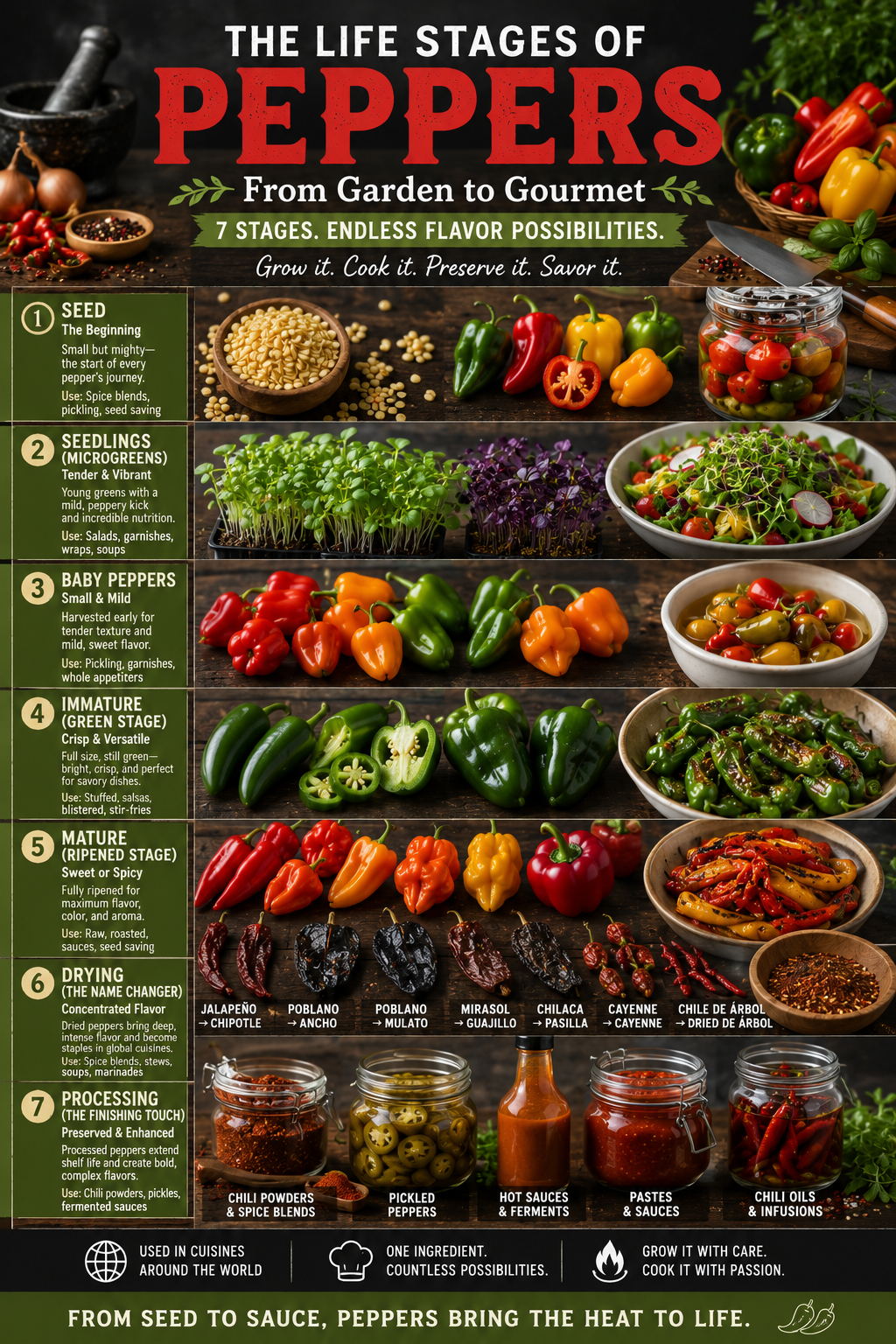
Life Stages of Peppers: The Ultimate Fiery Flavor Guide From Seed to Sauce
Before I knew peppers as a gardener, I met them as a young cook.
It was 1993, and the Red Savina Habanero had just stepped into culinary legend as the hottest pepper in the world. At the time, I was a student at the Culinary Institute of America, still learning how much I did not know. I thought peppers were simple. Bell peppers were sweet. Jalapeños were hot. Habaneros were dangerous. That was about the size of my understanding.
Then I walked into produce identification class.
The first thing I noticed was the color. The prep kitchen was covered with peppers, not as a small display or a quick identification tray, but table after table of them. There were tiny pale seeds, tender young seedlings, baby peppers just beginning to form, firm green peppers, glossy ripe peppers in reds and yellows and oranges, wrinkled dried chiles, bowls of powders, jars of pickled peppers, bottles of hot sauce, and oils stained deep red with heat. It felt less like a classroom and more like a chef’s laboratory, the kind of room where an ingredient stops being ordinary because someone has finally taken the time to show you everything it can become.
Only a few of us in that class had ever been farmers or recreational gardeners. Most of us knew peppers the way young cooks often know produce: as ingredients that arrived in boxes, were washed, trimmed, sliced, roasted, stuffed, sautéed, or turned into sauce. We knew how to use them in the moment, but we did not yet understand the full journey of the plant. We did not understand that a pepper could be many different ingredients depending on when it was harvested and what happened to it next.
Our instructor understood something we did not yet have the experience to see. He did not present peppers as a list of produce terms to memorize. He presented them like a chef would present a menu that had not been written yet. On one table sat the beginning: seeds, seedlings, and tiny fruit. On another sat the harvest: green peppers, ripe peppers, and chiles at different stages of color. Farther down were the transformations: dried pods, powders, pickles, sauces, oils, and ferments.
It felt as if the plant had been taken apart and spread across the room in time order. The seed was the opening note. The green pepper was the sharp middle. The ripe pepper was the full voice. The dried chile was the echo after the season had passed. The sauce, powder, and pickle were what happened when a cook refused to let the harvest end.
That was the moment the lesson landed. A pepper was not just something to chop. It was an ingredient with chapters. If a chef understood those chapters, the garden became more than a place to grow food. It became a pantry, a spice cabinet, a preservation system, and a flavor engine all at once.
That single class changed the way I cooked. Years later, it also changed the way I gardened, because once you understand the chapters of a pepper, you stop seeing one harvest and start seeing a series of culinary decisions. The question is no longer simply, “Is this pepper ready?” The better question is, “What is this pepper ready to become?”
That is why peppers are one of the great chef’s ingredients. They do not simply grow. They transform.
Why Peppers Are One of the Most Versatile Garden-to-Table Ingredients
To understand peppers as a chef, you have to stop thinking of them as one ingredient. A pepper plant is more like a book of flavor, with each chapter offering the kitchen something different. The opening chapter holds the seed. The tender chapter offers the young greens. The baby pepper chapter gives delicacy and presentation. The green chapter brings crunch and bite. The ripe chapter delivers sweetness, heat, and color. The dried chapter concentrates the season. The pantry chapter preserves the harvest into sauces, powders, pickles, oils, and ferments.
For the gardener, this changes the harvest question. Instead of picking only by habit or color, you begin picking by purpose. A green jalapeño may be perfect for salsa today, but a fully ripened red jalapeño may be better for smoking, drying, or fermenting tomorrow. A poblano may be beautiful when stuffed fresh, but when dried into an ancho, it becomes something deeper, sweeter, darker, and more suited to sauces and moles.
That is the hidden power of peppers. One plant can move from garden bed to cutting board, from drying rack to spice jar, from fermentation crock to hot sauce bottle, and from a family recipe to a global cuisine. The more you understand its chapters, the more value you can pull from a single plant.
Pepper Life Stages Chart: The 7 Culinary Chapters From Seed to Sauce
This chart is the roadmap for the entire pepper journey. Use it as a quick reference when deciding whether to grow, harvest, cook, dry, ferment, pickle, or preserve your peppers.
| Pepper Chapter | What It Is | Flavor and Texture | Best Culinary Uses | Chef’s Takeaway |
|---|---|---|---|---|
| 1. The Seed Chapter | The starting point of the pepper plant | Mild, small, sometimes bitter or sharp when included in preparations | Seed saving, spice blends, pickling, future planting | The seed is future flavor. It can become next year’s garden. |
| 2. The Tender Green Chapter | Young edible pepper greens grown from safe culinary seed | Tender, fresh, mild, lightly peppery | Salads, sandwiches, wraps, omelets, soups, garnishes | This is the first edible whisper of the plant. |
| 3. The Baby Pepper Chapter | Small, underdeveloped fruit | Tender, mild, delicate, visually attractive | Quick pickles, whole garnishes, appetizers | Baby peppers are useful when you want tenderness and presentation. |
| 4. The Green Pepper Chapter | Full-sized but not fully ripened fruit | Crisp, grassy, firm, sometimes bitter or sharp | Stuffed peppers, salsas, frying, blistering, relishes | Green is not “unfinished.” It is a culinary stage of its own. |
| 5. The Ripe Pepper Chapter | Fully ripened pepper in its final color | Sweeter, fruitier, hotter, softer, more developed | Raw dishes, roasting, sauces, marinades, seed saving | This is the pepper at full expression. |
| 6. The Dried Chile Chapter | Pepper preserved by drying, smoking, or dehydrating | Concentrated, smoky, fruity, earthy, leathery, deep | Chili powders, stews, soups, sauces, rubs, oils | Drying does not just preserve flavor. It transforms it. |
| 7. The Pantry Chapter | Pepper turned into a finished preserved ingredient | Tangy, smoky, spicy, acidic, fermented, concentrated, or infused | Hot sauce, pickles, powders, pastes, chili oil, ferments | This is where the garden becomes a pantry. |
The Seed Chapter: Where Every Pepper Harvest Begins
Every fiery sauce, every smoky dried chile, every jar of pickled peppers, and every future harvest begins with something that looks almost powerless: a seed. Pepper seeds are small, flat, and usually pale in color. They do not look dramatic. They do not look fiery. They certainly do not look like the beginning of salsa, chili powder, roasted peppers, paprika, hot sauce, or mole. But inside that small seed is the entire future of the plant.
For the gardener, the seed represents continuation. It is next season’s possibility waiting to happen. For the chef, it represents potential. A single pepper plant can eventually produce fruit, seeds, spice, and preservation opportunities far beyond what the original seed seems capable of offering. That is why the seed chapter matters. It reminds you that the pepper’s value does not begin when the fruit appears. It begins long before that, hidden in something small enough to rest on the tip of your finger.
Pepper seeds are often left inside fresh or pickled peppers because they can intensify heat and flavor. In dried pepper blends, seeds may be included when a stronger, sharper heat is desired. They can also add texture in pickled peppers, especially when the peppers are sliced into rings or preserved whole. The seed may be small, but in both the garden and the kitchen, it carries consequence.
The Tender Green Chapter: Pepper Seedlings and Microgreens
The first green chapter of a pepper plant is tender and delicate. Young pepper seedlings, sometimes used as microgreens when grown from edible pepper varieties and safe seed sources, have tender stems and leaves. When they first emerge, they are usually bright green. Depending on the variety, some may show hints of purple or red as they develop. This chapter is not about heat. It is about freshness.
Pepper microgreens can bring a mild, peppery note to a dish. They are not meant to replace a mature pepper. They are meant to provide a delicate accent. A small handful can change the look and feel of a plate, especially when added at the end of cooking or used as a garnish. In a chef’s hands, microgreens become one of those small details that make a dish feel intentional.
They can be added to salads for a mild peppery flavor and tender crunch. They can be tucked into sandwiches and wraps, scattered over tacos, added to omelets, or placed on soups and appetizers just before serving. This is the pepper plant at its lightest and most delicate edible stage.
A safety note matters here. Only grow pepper microgreens from seeds intended for edible food crops. Do not use ornamental, treated, or unknown seed sources. Also, do not assume all nightshade seedlings are edible. Peppers belong to the nightshade family, but that does not mean every nightshade plant is safe to eat. Avoid toxic nightshade plants such as deadly nightshade, and always research the exact plant and seed source before eating any young greens.
The Baby Pepper Chapter: Tender Young Peppers for Pickling and Garnish
Baby peppers are the early fruits of the plant. They are small, underdeveloped, and tender. At this point, the pepper has begun its journey as a fruit, but it has not yet developed its full size, full sweetness, full heat, or final color. For a chef, this chapter is useful because the peppers are often mild, delicate, and visually beautiful.
This is the stage that reminds you how much of cooking is about timing. Pick too early by accident, and you may lose the full flavor of maturity. Pick early with intention, and you gain a completely different ingredient. Baby peppers can be quick-pickled because of their tender texture and mild flavor. They can be served whole as a garnish, especially when a dish needs color, shape, or a playful garden-to-table presentation.
In some kitchens, baby peppers are treated almost like edible jewels. They can be lightly blistered, tucked onto appetizer plates, served alongside roasted meats and cheeses, or preserved in vinegar for a bright bite later. They may not have the full drama of a mature pepper, but they offer something else: tenderness, delicacy, and the beauty of a plant caught early in its transformation.
The Green Pepper Chapter: Immature Peppers With Crunch, Bite, and Bright Flavor
This is one of the most familiar chapters, and also one of the most misunderstood. Immature peppers are usually full-sized but not fully ripe. Many are green, firm, crisp, and grassy in flavor. Green bell peppers, green jalapeños, serranos, shishitos, padrón peppers, and guindilla peppers all show how useful this chapter can be.
The green chapter is not a lesser version of the ripe chapter. It is a different ingredient. A green pepper often brings firmness, sharpness, bitterness, freshness, and structure. It cuts through richness. It adds crunch. It holds up well to stuffing, frying, grilling, and salsa making. In the same way a green tomato has a role different from a ripe tomato, a green pepper has its own culinary identity.
Green bell peppers are a classic choice for stuffed peppers because they are firm and hold their shape well. Green jalapeños and serranos are commonly used in fresh salsas, relishes, and sauces because they bring brightness and bite. Shishito, padrón, and guindilla peppers are often blistered in hot oil and served as appetizers with salt, citrus, or dipping sauces. At this stage, the pepper is crisp, savory, and alive with green flavor.
The Ripe Pepper Chapter: Full Color, Sweetness, Heat, and Seed Saving
When peppers fully ripen, they reveal their final color. Red, yellow, orange, chocolate, purple, cream, or other colors may appear depending on the variety. Along with color comes a change in flavor. Many peppers become sweeter. Some become fruitier. Some become hotter. Some become more aromatic. A ripe red bell pepper is not the same ingredient as a green bell pepper. A ripe habanero is not the same experience as a green chile. Maturity brings a fuller expression of the pepper’s identity.
Fully ripe peppers can be eaten raw in salads, sliced for crudité platters, or enjoyed as a simple snack. They can be roasted to deepen sweetness and add smoky complexity. They can be blended into sauces, marinades, soups, dips, spreads, and purées. This is the chapter where color and flavor work together. A ripe pepper does not merely taste different; it changes the appearance and emotional effect of the dish.
This is also the chapter when seed saving becomes important. If you want to save seeds, choose strong, healthy, fully mature peppers from plants you want to grow again. The best seed-saving peppers should come from plants that showed vigor, flavor, productivity, and disease resistance. When handling seeds from hot peppers, wear gloves and avoid touching your eyes or face.
The Dried Chile Chapter: Why Drying Peppers Changes Their Name and Flavor
Drying is where peppers become something magical. A fresh pepper and its dried counterpart can be so different that they often receive different names. Drying removes moisture, concentrates flavor, deepens aroma, and changes the pepper’s role in the kitchen. A fresh chile may be bright, grassy, juicy, or sharp. A dried chile may become smoky, fruity, earthy, raisin-like, nutty, leathery, or deeply complex.
This is why chefs respect dried peppers so much. Drying does not simply preserve the pepper. It transforms it. The same fruit that once brought crunch and brightness can become the backbone of a sauce, the soul of a stew, or the quiet heat inside a spice blend.
Dried peppers can be ground into powders and spice blends. They can be rehydrated and blended into sauces. They can be added to stews, soups, broths, marinades, rubs, and braises. Smoked dried peppers, such as chipotles, bring deep smoky flavor to barbecue sauces, chili, marinades, beans, and slow-cooked dishes. This is the chapter where a pepper begins to carry memory. It tastes less like a fresh garden harvest and more like time, smoke, sun, and preservation.
Fresh to Dried Pepper Chart: The Name-Changing Chile Guide
This chart is one of the most useful pieces of the entire guide. Many peppers change names after they are dried or smoked, and that name change often signals a major change in flavor, texture, aroma, and culinary purpose. A fresh pepper and its dried form may come from the same plant, but in the kitchen they behave like different ingredients.
| Fresh Pepper | Dried or Smoked Name | Heat Level | Flavor Profile | Best Culinary Uses | Chef’s Note |
|---|---|---|---|---|---|
| Jalapeño | Chipotle | Medium | Smoky, earthy, slightly sweet | Barbecue sauce, chili, beans, marinades, salsas | A chipotle is a smoked, dried jalapeño. Use it when you want smoke as much as heat. |
| Poblano | Ancho | Mild to medium | Sweet, raisin-like, earthy, dark fruit | Mole, enchilada sauce, soups, stews, braises | Ancho is one of the great sauce-building chiles. It brings body and depth. |
| Poblano | Mulato | Mild to medium | Dark, smoky, chocolate-like, licorice notes | Mole negro, rich sauces, slow-cooked meats | Mulato is darker and deeper than ancho, with a more mysterious flavor. |
| Mirasol | Guajillo | Medium | Fruity, tangy, bright, slightly smoky | Adobo, Mexican sauces, soups, marinades | Guajillo is excellent when you want red color, fruitiness, and moderate heat. |
| Chilaca | Pasilla | Mild to medium | Earthy, dark berry, raisin-like, complex | Moles, stews, sauces, roasted meats | Pasilla adds depth without overwhelming a dish with heat. |
| Cayenne | Dried Cayenne / Cayenne Powder | Hot | Sharp, clean, direct heat | Spice blends, hot sauces, soups, rubs | Cayenne is a universal heat tool. Use carefully; it spreads through a dish quickly. |
| Chile de Árbol | Dried Chile de Árbol | Hot | Nutty, sharp, grassy, intense | Salsa, chili oil, infused vinegar, hot sauce | Small chile, big impact. Excellent for oils and table sauces. |
| Pequin | Dried Pequin | Very hot | Tiny, fiery, smoky-fruity | Salsas, pickling, spice blends, condiments | Pequin is small but powerful. It adds concentrated heat. |
| Cascabel | Dried Cascabel | Mild to medium | Nutty, smoky, earthy, subtle fruit | Sauces, soups, stews, marinades | Cascabel is known for its round shape and rattling seeds when dried. |
| Chihuacle Rojo | Dried Chihuacle Rojo | Mild to medium | Deep, earthy, complex | Oaxacan mole, traditional sauces | A prized chile for complex regional sauces. |
| Chihuacle Amarillo | Dried Chihuacle Amarillo | Mild to medium | Fruity, warm, rich | Yellow moles, stews, regional sauces | Brings warmth and complexity more than aggressive heat. |
| Chihuacle Negro | Dried Chihuacle Negro | Mild to medium | Dark, smoky, rich, deeply complex | Mole negro, special occasion sauces | One of the most distinctive chiles for deep, traditional sauce work. |
The reason this chart matters is simple: the name changes because the ingredient changes. A jalapeño and a chipotle come from the same pepper, but they do not perform the same job in a dish. A poblano and an ancho may share a botanical origin, but in the kitchen they speak different languages.
Fresh peppers bring water, crunch, brightness, and immediacy. Dried peppers bring concentration, depth, smoke, fruit, and memory. For a chef, this is not trivia. This is culinary power.
When to Harvest Peppers: A Chef’s Garden-to-Kitchen Decision Chart
The easiest way to understand peppers is to stop asking only when they are ready and start asking what they are ready for. That is the difference between harvesting like a beginner and harvesting like a chef. A beginner sees ripeness as the finish line. A chef sees ripeness as one option among several.
Use this chart when deciding whether to pick a pepper early, let it ripen, dry it, smoke it, ferment it, pickle it, or save it for seed. The value of the pepper changes depending on the chapter, but the best choice depends on what you want the pepper to become.
| Desired Result | Best Pepper Chapter | Why It Works | Examples |
|---|---|---|---|
| Crisp texture | Green Pepper Chapter | Firm flesh holds shape and adds crunch | Stuffed green peppers, fresh salsa, relishes |
| Bright fresh heat | Green Pepper Chapter or early Ripe Pepper Chapter | Fresh capsaicin bite with grassy sharpness | Jalapeño salsa, serrano salsa verde |
| Sweet roasted flavor | Ripe Pepper Chapter | Ripeness increases sweetness and aroma | Roasted red peppers, red pepper soup, romesco-style sauces |
| Deep sauce flavor | Dried Chile Chapter | Drying concentrates sugars, acids, and aromatics | Ancho sauce, guajillo adobo, pasilla stew |
| Smoky flavor | Smoked Dried Chile Chapter | Smoke adds complexity and preservation | Chipotle sauce, barbecue rubs, smoky beans |
| Long shelf life | Dried Chile Chapter or Pantry Chapter | Preservation extends use beyond harvest season | Chili powder, pepper vinegar, fermented hot sauce |
| Visual garnish | Baby Pepper Chapter or Ripe Pepper Chapter | Shape and color create plate appeal | Pickled baby peppers, sliced ripe peppers |
| Seed saving | Ripe Pepper Chapter | Seeds are most mature when fruit is fully ripe | Saving seeds from best-performing plants |
| Fermented complexity | Ripe Pepper Chapter or mixed ripe peppers | Sugars support fermentation and flavor development | Hot sauce, pepper mash, fermented chile paste |
| Spice cabinet staple | Dried Chile Chapter | Dry peppers can be ground and stored | Cayenne powder, chili flakes, custom blends |
This is the kind of chart that turns a gardener into a better cook. It also turns a cook into a better gardener. Once you know what each chapter is good for, you can harvest with intention instead of simply picking whatever happens to be ready.
The Pantry Chapter: How Peppers Become Hot Sauce, Pickles, Powders, and Chili Oil
The final chapter is where peppers become long-lasting kitchen tools. Processing includes grinding, pickling, fermenting, blending, preserving, smoking, freezing, and infusing. At this point, the pepper is no longer just a fruit from the garden. It becomes a prepared ingredient.
This is where cooks create pantry staples. Dried peppers can be ground into chili powders and spice blends. Fresh or dried peppers can be fermented into hot sauces. Peppers can be pickled for sandwiches, salads, antipasto trays, tacos, and charcuterie boards. They can be infused into oils, blended into pastes, packed into vinegar, or preserved in sauces.
This chapter is where the garden becomes portable. A fresh pepper is tied to the season, but a processed pepper travels through time. It can sit on a shelf, rest in the refrigerator, wait in the freezer, or age in a bottle. It can bring the heat of August into a winter stew. It can turn a simple pot of beans into something memorable. It can become the small jar in the pantry that quietly changes dinner.
Pepper Preservation Chart: How to Turn a Pepper Harvest Into Pantry Power
The harvest is only the beginning. Preservation decides how long the pepper keeps speaking. If you want brightness, pickle it. If you want depth, dry it. If you want smoke, smoke it. If you want tang and complexity, ferment it. If you want convenience, freeze it.
| Preservation Method | Best Pepper Chapter | Finished Product | Flavor Result | Storage Benefit | Best Uses |
|---|---|---|---|---|---|
| Air-drying | Ripe Pepper Chapter or Dried Chile Chapter | Whole dried peppers | Concentrated, earthy, sometimes fruity | Long shelf life when fully dried | Soups, sauces, powders, stews |
| Dehydrating | Ripe Pepper Chapter | Dried slices, flakes, powders | Clean concentrated pepper flavor | Efficient storage, easy grinding | Chili flakes, spice blends, rubs |
| Smoking | Ripe Pepper Chapter | Smoked dried chiles | Smoky, deep, savory | Preserved with added smoke complexity | Chipotle-style sauces, barbecue, beans |
| Pickling | Baby, Green, or Ripe Pepper Chapter | Pickled peppers | Tangy, bright, sharp | Refrigerator or canned storage depending on method | Sandwiches, salads, tacos, antipasto |
| Fermenting | Ripe Pepper Chapter | Fermented hot sauce or pepper mash | Tangy, complex, savory heat | Refrigerated or bottled preservation | Hot sauce, marinades, condiments |
| Freezing | Green or Ripe Pepper Chapter | Frozen pepper pieces | Fresh flavor retained, softer texture after thawing | Easy storage for later cooking | Soups, stews, sautés, sauces |
| Roasting and freezing | Ripe Pepper Chapter | Roasted frozen peppers | Sweet, smoky, soft | Ready-to-use cooked pepper flavor | Sauces, soups, sandwiches, pasta |
| Infusing | Dried Chile Chapter | Chili oil or pepper vinegar | Heat transferred into oil or vinegar | Flavorful condiment base | Noodles, greens, marinades, dipping sauces |
| Grinding | Dried Chile Chapter | Powder or flakes | Intense, concentrated, adjustable heat | Compact spice storage | Rubs, chili, sauces, seasoning blends |
Global Pepper Uses: How Peppers Shape World Cuisines
After spending that day scribbling notes like I was a court stenographer at a high-stakes auction, I finally began to understand what our chef had been trying to show us. The class was not just about identifying produce. It was about seeing possibility.
Peppers were not simply hot, sweet, green, or red. They were part of global food history. They provided nutrition, heat, preservation, color, identity, and tradition to cuisines around the world. They traveled through trade. They became part of family recipes. They shaped regional flavor systems. They stood the test of time longer than many trends, cities, borders, and empires.
Once you understand peppers through their chapters, you begin to see why so many cuisines depend on them. They are not just ingredients. They are culinary bridges. They connect the backyard to the world.
Global Pepper Flavor Systems Chart: From Cajun Holy Trinity to Korean Gochujang
This chart shows why peppers belong in the culinary hall of fame. They do not belong to one cuisine. They appear again and again because they solve the same culinary problems in different languages. They build bases. They add heat. They bring color. They preserve well. They balance richness. They create identity.
| Cuisine or Region | Pepper-Based Flavor System | Core Ingredients | Common Dishes or Uses | What Peppers Contribute |
|---|---|---|---|---|
| Cajun and Creole Cuisine | Holy Trinity | Bell peppers, onions, celery | Gumbo, jambalaya, étouffée | Sweetness, aroma, structure, savory base |
| Spanish Cuisine | Sofrito | Peppers, onions, garlic, tomatoes | Paella, stews, sauces | Sweetness, color, depth, aromatic foundation |
| Italian Cuisine | Peperonata-style base | Bell peppers, onions, tomatoes, olive oil | Peperonata, bruschetta, pasta sauces, side dishes | Sweetness, softness, color, acidity balance |
| Caribbean Cuisine | Green seasoning and pepper marinades | Scotch bonnet, herbs, garlic, onion | Stews, seafood, grilled meats, marinades | Heat, fruitiness, aroma, cultural identity |
| Chinese Cuisine | Chili oil and chile aromatics | Dried chiles, garlic, ginger, oil | Mapo tofu, dan dan noodles, stir-fries | Heat, color, fragrance, numbing-spicy balance when paired with Sichuan peppercorn |
| Thai Cuisine | Curry paste and stir-fry aromatics | Chiles, garlic, shallots, herbs | Curry pastes, stir-fries, dipping sauces | Heat, brightness, sharpness, aromatic lift |
| Indian Cuisine | Tadka / tempering | Dried red chiles, mustard seeds, curry leaves, spices | Dals, curries, rice dishes | Heat, aroma, infused oil flavor, complexity |
| Korean Cuisine | Fermented chile systems | Chili peppers, garlic, fermented soybean products | Gochujang, kimchi, stews, barbecue marinades | Heat, fermentation depth, color, umami support |
| Mexican Cuisine | Fresh and dried chile systems | Jalapeño, serrano, poblano, ancho, guajillo, pasilla | Salsas, moles, adobos, tacos, soups | Fresh heat, dried depth, smoke, fruit, sauce structure |
| Mediterranean Cuisine | Roasted and preserved pepper traditions | Sweet peppers, olive oil, garlic, herbs | Roasted peppers, spreads, salads, sauces | Sweetness, color, softness, preserved flavor |
The Garden-to-Table Pepper Lesson: Harvest With Purpose
For a gardener, this changes everything. You no longer look at a pepper plant and ask only, “When is it ready?” You begin asking better questions. What chapter is this pepper in? What does this chapter offer? Should I harvest it green? Should I let it ripen? Should I dry it? Should I ferment it? Should I save seeds? Should I turn the surplus into something that lasts?
These are chef questions. They are also gardener questions. When you begin asking them, the garden becomes more than a source of produce. It becomes a living kitchen.
That is the real garden-to-table lesson peppers taught me. The value of a plant is not limited to one harvest. The value expands when you understand its timing, its transformations, and its place in the kitchen. A pepper plant does not simply hand you food. It offers decisions. It asks what kind of cook you are becoming.
Conclusion: Do Not Just Grow Peppers — Learn the Whole Journey
That day at the Culinary Institute of America, I thought I was learning produce identification. I was really learning how to see.
A pepper was no longer just a pepper. It was seed, sprout, fruit, spice, sauce, preservation, culture, and memory. It was a plant that could move from garden bed to cutting board, from drying rack to spice jar, from family recipe to global cuisine.
The longer I garden, the more I appreciate ingredients that refuse to be only one thing. Peppers are like that. They are not locked into a single use, a single flavor, or a single moment. They reward the cook who pays attention.
The green chapter teaches timing. The ripe chapter teaches patience. The dried chapter teaches preservation. The fermented chapter teaches transformation. Seed saving teaches continuity. Each chapter asks a different question, and the better you become at answering those questions, the more useful the plant becomes.
That is what my instructor gave us that day. He was not simply teaching us names. He was teaching us how to see possibility before it became obvious.
A pepper plant does not hand you one ingredient.
It hands you decisions.
And the quality of those decisions is what turns a garden into a kitchen.