
Elder Care Often Begins Before Anyone Calls It Caregiving
Elder care does not always begin in a hospital room.
It does not always begin with a diagnosis.
It does not always begin with paperwork, insurance forms, walkers, medication lists, or family meetings.
Sometimes it begins in the kitchen.
A pan on low heat.
A few eggs in a bowl.
A winter morning.
A grandson home from college.
Two grandparents sitting nearby, waiting for breakfast.
At the time, I did not think of it as elder care.
I was a young college kid home on winter break in upstate New York, near Saratoga Springs. The air outside had that particular winter stillness that anyone from that region knows. Cold windows. Quiet mornings. Snow light. The kind of morning where the house feels warmer because people you love are inside it.
I do not remember everything from that break.
But I remember those eggs.
I remember cooking them slowly.
I remember wanting them to be soft, light, and gentle.
I remember serving them to my grandparents.
And I remember their faces.
They smiled and said they had never had such light and fluffy eggs before.
That sentence still fills my heart.
I can still picture them.
I can still hear their voices.
And what stays with me most is not that I cooked breakfast.
It is that I did not need to cook for them that morning.
It was my honor to cook for them.
That is the part people sometimes miss about caregiving.
The small acts are not small when they are received with love.
A Meal Can Become a Memory That Outlives the Morning
Scrambled eggs are ordinary.
That is part of their beauty.
They are not a grand holiday meal.
They are not a banquet.
They are not the kind of dish people expect to remember decades later.
But when cooked for someone you love, at the right time, in the right season of life, an ordinary meal becomes something else.
It becomes a marker.
A moment.
A small offering of care.
In elder care, those moments matter.
As people age, food can change. Appetite may shift. Chewing may become harder. Swallowing may become less safe. Fatigue can make eating more difficult. Illness, medications, dental issues, dry mouth, and memory changes can all affect the way a person experiences a meal.
The National Institute on Aging describes healthy eating as a cornerstone of healthy aging and notes that older adults may need to make adjustments to meet nutrient needs and reduce disease risk. (nia.nih.gov)
But nutrition is only one part of the meal.
There is also dignity.
There is comfort.
There is recognition.
There is the feeling of being cared for by someone who notices.
A soft scrambled egg can be protein.
It can be breakfast.
It can also be a message:
I see you.
I have time for you.
You still deserve something made with care.
The Quiet Beginning of Care
Most caregiving begins quietly.
A parent starts eating less.
A grandparent begins avoiding certain foods.
Someone who used to cook for everyone now gets tired standing at the stove.
Someone starts needing breakfast made for them.
At first, nobody names it.
You simply adjust.
You cut the food smaller.
You make the soup smoother.
You cook the vegetables longer.
You choose softer bread.
You stay nearby while they eat.
You make the eggs lighter.
That is how the season changes.
Not all at once.
Little by little.
In the United States, caregiving is no longer a rare family situation. AARP and the National Alliance for Caregiving reported in 2025 that 63 million Americans are providing ongoing care, about one in four adults. (aarp.org) Many caregivers are also balancing jobs, children, and aging relatives at the same time; AARP reports that 29% of caregivers are in the sandwich generation, and among caregivers under age 50, that rises to 47%. (aarp.org)
Those numbers are large.
But caregiving does not feel like a statistic when you are standing at the stove.
It feels like trying to make one morning easier.
It feels like wanting someone you love to eat.
It feels like hoping they smile.
Why Eggs Matter in the Caregiver’s Kitchen
Eggs are humble, but they are useful.
They cook quickly.
They are familiar.
They can be served at breakfast, lunch, or dinner.
They can be made soft, moist, savory, mild, or comforting.
They can carry herbs, cheese, pureed vegetables, sauces, or gentle flavors.
USDA’s Food Safety and Inspection Service notes that eggs are among the most nutritious foods and can be part of a healthy diet, while also emphasizing that eggs are perishable and must be handled, refrigerated, and cooked safely. (fsis.usda.gov)
That safety part matters, especially for older adults. CDC states that adults age 65 and older are more likely to get sick from certain foodborne germs, including Salmonella, Campylobacter, and Listeria, and identifies undercooked eggs as a riskier choice for older adults. (cdc.gov)
So this recipe is not about undercooked eggs.
It is not about runny eggs.
It is not about restaurant-style eggs that are soft because they are barely cooked.
This is about eggs that are fully cooked, safe, tender, moist, and gentle.
There is a difference.
A caregiver-safe scrambled egg should be cooked thoroughly, but not abused.
Low heat.
Patience.
Moisture.
Attention.
That is the whole dish.
That is also the whole lesson.
Caregiver Safety Note: Read This Before Making the Recipe
This recipe is for general caregiver support and inspiration only. It is not medical advice, nutrition therapy, swallowing therapy, or a replacement for a care plan.
Always follow the person’s physician, speech-language pathologist, registered dietitian, nurse, or care team guidance.
If the person has difficulty chewing, swallowing, coughing during meals, choking risk, aspiration risk, dementia-related eating changes, or a prescribed texture-modified diet, do not guess the safest texture.
Ask the care team.
ASHA describes adult dysphagia as a swallowing disorder that can involve the mouth, throat, esophagus, or related structures, and notes that intervention may include modifying food consistency, compensatory strategies, posture considerations, and caregiver education. (asha.org)
If the care team uses IDDSI levels, follow those. The International Dysphagia Diet Standardisation Initiative framework uses a continuum from Levels 0–7, with drinks measured from Levels 0–4 and foods from Levels 3–7. (iddsi.org)
Do not serve scrambled eggs to someone with dysphagia unless the final texture matches their care plan.
Do not serve runny or undercooked eggs to older adults. FDA advises keeping eggs refrigerated, cooking eggs until yolks are firm, and cooking foods containing eggs thoroughly. (fda.gov)
The goal is not fancy eggs.
The goal is safe, tender, dignified food.
Recipe: Cloud-Soft Scrambled Eggs for a Gentle Morning
What This Recipe Is
This is a gentle, fully cooked scrambled egg designed to be tender, moist, and comforting.
It is inspired by the kind of breakfast you make when someone you love needs the day to begin softly.
It is not rushed.
It is not dry.
It is not rubbery.
It is not runny.
It is cooked with care.
Best For
This recipe may be useful for caregivers preparing breakfast for an older adult who can safely eat soft scrambled eggs according to their care plan.
It can also be adapted into softer, minced/moist, or pureed pathways if approved by the care team.
Dignity Goal
A breakfast that feels warm, adult, familiar, and made with love.
Not a medical task.
Not a rushed plate.
A gentle morning.
Ingredients
For one serving:
- 2 large eggs
- 1 tablespoon whole milk, half-and-half, cream, or approved liquid
- 1 teaspoon butter
- 1 tablespoon smooth ricotta, cream cheese, or cottage cheese blended completely smooth, optional
- Tiny pinch of salt, only if allowed
- Optional: very finely minced soft chives or strained herb puree, only if allowed
- Optional: 1 teaspoon warm mild cheese sauce or approved gravy for added moisture
For a larger caregiver batch:
- 6 large eggs
- 3 tablespoons milk, half-and-half, cream, or approved liquid
- 1 tablespoon butter
- 3 tablespoons smooth ricotta or cream cheese, optional
- Salt only if allowed
Equipment
- Small nonstick pan
- Rubber spatula
- Mixing bowl
- Whisk or fork
- Fine mesh strainer, optional
- Food thermometer, optional but useful
- Warm plate or bowl
Method: The Gentle Low-Heat Technique
Crack the eggs into a bowl.
Add milk or approved liquid.
Whisk until the mixture is fully blended. You should not see separate streaks of yolk and white.
Place the pan over low heat.
Add butter and let it melt gently.
Pour in the eggs.
Wait a moment.
Then begin stirring slowly with a rubber spatula.
Do not scrape aggressively.
Do not rush.
Move the eggs slowly from the outside of the pan toward the center.
The curds should form gently.
When the eggs are mostly set, remove the pan from the heat and keep stirring. The residual heat will finish the cooking.
Fold in the smooth ricotta or cream cheese if using.
Return briefly to very low heat only if needed to finish cooking.
The final eggs should be fully cooked and set, but still tender and moist.
They should not be runny.
They should not be dry.
Serve immediately on a warm plate or in a warm bowl.
Chef’s Note: The Secret Is Not More Skill. It Is Less Heat.
Most bad scrambled eggs are not bad because the cook lacks talent.
They are bad because the heat is too high.
High heat forces the egg proteins to tighten quickly. The eggs become firm, dry, and rubbery.
Low heat gives you time.
And time gives you tenderness.
That is the caregiver lesson hidden inside the recipe.
Care often improves when we lower the heat.
When we stop rushing.
When we give the moment enough attention to become gentle.
Texture Pathways
Only use these adaptations if they match the person’s care plan.
Regular Soft Version
Use the main recipe.
Keep the eggs tender and moist.
Serve in small curds.
Avoid browning.
Avoid dryness.
Avoid hard edges.
Extra-Moist Soft Version
Fold in smooth ricotta, cream cheese, or a small amount of approved warm sauce after the eggs are fully cooked.
This can help the eggs feel softer and more cohesive.
Only use ingredients allowed by the person’s diet.
Minced and Moist Pathway
If the care plan allows minced and moist foods, cook the eggs fully and gently.
Chop or mash into the approved particle size.
Moisten with approved sauce, gravy, or dairy component so the eggs are cohesive and not crumbly.
Do not leave scattered dry pieces.
Pureed Egg Pathway
For a pureed version, cook the eggs fully and gently.
Place the cooked eggs in a blender.
Add a small amount of warm approved liquid, such as milk, broth, or sauce.
Blend until completely smooth.
Scrape down the sides and blend again.
Strain if required.
Adjust with approved thickener if needed.
Match the prescribed texture level.
Serve warm in a small bowl or pipe into a ramekin.
A pureed egg can be topped with a small amount of approved sauce or strained herb puree for color, but only if the final plate remains safe.
Egg Custard Cup Pathway
For some care plans, a soft baked egg custard may be easier to standardize than scrambled eggs.
Whisk eggs with milk or approved liquid.
Pour into a small greased ramekin.
Bake gently in a water bath until fully set.
Cool slightly.
Serve as allowed, or puree if required.
Egg dishes without meat or poultry should be cooked to a safe internal temperature; FoodSafety.gov lists 160°F for egg dishes that do not contain meat or poultry. (foodsafety.gov)
Flavor Variations
Keep flavors gentle, familiar, and care-plan approved.
Garden Herb Egg
Add a tiny amount of strained parsley, basil, or chive puree.
This gives color and aroma without fibrous leaves.
Ricotta Morning Egg
Fold in smooth ricotta for a mild, creamy texture.
This is especially useful when the goal is softness without making the eggs runny.
Tomato Breakfast Egg
Serve with a spoonful of smooth, thickened tomato sauce.
This creates a familiar tomato-and-egg flavor without rough textures.
Savory Breakfast Bowl
Serve the soft eggs over very smooth grits, polenta, or mashed potato if allowed.
This can make the meal more filling and easier to present.
Gentle Vegetable Egg
Blend cooked carrots, spinach, or squash into a smooth puree and serve alongside the eggs.
Do not mix textures unless the care plan allows it.
Food Safety Notes for Eggs and Older Adults
Older adults are more vulnerable to severe foodborne illness, so egg safety matters.
Use refrigerated eggs.
Discard cracked or dirty eggs.
Wash hands and surfaces.
Cook eggs thoroughly.
Do not serve runny scrambled eggs to an older adult at higher risk.
FDA’s egg safety guidance says to keep eggs refrigerated, cook eggs until yolks are firm, and cook foods containing eggs thoroughly. (fda.gov)
FoodSafety.gov advises cooking eggs until both the yolk and white are firm, cooking egg dishes to safe internal temperatures, and refrigerating eggs or egg-containing foods promptly after cooking. (foodsafety.gov)
If preparing eggs for someone medically fragile, follow the strictest relevant guidance from their care team.
A beautiful breakfast is not worth a preventable illness.
Safety is part of dignity.
Caregiver Shortcut: The Gentle Breakfast Kit
Caregivers need systems, not heroic mornings.
A breakfast kit can make this easier.
Keep on Hand
- Eggs
- Pasteurized liquid eggs, if recommended or preferred
- Smooth ricotta or cream cheese
- Milk or approved liquid
- Small containers of smooth tomato sauce
- Smooth herb puree cubes
- Soft cooked grits or polenta
- Food thermometer
- Small warm bowls
- Freezer labels
Prep Ahead
Make small portions of strained herb puree and freeze them in tiny cubes.
Prepare smooth tomato sauce and portion it.
Keep a written note of which textures worked.
Write down whether the person preferred eggs plain, with ricotta, with sauce, or with a softer base.
The goal is not to make breakfast complicated.
The goal is to make care repeatable.
The Caregiver Kitchen Ledger
After my grandparents complimented those eggs, I did not need a ledger to remember the moment.
Their faces became the record.
But caregivers cannot rely only on memory, especially when care becomes daily, complicated, or exhausting.
A simple meal ledger can help.
| Date | Meal | Texture | Intake | Reaction | Notes for Next Time |
| Monday | Soft eggs with ricotta | Soft/moist | Ate most | Smiled | Keep low heat |
| Tuesday | Eggs with tomato sauce | Soft/moist | Ate half | Liked sauce | Smaller portion |
| Wednesday | Pureed eggs | Pureed | Ate 75% | No coughing | Ask care team about herbs |
This is not paperwork for its own sake.
It is attention made visible.
It can help a caregiver notice:
- which meals are easier
- what textures work best
- when appetite is stronger
- when fatigue affects intake
- when coughing or discomfort appears
- which flavors still bring joy
ASHA notes that caregivers may help track food and liquid intake and report concerns to the doctor or speech-language pathologist when swallowing problems are suspected. (asha.org)
A kitchen ledger turns small observations into better care.
The Soft Scrambled Egg Rule
There is a principle hidden inside this breakfast.
I would call it:
The Soft Scrambled Egg Rule
Caregiving often begins with one small adjustment made with love.
The food gets softer.
The pace gets slower.
The plate gets warmer.
The portion gets smaller.
The person gets more time.
That is not failure.
That is adaptation.
A gardener knows this.
When the season changes, you do not blame the plant.
You adjust the care.
You move it toward better light.
You water differently.
You protect it from frost.
You respond to what the living system needs now, not what it needed ten years ago.
Elder care asks the same thing.
It asks us to notice the season.
And then to respond with tenderness.
The Dignity of an Ordinary Breakfast
There is a reason this memory stays with me.
My grandparents were not reviewing a restaurant.
They were not judging technique.
They were receiving care.
And their joy was so simple.
They had never had eggs so light and fluffy.
That was all they said.
But that was enough.
As a young man, you do not always understand the full meaning of a moment while you are standing inside it.
You think you are making breakfast.
Years later, you realize you were being given a gift.
Their compliment was not just about eggs.
It was about connection.
They allowed me to care for them.
They let me give something back.
That is one of the quiet honors of elder care.
The people who once cooked for us, drove us, fed us, taught us, protected us, and held our families together eventually enter a season where we may get to return a portion of that care.
Not repay it.
You can never fully repay that kind of love.
But you can honor it.
Sometimes with paperwork.
Sometimes with appointments.
Sometimes with advocacy.
Sometimes with a spoonful of soft eggs on a winter morning.
What Caregivers Need to Hear
If you are caring for someone right now, you may be tired.
You may be reading this between appointments.
You may be trying to figure out breakfast before work.
You may be worried about choking, appetite, weight loss, hydration, medications, or whether you are doing enough.
So let me say this clearly:
You do not have to make perfect eggs.
You do not have to be a chef.
You do not have to turn every meal into a memory.
Some mornings, care is cereal.
Some mornings, care is yogurt.
Some mornings, care is a nutrition shake the care team approved.
Some mornings, care is simply getting through breakfast safely.
That counts.
But when you do have a little space, remember this:
Small acts matter.
A warm plate matters.
A soft texture matters.
A familiar smell matters.
A patient voice matters.
A caregiver deserves dignity too.
The best caregiver meal is not the one that impresses the internet.
It is the one that safely nourishes the person and does not destroy the person making it.
The Elder Care Garden Lesson
The Elder Care Garden is about more than recipes.
It is about seeing care as a living system.
Food is one part.
Safety is one part.
Memory is one part.
The caregiver is one part.
The elder is not a task inside the system.
They are the reason the system exists.
A soft scrambled egg may seem too simple to matter.
But gardens begin with seeds.
Care begins with small acts.
And sometimes the smallest act becomes the one you remember for the rest of your life.
That winter morning near Saratoga Springs, I gave my grandparents breakfast.
But they gave me something too.
They gave me the memory of their smiles.
They gave me the sound of their voices.
They gave me the feeling that cooking for someone you love is not service in the lesser sense.
It is honor.
Final Thought: The Honor of the Morning Meal
I still think about those eggs.
Not because they were the most technical dish I ever made.
They were not.
Not because they belonged on a fine-dining menu.
They did not.
I think about them because of the way my grandparents received them.
Their faces softened.
Their voices lifted.
For a moment, the morning felt whole.
There is a line often attributed to violinist Michael Rabin:
“Play every concert as if it’s the first and last time you will ever play.”
That is how I want to think about food in elder care.
Cook as if this is the first time someone is tasting your care.
Cook as if it may be the last time they taste that dish.
Not with fear.
With reverence.
Because we do not always know which meals will become memories.
We only know that the person in front of us deserves our best available care in that moment.
I did not need to cook for my grandparents that morning.
It was my honor.
And sometimes, that is what caregiving really is.
Not obligation.
Honor, made warm.
Honor, served softly.
Honor, placed on a plate before the day begins.
Where to Go Next
This is the second plate in The Elder Care Garden.
The first was:
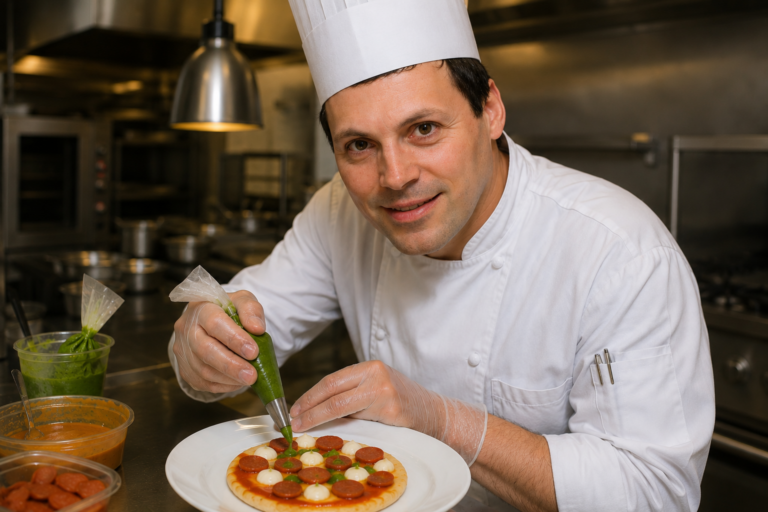
The Pureed Pizza: Why Elder Care Food Should Preserve Dignity
A professional story about nursing home food, modified diets, dysphagia, and the belief that the meal may be modified, but the person is not.
Next in the series:
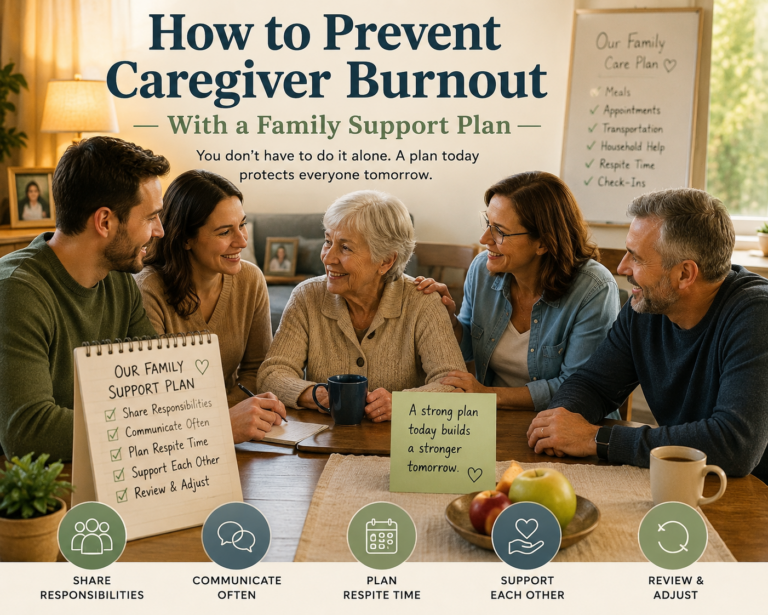
Caring for the Caregiver: Why Families Need Systems Before the Winter Comes
Because love matters, but love without a system can exhaust the person giving it.
Quick Reference: Cloud-Soft Scrambled Eggs for a Gentle Morning
Main ingredients:
- Eggs
- Milk or approved liquid
- Butter
- Smooth ricotta or cream cheese, optional
- Gentle seasoning, if allowed
Most important rules:
- Use low heat.
- Cook fully.
- Do not serve runny eggs to high-risk older adults.
- Keep texture tender and moist.
- Follow the care plan.
- Ask the SLP, dietitian, nurse, or physician when unsure.
- Serve with dignity.
Core reminder:
Elder care often begins with one small adjustment made with love.