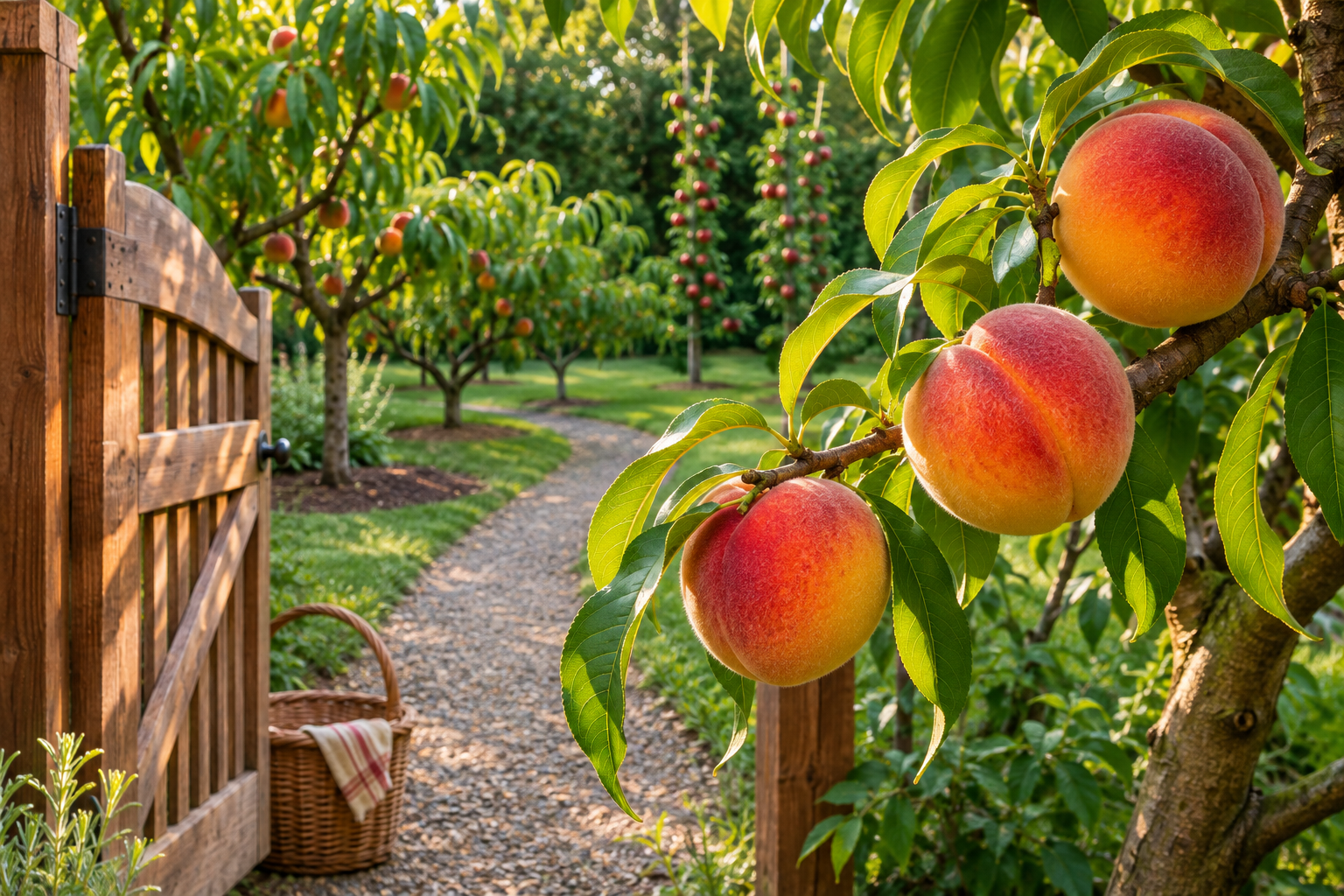
If growing peaches has you worried about keeping a tree alive, finding enough room, or knowing how to prune, start with three decisions. Choose a tree suited to your climate, give it a sunny spot with good drainage, and plan for a size you can comfortably manage. A nursery that answers your questions and explains its plant guarantee can help you feel more comfortable taking that first step.
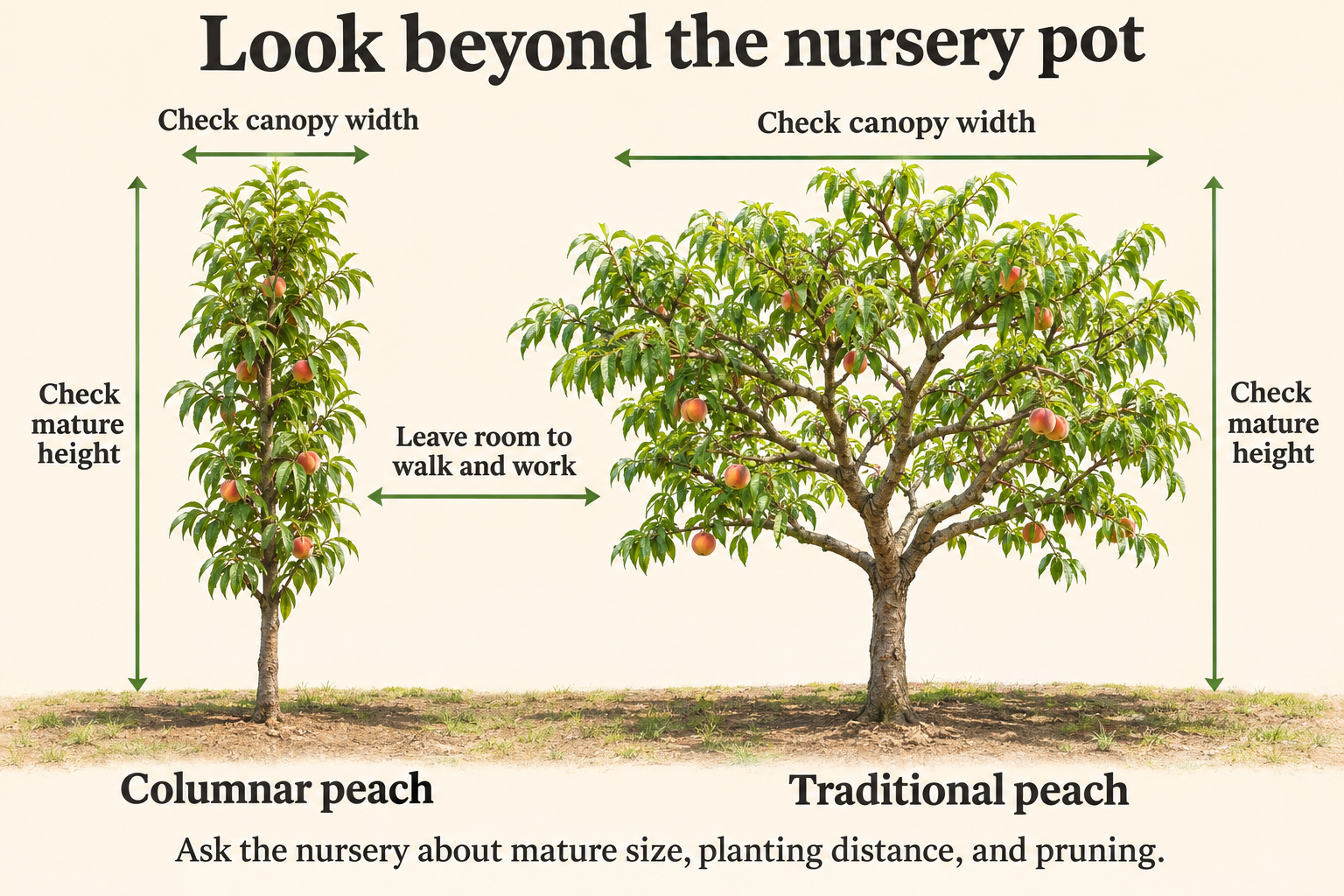
I prefer columnar trees because they let me grow more in my postage-stamp orchard. However, a traditional peach may suit your space too. The comparison below shows what to check before choosing.
Keep the tree within your reach
Dave Wilson Nursery’s Backyard Orchard Culture starts with a size you can manage from the ground. Begin shaping the tree while it’s young, using pruning guidance for its growth form. Backyard Orchard Culture guide
Choose peaches you’ll enjoy preparing
I prefer freestone peaches for the kitchen: the ripe flesh releases readily from the pit. Clingstone flesh holds tightly to it, so you usually cut pieces away. That easier release saves time when I’m preparing a bowlful for the grill or cobbler. Flesh color is a separate choice, as the guide below shows.
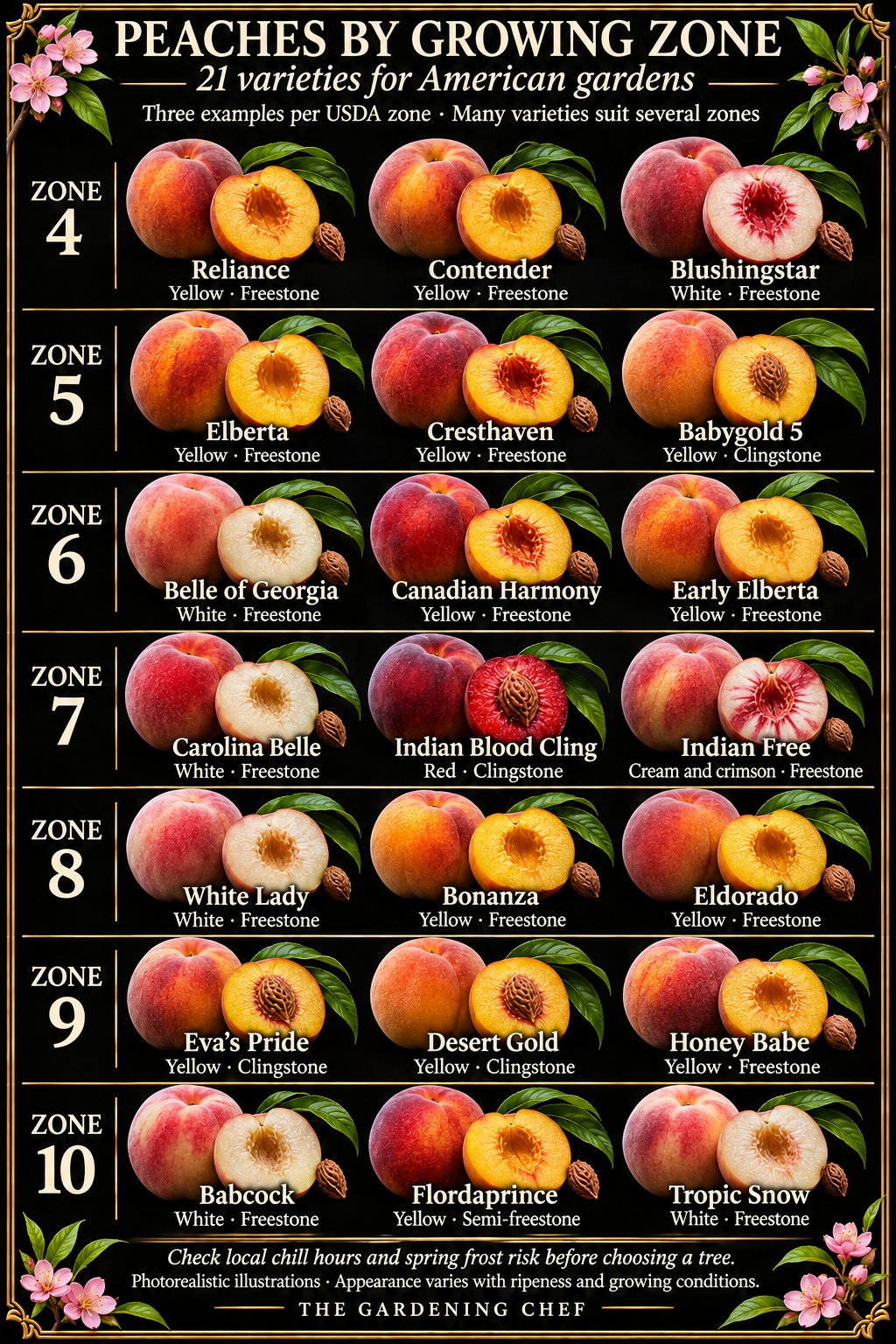
Use the poster as a starting list, then confirm the cultivar’s growing requirements with your nursery or local Extension office. Stark Bro’s cultivar listings · Dave Wilson Nursery’s variety guide
Give your peach tree a good start
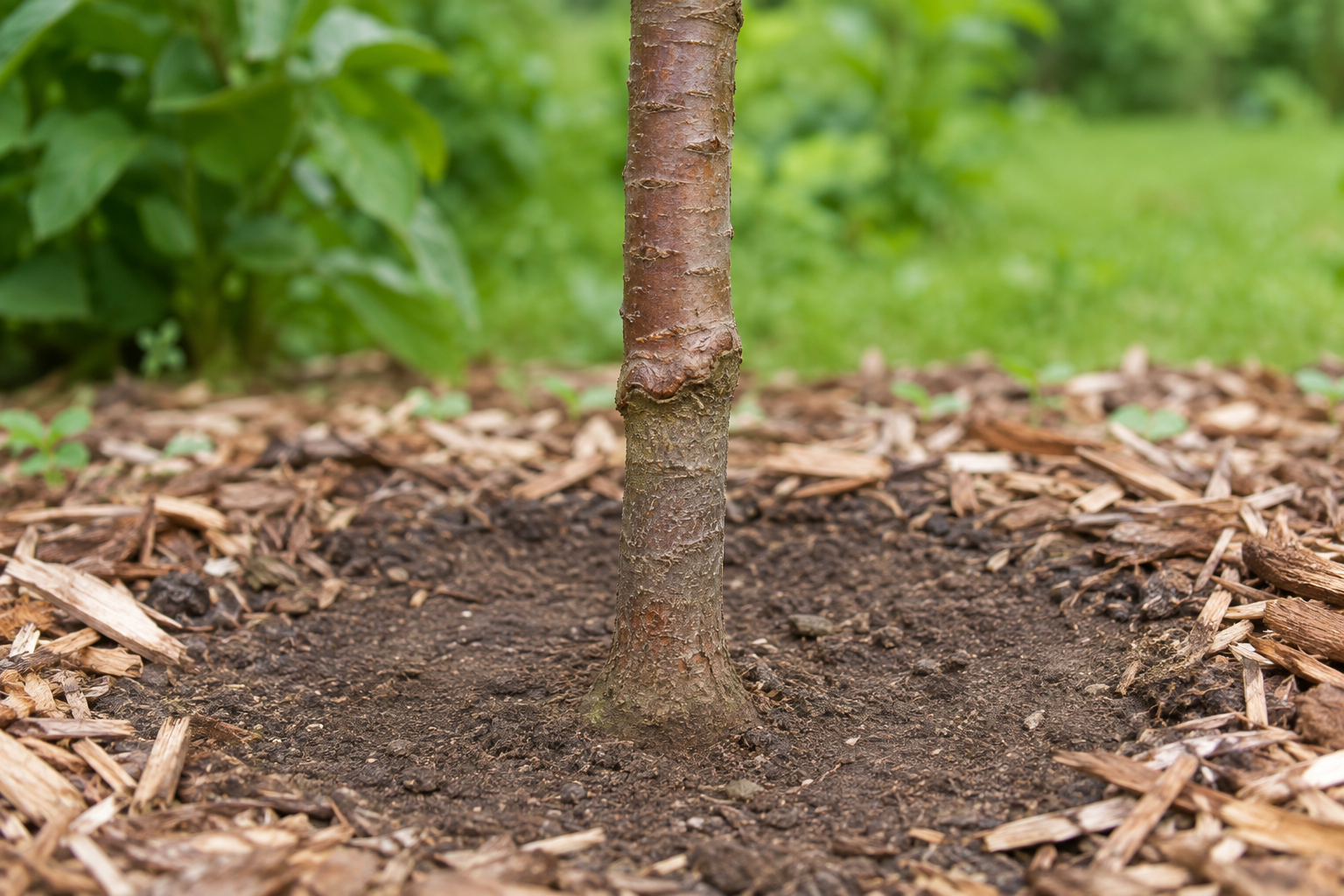
Growing peaches starts with matching the tree to the place you’ll plant it. Before ordering, check how much sun that spot receives and whether water lingers there after rain. For that reason, choose full sun and well-drained soil. University of Minnesota Extension’s site guidance
If the tree is grafted, it combines two parts: the scion, which produces your chosen peach variety, and the rootstock, which supplies the roots and influences vigor and adaptation to soil conditions. Before buying, ask the nursery which rootstock it uses and why it suits your garden. Virginia Cooperative Extension’s rootstock guidance
Growing peaches: choose a tree that fits
Growing peaches can start with one tree if you choose a self-fruitful variety. Next, use this chart to compare hardiness ranges, winter chill requirements, and pollination partners. Your local Extension office or nursery can help you match those needs to your garden.
THE PEACH LIBRARY
21 varieties • Growing zones • Winter chill • Pollination partners
Choose a variety name to see its supporting nursery listing.
Peaches for colder winters
| Peach variety | USDA zones | Approx. chill hours | Second tree needed? |
|---|---|---|---|
| Reliance Peach | 4–8 | 950–1,000 | No—one tree can fruit |
| Contender Peach | 4–8 | 1,000 | No—one tree can fruit |
| Blushingstar Peach | 4–8 | 750–950 | No—one tree can fruit |
| Elberta Peach | 5–8 | 800 | No—one tree can fruit |
| Cresthaven Peach | 5–8 | 800 | No—one tree can fruit |
| Babygold 5 Peach | 5–8 | 850 | No—one tree can fruit |
| Belle of Georgia Peach | 5–8 | 800 | No—one tree can fruit |
| Canadian Harmony Peach | 5–8 | 1,000 | No—one tree can fruit |
| Early Elberta Peach | 5–8 | 850 | No—one tree can fruit |
| Carolina Belle Peach | 5–8 | 800 | No—one tree can fruit |
| Indian Blood Cling Peach | 5–9 | 800 | No—one tree can fruit |
| Indian Free Peach | 5–9 | About 700 | Yes—Elberta Peach or Frost Peach; a compatible nectarine is another option. Match bloom locally. |
| White Lady Peach | 5–9 | 800 | No—one tree can fruit |
Lower-chill and miniature options
| Peach variety | USDA zones | Approx. chill hours | Second tree needed? |
|---|---|---|---|
| Bonanza Peach | 6–10 | 200–400 | No—one tree can fruit |
| Eldorado Peach | 6–9 | About 500 | No—one tree can fruit |
| Eva’s Pride Peach | 9–10 | 100–200 | No—one tree can fruit |
| Desert Gold Peach | 8–10 | 200 or fewer | No—one tree can fruit |
| Honey Babe Peach | 6–9 | 400 or fewer | Partly self-fruitful—a partner may improve crops. Consider Necta Zee Nectarine; confirm bloom overlap. |
| Babcock Peach | 8–10 | 250–350 | No—one tree can fruit |
| Flordaprince Peach | 8–10 | About 150 | No—one tree can fruit |
| Tropic Snow Peach | 6–10 | About 200 | No—one tree can fruit |
Match chill hours and pollination partners
Chill hours and zone ranges are approximate supplier guidance; nursery estimates and chill models differ. Therefore, confirm the requirements for the tree you buy with your nursery or local Extension office. Find your USDA zone.
Indian Free needs a compatible peach or nectarine flowering at the same time. Dave Wilson Nursery describes Honey Babe as partly self-fruitful; Necta Zee Nectarine is a nursery-listed companion. Confirm local bloom overlap for either pairing.
Apricots and other fruit trees can share your orchard, but they do not replace a compatible peach or nectarine pollination partner. If you add another tree, choosing different ripening dates can also spread out the harvest.
THE GARDENING CHEF · Grow it. Cook it. Share what you learn.
Give blossoms a chance after winter
Winter survival and sufficient chill do not guarantee a crop: blossoms can still be damaged by a late freeze. Utah State University Extension explains chill requirements and spring frost risk.
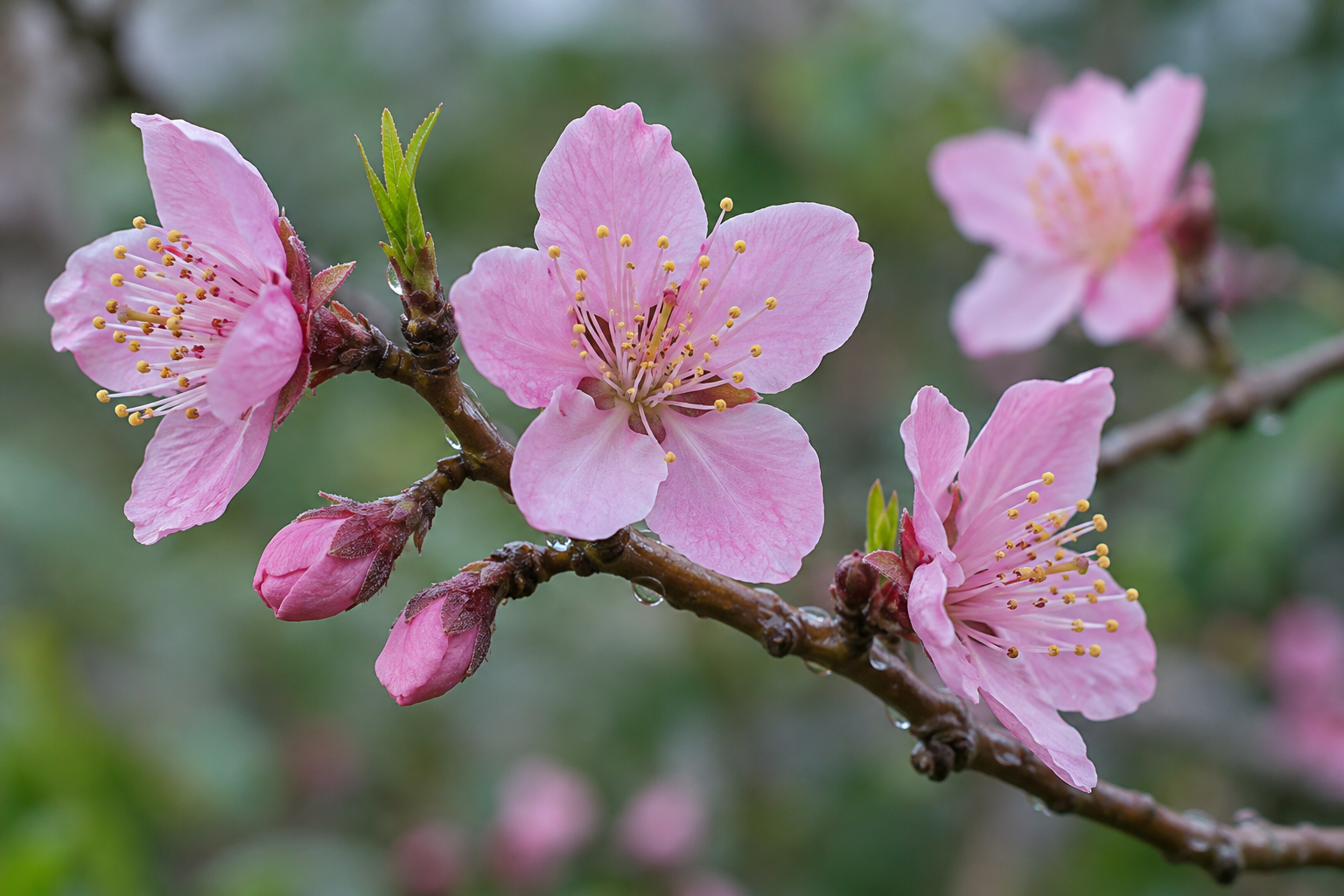
Choose a planting spot away from low pockets where cold air collects. Keeping the tree small also makes temporary protection more practical: frost cloth reaching the ground can help during a light frost, although protection varies with the weather. Extension advice on covering peach trees · University of Florida IFAS Extension’s guide to cold protection.
For a closer look at how frost affects peach buds at different stages, see Alabama Cooperative Extension’s peach bud temperature chart.
Check what happens if the tree doesn’t make it
A nursery that answers questions before and after the sale can make growing peaches feel less intimidating. Look for a written plant guarantee, and check what it actually offers—a replacement, refund, or store credit.
Before ordering, read the reporting deadline, any planting or weather exclusions, what proof you’ll need, and whether replacement shipping costs extra. Keep your receipt, plant tag, and a few photos. For an example, see Stark Bro’s guarantee and return policy; check the current terms of whichever nursery you choose.
Sometimes a tree struggles while you’re learning, and sometimes nature frowns on your green thumb. Either way, knowing who to contact gives you a practical next step.
Growing peaches through the first year
In the first season, focus on helping the roots establish. Plant with the root flare at soil level and the graft union above ground, then water to settle the soil around the roots. The comparison below shows three habits worth checking as the tree settles in.
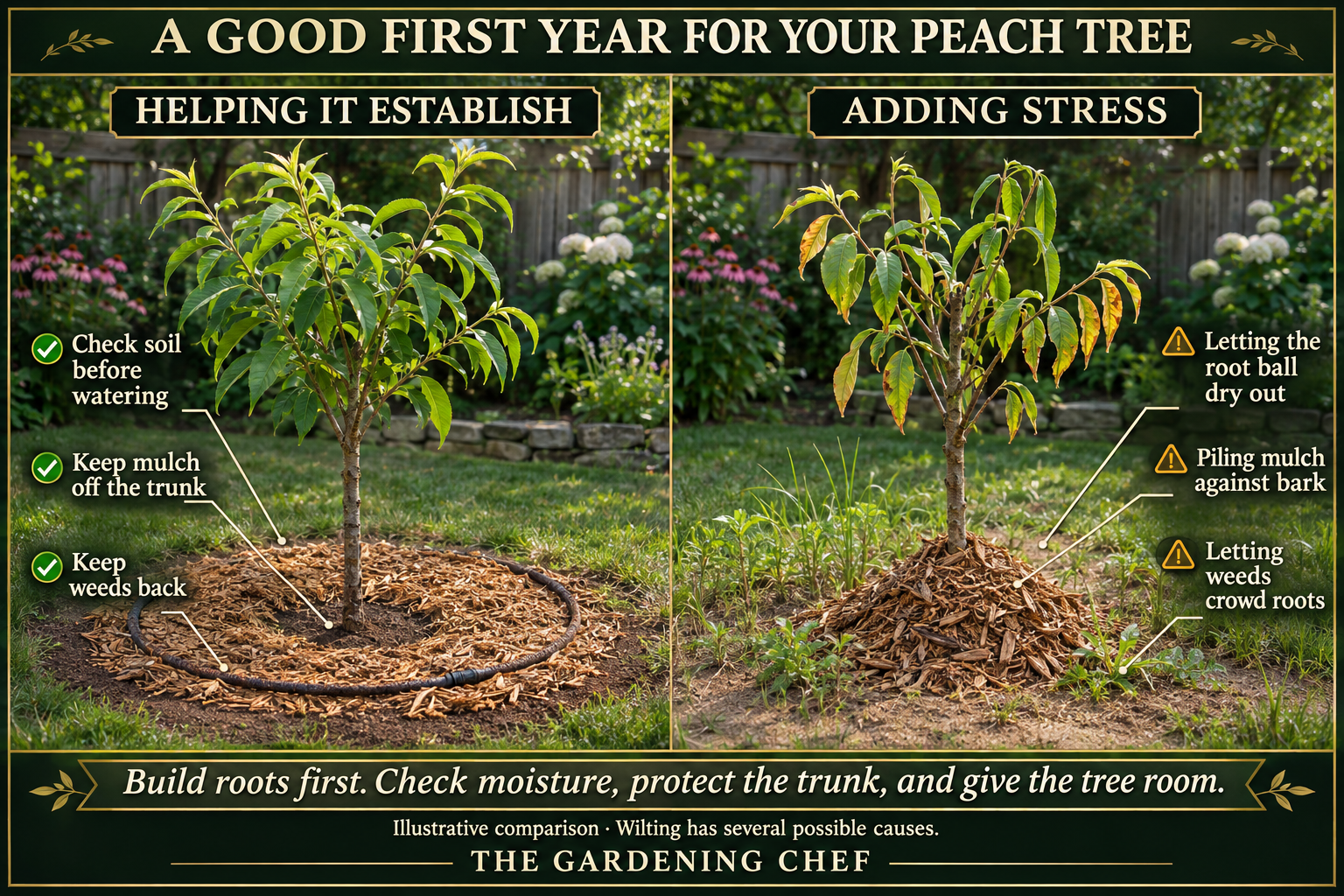
For the supporting guidance, see University of Minnesota Extension on planting and mulch and watering newly planted trees.
Virginia Cooperative Extension says peaches usually bear some fruit in their third year. In the meantime, ask your nursery what to expect from the tree you’re buying, and treat an early bowl as a bonus. Virginia’s peach-growing guidance.
Growing peaches: prune with confidence
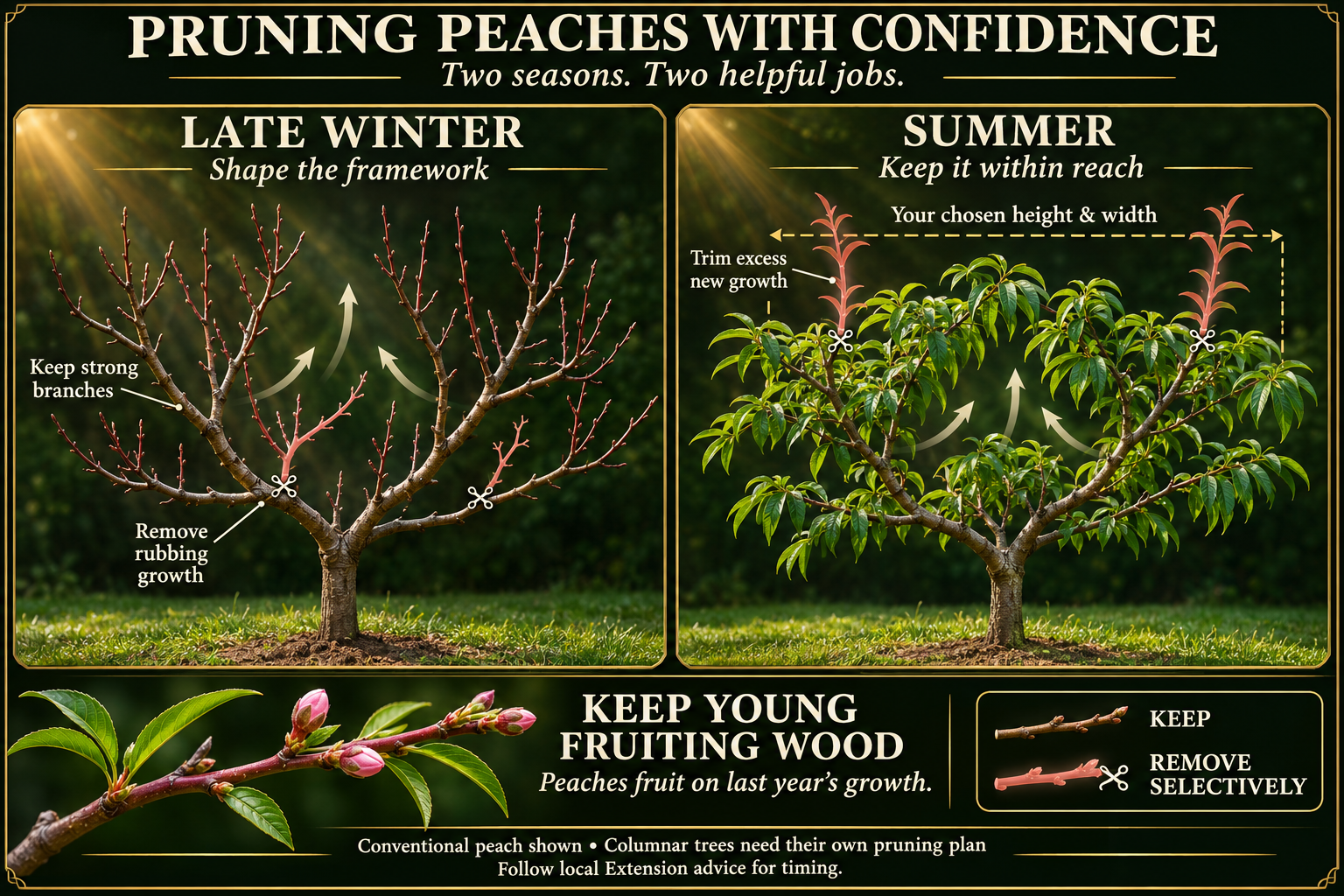
When you’re growing peaches, think of pruning as giving your tree a haircut. You’re shaping it to fit your reach and planting space, while keeping strong branches and letting sunlight and air through. Start with a few thoughtful cuts, then step back and look.
Summer pruning keeps size in check. Dave Wilson Nursery’s Backyard Orchard Culture emphasizes trimming new growth to keep trees manageable.
Late-winter pruning helps shape the framework. Virginia Cooperative Extension recommends waiting until late winter rather than pruning early in winter, and also uses summer pruning to train young trees and remove unwanted upright growth.
Keep suitable young shoots: peaches fruit on last year’s growth. Follow local advice for timing and your tree’s growth form; a columnar peach needs a different pruning plan from the conventional tree shown in the graphic.
Give fewer peaches room to grow
You’ve watched the blossoms become little peaches, and now you’re supposed to pull some off? Like pruning, thinning can feel completely backward. But as we say in the kitchen, you have to break a few eggs to make an omelet.
Because a tree can set more peaches than it can support well, removing some reduces competition for water and energy. As a result, the remaining peaches can grow larger while the branches carry less weight.
First, remove damaged fruit and thin crowded clusters. Virginia Cooperative Extension recommends an average spacing of 6–8 inches between peaches along a shoot, assessing the crop around 45–50 days after bloom. If frost has already left only a few healthy peaches, there may be little thinning to do.
Think about the peaches you’re leaving: you’re giving those little fruits room to become the peaches you want to bring into the kitchen.
Notice a problem, then take the next step
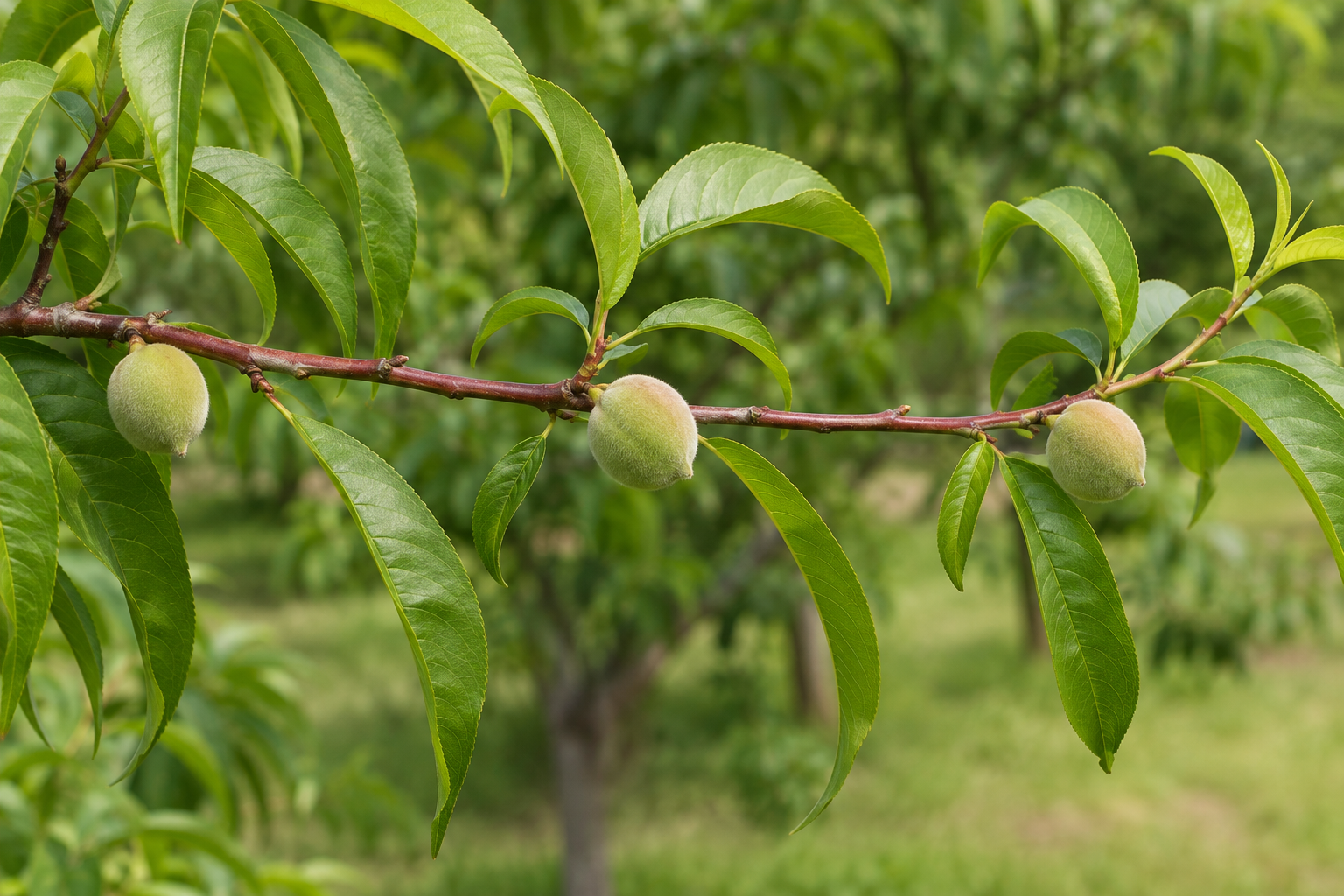
A damaged peach doesn’t mean you’ve failed at growing peaches. As you check your tree, look for fruit developing spreading brown patches or shriveling on the branch. Remove rotting and dried-up fruit from the tree and ground rather than leaving it there.
If the problem keeps returning, take clear photos of the fruit, leaves, and whole tree, and contact your local Extension office. You don’t have to recognize every pest or disease yourself—you just need to notice when something needs a closer look.
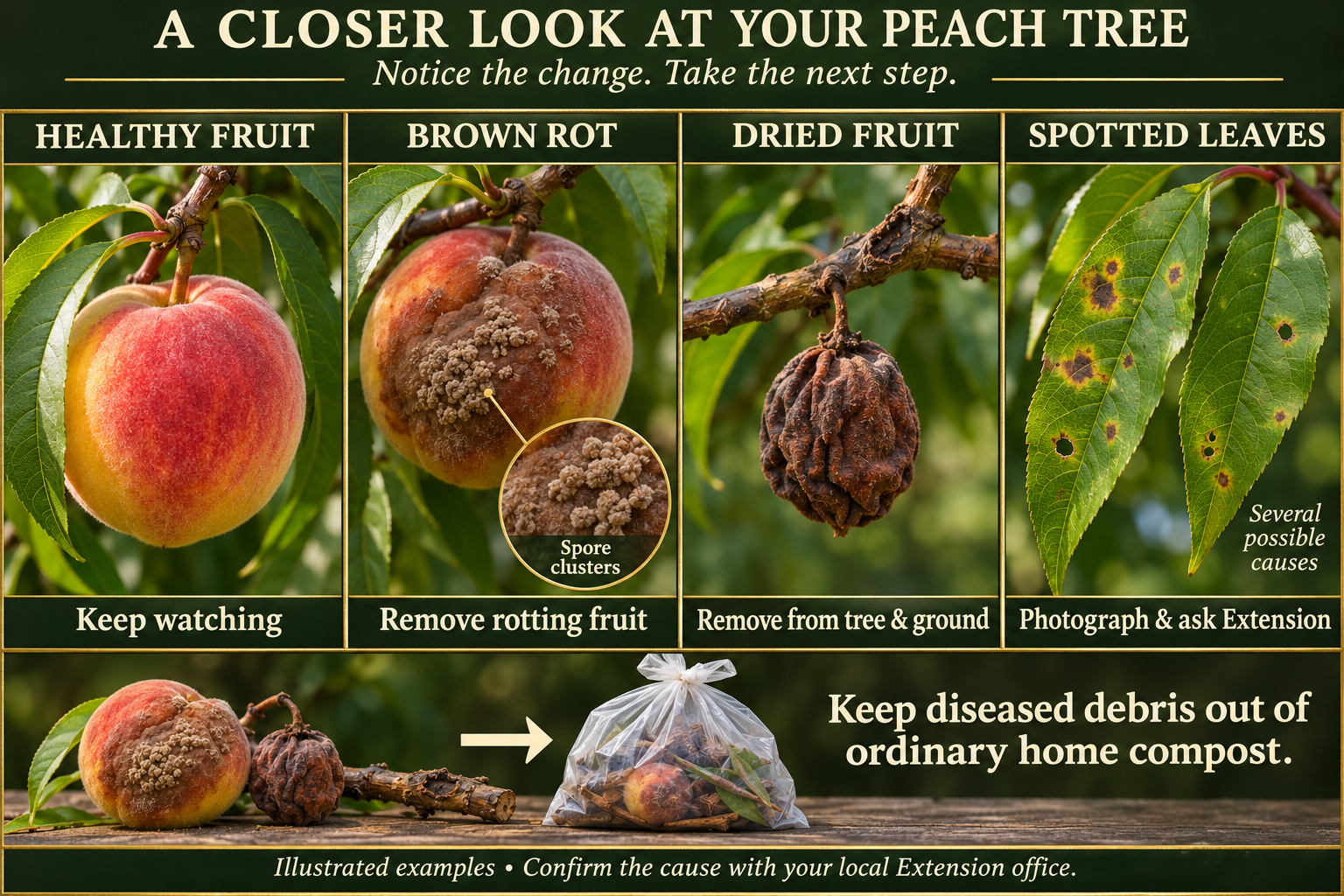
Don’t leave diseased fruit, leaves, or pruned wood beneath the tree or automatically toss them into your compost. That’s because a typical home compost pile may not get hot enough throughout to kill the organisms causing disease. Bag suspect material for disposal where local rules allow, or ask your Extension office about an appropriate disposal option. Burning may be an option where permitted and when no burn restrictions apply. However, healthy garden trimmings can still go into the compost.
Have more branches than you can easily dispose of? Many towns and counties offer curbside brush pickup or a yard-waste drop-off site.
Further guidance: Penn State Extension’s brown rot guide · University of Minnesota Extension’s home composting guide.
Make room for the harvest you want
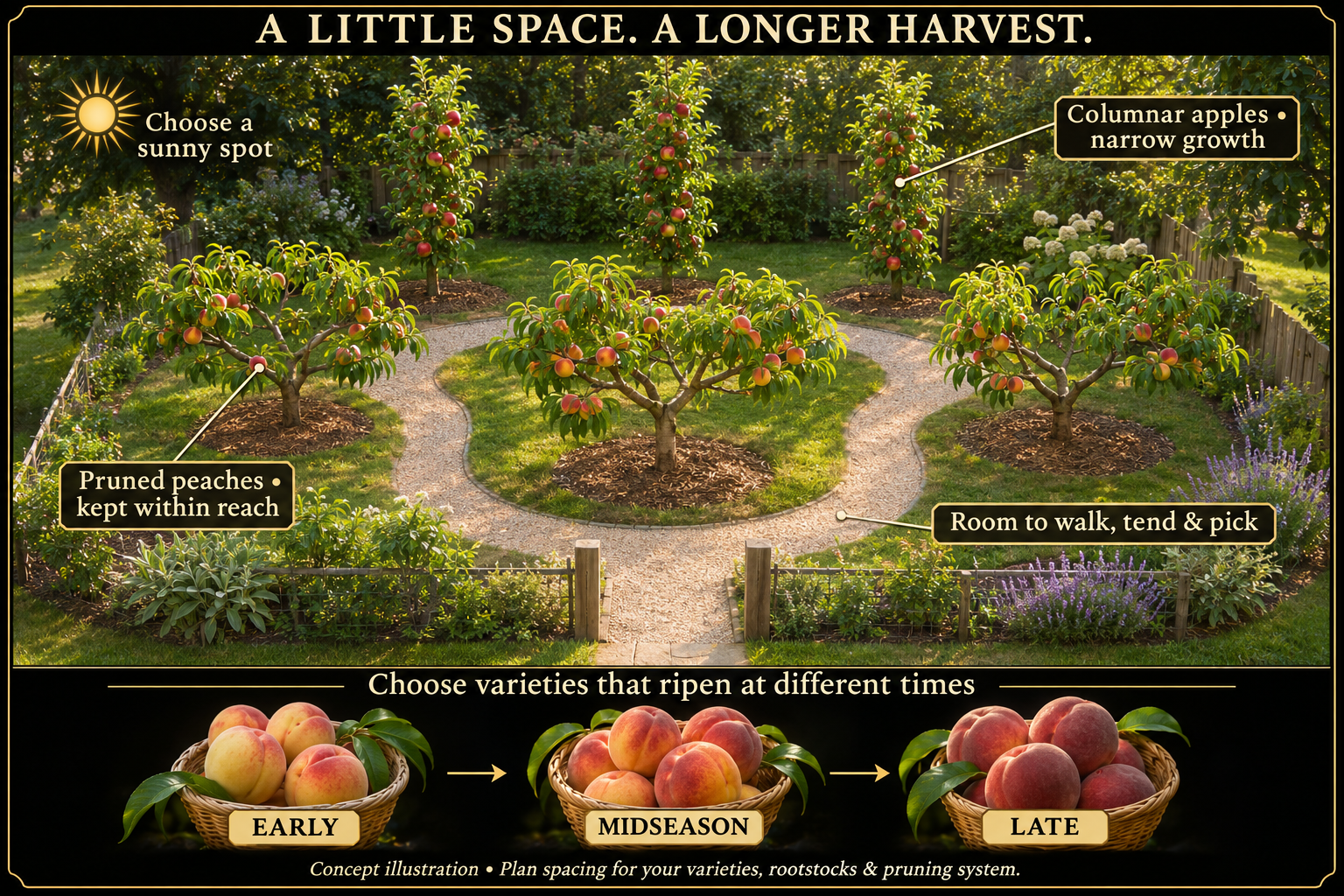
A little orchard starts with deciding what you’d enjoy bringing into the kitchen. Growing peaches might mean one favorite tree, two varieties that ripen at different times, or a peach alongside other fruits your family enjoys.
Sketch your space before buying. In a 20-by-20-foot backyard, draw the trees at the size you’ll maintain through pruning, and leave yourself room to walk, tend them, and pick. Columnar forms, dwarfing rootstocks, and regularly pruned traditional trees offer different ways to use that space.
Dave Wilson Nursery’s Backyard Orchard Culture takes this further with close planting and varieties that ripen in succession. Trees planted together need compatible vigor and growing requirements, plus regular pruning to keep their growth balanced. You can build toward that approach as you learn your garden.
For the kitchen, spreading the harvest is especially appealing: fresh peaches over several weeks gives you more chances to enjoy them without everything arriving at once.
What to watch for through the year
| When | What I’d look for |
|---|---|
| Late winter | Look at the shape and fruiting wood, and use pruning guidance for your tree’s form. |
| At bloom | Write down when the flowers open and watch the forecast for freezing nights. |
| After fruit sets | Check how much fruit survived, then thin a heavy set while the peaches are small. |
| In summer | Check soil moisture during dry spells and watch where vigorous growth crowds the canopy. |
| At harvest | Pick in passes. Note when you picked the first ripe fruit and how long the picking lasted. |
That last note is the one I’d bring along if I ever went shopping for a second tree. A date from your own yard is a better starting point than guessing what a catalog means by “midseason.”
Pick a few, then come back for more
You don’t have to harvest the whole tree at once. Peaches ripen over several pickings, and a red blush alone doesn’t mean they’re ready. Watch the background color beneath it, notice the fragrance, and feel for a little give without squeezing. Pick a promising peach and taste it—you’ll soon learn what ready looks like on your tree.
In my kitchen, firm-ripe peaches would head toward the grill, while softer ones might become cobbler. If there’s more than you can use fresh, share a few or freeze some for later. Above all, enjoy one before it ever reaches the cutting board.
For a place to start, try my grilled peaches with honey-bourbon glaze.
That first bowl brings us back to why we started. You don’t need to know everything about growing peaches before planting a tree. Choose one that fits your garden, learn its habits, and give yourself room to learn alongside it.
If you had room for one peach tree, what’s the first thing you’d make with the fruit?
Harvest guidance: Virginia Cooperative Extension · Utah State University Extension.
Keep a gardening reference close
Save this guide
On Windows, press Ctrl+D. On Mac, press ⌘+D. On your phone or tablet, open your browser’s menu or Share button and choose Bookmark or Add Bookmark.
Open the permanent article link
For interactive tools, save this page after making your selections. The tool must encode those selections in the URL for a bookmark to restore them.