How Old Gardening Tricks, Scrap Materials, and Simple Thinking Can Help Ordinary People Eat Better Again
I grew up in a time when people didn’t throw useful things away quite so quickly. If a bucket cracked, it became a planter. If a window broke out of a shed, somebody saved the frame because “it might be useful someday.” If weeds popped up in the yard, sometimes they ended up in dinner instead of the trash pile.
Back then, people didn’t always call it sustainability. They called it “getting by.”
Today, we live in a world where grocery prices jump every few months, fuel prices affect everything from fertilizer to food transport, and people are constantly told they need expensive systems to grow anything worthwhile. Social media will convince you that gardening requires a $3,000 greenhouse, imported soil blends, designer raised beds, automated irrigation, and twelve subscription services.
But the strange thing is this: many of the people who fed themselves best throughout history had almost none of that.
They had observation.
They had patience.
And they had the habit of looking at ordinary things differently.
The more I garden, the more I realize we didn’t necessarily become smarter than previous generations. In many ways, we just became more dependent. We outsourced skills that used to belong to ordinary families. Water collection became something only “systems” do. Food preservation became something factories do. Seed saving became something companies do.
But those old skills are still sitting there waiting for people to pick them back up.
And maybe that’s where gardening becomes more than a hobby. Maybe it becomes a quiet form of independence.
The Forgotten Economics of a Dandelion
One of the first things modern society teaches people is that food comes from stores. One of the first things hardship teaches people is that food actually comes from ecosystems.
When I was younger, people still foraged casually without turning it into a lifestyle movement. You picked blackberries from fence rows. You gathered walnuts from the yard. You noticed where wild onions grew. Dandelions weren’t decorative enemies in a lawn. They were food.
Today, companies spend billions trying to kill plants people used to eat for free.
That alone should make people stop and think.
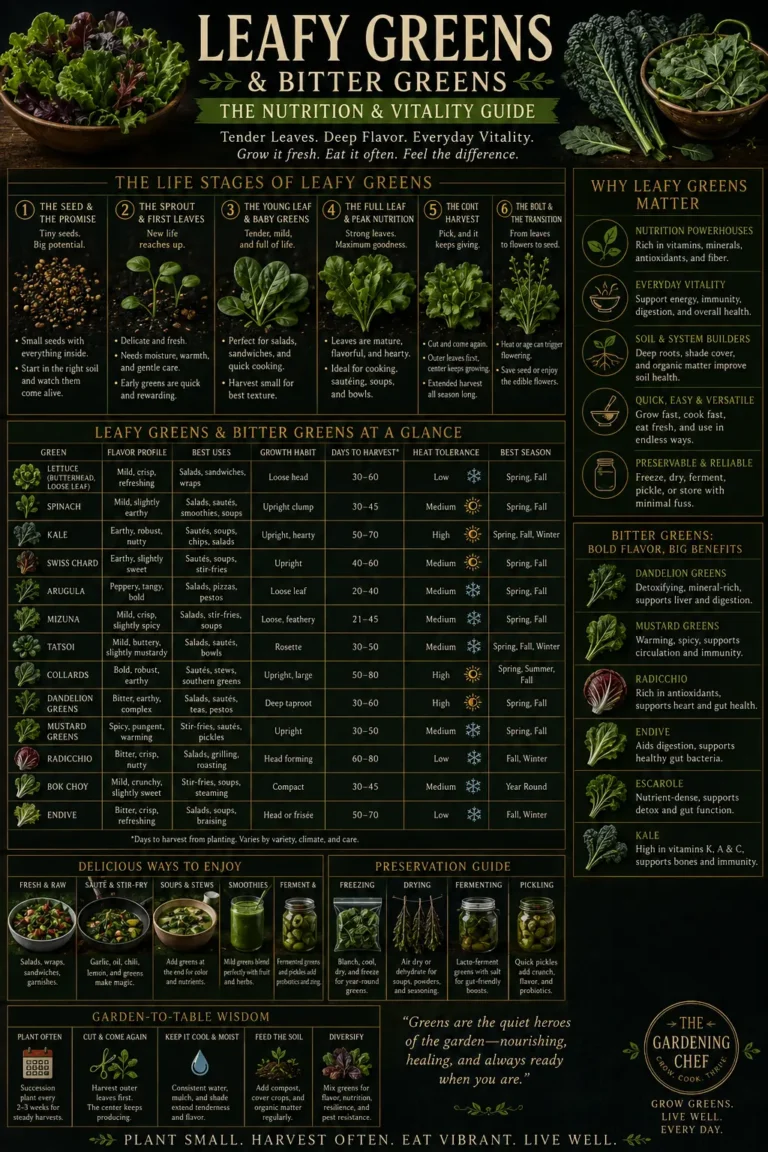
A single healthy patch of dandelion greens can produce repeated harvests through spring and fall. Nutritionally, they’re loaded with vitamins and minerals. Yet most homeowners spend money spraying them, mowing them, bagging them, and hauling them away.
From an analytical perspective, that’s fascinating.
Imagine explaining this to someone from 1850:
“Modern families spend money removing edible plants because advertisements convinced them uniform grass is wealth.”
They would think we were insane.
And honestly, maybe they’d be right.
The same applies to chickweed, lamb’s quarters, purslane, plantain, wood sorrel, and wild garlic. Many of these “weeds” are hardy because nature designed them to survive difficult conditions. That means they often grow without irrigation, fertilizer, or human help.
Modern gardening often fights nature. Older gardening systems tended to cooperate with it.
That’s a major difference.
The Five-Gallon Bucket Revolution
If historians ever write honestly about modern gardening survival, the five-gallon bucket deserves its own chapter.
I’ve seen people grow potatoes, tomatoes, peppers, lettuce, herbs, carrots, ginger, onions, and even dwarf fruit trees using containers that originally held paint, pickles, detergent, livestock supplements, or restaurant ingredients.
A bucket with drainage holes becomes a food-production unit.
Think about that for a moment.
One discarded object plus a little soil can become recurring food production for years.
That’s powerful.
A lot of people say they can’t garden because they rent property or don’t own land. But containers change the equation entirely. Suddenly patios, balconies, sidewalks, driveways, porches, and rooftops become growing spaces.
The old mindset was:
“What can this object become?”
The modern mindset often becomes:
“What should I buy next?”
Those are completely different ways of thinking.
One creates resilience.
The other creates dependence.
Rainwater: The Free Resource Falling From the Sky
One of the strangest things about modern life is that people will pay for water while rain falls directly onto their property for free.
Now obviously there are local laws and regulations people should follow regarding rain collection. But conceptually, it’s incredible how much water simply disappears off rooftops every year.
Older farms understood this instinctively.
Barrels, cisterns, ponds, swales, diversion ditches, and gravity-fed systems weren’t “eco trends.” They were survival infrastructure.
Today, people buy bottled water while standing under gutters capable of collecting thousands of gallons annually.
Again, from an analytical perspective, that’s worth studying.
A simple rain barrel connected to a downspout can reduce watering costs significantly during growing season. Two barrels connected together work even better. Four barrels become a reserve system.
And the funny thing is many systems can be built partly from recycled materials:
- Food-grade barrels
- Old hose sections
- Salvaged PVC
- Scrap screening
- Reused lumber
People often imagine sustainability as expensive because they’ve only seen commercialized versions of it.
But traditional resilience usually started with whatever somebody already had available.
Cold Frames, Scrap Windows, and Seasonal Thinking
One of the greatest forgotten skills is season extension.
Modern stores trained people to expect tomatoes in winter and lettuce year-round regardless of climate. Older gardeners thought differently. They worked with temperature, timing, and protection.
A cold frame is basically a tiny greenhouse. Historically, people built them from old windows laid over angled wooden frames.
That’s it.
Simple.
No apps. No Wi-Fi. No subscription plan.
And yet those little systems could dramatically extend harvest seasons.
A person with a few salvaged windows, scrap wood, and basic hinges can protect greens well into colder months. Spinach, kale, lettuce, mache, and certain Asian greens can survive temperatures that surprise most beginners.
People think survival gardening means huge acreage.
Often it really means learning how to squeeze productivity out of small spaces for longer periods.
That’s a different mindset entirely.
Windmills and Human Memory
There’s something deeply interesting about technologies society abandons.
Windmills are a great example.
For centuries, wind powered water pumping, grain grinding, irrigation, ventilation, and mechanical work. Then cheap fossil fuels arrived, and suddenly the old systems seemed outdated.
But here’s the problem with convenience:
When convenience fails, forgotten knowledge suddenly matters again.
Today, small-scale wind and solar systems are slowly rediscovering principles older societies already understood:
- Store energy when available
- Use local resources
- Reduce dependence on centralized systems
- Design for resilience instead of maximum consumption
Gardening teaches this naturally.
A gardener understands backup plans.
You save seeds because crops can fail.
You preserve food because seasons change.
You compost because nutrients cycle.
Nature itself operates on redundancy.
Modern systems often don’t.
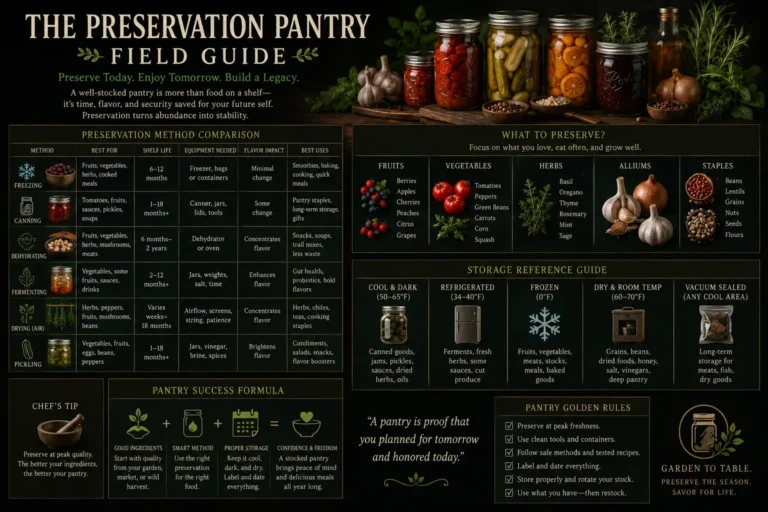
The Lost Art of Preservation
Growing food is only half the equation.
Preserving it matters just as much.
This is another area where older generations possessed incredible practical knowledge. Canning, drying, fermenting, salting, root cellaring, smoking, and cold storage were ordinary household skills.
Now many people panic if a refrigerator loses power for twelve hours.
That’s not criticism. It’s simply evidence of how disconnected society became from food systems.
One tomato plant can overwhelm a family with harvest during peak production. Historically, that excess became sauces, canned goods, dehydrated slices, or preserved soups.
Today, many gardens fail economically because people only calculate harvest weight instead of preservation value.
Ten pounds of tomatoes eaten fresh is nice.
Ten pounds turned into shelf-stable sauce during winter becomes infrastructure.
That’s the difference.
Compost: Nature’s Quiet Currency
Modern agriculture often treats fertility like an industrial input.
Older systems treated fertility like treasure.
Compost piles were not glamorous, but they represented stored future productivity. Kitchen scraps, leaves, grass clippings, coffee grounds, shredded paper, manure, straw, ash, and spoiled hay all became tomorrow’s soil.
People today often throw away fertility every single week without realizing it.
Imagine explaining modern garbage trucks to older farming communities:
“You mean you collect nutrients from every household and permanently remove them from food production systems?”
Again, they’d probably think we were crazy.
A simple compost pile can dramatically reduce fertilizer costs while improving soil structure, moisture retention, and microbial activity.
And it doesn’t need perfection.
One of the biggest lies beginners believe is that gardening must be done perfectly.
Nature has never operated perfectly.
Forests compost without measuring ratios.
Fields regenerate through cycles.
Life adapts constantly.
Raised Beds and the Engineering of Convenience
Raised beds are interesting because they combine ancient ideas with modern practicality.
At their core, they solve multiple problems:
- Better drainage
- Easier access
- Improved soil control
- Faster warming in spring
- Reduced compaction
But what fascinates me most is how creative people become once they start building them.
Some use logs.
Some use stone.
Some use scrap metal roofing.
Some use pallets.
Some use old livestock tanks.
Some use cinder blocks filled with herbs.
Human beings are naturally inventive when necessity enters the equation.
The problem is many people lost confidence in their ability to improvise.
They think expertise only belongs to professionals.
But historically, ordinary people engineered solutions constantly because they had no alternative.
A gardener who solves irrigation with salvaged tubing and gravity flow is practicing engineering whether they realize it or not.
The Psychology of Self-Reliance
There’s another layer to all this that doesn’t get discussed enough.
Growing food changes people psychologically.
You start paying attention differently.
Rain matters more.
Soil texture matters.
Temperature matters.
You notice seasons again.
You begin thinking in cycles instead of transactions.
Modern life trains people toward instant consumption:
Need something? Buy it.
Gardening interrupts that pattern.
You plant now for future reward.
You prepare beds months ahead.
You preserve harvests for winter.
You think long term.
That changes a person slowly.
And honestly, I think many people are starving for exactly that kind of reconnection.
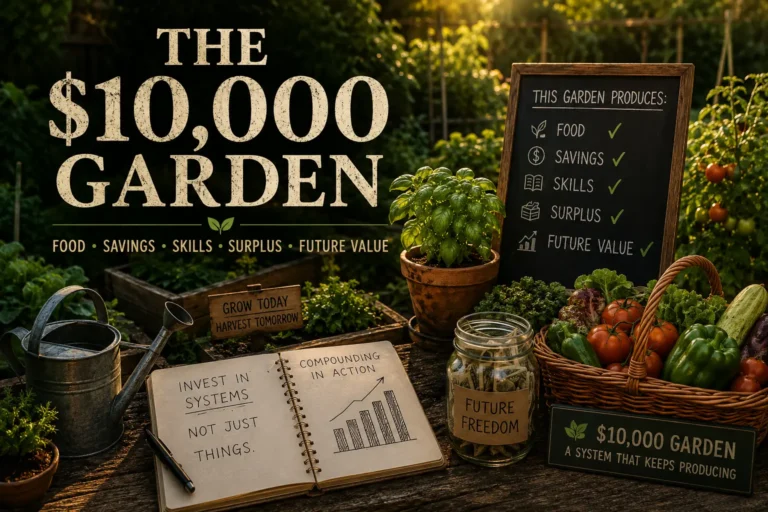
The Economics Nobody Calculates
A lot of people argue gardening isn’t financially worth it.
Sometimes they’re correct — if someone buys every premium product imaginable.
But older-style gardening operated differently.
Let’s look at a simple example:
- Recycled containers
- Homemade compost
- Saved seeds
- Rainwater collection
- Vertical growing
- Preserved harvests
Suddenly the equation changes dramatically.
Now the garden isn’t just producing vegetables.
It’s reducing grocery trips.
It’s lowering waste.
It’s creating skills.
It’s building food reserves.
It’s improving nutrition.
It’s reducing dependency.
That’s hard to measure with a simple dollar amount.
A jar of homemade tomato sauce during economic uncertainty carries psychological value too.
So does knowing you can grow another one.
Why This Matters Right Now
We live in an age of incredible technology and incredible fragility at the same time.
Supply chains stretch across continents.
A fuel disruption affects fertilizer prices.
Weather affects transportation.
Tariffs affect costs.
Economic shifts ripple through food systems almost immediately.
And yet many ordinary people still possess tiny pieces of older knowledge passed quietly through families:
- How to save seeds
- How to preserve beans
- How to grow herbs
- How to mend tools
- How to forage safely
- How to stretch ingredients
- How to make something useful from scraps
Those skills matter.
Not because society is collapsing tomorrow, but because resilient people handle hard times better than dependent people.
That’s always been true.
The Garden as a Classroom
Maybe the biggest thing gardening teaches is observation.
A gardener notices patterns.
Why did one tomato thrive while another struggled?
Why does water collect in one corner?
Why do insects appear after certain weather?
Why do weeds indicate soil conditions?
This is systems thinking disguised as dirt work.
And once people start seeing the world this way, they begin applying it elsewhere.
They repair more things.
Waste less.
Plan further ahead.
Store resources.
Learn continuously.
Gardening becomes less about tomatoes and more about understanding relationships between energy, water, nutrients, weather, labor, and time.
That’s real knowledge.
Sitting Around the Fire
If I had to sum all this up simply, I’d say this:
People are far more capable than modern systems want them to believe.
You do not need perfect conditions to begin.
You do not need expensive equipment.
You do not need approval from experts.
Most of the great survival systems in human history started because ordinary people looked around and said:
“What can I do with what I already have?”
That mindset built gardens from scrap wood.
It turned weeds into meals.
It transformed rain into irrigation.
It preserved harvests through winter.
It carried families through hard years.
And I think a lot of those forgotten ideas are worth remembering again.
Not because the old days were perfect.
But because some of the old ways still work.