Sunday Dinner Was the System Before I Knew What a System Was
Before I knew words like caregiver burden, respite, mobility aid, neurological disorder, or family support system, I knew Sunday dinner.
I knew the smell of food in my grandmother’s kitchen.
I knew the sound of cousins running through the house.
I knew someone had to set the table.
Someone had to shuck the corn.
Someone had to bring in firewood for the fireplace.
Someone had to know when to be silly.
And someone had to know when to stop being silly because it was time to help.
That was Sunday.
It was not announced as caregiving.
It was not explained as a family care model.
It was just what we did.
My grandmother cooked. My grandfather tended to the home in the ways grandfathers do. The adults talked. The kids helped in small bursts between running around and being kids. My uncle was there. My aunt was there. The table was set. The food was served. The house was alive.
My uncle had a neurological disorder.
But when I was young, we did not talk about it in the way people might now. There was no long explanation at the table. No clinical language. No attempt to make him into a diagnosis.
As long as I knew him, this was simply how things were.
His food needed to be cut.
Sometimes he needed to be fed.
He had cues, and the people who loved him knew them.
A subtle signal for a drink.
A pause that meant something.
A look that meant the cup needed to be lifted.
And for us kids, there was even a strange little sacred silliness to it. We would make sure the straw was in the cup just right, bent at what felt like the perfect angle — maybe forty-five degrees, as if the universe depended on it.
It was funny.
It was serious.
It was normal.
That is what family systems often look like when they are working.
They do not always look like systems.
They look like dinner.
The Person Was Never the Diagnosis
Several conditions can make mobility harder later in life or across a lifetime. Neurological disorders such as multiple sclerosis, Parkinson’s disease, ALS, or the aftermath of a stroke can affect movement. Musculoskeletal conditions such as severe osteoarthritis or rheumatoid arthritis can make walking painful or unsafe. Connective tissue or genetic disorders, muscular dystrophy, severe frailty, injury, and chronic disease can all change how a person moves through the world.
But a wheelchair should never be treated as a symbol of defeat.
A wheelchair can be a tool of independence.
MedlinePlus explains that mobility aids, including wheelchairs, walkers, canes, scooters, ramps, stairlifts, and handrails, can help people with disabilities, injuries, health conditions, or age-related mobility challenges move more safely and independently. The World Health Organization’s wheelchair provision guidelines similarly emphasize appropriate wheelchair access for children, older adults, people with mobility disabilities, and people with chronic health conditions, with assessment, fitting, training, and follow-up.
That matters.
Because the goal of care is not to make the person disappear into their limitations.
The goal is to help them participate.
At Sunday dinner, my uncle was not an interruption to the meal.
He was part of the meal.
His needs were not separate from the family rhythm.
They were woven into it.
Someone cut the food.
Someone brought the drink.
Someone wiped a little gravy from his face.
Someone noticed.
Someone responded.
And somehow, in the middle of all of it, the meal continued.
That is dignity.
Not pretending there is no need.
Not making the need shameful.
Simply making room for the person and the care at the same table.
My Aunt’s Face Taught Me Something Before I Understood It
When I think back now, I remember my aunt.
I remember her taking small breaks.
I remember her looking exhausted.
Not dramatically.
Not in a way that demanded attention.
Just tired in the way caregivers get tired.
The kind of tired that settles behind the eyes.
The kind of tired that comes from always listening for the next cue.
The kind of tired that comes from loving someone and being responsible at the same time.
Sunday dinner gave her something.
It gave her a place where she was not the only one watching.
Not the only one responding.
Not the only one carrying the system.
For a few hours, there were more hands.
More eyes.
More people in the room who understood the rhythm.
She could sit.
She could talk.
She could laugh.
She could forget, for a little while, the pressure that caregiving places on the body and spirit.
That is what I understand now.
Sunday dinner was not only feeding the family.
It was caring for the caregiver.
Caregiving Is Not Rare Anymore
What I saw in my family was not unusual.
It was personal, but it was not isolated.
AARP and the National Alliance for Caregiving reported in 2025 that the United States now has about 63 million caregivers, nearly one in four adults. Their report also notes that 29% of caregivers are in the sandwich generation, caring for both children and adults.
The same report found that more than 40% of caregivers provide high-intensity care, many perform complex medical tasks, and only 22% receive training. It also found that one in five caregivers report poor health, one quarter take on debt due to caregiving, and half report a negative financial impact.
The CDC has also described caregiving as a public health priority, noting that caregivers often provide support that may help someone avoid long-term facility placement, while caregiving can place emotional, economic, and physical strain on the caregiver.
Those facts matter because they reveal something families often learn too late:
Love is not enough if love has no system.
A caregiver can love deeply and still become exhausted.
A caregiver can be devoted and still need rest.
A caregiver can be capable and still need help.
A caregiver can be grateful for the person they care for and still feel overwhelmed by the demands of care.
Those truths can exist together.
Caregiving is not a failure of love.
Caregiver exhaustion is not a failure of character.
It is often a sign that one person has become the entire system.
Respite Is Not Abandonment
One of the most important words in caregiving is respite.
It sounds formal, but it means something simple:
A break.
A breath.
A chance for the caregiver to rest, handle life, see a friend, take a walk, go to an appointment, sit down, or remember themselves.
The National Institute on Aging defines respite care as short-term relief for primary caregivers, lasting from a few hours to several weeks, and notes that it can happen at home, in a health care facility, or at an adult day care center. The Administration for Community Living describes respite as an essential part of home- and community-based long-term services that can support healthier families and the well-being of both caregivers and care recipients.
That is what Sunday dinner became in my memory.
Not formal respite.
Not scheduled respite.
But family-made respite.
A table full of people.
A grandmother cooking.
Children helping in small ways.
Adults watching without making it obvious.
A caregiver able to sit inside a safe emotional space.
No judgment.
No performance.
Just help.
The Symphony of Sunday Dinner
Looking back, it feels like a symphony.
At the time, I only heard noise.
Plates.
Silverware.
Chairs.
Laughter.
The fire.
The adults talking.
The kids running.
But now, after years of thinking about food, elder care, systems, and family, I can hear the music underneath it.
My grandmother cooking was one section.
My grandfather bringing in wood was another.
The kids setting the table were another.
Someone cutting food.
Someone wiping a face.
Someone watching the cup.
Someone adjusting the straw.
Someone noticing my aunt needed to sit.
Someone keeping the fire alive.
Each small action was a note.
No one person played the whole piece.
That was the beauty of it.
A caregiving system works best when the whole orchestra understands the song.
Why the Hackathon Pulled at My Heartstrings
Years later, when I participated in a hackathon focused on caring for caregivers, it hit something deep in me.
It was not just an innovation challenge.
It was not just problem-solving.
It was memory.
It was my aunt’s tired face.
It was my uncle’s subtle cues.
It was my grandmother’s Sunday meals.
It was kids learning that care could be normal, serious, funny, and sacred all at once.
It was the realization that caregivers often need what my aunt had on Sundays:
a safe place.
A system.
A moment where they are not alone.
That is why I cared so much.
That is why I brought passion to it.
Because when you have seen caregiving up close, you understand that the person receiving care matters deeply.
But the caregiver matters too.
And if the caregiver breaks, the whole system shakes.
Caregiver Safety and Support Note
This article is for education, reflection, and caregiver support. It is not medical advice, legal advice, nutrition therapy, swallowing therapy, physical therapy, occupational therapy, or a replacement for a care plan.
Always follow guidance from the person’s physician, nurse, physical therapist, occupational therapist, speech-language pathologist, registered dietitian, social worker, or care team.
If the person has difficulty swallowing, choking risk, aspiration risk, chewing problems, dementia-related eating changes, mobility limitations, pressure injury risk, or requires feeding assistance, ask the care team for specific instructions.
If a person uses a wheelchair, walker, cane, scooter, lift, adaptive utensils, modified cup, straw, transfer equipment, or other assistive device, make sure it has been properly recommended, fitted, and used according to professional guidance.
Caregiving is personal, but it should not be improvised in isolation.
Ask for help.
Write things down.
Build a system.
Recipe: Sunday Dinner Shepherd’s Pie Cups
What This Recipe Is
This is a caregiver-friendly comfort meal designed around the Sunday dinner idea.
It can be made as a regular family meal, a soft meal, a minced-and-moist style meal, or a pureed dignity plate depending on the care plan.
The goal is simple:
One family meal.
Multiple safe pathways.
Less stress for the caregiver.
More dignity for the person receiving care.
Best For
This recipe may be useful for families caring for someone who needs meals cut up, softened, moistened, adapted, or portioned carefully.
Only use the texture pathway that matches the person’s care plan.
Dignity Goal
A familiar Sunday-style meal served in a way that allows the person to remain part of the family table.
Ingredients
For the Filling
- 1 pound ground beef, ground turkey, ground chicken, or cooked lentils
- 1 cup carrots, peas, corn, or other approved vegetables, cooked very soft
- 1½ to 2 cups low-sodium gravy, broth-based sauce, or thickened pan sauce
- 1 teaspoon onion powder
- ½ teaspoon garlic powder
- ½ teaspoon thyme or parsley, finely ground or infused and strained if needed
- Salt and pepper only if allowed
For the Potato Topping
- 3 cups mashed potatoes
- 2 tablespoons butter
- ¼ to ½ cup milk, broth, or approved liquid
- 2 tablespoons smooth ricotta or cream cheese, optional
- Salt only if allowed
Optional Additions
- Smooth pureed carrots for color
- Smooth pureed peas for a separate vegetable layer
- Mild cheese sauce, if allowed
- Extra gravy for moisture
Method: Regular Family Version
Cook the ground meat or lentils fully.
Drain excess fat if needed.
Add the soft vegetables.
Add gravy or sauce and simmer until everything is moist and cohesive.
Spoon the filling into ramekins or a baking dish.
Top with mashed potatoes.
Bake at 350°F until hot throughout.
Serve with extra gravy.
This version is for family members who do not need texture modification.
Soft Version
For someone who can eat soft foods but struggles with chewing fatigue, make sure the vegetables are cooked very soft.
Keep the meat moist.
Avoid dry, crumbly texture.
Cut everything into the approved size.
Add extra gravy before serving.
Serve in a small ramekin or shallow bowl.
A small portion can feel more manageable than a large plate.
Cut-Up and Assisted-Feeding Version
This pathway reminds me most of Sunday dinner.
Sometimes the meal does not need to be pureed.
It needs to be prepared with attention.
Cut the food into the size recommended by the care team.
Remove tough pieces.
Moisten with gravy.
Check the temperature.
Serve slowly.
Watch for cues.
Do not rush the person.
If they use a straw, adaptive cup, modified utensil, plate guard, non-slip mat, or angled spoon, have it ready before the meal begins.
The goal is not just to feed.
The goal is to help the person participate in the meal.
Minced and Moist Pathway
If the care plan calls for a minced and moist texture, finely mince the cooked meat and vegetables to the approved size.
Bind everything with enough gravy so it stays moist and cohesive.
The food should not be dry, scattered, crumbly, or hard to gather on a spoon.
Top with smooth mashed potatoes.
Serve with additional approved sauce if needed.
Pureed Dignity Plate Version
For a pureed version, separate the components.
Blend the meat and gravy until completely smooth.
Blend the vegetables separately until completely smooth.
Blend the mashed potatoes until smooth if needed.
Adjust each component to the prescribed texture using approved liquid or thickener as directed by the care plan.
Then layer the purees into a ramekin:
Meat and gravy layer.
Vegetable layer.
Mashed potato layer.
Pipe the potato topping if possible.
A spoonful of separate color can help the person recognize the meal.
This is not “a bowl of puree.”
This is shepherd’s pie, adapted.
Food Safety Notes
Older adults are at higher risk for serious illness from foodborne germs. CDC states that adults 65 and older have a higher risk of food poisoning and serious illness, and recommends the four basic food safety steps: clean, separate, cook, and chill.
For leftovers, USDA’s Food Safety and Inspection Service recommends reheating leftovers to 165°F as measured with a food thermometer.
Practical caregiver rules:
- Wash hands before preparing food.
- Keep raw and cooked foods separate.
- Cook proteins thoroughly.
- Chill leftovers promptly.
- Use shallow containers for cooling.
- Label leftovers with dates.
- Reheat thoroughly.
- When in doubt, throw it out.
Food safety is not separate from caregiving.
It is caregiving.
Caregiver Shortcut: The Sunday Dinner System
The goal is not to make Sunday dinner harder.
The goal is to make it repeatable.
Prep Once, Adapt Many Ways
Make one base meal.
Then create different versions:
- regular version for the family
- cut-up version for someone who needs assistance
- soft version for chewing fatigue
- minced-and-moist version if prescribed
- pureed version if prescribed
This lets everyone share the same meal memory, even if the textures differ.
Make a “Care Tray”
Before the meal begins, prepare a small tray:
- napkins
- adaptive utensils
- straw or cup setup
- thickened drink if prescribed
- extra gravy or sauce
- wipes
- medication reminder if appropriate
- small towel
- food thermometer
- care notes
The tray prevents the caregiver from getting up twenty times.
It also allows someone else to step in and help.
Assign Small Jobs
This is where children and extended family can participate.
Not every child should feed someone.
Not every person should handle medical care.
But almost everyone can do something.
Someone can set napkins.
Someone can bring water.
Someone can clear plates.
Someone can shuck corn.
Someone can bring in firewood.
Someone can sit and talk.
Someone can make sure the caregiver gets a plate while it is still warm.
That last one matters.
The Family Table Task Map
Caregiving feels lighter when roles are visible.
Try this for a family meal:
| Task | Who Can Help | Notes |
| Set table | Kids / cousins | Simple, supervised |
| Prepare drinks | Adult or trained helper | Follow care plan |
| Cut food | Caregiver or trained person | Match safe size |
| Assist feeding | Caregiver or trained person | Do not rush |
| Watch for cues | Familiar family member | Respect dignity |
| Clear dishes | Kids / relatives | Reduces caregiver load |
| Pack leftovers | Adult helper | Label and date |
| Sit with caregiver | Anyone loving | Let them exhale |
This is not about turning Sunday dinner into a workplace.
It is about making care shared instead of invisible.
The Wheelchair-Friendly Dinner Table
If someone uses a wheelchair, the table itself becomes part of the care system.
A wheelchair is not the problem.
An inaccessible room is often the problem.
A few practical considerations:
- Make sure there is enough space to approach the table.
- Avoid crowding the wheelchair user into a corner.
- Check table height and knee clearance.
- Keep pathways clear.
- Remove loose rugs if they create risk.
- Keep needed items within reach.
- Ask the person where they prefer to sit.
- Do not move someone’s wheelchair without permission unless safety requires it.
- Speak to the person directly, not over them.
The goal is not just physical access.
It is belonging.
No one should feel parked at the edge of their own family.
What Children Learn Around a Caregiving Table
I think often about us kids running around.
We were not perfect.
We were loud.
We were silly.
We had to be reminded.
But we were also learning.
We learned that disability was not something to be afraid of.
We learned that helping was normal.
We learned that laughter and seriousness could live in the same room.
We learned that care was not always dramatic.
Sometimes care was a straw bent to the right angle.
Sometimes it was a napkin.
Sometimes it was knowing when to quiet down.
Sometimes it was watching the adults and slowly understanding what love looks like when it becomes action.
That kind of education does not come from a lecture.
It comes from being included in a family system where care is visible and dignity is protected.
The Caregiver’s Plate
There is one detail I want every family to remember:
The caregiver needs to eat too.
Not standing.
Not cold.
Not after everyone else.
Not only if there is time.
A caregiver who spends the meal cutting, feeding, wiping, adjusting, fetching, and watching may never actually eat.
So make it someone’s job.
“Did Aunt get a plate?”
“Is her food warm?”
“Does she have a drink?”
“Can someone sit with him for five minutes so she can eat?”
That is not a small thing.
That is care.
For the caregiver.
A Caregiver Sunday Dinner Checklist
Use this before the meal.
Before Dinner
- Is the pathway clear?
- Is the table accessible?
- Is the correct chair or wheelchair position ready?
- Are adaptive utensils ready?
- Is the drink prepared correctly?
- Is the food texture correct?
- Is extra sauce or gravy available?
- Does the caregiver have help?
- Does everyone know their role?
During Dinner
- Watch for cues.
- Slow down.
- Keep conversation normal.
- Avoid making the person feel watched.
- Offer help quietly.
- Give the caregiver a break if possible.
- Let kids help in safe, appropriate ways.
After Dinner
- Pack leftovers safely.
- Write down what worked.
- Note appetite changes.
- Note coughing, fatigue, or difficulty.
- Ask the caregiver what would help next time.
- Let the caregiver sit before cleaning everything.
This is how a meal becomes a system.
The Caregiver Ledger
A simple record can protect everyone.
| Date | Meal | Care Need | What Helped | What Was Hard | Next Time |
| Sunday | Shepherd’s pie | Food cut small | Extra gravy | Caregiver did too much | Assign drink helper |
| Sunday | Roast chicken | Feeding help | Smaller bites | Fatigue near end | Serve smaller portion |
| Sunday | Soup | Straw/cup help | Good intake | Cup too far away | Set care tray first |
This ledger is not about surveillance.
It is about learning.
It helps the family notice patterns:
- Which meals are easiest?
- Which textures cause trouble?
- When does fatigue appear?
- What gives the caregiver relief?
- What jobs can others safely take over?
- What questions should be brought to the care team?
A family that writes things down becomes less dependent on memory.
And memory gets tired.
Especially when caregivers get tired.
The Emotional Safety of Sunday Night
Of all the things I remember, I remember the fire.
At the end of the night, after the meal had been served and the dishes had settled and the house grew quieter, we kids would sit in front of the fireplace.
The embers glowed.
They seemed alive.
Like they had a heartbeat only they knew the rhythm to.
That image has stayed with me.
Because now I understand something I did not understand then.
The fire was not the only thing giving warmth.
The whole house was.
My aunt could sit and talk.
She knew my uncle was safe.
Not just physically safe.
Emotionally safe.
She knew people were around who understood.
People who would help without judging.
People who would laugh and carry wood and wipe gravy and bend straws and set plates and let life feel normal for a while.
That is what caregivers need.
Not pity.
Not applause only.
Not advice from people who never show up.
They need safe rooms.
They need shared systems.
They need Sunday dinner.
The Elder Care Garden Lesson
In the Wealth Garden, we talk about systems that produce value over time.
A garden produces food.
A kitchen produces nourishment.
A family produces care.
A Sunday dinner can produce something too:
relief
memory
belonging
respite
dignity
continuity
None of that appears on a bank statement.
But it is wealth.
Deep wealth.
The kind that holds a family together when the season gets colder.
Elder care is one of the winter seasons of family life.
And winter requires preparation.
Food.
Warmth.
Stored energy.
Shared work.
A system that does not depend on one person carrying everything alone.
Because the caregiver is not the firewood.
The caregiver is not meant to be burned until everyone else is warm.
The caregiver needs tending too.
Final Thought: The Symphony We Did Not Know We Were Playing
I did not know, as a child, that I was watching a caregiving system.
I thought I was watching Sunday dinner.
I thought I was watching my grandmother cook.
I thought I was watching my uncle eat.
I thought I was watching my aunt rest for a moment.
I thought I was watching embers burn down in the fireplace.
But all these years later, I see it differently.
It was a symphony.
Not perfect.
Not rehearsed.
Not written down.
But understood.
The meal had rhythm.
The family had roles.
The caregiver had relief.
The person receiving care had dignity.
And the children, without knowing it, were learning the music.
Maybe that is why the hackathon mattered so much to me later.
Because somewhere inside me, I already knew the problem.
A caregiver should not have to be the whole orchestra.
A person receiving care should not have to lose their place at the table.
And a family should not wait until crisis to learn the song.
Caring for the caregiver begins before the breaking point.
It begins when someone sets the table.
When someone cuts the food.
When someone watches for the cue.
When someone gives the caregiver a warm plate.
When someone says:
Sit.
Eat.
We have this for a moment.
You are safe here too.
Where to Go Next
This is the third piece in The Elder Care Garden.
The first was:
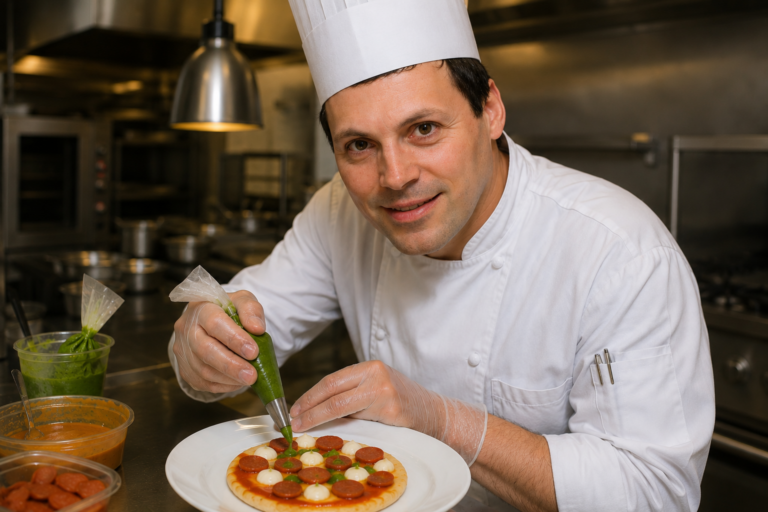
The Pureed Pizza: Why Elder Care Food Should Preserve Dignity
A professional story about nursing home food, modified diets, and the belief that the meal may be modified, but the person is not.
The second was:
The Soft Scrambled Egg: How Small Acts Become Elder Care
A family story about a winter morning, grandparents, and the honor of cooking with tenderness.
The Caregiver’s Kitchen Ledger
How to track meals, symptoms, fatigue, and preferences without overwhelming the family.
Start With One Line
You do not have to organize everything today. Start with one meal, one drink, one care moment, and one note.
This is not only a record of what was eaten. It is a record of what was shared.
Another Great Article:
How to Make Pureed Food Look Appetizing Again: A Chef’s Guide
Quick Reference: Caring for the Caregiver
Core idea:
Caregiving should not depend on one exhausted person.
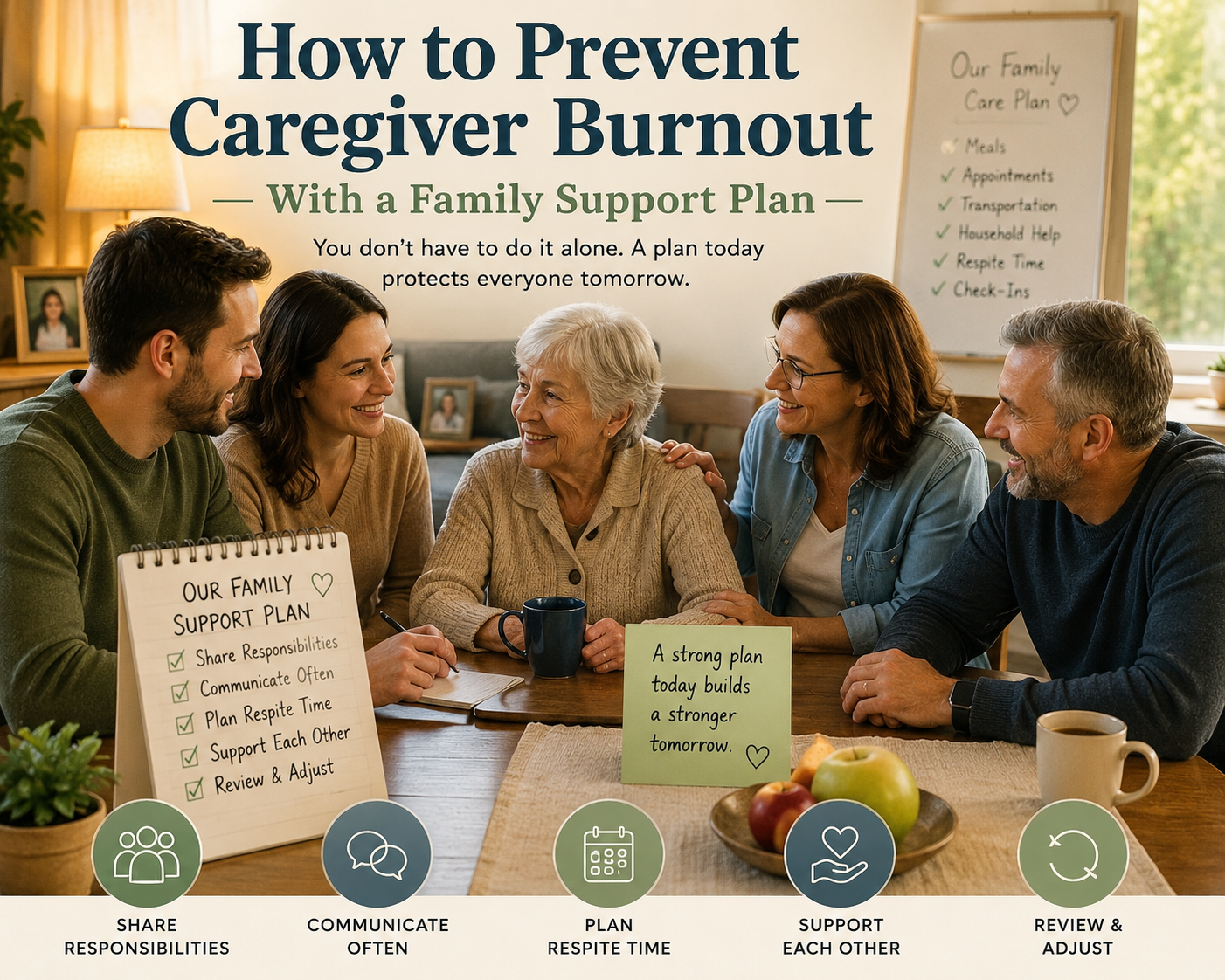
A family system needs:
- shared roles
- accessible spaces
- safe meals
- written notes
- caregiver breaks
- emotional safety
- dignity for the care recipient
- dignity for the caregiver
Sunday dinner reminder:
A meal can feed the person receiving care.
A system can sustain the person giving it.