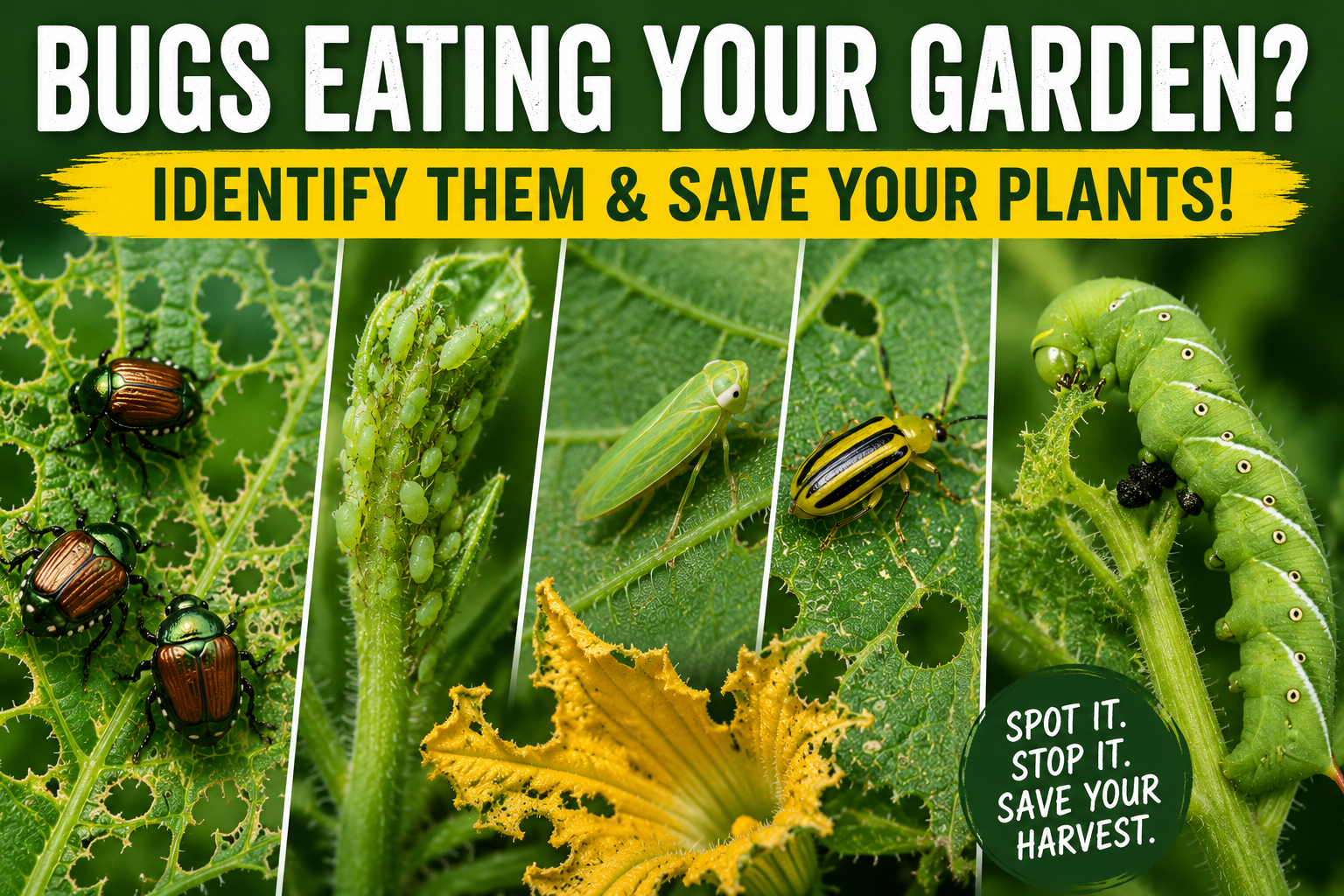
Friend, Foe, or Warning Sign?
You walk into the garden one morning and something looks wrong.
A leaf has holes in it.
A squash plant is wilting.
A tomato branch is suddenly bare.
Tiny insects are clustered on new growth.
Your first thought might be:
“What is this bug?”
Your second thought is probably:
“How do I get rid of it?”
But before you spray, squash, or panic, take a breath.
Most garden insects are not trying to hurt you. Many will fly away, jump away, or hide when you move the leaves. Some are pests. Some are helpers. Some are warning signs that your garden system is out of balance.
The first job is not to kill.
The first job is to identify.
Virginia gardens are full of both pests and helpful insects. Virginia Tech Extension and Master Gardener resources list many common vegetable garden pests in Virginia, including aphids, cabbage worms, Colorado potato beetles, cucumber beetles, flea beetles, hornworms, squash bugs, squash vine borers, stink bugs, and whiteflies.
This guide will help you slow down, look closely, and decide whether the bug you found is a friend, foe, or mystery.
Quick Safety Note: Most Garden Bugs Are Not Coming After You
For a beginner, bugs can feel scary. That is normal.
But most insects in your vegetable garden are focused on plants, prey, nectar, or hiding. They are not looking for people.
Still, use a simple rule:
Do not handle unknown insects with bare hands.
Use your phone camera. Zoom in. Take photos. Wear gloves if you are moving leaves or checking stems.
A few insects can surprise you. Leafhoppers may jump or fly quickly when disturbed; Virginia Cooperative Extension describes adult leafhoppers as green, wedge-shaped insects that fly quickly when disturbed, while nymphs are smaller and move sideways like tiny crabs.
Flying insects may fly off when you get close. Squash vine borer adults look like small wasps, but they are moths. Assassin bugs are helpful predators, but large species can bite if handled carelessly, so observe them rather than picking them up.
The calm approach is best:
Look. Photograph. Log. Identify. Then decide.
Before You Identify: Take These 3 Photos
A single blurry bug photo is often not enough.
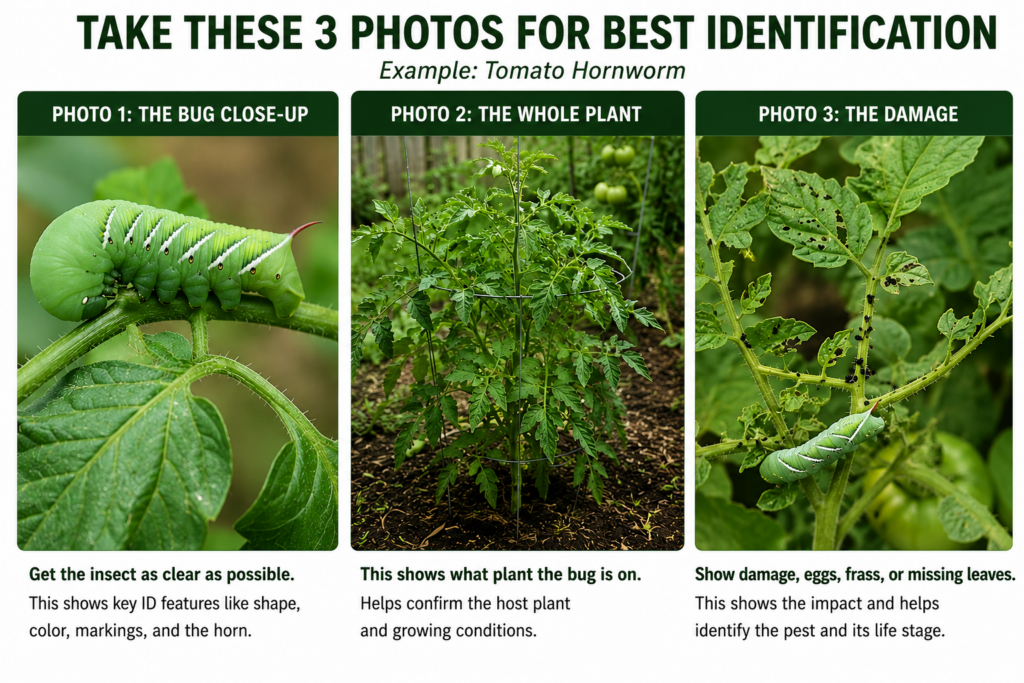
When possible, take three pictures:
Photo 1: The Bug Close-Up
Get the insect as clear as possible.
Photo 2: The Whole Plant
This shows what plant the bug is on.
Photo 3: The Damage
Show holes, sticky leaves, wilted stems, eggs, frass, or missing leaves.
These three photos help ChatGPT, Google Lens, local garden groups, farmers, nurseries, and Extension agents give better answers.
A bug is only part of the story.
The plant matters.
The date matters.
The damage matters.
The life stage matters.
Use a Simple Garden Bug Ledger
Keep this easy. You do not need a complicated spreadsheet.
| Date | Plant / Location | What I Saw | Photo Taken? | Friend, Foe, or Unknown | What I Did |
|---|---|---|---|---|---|
| June 12 | Tomato bed | Big green caterpillar, missing leaves | Yes | Foe | ID’d as hornworm |
| June 15 | Squash leaf | Bronze eggs under leaf | Yes | Foe | Removed eggs |
| June 18 | Pepper plant | Tiny green insects on new growth | Yes | Foe | Sprayed with water |
| June 22 | Tomato plant | Hornworm with white cocoons | Yes | Helpful sign | Left it alone |
This is the same idea as an old checkbook ledger. You are not just recording facts. You are building awareness.
After one season, your notes become one of your best garden tools.
This fits the larger Garden Ledger idea from The Wealth Garden: what gets recorded can be reviewed, improved, and compounded over time.
Where to Get Help Identifying Bugs
Once you have photos and notes, you have options.
You can ask:
- Google Lens
- ChatGPT
- Virginia Cooperative Extension
- Local Master Gardeners
- Farmers at your farmers market
- Local nurseries
- Community garden members
- Virginia gardening Facebook groups
- County garden clubs
- Your local library
- Seed company pest guides
- University Extension websites
- Local farm stores
- Pollinator groups or beekeepers
- Experienced neighbors
For official local help, Virginia Cooperative Extension is one of the best places to start. For spotted lanternfly, Virginia Tech notes that local Extension offices can help with management and identification, and VDACS maintains current reporting and management guidance.
Now let’s look at the bugs.
The Good Guys
1. Lady Beetles
Garden Rating: Friend
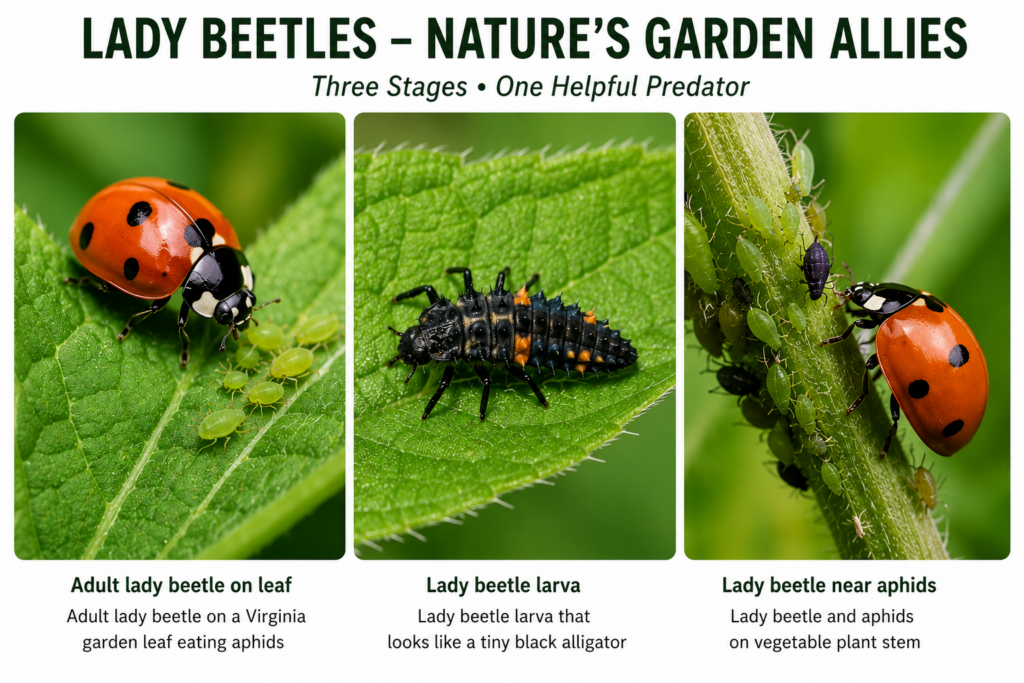
Lady beetles, often called ladybugs, are one of the easiest beneficial insects to love. The adults are familiar: small, rounded beetles, often red, orange, or black with spots.
But the larvae are the stage beginners often miss.
Lady beetle larvae look like tiny black or gray alligators. Many new gardeners think they are pests and kill them by mistake. Don’t. Lady beetles are beneficial as both adults and larvae, feeding mainly on aphids, mites, small insects, and insect eggs.
What to Look For
- Round beetles with spots
- Tiny alligator-like larvae
- Often near aphid colonies
- Eggs may appear in small yellow clusters
Life Cycle Snapshot
Lady beetles go through egg, larva, pupa, and adult stages. The larval stage is very important because larvae eat pests too. If you only know the adult, you may miss half the help.
Beginner Comfort Note
Lady beetles are not dangerous to gardeners. Let them work.
What This Bug Teaches
Not every strange-looking insect is bad.
2. Green Lacewings
Garden Rating: Friend
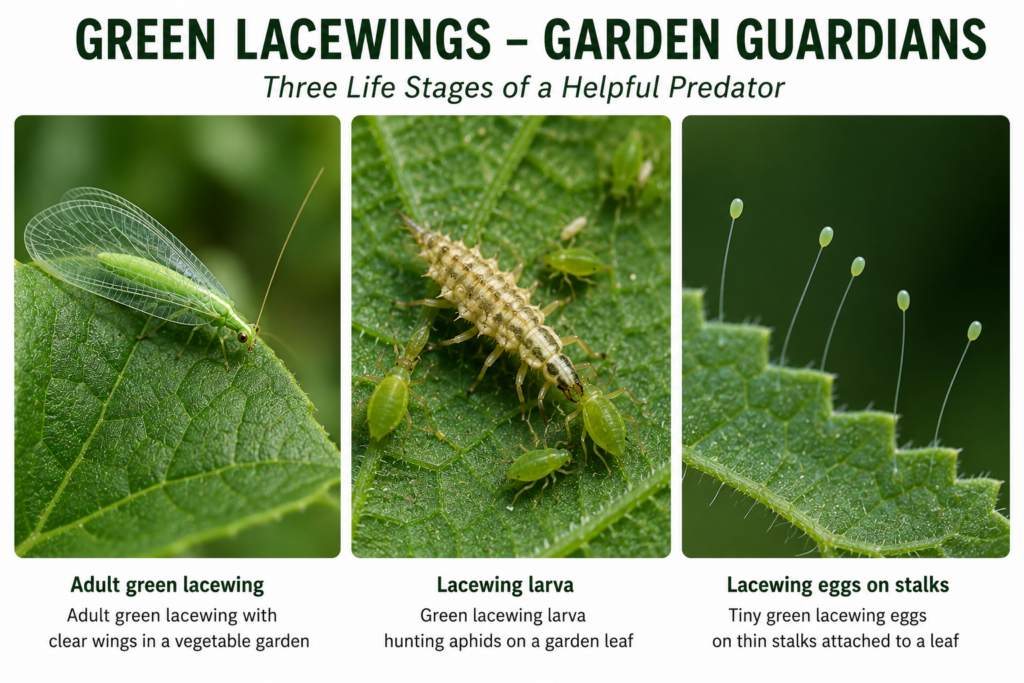
Green lacewings look delicate. Adults are light green with clear wings and golden eyes.
Their larvae are the real hunters.
Lacewing larvae are often called “aphid lions” because they feed on aphids and other small pests. Beneficial insects like lady beetles and lacewings are important parts of pest balance in the garden.
What to Look For
- Delicate green adult
- Clear wings held over the body
- Tiny, active larvae
- Often found near aphids or soft-bodied pests
Life Cycle Snapshot
Lacewings go from egg to larva to pupa to adult. The larvae are the main pest-eating stage.
Beginner Comfort Note
Lacewings are not a threat to you. If one flies away when you move the leaves, that is normal.
What This Bug Teaches
The garden has helpers you may never notice unless you slow down.
3. Assassin Bugs
Garden Rating: Friend, But Do Not Handle
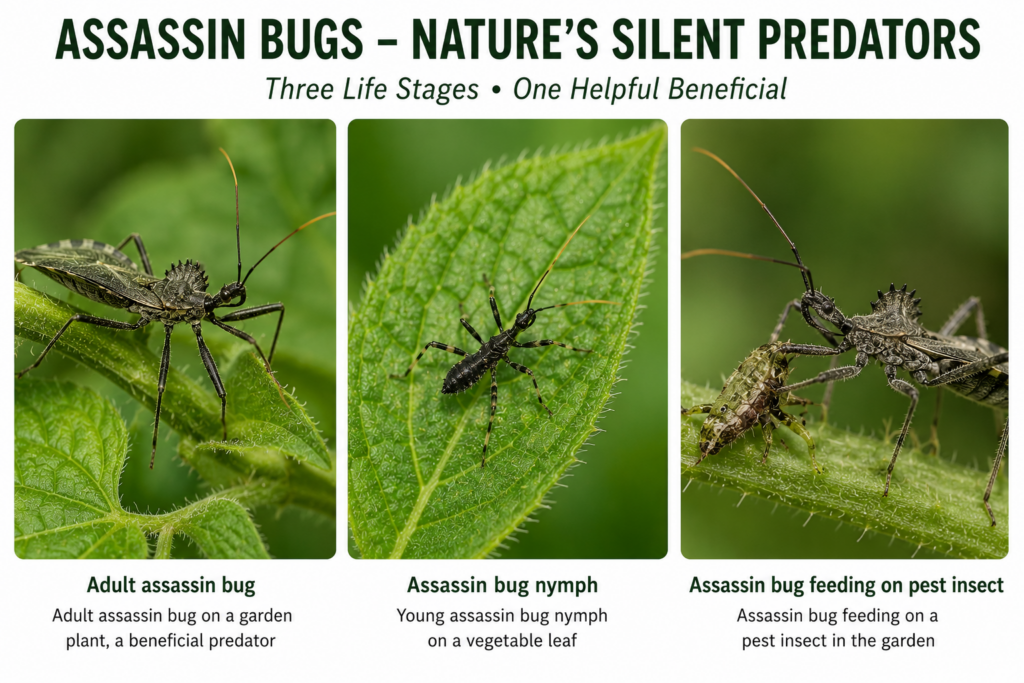
Assassin bugs are predators. They eat many insects, including pests. They often have long bodies, strong legs, and a curved piercing mouthpart.
They are useful, but they deserve respect.
Large assassin bugs can bite if handled. University of Maryland Extension describes assassin bugs as important predators in the home garden, but warns that large species can bite humans as well as prey.
What to Look For
- Long body
- Narrow head
- Strong front legs
- Curved beak tucked under the body
- Often sitting still, waiting for prey
Life Cycle Snapshot
Assassin bugs have eggs, nymphs, and adults. Both nymphs and adults can be predators.
Beginner Comfort Note
They are not hunting you. Just do not pick them up. Use your phone camera.
What This Bug Teaches
Some friends should still be observed with care.
The Warning Signs and Pests
4. Aphids
Garden Rating: Foe / Warning Sign
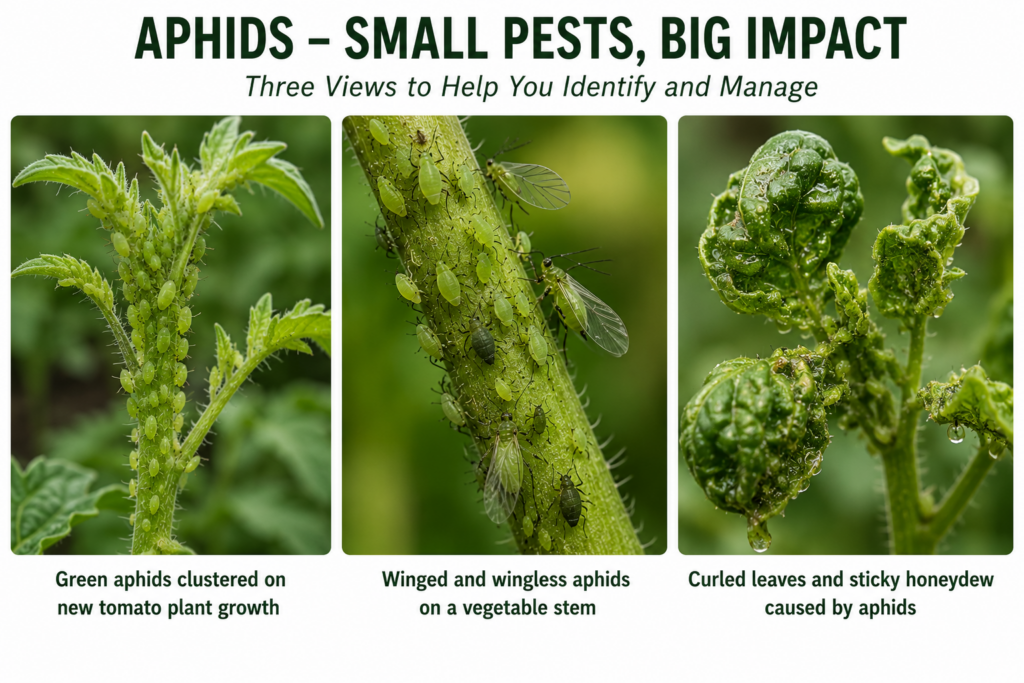
Aphids are tiny, soft-bodied insects. They may be green, black, yellow, gray, or reddish.
They often cluster on new growth, flower buds, and the underside of leaves. Virginia Cooperative Extension describes aphids as small, soft-bodied insects that feed in clusters, prefer new shoots and young leaves, and produce honeydew that can lead to sooty mold.
What to Look For
- Tiny insects clustered together
- Sticky leaves
- Curled or distorted new growth
- Ants visiting the plant
- Shiny honeydew on leaves
Life Cycle Snapshot
Aphids can multiply quickly. In warm weather, populations can grow fast. You may see many sizes at once.
Beginner Comfort Note
Aphids will not hurt you. You can brush them off with gloves or spray them with water.
What This Bug Teaches
Aphids are often a signal. They may show up when plants are stressed or when new soft growth is available.
5. Leafhoppers
Garden Rating: Foe / Jumpy Warning Sign
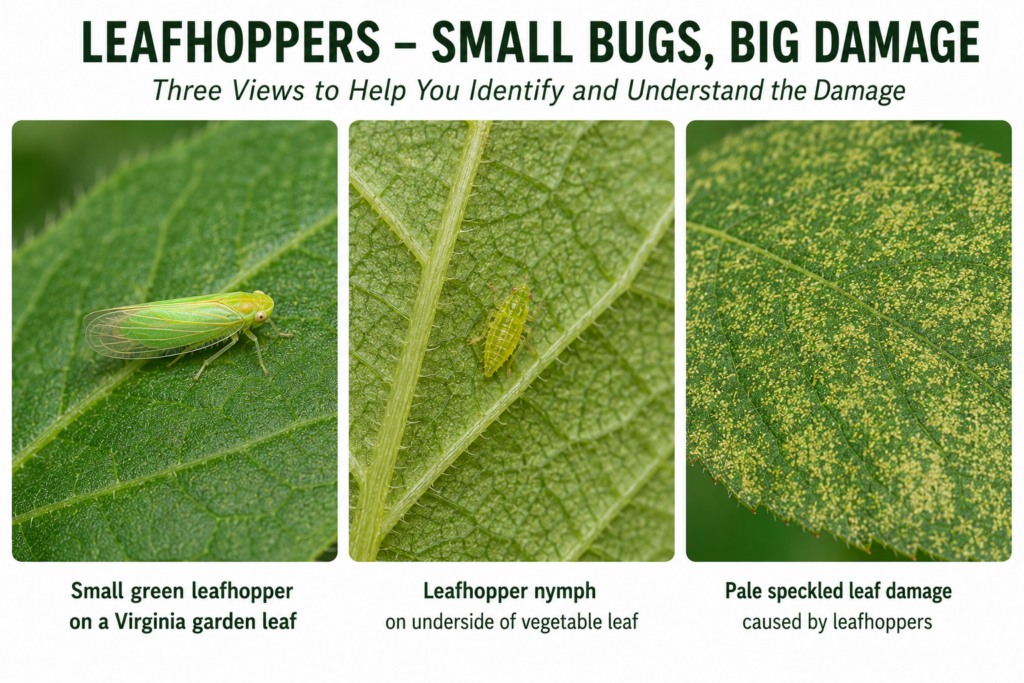
Leafhoppers are small, wedge-shaped insects. Many are green, yellow, or brown.
They can be hard to photograph because they move fast. When you disturb the plant, adults may jump or fly away. Nymphs may run sideways along the leaf.
Virginia Cooperative Extension says adult leafhoppers are green, wedge-shaped, up to 1/8 inch long, and fly quickly when disturbed. Nymphs are smaller and crawl sideways like crabs. Leafhopper feeding can cause curling, yellowing, bronzing, and “hopperburn” on potatoes.
What to Look For
- Tiny wedge-shaped insects
- Fast jumping or flying
- White speckling or stippling on leaves
- Yellowing or curling leaves
- Damage on beans, lettuce, potatoes, and some ornamentals
Life Cycle Snapshot
Leafhoppers have eggs, nymphs, and adults. The nymphs may look like tiny wingless versions of adults.
Beginner Comfort Note
They may startle you by jumping. They are not attacking you. They are escaping.
What This Bug Teaches
Some bugs will not sit still for a portrait. That is why taking a photo of the damage matters.
6. Tomato Hornworms
Garden Rating: Foe, Unless Parasitized
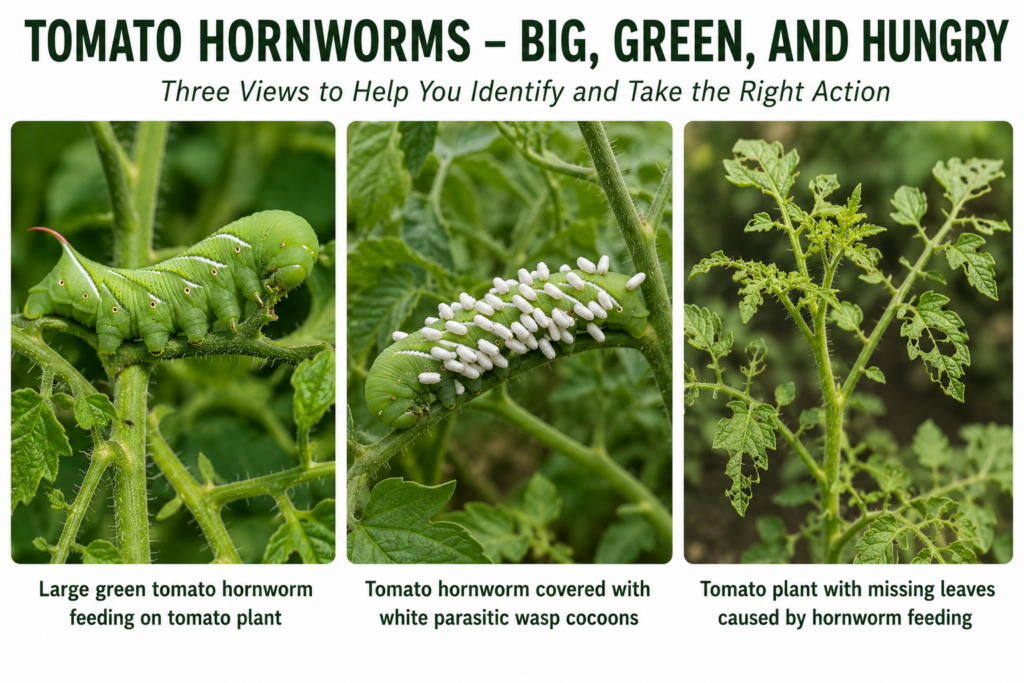
Tomato hornworms and tobacco hornworms are big green caterpillars that feed on tomato, pepper, eggplant, and related plants.
They can be hard to spot because their green color blends into the plant. Often, you find the damage first: missing leaves, bare stems, or dark droppings.
Virginia Cooperative Extension notes that hornworms may be parasitized by small wasps, which form white cocoons on the back and sides of the caterpillar. If you see those white cocoons, leave that hornworm in the garden so the wasps can emerge and attack more hornworms.
What to Look For
- Large green caterpillar
- White diagonal stripes
- Horn on rear end
- Missing tomato leaves
- Dark droppings below feeding area
Life Cycle Snapshot
Hornworms are the larval stage of sphinx moths. The caterpillar stage is the one that eats your tomato leaves.
Beginner Comfort Note
Hornworms look huge, but they are not going to hurt you. Use gloves if you hand-pick them.
What This Bug Teaches
Sometimes the “problem” is already being handled by the garden.
7. Squash Bugs
Garden Rating: Foe
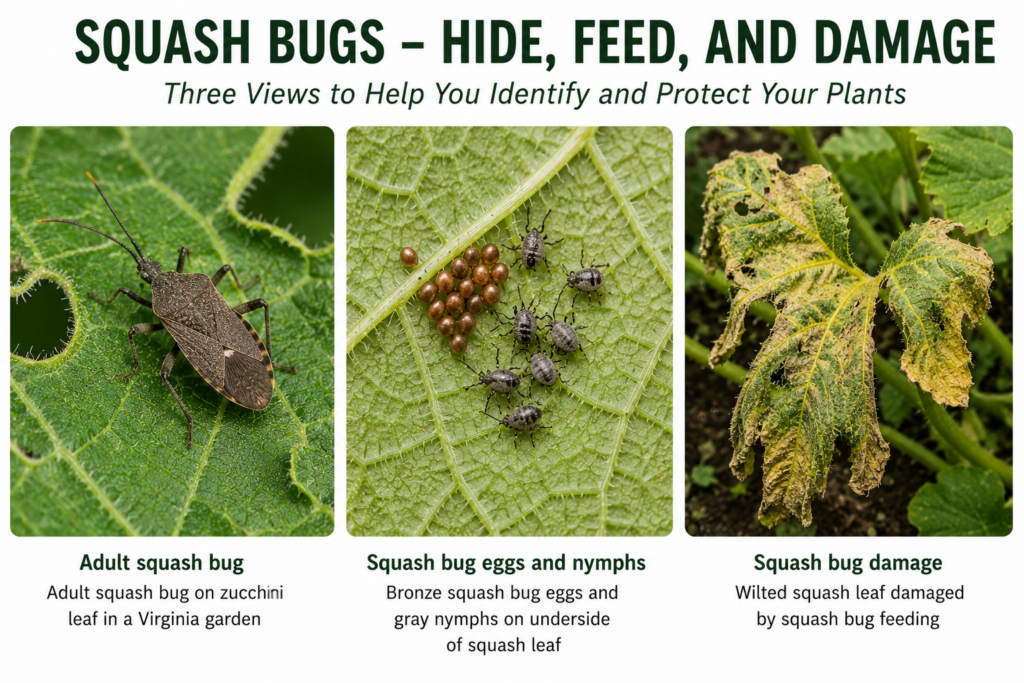
Squash bugs are common on squash, zucchini, pumpkins, and related crops.
They are not the same as squash vine borers. Squash bugs feed with piercing-sucking mouthparts. They can cause leaves to yellow, wilt, and decline.
Virginia Cooperative Extension explains that squash bugs can have eggs, nymphs, and adults present at the same time during summer. Eggs are often found on leaf undersides, and adults may overwinter in ground litter or sheltered places. Depending on where you are in Virginia, there can be one to two generations per year.
What to Look For
- Bronze-brown egg clusters
- Gray nymphs
- Brownish-black adults
- Wilting squash leaves
- Bugs hiding under leaves or near plant base
Life Cycle Snapshot
Squash bugs overwinter as adults. In spring and summer, they lay eggs. Eggs hatch into nymphs. Nymphs become adults. You may see several stages at once.
Beginner Comfort Note
They may move quickly when you lift a leaf. They are not dangerous to you.
What This Bug Teaches
Check under the leaves. Many garden problems hide where beginners do not look.
8. Squash Vine Borers
Garden Rating: Major Foe
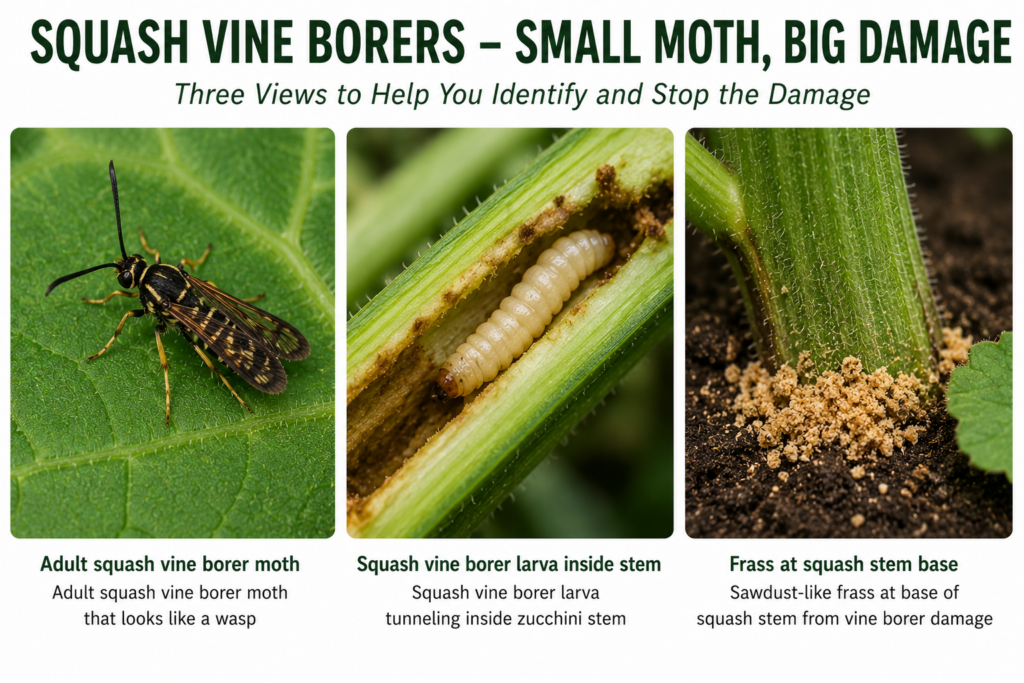
Squash vine borers are one of the most frustrating pests for Virginia gardeners.
The adult looks like a small wasp, but it is actually a clearwing moth. Virginia Cooperative Extension says adult squash vine borers resemble paper wasps and are day fliers.
The real damage happens when larvae tunnel inside the squash stem. By the time the plant wilts, the larva may already be inside.
What to Look For
- Sudden wilting of squash or zucchini
- Sawdust-like frass near the stem base
- Holes in the stem
- Adult moth that looks like a wasp
- Larva inside the stem
Life Cycle Snapshot
Squash vine borer has egg, larva, pupa, and adult stages. The larval stage is the damaging stage because it feeds inside the stem.
Beginner Comfort Note
The adult may look like a wasp, but it is a moth. It may fly if disturbed.
What This Bug Teaches
Lifecycle matters. Once the larva is inside the stem, the problem is much harder.
9. Cucumber Beetles
Garden Rating: Foe
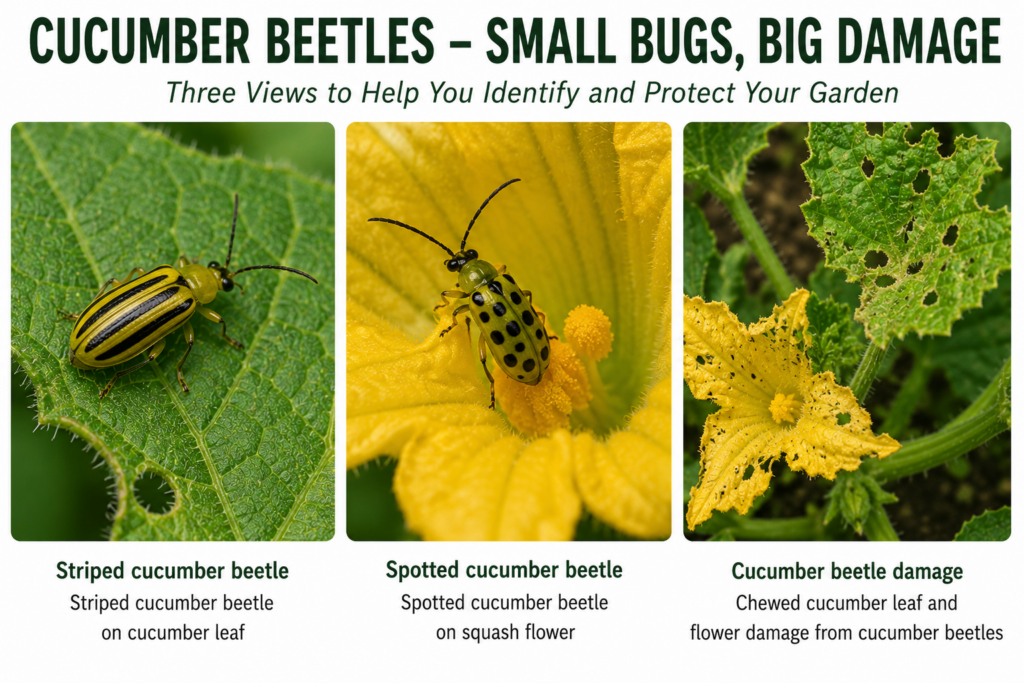
Cucumber beetles are small but important pests.
Virginia gardeners may see striped cucumber beetles or spotted cucumber beetles. They attack cucumbers, squash, pumpkins, melons, and other cucurbits. Master Gardeners of Northern Virginia note that both striped and spotted cucumber beetles are commonly seen in Virginia gardens.
The chewing damage matters, but the disease risk can matter even more. Virginia Cooperative Extension notes that bacterial wilt of cucurbits is serious in cucumber and muskmelon, and disease transmission is a key part of cucumber beetle biology.
What to Look For
- Small yellow beetles
- Black stripes or black spots
- Chewed leaves and flowers
- Beetles inside squash blossoms
- Sudden wilting in cucumber or melon plants
Life Cycle Snapshot
Cucumber beetles have egg, larva, pupa, and adult stages. Adults are the stage most gardeners notice first.
Beginner Comfort Note
They may fly or drop when disturbed. Move slowly and photograph before shaking the plant.
What This Bug Teaches
Sometimes the bug is not the only problem. It may also carry disease.
10. Japanese Beetles
Garden Rating: Foe
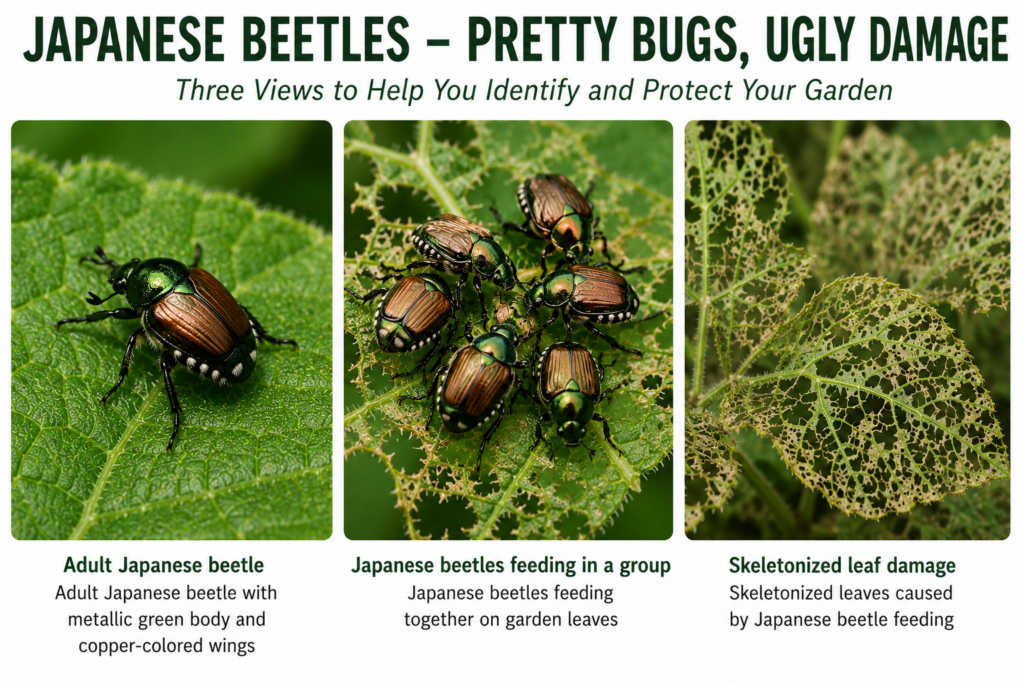
Japanese beetles are easy to recognize once you have seen them.
They have metallic green bodies and copper-colored wing covers. They often gather in groups and chew leaves until only the veins remain. This is called skeletonizing.
Virginia Tech notes that Japanese beetles can damage more than 300 species of plants, including turfgrass, roses, grapes, and hops.
What to Look For
- Metallic green head and body
- Copper wing covers
- White tufts along the sides
- Groups feeding together
- Skeletonized leaves
Life Cycle Snapshot
Japanese beetles have egg, grub, pupa, and adult stages. The adult stage damages leaves and flowers. The grub stage lives in soil and can damage turf roots.
Beginner Comfort Note
They may fly when disturbed, but they are not dangerous to you. They may feel clingy if they land on you, but they are not attacking.
What This Bug Teaches
A bug can be beautiful and destructive at the same time.
Bonus Virginia Watchlist: Spotted Lanternfly
Garden Rating: Invasive Pest / Report and Manage Carefully
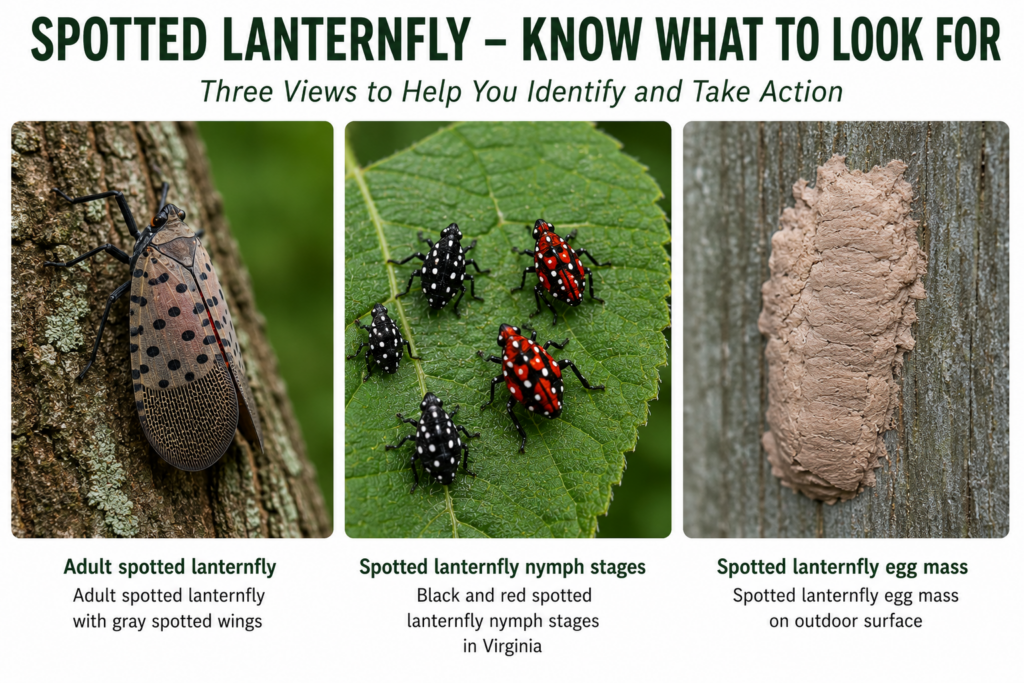
Spotted lanternfly is not just a vegetable garden pest. It is an invasive insect that affects grapes, fruit trees, maples, tree-of-heaven, and many other plants.
VDACS says spotted lanternfly was first found in Virginia in 2018 and has now been found in more than half of Virginia’s counties and independent cities. It spreads by hitchhiking, especially through egg masses on vehicles, trains, and outdoor materials.
Virginia’s spotted lanternfly quarantine was repealed on March 27, 2025, but VDACS still gives guidance on reporting sightings and managing the pest. Some Virginia localities no longer require reports because the insect is already established there, so check current VDACS and Virginia Tech guidance before reporting.
What to Look For
- Gray egg masses on hard surfaces
- Black nymphs with white spots
- Red-and-black later nymphs
- Adults with spotted wings
- Adults that jump or fly when disturbed
Virginia Cooperative Extension’s lifecycle calendar shows spotted lanternfly eggs, nymphs, and adults at different times of year, with young black-and-white nymphs, red later nymphs, and adults as key stages to recognize.
Beginner Comfort Note
Spotted lanternflies may jump or fly suddenly. They are not trying to injure you. Take photos first, then follow current Virginia reporting and management guidance.
What This Bug Teaches
Some insects are bigger than one garden. They are part of a wider regional system.
The Beginner Rule: Identify Before You Act
It is normal to want to get rid of pests right away.
But spraying before identifying can cause problems.
You may kill lady beetle larvae.
You may harm lacewings.
You may remove a parasitized hornworm that was helping the garden.
You may treat the wrong pest at the wrong life stage.
Good pest management starts with observation.
The best first question is not:
“How do I kill it?”
The best first question is:
“What am I looking at?”
Then ask:
What plant is it on?
What stage is it in?
What damage do I see?
Is it alone or part of a larger pattern?
Is it friend, foe, or unknown?
A beginner sees bugs.
A gardener sees clues.
A steward keeps records.
When to Ask for Help
Ask for help when:
- You cannot identify the bug.
- The plant is declining fast.
- You see sudden wilting.
- You find eggs but do not know what they are.
- You suspect spotted lanternfly.
- You are thinking about spraying.
- You are worried about bees or beneficial insects.
- The insect is inside the stem, fruit, or soil.
- The same problem returns every year.
Bring your photos and your bug ledger notes.
A good question sounds like this:
“I found this insect on zucchini in central Virginia on June 15. The plant is wilting, and I found sawdust-like material near the stem base. Here are photos of the insect, the whole plant, and the damage. What is it?”
That kind of question is much easier to answer.
What Comes Next: How Do I Get Rid of Them?
Once you know what bug you are dealing with, the next question is natural:
How do I get rid of it?
That question deserves its own guide.
Some problems can be handled by doing nothing.
Some need hand-picking or pruning.
Some can be managed with row cover, water spray, or egg removal.
Some may call for organic controls.
Some may require stronger chemical options used carefully and correctly.
But the order matters.
First identify.
Then decide.
Read Next:
10 Virginia Garden Pests Every New Gardener Should Watch For Before Spraying
FAQ
What garden bugs should Virginia beginners learn first?
Start with aphids, tomato hornworms, squash bugs, squash vine borers, cucumber beetles, Japanese beetles, lady beetles, lacewings, assassin bugs, and leafhoppers. If you grow grapes, fruit trees, or ornamentals, also learn spotted lanternfly.
Are garden bugs dangerous to people?
Most garden insects are not dangerous to people. The safest approach is to avoid handling unknown insects. Use your phone camera, wear gloves, and observe before touching. Some beneficial predators, like assassin bugs, can bite if handled carelessly.
Why do bugs disappear when I move the leaf?
Many insects hide on the underside of leaves. Some jump, fly, or drop when disturbed. Leafhoppers, for example, can fly quickly when disturbed.
Should I kill every bug I find?
No. Some insects are beneficial. Lady beetles and lacewings eat pests. Assassin bugs are predators. Hornworms with white cocoons should usually be left alone because parasitic wasps are already using them.
Why does lifecycle matter?
A bug may look different as an egg, nymph, larva, pupa, or adult. Some pests are easier to manage early. Squash bug eggs, for example, are easier to remove than a full population of adults and nymphs later.