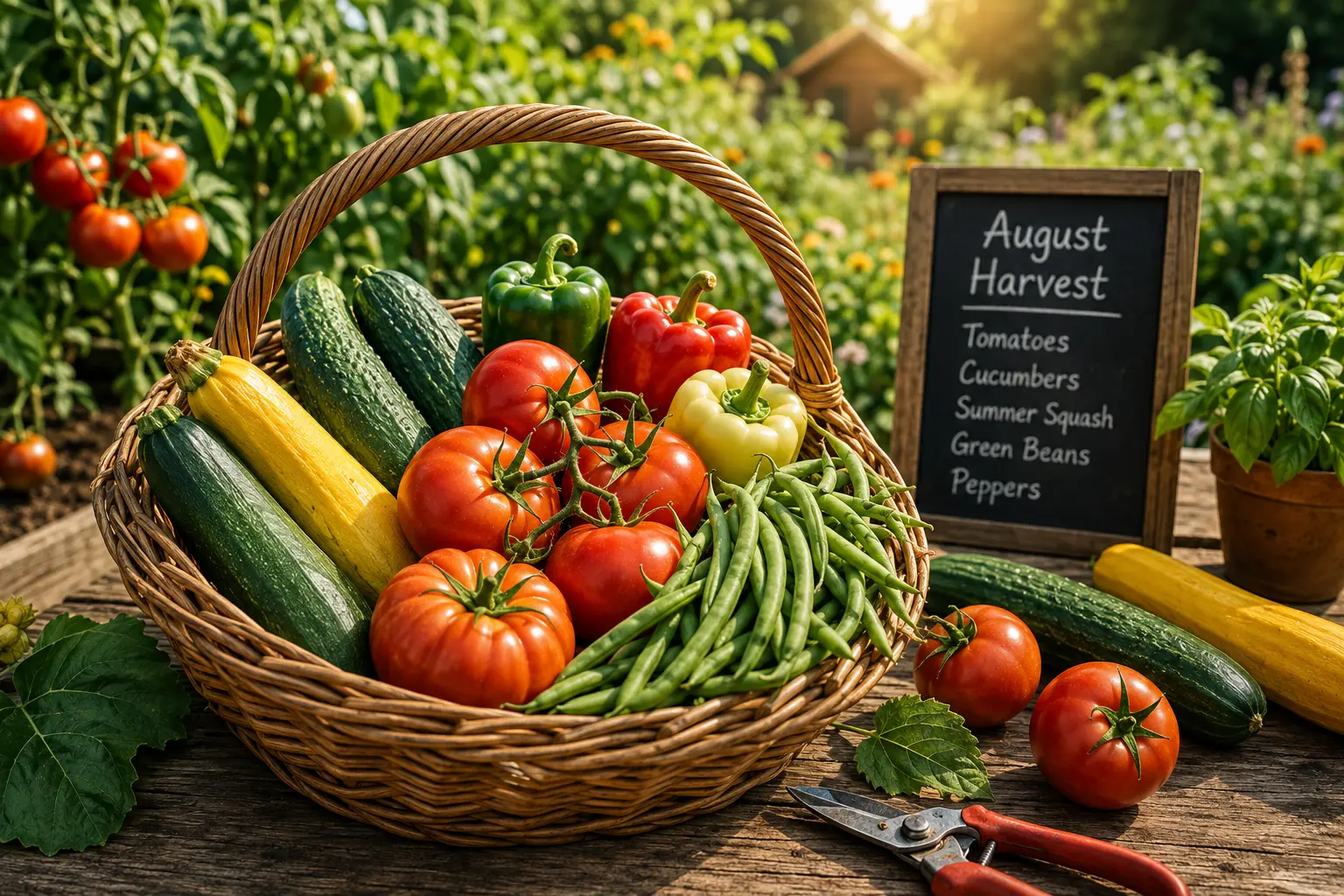
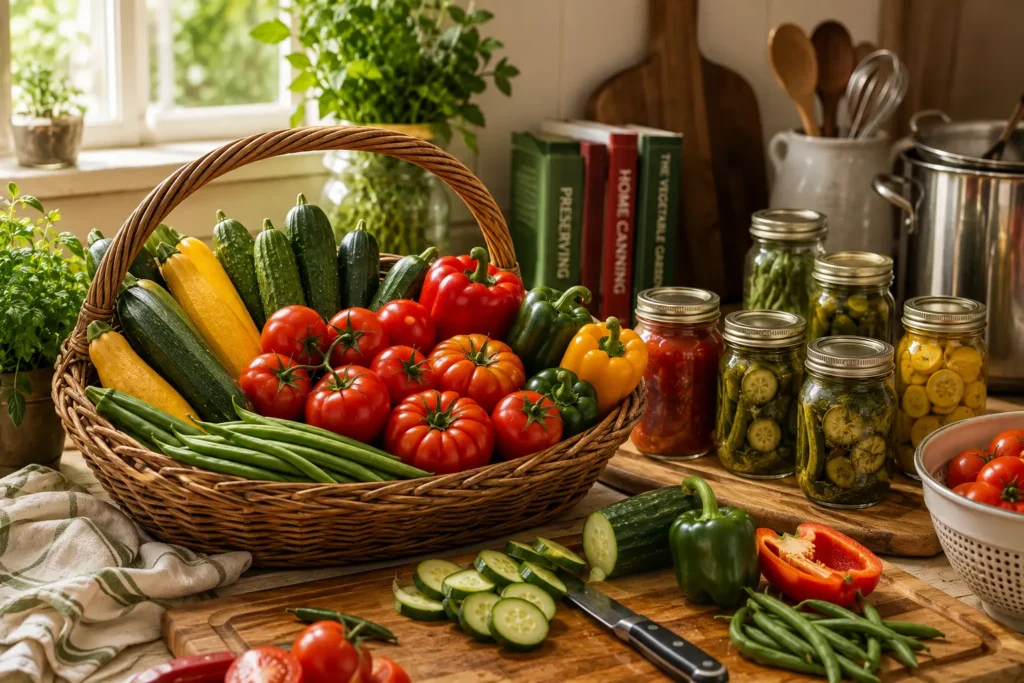
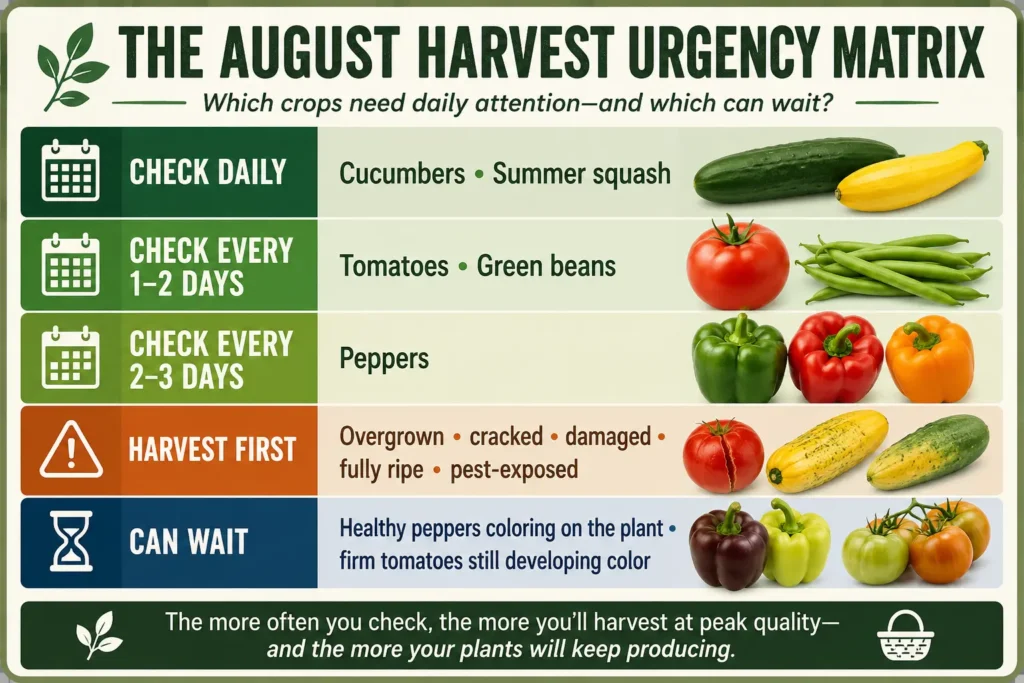
The five most important August crops to monitor are tomatoes, cucumbers, summer squash, green beans, and peppers.
These crops do not share the same harvest window.
Cucumbers and summer squash can move beyond peak tenderness surprisingly quickly. Green beans become fibrous as the seeds enlarge. Tomatoes may crack, split, soften, or attract wildlife while the gardener waits for a theoretically perfect moment. Peppers, by contrast, often give the gardener more flexibility.
That means the August question is not simply “What is growing?” But what must be harvested today, what can wait, and what should move directly into the kitchen or preservation plan?
This is Part 2 of The Gardening Chef’s August garden-to-kitchen series.
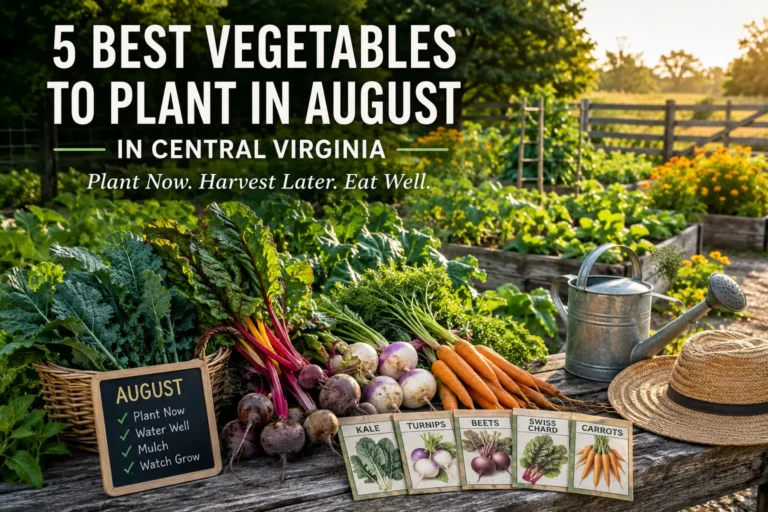
Part 1 explained what to plant for the next season starting in August. This guide focuses on harvest timing, what should be picked now, what can wait, and what should move directly into the kitchen or preservation plan. 5 Best Vegetables to Plant in August in Central Virginia: Lynchburg Planting Dates, Harvest Windows & More
What Should You Harvest in August?
| Rank | Crop | Ready when | Suggested peak-season check | Harvest urgency |
|---|---|---|---|---|
| 1 | Tomatoes | Full-sized, firm, and showing the mature color expected for the variety | Every 1–2 days | Harvest ripe, cracked, or damaged fruit promptly |
| 2 | Cucumbers | Firm, evenly colored, and at the preferred size for the variety | Daily | Do not allow them to yellow or become heavily seeded |
| 3 | Summer squash | Young, tender, glossy, and easily marked by a thumbnail | Daily | Harvest before the rind hardens |
| 4 | Green beans | Pods are succulent and seeds have not begun bulging prominently | Every 1–2 days | Pick before pods become fibrous |
| 5 | Peppers | Full-sized and at the color required for their intended use | Every 2–3 days | Green peppers may be picked; others can remain to color |
The check frequencies above are practical home-garden starting points, not fixed biological rules. Variety, temperature, rainfall, plant health, wildlife pressure, and the size of the planting can all change the schedule.
The simplest August harvest rule
Harvest cucumbers and summer squash first.
Check beans before their pods become bulky.
Remove ripe or damaged tomatoes.
Choose pepper timing according to the flavor, color, and recipe you want.
Jump to a Section
- Tomatoes
- Cucumbers
- Summer Squash and Zucchini
- Green Beans
- Peppers
- What to Eat, Store, or Preserve First
- The Fifteen-Minute August Harvest Walk
- Frequently Asked Questions
The August Harvest Is a Quality Decision
A vegetable is not necessarily at its best simply because it has reached its largest possible size.
Many summer vegetables are harvested while they are still biologically immature.
A cucumber is usually preferred before it turns yellow and develops large seeds. Summer squash is prized while the rind remains tender. Snap beans are collected while their seeds are still immature and the pod remains succulent. Virginia Cooperative Extension similarly recommends harvesting summer squash while young and removing old fruit so new fruit can continue developing.
The objective is therefore not:
Grow every vegetable as large as possible.
It is:
Harvest each crop at the stage that produces the texture, flavor, storage quality, and kitchen use you actually want.
This distinction is one of the most important lessons in a productive garden.
Maximum size and maximum value are not always the same thing.
Before You Pick: Six August Harvest Rules
1. Harvest while the produce is relatively cool
Morning is often an excellent harvest period, but wait until dew or rain has dried when working among plants susceptible to disease spread.
Harvesting before produce accumulates the full heat of the day can help protect quality. Virginia gardening guidance also recommends waiting until plant surfaces are dry before working among them.
2. Carry clean clippers or scissors
Pulling is not always the best method.
Peppers are often best clipped. Cucumbers can be cut when snapping risks vine damage. Squash stems can be prickly and tough. A clean cutting tool helps the gardener harvest without tearing the plant.
3. Place harvested vegetables in the shade
A basket left in direct August sun can continue accumulating heat after harvest.
Virginia Cooperative Extension specifically recommends placing picked tomatoes in the shade. The same practical principle helps protect other tender produce during the harvest walk.
4. Handle the harvest gently
Cuts, bruises, and broken skin shorten storage life.
Handle vegetables as little as practical, and do not pile heavy tomatoes or squash on top of more delicate produce. Extension guidance notes that reduced handling and bruising improve storage potential.
5. Separate damaged produce immediately
Do not bury a cracked tomato, soft cucumber, or leaking squash beneath sound produce.
Keep damaged but usable vegetables in a separate container and take them directly to the kitchen. Discard or compost produce showing advanced decay, offensive odors, or extensive disease.
Rotting produce generally stores poorly and can expose neighboring vegetables to decay organisms.
6. Decide where the harvest is going
Every basket should have a destination:
- Tonight’s meal
- Short-term fresh use
- Refrigerator storage
- Freezer preparation
- Dehydrator
- Pickling project
- Tested canning recipe
- Sharing basket
- Compost
Harvesting without a use plan can simply move waste from the garden to the kitchen counter.
1. Tomatoes: Best Overall August Harvest
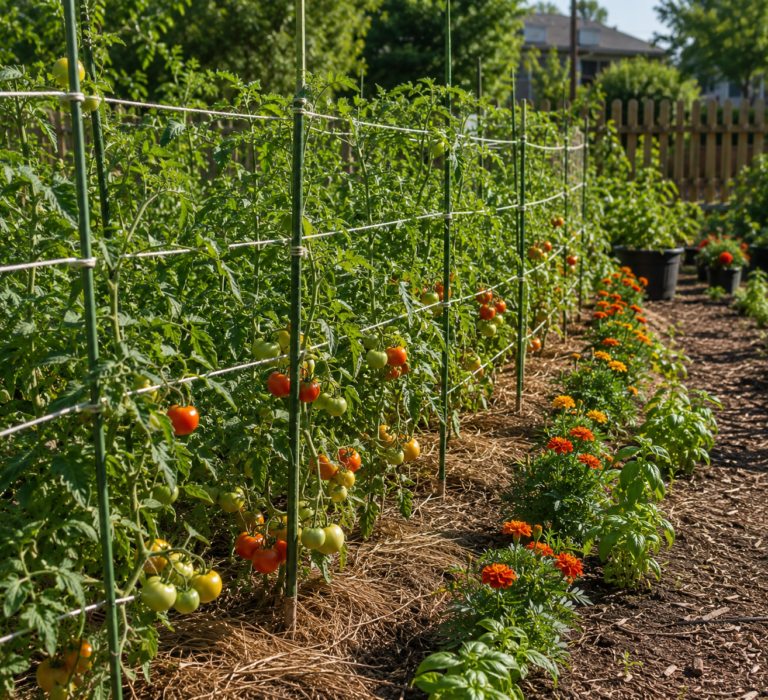
August is often when tomato plants begin returning the value of months of preparation.
The cages were installed.
The plants were tied.
The soil was watered.
Hornworms, leaf spots, cracking, blossom-end rot, and wildlife may already have tested the gardener’s patience.
Now the harvest can arrive faster than the household can use it.
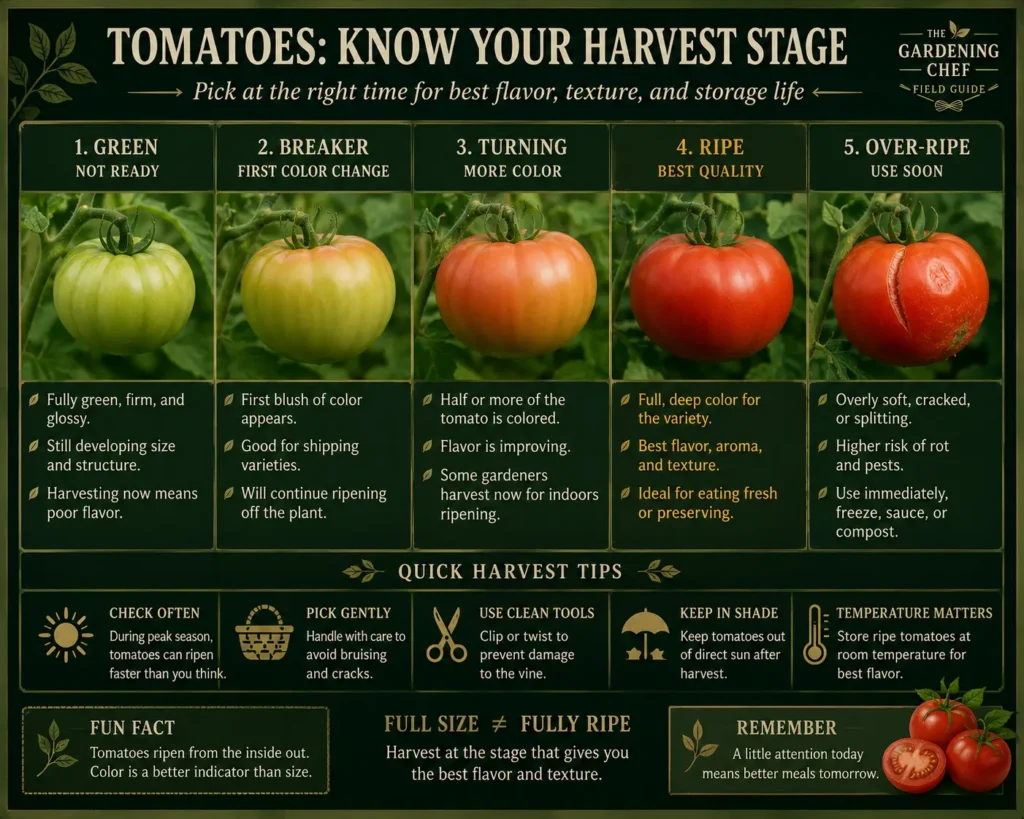
How do you know when a tomato is ready?
A tomato intended for immediate fresh eating should generally be:
- Full-sized for the variety
- Firm rather than hard
- Evenly colored according to the variety
- Free from active decay
- Easily removed without crushing the fruit
Not every ripe tomato will be red.
Some varieties mature yellow, orange, pink, purple, brown, striped, or green. Learn the mature appearance of the variety rather than using red color as the only signal.
Virginia Cooperative Extension recommends harvesting tomatoes when fully vine-ripened but still firm.
Harvest these tomatoes immediately
Pick tomatoes promptly when they are:
- Fully colored and ready to eat
- Cracking around the stem or shoulders
- Split after heavy rainfall
- Softening rapidly
- Showing minor pest damage that can still be trimmed
- Touching the soil
- At risk from birds, squirrels, deer, or other wildlife
- On a declining or diseased plant
- Likely to be lost to an approaching weather event
A perfect-looking tomato tomorrow is not more valuable than a usable tomato safely harvested today.
What tomatoes can remain on the plant?
A healthy, firm tomato can often remain when it is still developing color and conditions are favorable.
However, leaving fruit longer is a risk decision.
Consider:
- Rain in the forecast
- Existing cracking
- Animal pressure
- Disease progression
- Whether the plant still has enough foliage to shade the fruit
- How quickly the household can use the existing harvest
Tomatoes that have begun changing color can be picked when loss pressure is high and allowed to finish ripening away from direct sun. Virginia guidance also notes that tomatoes do not require light simply to continue ripening, although light affects color development.
How should tomatoes be harvested?
Support the fruit with one hand and detach it without crushing or tearing the plant.
Some varieties release easily at the joint. Others are better cut with clean clippers.
Place tomatoes in a shallow container rather than a deep bucket where the weight of the upper fruit can bruise the lower layers.
Move the container into the shade.
What should happen after harvest?
Eat first
Use these first:
- Cracked tomatoes
- Very soft tomatoes
- Fruit with trimmed pest damage
- Tomatoes at maximum ripeness
- Thin-skinned heirlooms
Hold briefly
Keep sound, ripe tomatoes in a cool location away from direct sunlight.
Typical household conditions are rarely identical to ideal commercial storage conditions, so published shelf-life estimates should be treated as guidance rather than promises. University of Minnesota Extension recommends cool storage and warns that temperatures below 40°F can reduce tomato color, firmness, and flavor.
Preserve
Tomatoes can be routed into:
- Freezer tomatoes for future cooked dishes
- Roasted tomato sauce
- Tested canned tomato products
- Dehydrated tomato slices
- Tomato powder
- Tested salsa recipes
- Tomato paste
- Soup bases
Tomatoes intended for shelf-stable canning require a current tested recipe, correct acidification when directed, approved jar sizes, and altitude-appropriate processing. Freezing is a simpler alternative for gardeners who do not yet have enough tomatoes for a full canning project.
Does harvesting increase production?
Harvesting ripe fruit prevents usable tomatoes from being lost on the plant and makes the remaining crop easier to inspect.
Indeterminate tomatoes may continue growing and producing until frost, disease, or environmental stress ends the season. Determinate varieties tend to produce a more concentrated crop and then decline.
The gardener should therefore judge a plant according to its type.
A declining determinate plant may have completed most of its productive work.
A healthy indeterminate plant may still have considerable August and September value.
Gardening Chef verdict
Tomatoes are the best overall August harvest because they combine fresh-eating quality, preservation potential, culinary range, and substantial household value.
Garden Wealth lesson
A heavy tomato harvest is not automatically a profitable harvest.
The value is created when the fruit is eaten, preserved, shared, or transformed before it spoils.
2. Cucumbers: Most Urgent Daily Harvest
A cucumber can hide beneath one leaf today and become oversized before the gardener remembers to look again.
That rapid change makes cucumbers one of the most time-sensitive August harvests.
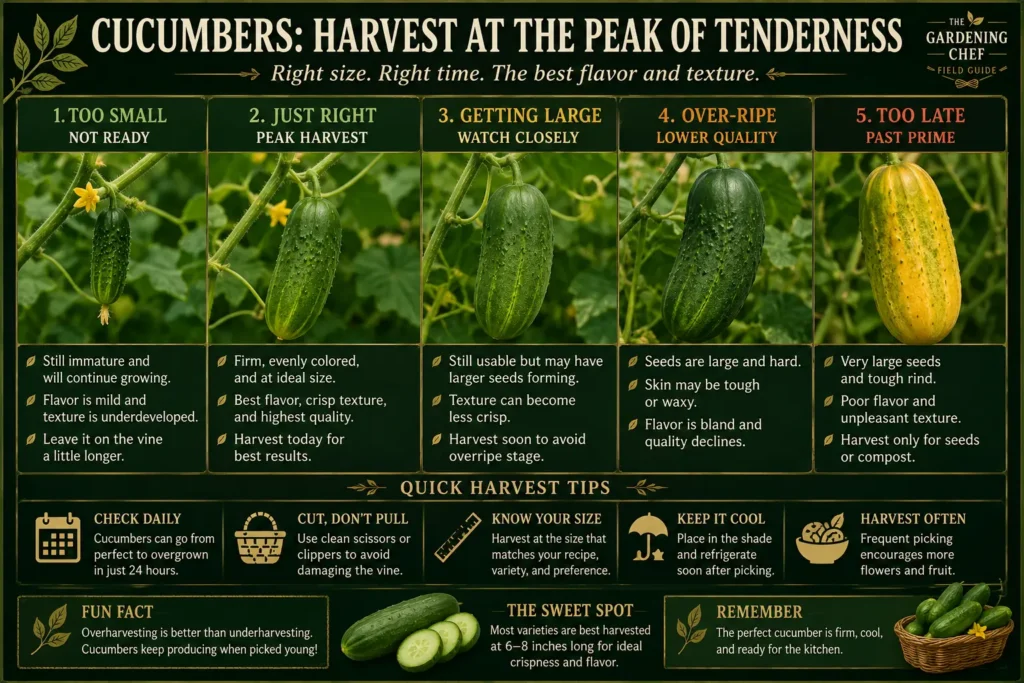
How do you know when a cucumber is ready?
The correct harvest size depends on the variety and intended use.
A small pickling cucumber may be harvested at only a few inches. A slicing cucumber may be allowed to become much longer. Specialty varieties can differ substantially in shape, color, and mature size.
Use the seed packet or variety description as the primary size guide.
In general, harvest cucumbers while they are:
- Firm
- Crisp-looking
- Evenly colored for the variety
- Free from soft spots
- Not yellowing
- Not swollen with large, hard seeds
Virginia Cooperative Extension advises harvesting cucumbers at the preferred usable size before they begin turning yellow.
Harvest these cucumbers immediately
Pick cucumbers when they:
- Have reached the preferred size
- Are beginning to lighten or yellow
- Are becoming thick and bulbous
- Are hidden beneath dense foliage
- Show minor damage but remain usable
- Are weighing down or twisting the vine
- Are on plants beginning to decline
Leaving very large cucumbers on the vine can reduce additional production. Frequent harvesting also makes it easier to find fruit before it becomes overgrown.
What cucumbers can remain?
A small, firm cucumber that has not reached the desired size can remain briefly.
Do not rely on memory.
Mark the fruit mentally, photograph it, or place a small garden marker near the location so it is checked the following day.
How should cucumbers be harvested?
Avoid pulling hard on the vine.
Virginia Cooperative Extension describes turning the cucumber parallel to the vine and snapping it cleanly, although cutting may be safer when the fruit does not release easily. Avoid moving wet vines unnecessarily because handling wet foliage can contribute to disease spread.
Use one hand to support the vine and the other to remove the fruit.
What should happen after harvest?
Eat first
Prioritize:
- The largest cucumbers
- Fruit beginning to soften
- Cucumbers with superficial damage
- Slicing types at full size
- Fruit already showing pale color
Store briefly
Cucumbers prefer conditions that are cooler and more humid than many homes can easily provide. They are also susceptible to chilling injury under excessively cold storage.
University of Minnesota Extension estimates approximately one week under appropriate conditions but cautions that very cold storage can cause pitting and water-soaked damage.
Treat that estimate as an upper target, not permission to forget them in the refrigerator.
Preserve
Cucumbers can become:
- Refrigerator pickles
- Fermented pickles using tested guidance
- Tested water-bath canned pickles
- Relish
- Chopped freezer ingredients where texture is not critical
- Tzatziki or chilled soups for immediate use
Pickling quality is generally better with firm, appropriately sized cucumbers rather than yellow, heavily seeded fruit.
Shelf-stable pickles require tested ingredient proportions and a validated process. Do not reduce vinegar, change jar size, or substantially alter the vegetable-to-acid ratio in a tested canning recipe.
What can be done with an oversized cucumber?
An oversized cucumber is not automatically useless.
Try:
- Peel the tough skin.
- Split it lengthwise.
- Remove mature seeds.
- Taste for bitterness.
- Use acceptable flesh in relish, chilled soup, sauce, or a same-day salad.
Do not use decayed, slimy, or strongly bitter fruit simply to avoid waste.
Gardening Chef verdict
Cucumbers are the crop most likely to punish a missed harvest day. Check them before examining the slower crops.
Garden Wealth lesson
The garden does not lose value only when a plant dies.
Value is also lost when a usable crop remains uncollected until quality collapses.
3. Summer Squash and Zucchini: Easiest Harvest to Miss
Summer squash is famous for producing more than expected.
The gardener sees a small zucchini in the evening and returns to something resembling a club two days later.
The problem is not that the large squash is always inedible.
The problem is that tenderness, seed size, cooking options, and storage quality change as the fruit matures.
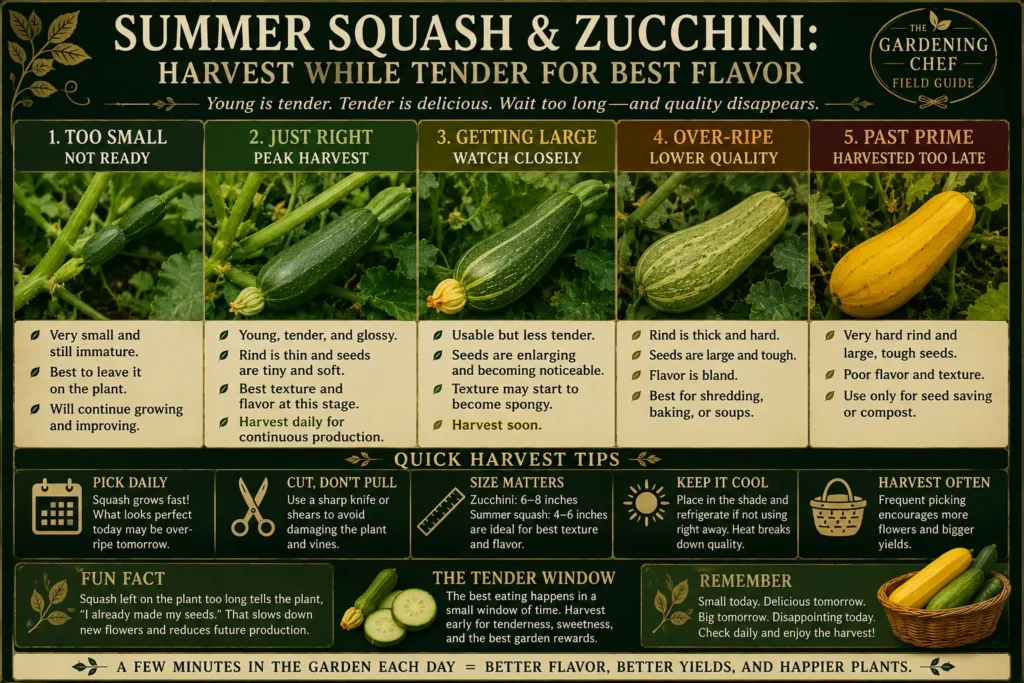
How do you know when summer squash is ready?
Harvest targets vary by type.
Virginia Cooperative Extension provides approximate ranges of:
- 6–8 inches for many elongated summer squash
- 3–4 inches in diameter for pattypan types
- 4–7 inches for yellow crookneck squash
A practical tenderness test is the rind.
If a thumbnail can still mark the skin, the fruit is generally young. Once the rind becomes difficult to mark, the squash is older and likely to contain firmer flesh and larger seeds.
Harvest these squash immediately
Pick summer squash when it is:
- Within the preferred size range
- Glossy and tender
- Beginning to lose its shine
- Hidden beneath leaves
- Pressing against the soil
- Becoming thick at the blossom end
- Showing minor surface damage
- On a plant with declining health
Remove old fruit rather than leaving it attached. Virginia Cooperative Extension specifically recommends removing overmature squash so new fruit can continue developing.
What squash can remain?
A very small, healthy squash can remain another day when it is still well below the desired size.
However, once summer squash begins growing rapidly, daily inspection becomes the safest routine.
Check beneath leaves and around the center of the plant.
How should summer squash be harvested?
Wear gloves or long sleeves if the stems and leaves irritate your skin.
Support the squash and cut the stem cleanly with a knife or pruning tool. Avoid twisting aggressively enough to damage the crown or break nearby stems.
Place the fruit gently in the harvest basket.
Tender-skinned summer squash bruises more easily than its appearance suggests.
What should happen after harvest?
Eat first
Prioritize:
- Scratched or bruised squash
- The largest fruit
- Fruit with blossom-end damage that can be trimmed
- Squash already losing its glossy appearance
- Tender blossoms intended for cooking
Store briefly
Summer squash is not a root-cellar crop.
University of Minnesota Extension estimates approximately one week under suitable conditions and recommends avoiding prolonged refrigerator storage. Virginia Cooperative Extension similarly describes summer squash as a short-storage crop.
Use it while it is still firm.
Preserve
Summer squash can be:
- Shredded and frozen for baking
- Blanched and frozen for cooked dishes
- Dehydrated
- Turned into tested pickles or relish
- Cooked into freezer-ready soup or sauce
- Mixed into ratatouille-style freezer meals
Frozen summer squash may soften after thawing, so it is best directed toward soups, sauces, casseroles, breads, fritters, and other cooked uses rather than recipes that require a crisp texture.
What can be done with an oversized zucchini?
An oversized zucchini can still provide value.
- Cut it open.
- Check for decay.
- Peel the rind if it is tough.
- Scoop out large seeds.
- Shred or chop the remaining flesh.
Use it for:
- Zucchini bread
- Fritters
- Soup
- Sauce
- Stuffed squash
- Freezer portions
- Vegetable stock ingredients
The best destination changes, but the food does not automatically become waste.
Gardening Chef verdict
Summer squash is the easiest August harvest to overlook and one of the fastest to move from premium tenderness to salvage use.
Garden Wealth lesson
A ten-inch zucchini may weigh more than a six-inch zucchini.
That does not necessarily make it more valuable.
Value includes quality, versatility, and the likelihood that the household will actually eat it.
4. Green Beans: Best Harvest for Continued Picking
Green beans are easy to underestimate because the pods blend into the foliage.
A row may appear nearly empty from above while dozens of beans hang beneath the leaves.
The challenge is collecting the pods while they remain tender.
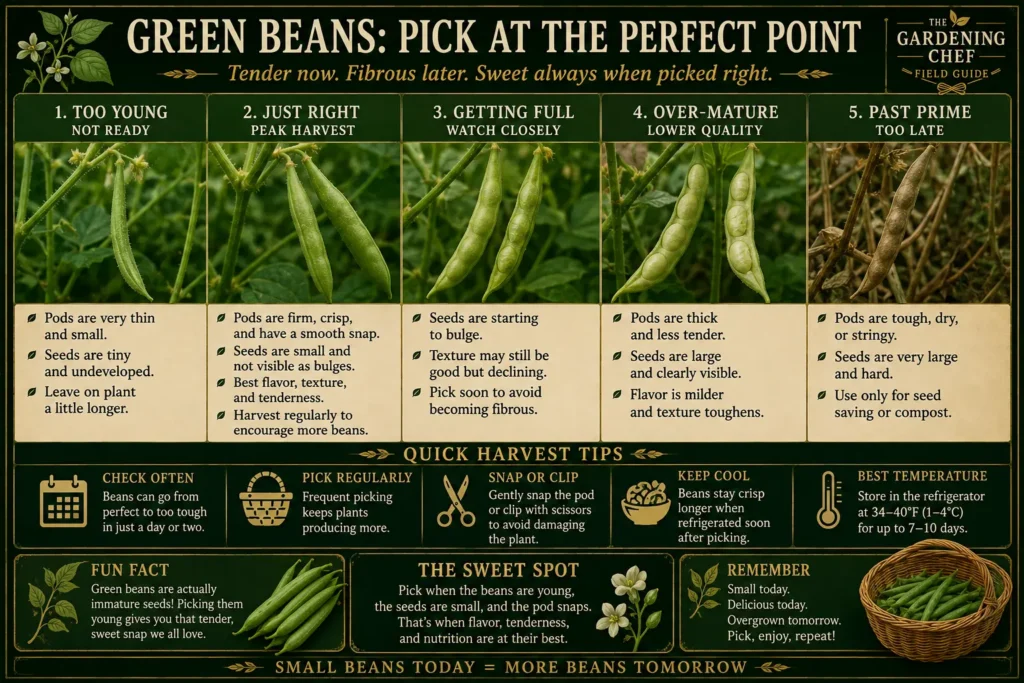
How do you know when green beans are ready?
Snap beans are generally ready when:
- The pod has reached the expected length
- The pod remains smooth and succulent
- Seeds are still immature
- The seed shapes are not prominently bulging
- The pod snaps rather than bending like a fibrous cord
University of Minnesota Extension recommends harvesting snap beans before the individual seeds become visibly prominent and the pods become fibrous.
Variety matters.
Filet beans are intentionally harvested thin. Romano-type beans may be wide and flat. Purple, yellow, striped, and green beans can all be ready even though they look different.
Harvest these beans immediately
Pick pods when they:
- Have reached the variety’s preferred size
- Are beginning to show seed bulges
- Are becoming less flexible
- Have minor surface damage
- Are hidden beneath lower foliage
- Are on a row nearing the end of production
What beans can remain?
Very slender pods that have not reached usable size can remain.
Check them again soon.
During warm weather, pod development can advance quickly.
How should beans be harvested?
Use two hands.
Hold the stem or nearby plant structure with one hand and remove the bean with the other. This reduces the risk of pulling out blossoms, breaking branches, or uprooting a small bush bean plant.
Work methodically:
- Look over the top.
- Lift the outer foliage.
- Inspect the center.
- Check beneath the row.
- Walk the opposite side.
The second view often reveals the beans missed during the first pass.
What should happen after harvest?
Eat first
Prioritize:
- Beans showing minor damage
- The largest pods
- Pods beginning to bulge
- Beans collected from declining plants
Store briefly
Snap beans should be cooled and refrigerated when they will not be cooked promptly. University of Minnesota Extension estimates roughly one week under appropriate cold, moist conditions, although actual household storage life varies.
Preserve
Green beans can be:
- Blanched and frozen
- Pressure-canned using a tested recipe
- Pickled as tested dilly beans
- Dehydrated
- Cooked and frozen in prepared dishes
Plain green beans are a low-acid vegetable and cannot be safely made shelf-stable with an ordinary boiling-water canner.
They require pressure canning unless they are sufficiently acidified through a tested pickling recipe.
What can be done with overmature beans?
The next use depends on the stage.
Slightly overmature
Remove strings if present and use in a long-cooked dish.
Fully developed but still soft seeds
Treat the crop as shelling beans when the variety and condition are appropriate.
Completely dry pods
Some varieties can be allowed to mature as dry beans or seed, provided the pods and seeds are healthy and properly dried.
A bean that has passed the snap-bean stage may have entered another useful stage.
Gardening Chef verdict
Green beans reward thorough, repeated harvesting and careful attention beneath the foliage.
Garden Wealth lesson
The visible harvest is not always the complete harvest.
A productive system often contains hidden value that must be deliberately searched for and recovered.
5. Peppers: Most Flexible Harvest Window
Peppers give the gardener choices that cucumbers and summer squash often do not.
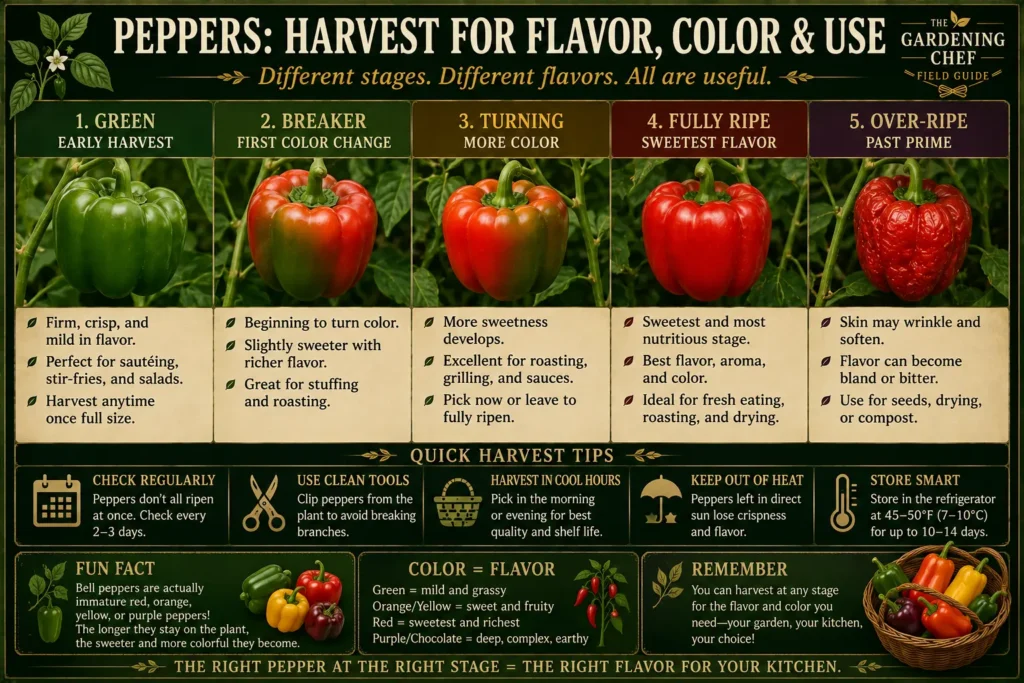
Many varieties can be harvested while green or allowed to mature into yellow, orange, red, brown, purple, or another final color.
The correct harvest stage depends on the desired flavor and use.
How do you know when a pepper is ready?
A pepper can be ready when it has:
- Reached the expected mature size
- Developed firm walls
- Taken on a glossy, healthy appearance
- Reached the color required for the intended recipe
A green bell pepper is not necessarily unharvestable.
It may be exactly what the cook wants.
Allowing a pepper to reach its final color can change sweetness, heat, aroma, and texture. University of Minnesota Extension notes that peppers do not have to turn red before harvest and that many varieties have good quality at more than one color stage.
Harvest these peppers immediately
Pick peppers when they:
- Have reached the desired color
- Have reached full usable size
- Show sunscald or minor damage
- Are beginning to soften
- Are weighing down a branch
- Are crowded against another fruit
- Are exposed to significant wildlife pressure
- Are on a branch at risk of breaking
What peppers can remain?
Healthy peppers can often remain while they continue coloring.
That makes peppers the least urgent crop in this five-crop group.
However, waiting still has tradeoffs.
A pepper left to mature occupies the plant longer and remains exposed to weather, pests, sunscald, and branch damage. Harvesting some mature peppers can also encourage the plant to continue flowering and setting fruit.
How should peppers be harvested?
Clip the stem with clean shears.
Pulling can break branches, especially when large peppers grow in clusters.
Wear gloves when harvesting hot peppers, and avoid touching the eyes or face. Capsaicin can remain on hands, tools, cutting boards, and gloves.
What should happen after harvest?
Eat first
Prioritize:
- Softening peppers
- Fruit with minor sunscald
- Peppers with small damaged areas
- Fully colored thin-walled peppers
- Any fruit from a broken branch
Store briefly
Peppers can keep longer than extremely tender summer squash, but they remain perishable.
University of Minnesota Extension estimates up to approximately two weeks under appropriate conditions while warning that peppers can suffer chilling injury at low temperatures.
Inspect stored peppers regularly rather than depending on the maximum estimate.
Preserve
Peppers can be:
- Seeded, chopped, and frozen
- Roasted and frozen
- Dehydrated
- Ground into pepper flakes or powder
- Added to tested salsa recipes
- Pickled using tested instructions
- Pressure-canned using an approved method
Peppers are one of the vegetable exceptions that do not require blanching before freezing, drying, or dehydrating, although preparation should still follow reliable preservation guidance.
Do not assume that a homemade pepper sauce, salsa, or oil mixture is safe for room-temperature storage. Use a tested recipe for shelf-stable products.
Gardening Chef verdict
Peppers offer the greatest harvest flexibility because the gardener can choose between an earlier green stage and a later fully colored stage.
Garden Wealth lesson
Flexibility has value.
A crop that can be harvested at several acceptable stages gives the gardener more ways to match supply with meals, preservation time, and household demand.
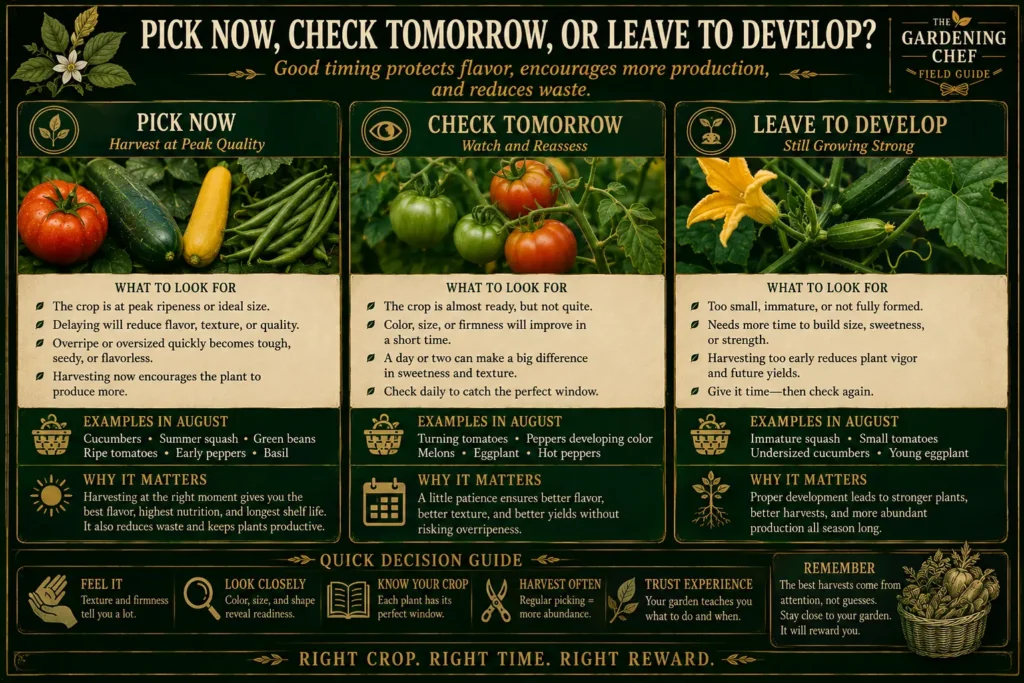
What Should Be Harvested First?
When several crops are ready at once, use this order.
Priority 1: Produce actively losing quality
Harvest first:
- Yellowing cucumbers
- Oversized summer squash
- Bulging green beans
- Cracked tomatoes
- Softening peppers
- Produce with minor pest damage
- Fruit resting on wet soil
- Vegetables on broken or collapsing stems
Priority 2: Produce at peak quality
Harvest next:
- Fully ripe tomatoes
- Properly sized cucumbers
- Tender summer squash
- Succulent snap beans
- Peppers at the desired color
Priority 3: Produce that can safely continue developing
These may remain when healthy:
- Small cucumbers
- Very young squash
- Immature beans
- Firm tomatoes still developing color
- Full-sized peppers being allowed to change color
This order protects the portion of the crop most likely to be lost.
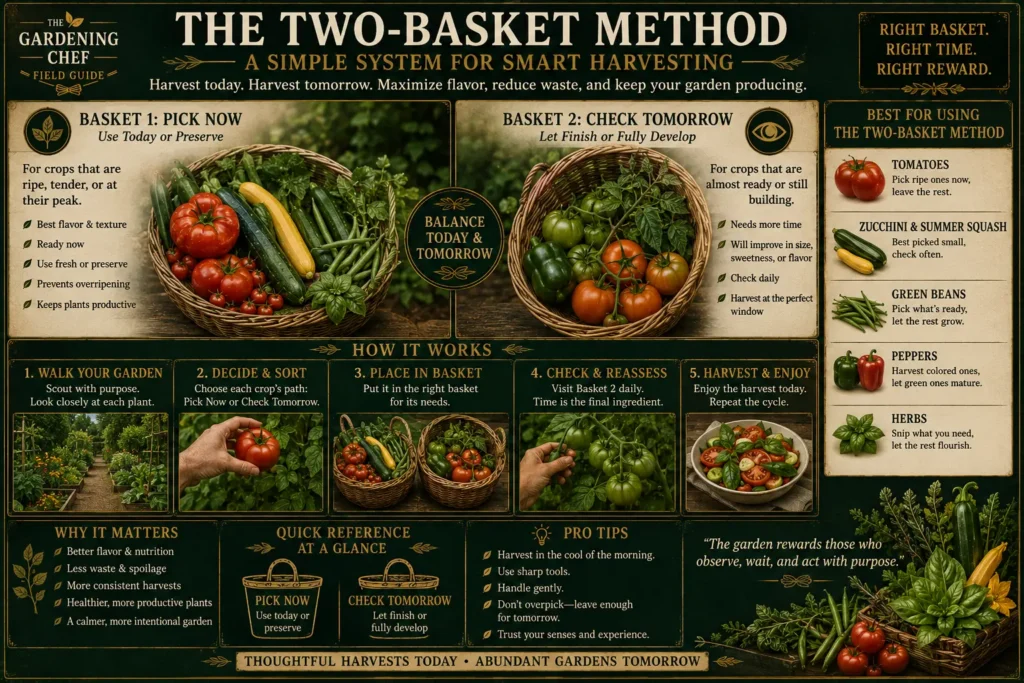
The Two-Basket Harvest Method
Carry two baskets, buckets, or shallow containers through the garden.
Basket 1: Peak Quality
Place sound produce here.
This basket is for:
- Fresh meals
- Short-term storage
- Sharing
- High-quality preservation
Basket 2: Use First
Place urgent produce here.
This includes:
- Cracked tomatoes
- Oversized cucumbers
- Scratched squash
- Bulging beans
- Softening peppers
- Produce with a small damaged area that can be safely trimmed
Do not allow this basket to disappear into the refrigerator.
Take it directly to the kitchen and make a decision.
A third small container can hold material destined for compost or disposal so decaying produce never mixes with sound food.
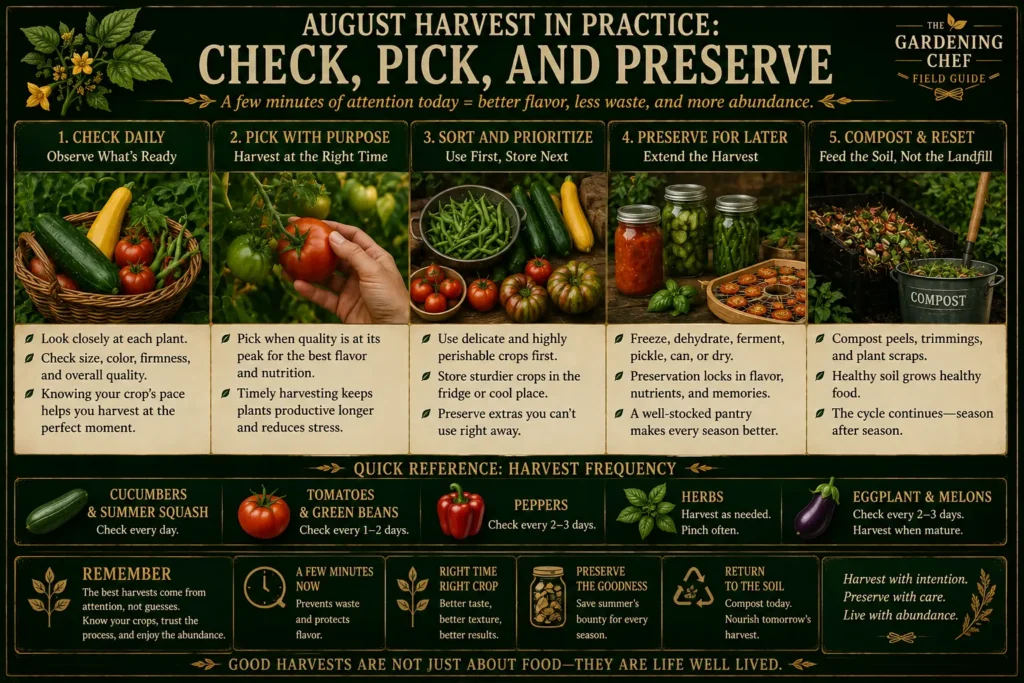
What Should Be Eaten, Stored, or Preserved First?
| Crop | Eat first | Short-term storage priority | Strong preservation routes |
|---|---|---|---|
| Tomatoes | Cracked, very ripe, thin-skinned, or damaged fruit | Keep shaded and use ripe fruit promptly | Freeze, dry, tested sauces, tested salsa, tested canned tomatoes |
| Cucumbers | Largest, palest, or softening fruit | Use quickly; avoid forgetting them in cold storage | Refrigerator pickles, tested canned pickles, relish, fermentation with tested guidance |
| Summer squash | Scratched, oversized, or less glossy fruit | Use while firm and tender | Shred and freeze, blanch and freeze, dehydrate, tested pickles or relish |
| Green beans | Bulging or slightly damaged pods | Refrigerate promptly | Blanch and freeze, pressure can, tested pickled beans, dehydrate |
| Peppers | Softening, damaged, or fully colored thin-walled fruit | Inspect regularly during storage | Freeze, roast and freeze, dry, tested pickles, pressure can |
Published storage periods assume particular temperature and humidity conditions that many homes cannot reproduce.
Treat storage estimates as planning guidance, not guarantees. Inspect produce frequently and use it before the first signs of decline become advanced.
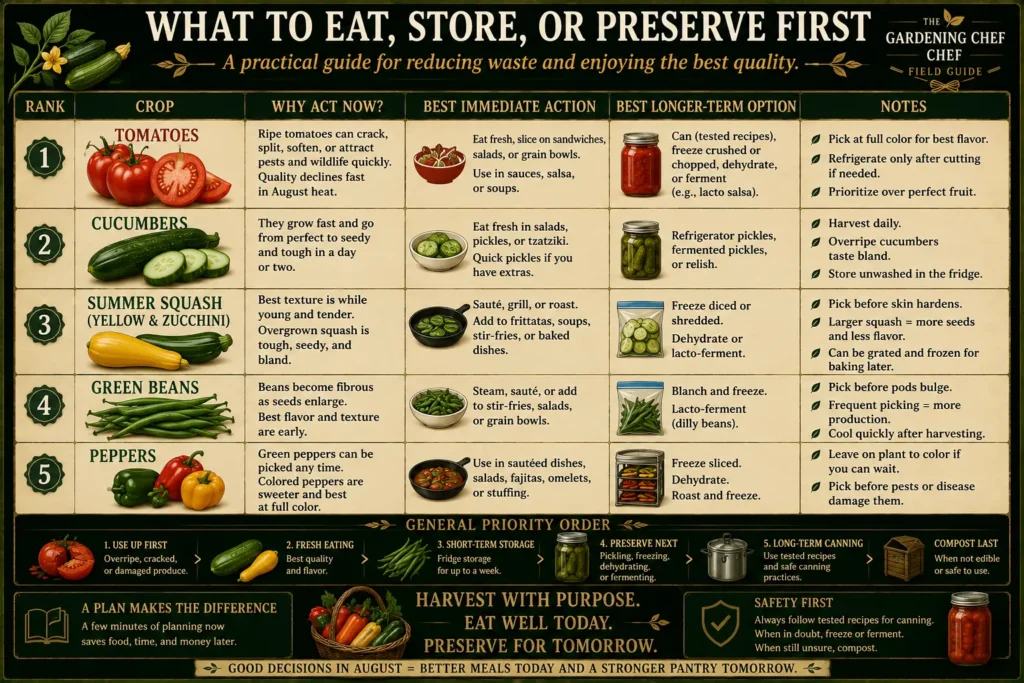
Preservation Safety: Keep This Part Simple
The garden encourages creativity.
Shelf-stable canning requires precision.
Use current tested recipes from sources such as:
- The National Center for Home Food Preservation
- USDA home-canning guidance
- Virginia Cooperative Extension
- Other university Extension food-preservation programs
Do not create shelf-stable recipes by guessing at:
- Vinegar strength
- Acid quantity
- Vegetable proportions
- Processing time
- Canner type
- Jar size
- Headspace
- Altitude adjustment
Freezer recipes and refrigerator pickles allow more flexibility because they are not being stored unrefrigerated on a pantry shelf.
Plain green beans and peppers are low-acid vegetables and require pressure canning for shelf-stable storage unless prepared through a tested acidified recipe. Tomato-canning directions may also require bottled lemon juice, citric acid, or another specified acidification step.
The Fifteen-Minute August Harvest Walk
A small garden does not always require an elaborate harvest day.
It may require fifteen focused minutes.
Minutes 0–3: Cucumbers
Look beneath leaves and along the back of the trellis.
Harvest anything at the preferred size or beginning to pale.
Minutes 3–6: Summer squash
Inspect the center of the plant and beneath the largest leaves.
Remove tender squash and any oversized fruit that was previously missed.
Minutes 6–9: Tomatoes
Collect ripe, cracked, damaged, or wildlife-exposed fruit.
Place it carefully in a shallow container.
Minutes 9–12: Green beans
Inspect both sides of the row.
Use two hands and check beneath the foliage.
Minutes 12–14: Peppers
Clip peppers at the desired size or color.
Check branches for crowding and breakage.
Minute 15: Sort the harvest
Separate:
- Peak quality
- Use first
- Preserve
- Share
- Compost
The fifteen-minute walk prevents a small quality problem from becoming tomorrow’s waste problem.
The August Harvest Dividend
The value of a garden is not measured only by how much it produces.
It is also measured by how much of that production is successfully recovered.
August harvesting can create several kinds of return:
- Fresh food
- Grocery savings
- Preserved ingredients
- Shared abundance
- Recipe development
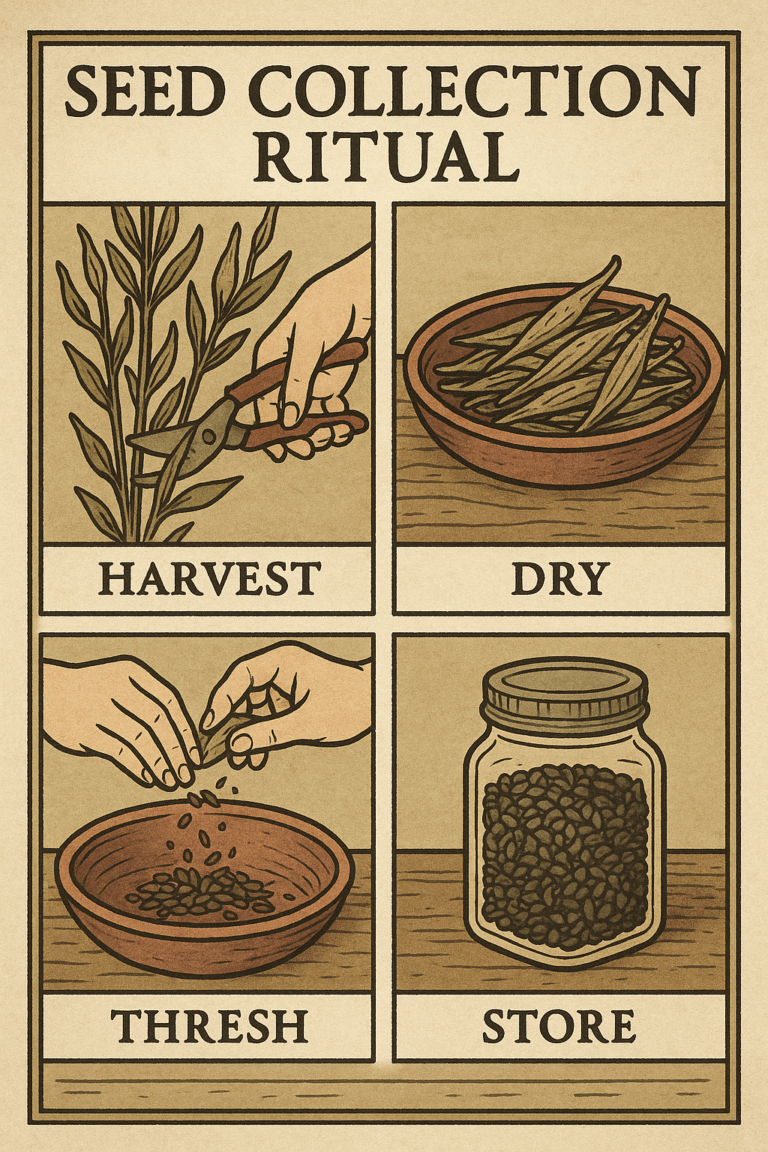
- Seed-saving opportunities
- Compost material
- Better knowledge of variety performance
- More informed planting decisions next year
A cucumber harvested at the right moment may become lunch.
A cucumber missed beneath the leaves may become compost.
The soil, plant, water, trellis, labor, and time were invested in both.
The difference is the harvest decision.
That is the Harvest Dividend.
The garden grows the potential.
The gardener captures the return.
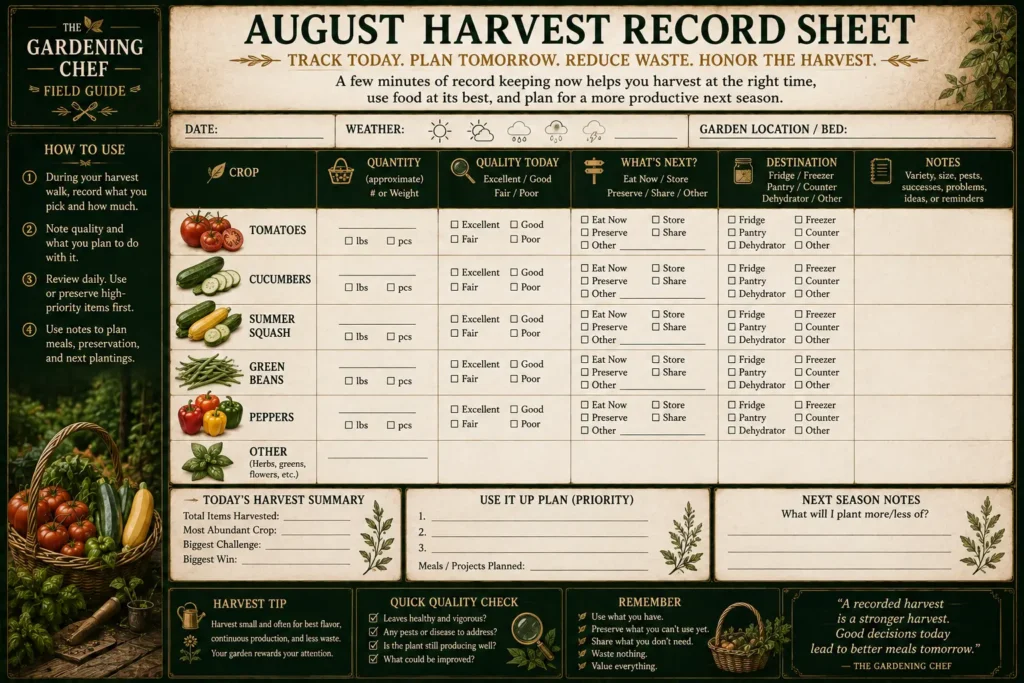
Keep an August Harvest Record
An evergreen guide becomes more valuable when it is combined with records from the actual garden.
Record:
- Crop and variety
- First harvest date
- Peak harvest period
- Preferred harvest size
- How often the crop required checking
- Common quality problems
- Total approximate harvest
- Best recipes
- Preservation method used
- Amount wasted
- Whether the household wanted more or less
- Whether the variety should be planted again
A seed catalog provides an estimate.
Your records reveal how the crop performed in your soil, weather, elevation, watering system, and kitchen.
Frequently Asked Questions
What vegetables are commonly harvested in August in Central Virginia?
Common August harvests include tomatoes, cucumbers, summer squash, green beans, peppers, eggplant, okra, sweet corn, melons, herbs, and potatoes, depending on when they were planted and how they have performed.
This guide focuses on five crops that combine high August availability with important harvest-timing decisions.
Which vegetables should be checked every day?
Cucumbers and summer squash deserve the most frequent attention during peak production because they can grow beyond preferred harvest size quickly.
A large planting, warm weather, or recent rainfall may justify more than one look per day.
Should tomatoes ripen completely on the vine?
Tomatoes intended for immediate fresh eating can be allowed to become fully colored while remaining firm.
However, cracking, wildlife, disease, severe weather, and plant decline may justify harvesting after the fruit has begun coloring and allowing it to finish indoors.
Can peppers be harvested while they are green?
Yes.
Many peppers are usable at the green stage. Other peppers can be left to develop their mature yellow, orange, red, brown, purple, or other final color.
The correct stage depends on the variety and intended use.
Can an oversized zucchini still be eaten?
Often, yes.
Check it for decay, peel a tough rind, remove developed seeds, and use the remaining flesh in breads, fritters, soups, sauces, stuffed squash, or freezer recipes.
Why should overgrown cucumbers and squash be removed?
Overgrown fruit may lose eating quality, become heavily seeded, and remain hidden until it decays.
Removing old summer squash allows the plant to direct resources toward developing fruit. Large cucumbers left on the vine can also reduce continued yield.
What should be preserved first?
Preserve sound produce at peak quality.
Use cracked, bruised, softening, or slightly damaged vegetables immediately rather than placing them into long-term storage.
Do not preserve decayed produce.
Should vegetables be harvested in the morning?
Morning is often preferred because produce has not accumulated the full heat of the day.
Wait until foliage has dried when moving among plants that may spread disease through wet leaves.
Can plain green beans be canned in a boiling-water canner?
No.
Plain green beans are low-acid and require pressure canning for shelf-stable storage. A tested pickled-bean recipe may use a boiling-water process because the beans are properly acidified.
Your August Harvest Action
Spend fifteen minutes in the garden today.
Do not begin by looking for the most beautiful vegetable.
Look for the crop most likely to lose quality first.
- Check beneath the cucumber leaves.
- Search the center of every squash plant.
- Remove cracked and fully ripe tomatoes.
- Inspect both sides of the bean row.
- Clip peppers according to the color you want.
- Sort everything before entering the kitchen.
The objective is not merely to fill a basket.
It is to recover the crop while it still has the greatest number of useful destinations.
What Comes Next?
This article is Part 2 of a three-part August garden-to-kitchen series.
Part 1: Plant
5 Best Vegetables to Plant in August in Central Virginia: Lynchburg Planting Dates, Harvest Windows & More
Learn which fall vegetables should enter the soil now, which planting windows are closing, and why carrots should be planted before spinach.
Part 2: Harvest
5 Things to Harvest in August in Central Virginia
You are here.
Part 3: Cook and Preserve
Coming next: 5 August Crops and 25 Garden-to-Kitchen Recipes
The five crops in this guide will each receive five practical transformations:
- Fresh
- Fast
- Hearty
- Preserved
- Low-waste
The result will be twenty-five ways to use tomatoes, cucumbers, summer squash, green beans, and peppers.
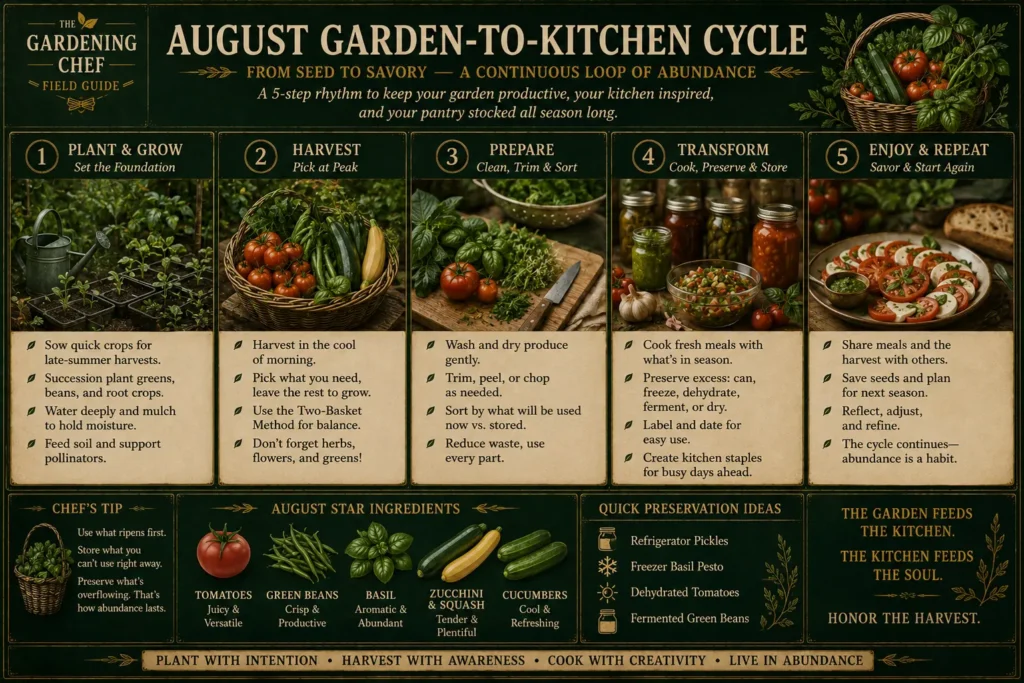
Get the Next Garden-to-Kitchen Guide
The work does not end when the basket enters the house.
The next decision is how to transform a short-lived harvest into meals, preserved ingredients, and future value.
Join The Gardening Chef newsletter to receive the final part of the August series:
Coming next: 5 August Crops and 25 Garden-to-Kitchen Recipes
The guide will include five uses for each harvest:
- Fresh
- Fast
- Hearty
- Preserved
- Low-waste
Practical seasonal guidance, Field Library resources, and garden-to-kitchen lessons. Sent when there is something worth planting, harvesting, cooking, or preserving.
Continue Through the Gardening Chef System
This harvest guide connects to the following foundational articles:
Learn how a garden can create food, savings, skills, resilience, content, products, and future opportunity.
Explore why productive systems depend on the quality of the foundation beneath them.
Build a better garden through approximately fifteen minutes of focused daily attention
This article also connects to the Field Guide Library.
About This Guide
This guide is written from Lynchburg, Virginia, where I have lived for nearly twenty years.
I also spent approximately thirty years in Saratoga Springs, New York. Growing in both regions taught me that the calendar date alone never tells the entire story.
August in Central Virginia can bring:
- Intense heat
- High humidity
- Heavy rainfall
- Dry stretches
- Rapid vegetable growth
- Disease pressure
- Wildlife pressure
- Declining early plantings
- New production from later plantings
The exact harvest date will depend on the variety, planting date, weather, elevation, soil, water availability, and conditions in the individual garden.
Use this guide as a decision system.
Then observe:
- How quickly the crop changes
- What size your household prefers
- Which varieties remain tender
- What stores well in your home
- What preservation methods you actually use
- What your family wants to eat again
Record what happens.
Adjust next year.
That is how a general harvest guide becomes your harvest guide.
The August Basket
August can make a garden look almost impossibly generous.
Tomatoes fill the counter.
Cucumbers hide beneath the leaves.
Squash seems to grow while the gardener is standing beside it.
Beans appear only after the row has already been searched.
Peppers wait quietly, changing color at their own pace.
But abundance is not the same as permanence.
Every harvest carries a clock.
Some crops offer several days.
Some offer one more afternoon.
Some have already moved from perfect to urgent.
The gardener’s task is not to stop that clock.
It is to recognize the moment when the food has reached its highest useful value—and move it into the next part of the system.
Into the basket.
Into the kitchen.
Into tonight’s meal.
Into the freezer, dehydrator, pickle jar, preservation plan, or sharing box.
August is not only the month when the garden produces.
It is the month when the gardener must decide what that production will become.
So begin with the crops that cannot wait.
Find the cucumbers.
Check beneath the squash leaves.
Pick the beans before they bulge.
Protect the tomatoes that are ready.
Choose the pepper color your kitchen needs.
Then carry the basket inside.
The garden has completed its part.
The transformation is about to begin.