The Leafy Greens & Bitter Greens Field Guide
The Nutrition, Flavor, and Everyday Vitality Guide
Tender Leaves. Deep Flavor. Daily Harvests. Real Kitchen Value.
The Leafy Greens & Bitter Greens Guide Promise
This is not just a salad guide.
It is a kitchen-and-garden field guide for understanding one of the most useful food groups a home gardener can grow: leaves.
Leafy greens are often treated as background food. They sit under dressing, fill out a sandwich, disappear into smoothies, or get pushed to the side of a plate as the “healthy part” of dinner.
But in a real kitchen garden, greens are not background.
They are rhythm crops.
They are the crops that bring the garden into daily life. A tomato plant may take months to produce. A winter squash may ask for a full season before it becomes storage food. Garlic may teach compounding over many months.
But greens can enter the kitchen quickly.
A few baby lettuce leaves.
A handful of spinach.
A bunch of kale.
A cutting of Swiss chard.
A peppery pinch of arugula.
A bitter dandelion leaf.
A rosette of tatsoi.
A head of radicchio.
A pot of escarole and beans.
A pan of collards with garlic, vinegar, and broth.
Leafy greens teach that not all wealth arrives as a dramatic harvest basket.
Some wealth arrives leaf by leaf.
This guide is for the gardener who wants steady harvests, the cook who wants better meals, the preserver who wants less waste, and the Wealth Garden reader who understands that daily-use crops create a kind of quiet abundance that matters far more than people realize.
Save this guide if you want to:
Understand the difference between tender greens, cooking greens, bitter greens, spicy greens, Asian greens, and cold-season greens.
Know when to harvest baby leaves, mature leaves, whole heads, outer leaves, stems, and bolting greens.
Learn which greens are best raw, sautéed, wilted, stir-fried, braised, fermented, frozen, dried, sauced, or added to soups.
Use bitterness as a culinary tool instead of avoiding it.
Build a steady cut-and-come-again harvest rhythm.
Grow greens in containers, raised beds, small gardens, cool seasons, partial shade, and succession plantings.
Reduce grocery waste by harvesting only what you need.
Turn extra greens into freezer packs, pestos, green sauces, soup bases, powders, ferments, and quick pickles.
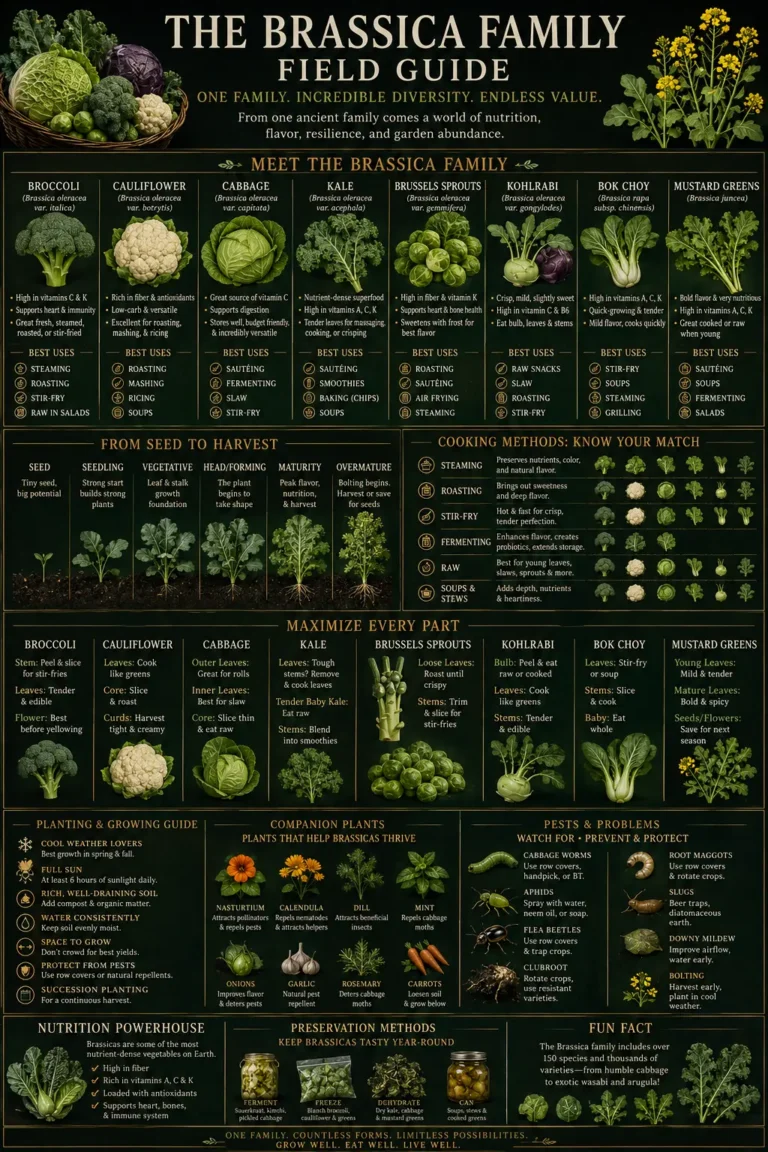
Connect leafy greens to herbs, garlic, onions, beans, potatoes, peppers, preservation, and The Gardening Chef Field Guide Library.
Start Here: Choose Your Reading Path
| If you are… | Start with… | You will learn… |
|---|---|---|
| A beginner gardener | The Core Lesson: Plant Small, Harvest Often | Why greens are one of the best crops for fast feedback and daily garden habits. |
| A home cook | Leafy Greens and Bitter Greens at a Glance | Which greens belong raw, cooked, braised, wilted, fermented, or preserved. |
| A salad lover | Tender Greens and Fresh Uses | How lettuce, spinach, arugula, mizuna, tatsoi, radicchio, endive, and young leaves behave. |
| A soup and comfort-food cook | Cooking Greens and Braising Greens | How kale, collards, chard, escarole, mustard greens, and dandelion greens deepen meals. |
| A preserver | Preservation Guide for Leafy Greens | How to freeze, dry, ferment, pickle stems, and turn greens into sauces. |
| A pantry builder | The Green Rhythm Effect | Why greens are not storage crops in the same way potatoes are, but still create enormous daily value. |
| A Wealth Garden reader | Leafy Greens as Rhythm Crops | How daily harvests, small habits, and repeated attention create a living food system. |
Leafy Greens & Bitter Greens Master Index
| Section | Use it when… |
|---|---|
| The Guide Promise | You want the big-picture reason leafy greens matter. |
| Why Greens Deserve Their Own Guide | You want to understand greens as more than salad. |
| The Core Rhythm | You want the “plant small, harvest often” system. |
| Life Stages of Leafy Greens | You want to know when leaves are tender, mature, bolting, or seed-ready. |
| Greens at a Glance | You want a fast comparison chart. |
| Deep Field Entries | You want details for lettuce, spinach, kale, chard, arugula, mizuna, tatsoi, collards, dandelion, mustard, radicchio, bok choy, endive, escarole, beet greens, turnip greens, and microgreens. |
| Bitter Greens Guide | You want to understand bitterness and how to balance it. |
| Kitchen Decision Guide | You need to know what to do with a harvest today. |
| Preservation Guide | You have more greens than you can eat fresh. |
| Growing Notes | You want better germination, harvest, succession planting, and season extension. |
| Common Problems | Your greens are bolting, bitter, bug-eaten, yellowing, or wilting. |
| Safety and Foraging Notes | You want to avoid unsafe harvest, spoiled greens, or risky wild-gathering mistakes. |
| Wealth Garden Connection | You want the deeper system lesson behind greens. |
| FAQ | You want quick answers for common leafy green questions. |
Leafy Greens & Bitter Greens
The Nutrition and Vitality Field Guide
Some crops ask for patience.
Leafy greens ask for attention.
They do not always demand a whole season. They do not always need a deep pantry shelf. They do not always arrive in a dramatic basket like tomatoes, squash, cucumbers, or potatoes.
Instead, greens offer something quieter and more immediate.
A handful of lettuce before lunch.
A bowl of spinach folded into eggs.
A bunch of kale added to soup.
A few leaves of Swiss chard cut from the outside of the plant.
A peppery bite of arugula on pizza.
A crisp rib of bok choy in a stir-fry.
A bitter leaf of radicchio balanced with citrus and cheese.
A pot of escarole and white beans on a cool evening.
Leafy greens are some of the most practical crops a gardener can grow because they enter the kitchen quickly and often. They can become salads, sautés, soups, stir-fries, smoothies, wraps, pestos, ferments, braises, bowls, sandwiches, sauces, garnishes, and side dishes.
But they also teach a deeper lesson.
Not all greens are the same.
Some are tender.
Some are tough.
Some are mild.
Some are bitter.
Some are peppery.
Some are buttery.
Some are crisp.
Some are earthy.
Some are best raw.
Some are better cooked.
Some thrive in spring.
Some handle fall and winter.
Some bolt quickly in heat.
Some can be harvested leaf by leaf and keep producing.
This is why the Leafy Greens & Bitter Greens Guide exists.
It is not just a guide to eating salad.
It is a guide to freshness, rhythm, resilience, bitterness, cooking, preservation, and everyday vitality.
Because greens do not only feed the body.
They teach the gardener how to show up often.
Why Leafy Greens Deserve Their Own Field Guide
Leafy greens are often treated as the “healthy” part of the plate.
A salad on the side.
A pile of spinach under dinner.
A green smoothie.
A garnish.
A bag of lettuce that may or may not survive the refrigerator.
But in a real kitchen garden, greens are much more than that.
They are timing crops.
They are quick crops.
They are cool-season crops.
They are cut-and-come-again crops.
They are bitter crops.
They are cooking crops.
They are fresh crops.
They are resilience crops.
They are connection crops.
A tomato plant may take months before it gives its first ripe fruit.
Many greens can begin feeding you much sooner.
That matters.
For beginners, leafy greens provide fast feedback. You plant seed, see sprouts, thin seedlings, harvest baby leaves, and begin eating from the garden while slower crops are still growing. That early success builds confidence.
For cooks, greens bring range. Lettuce is not kale. Kale is not spinach. Spinach is not mustard. Mustard is not radicchio. Radicchio is not bok choy. Bok choy is not dandelion. Escarole is not collards. Swiss chard is not arugula.
Each green has a different job.
Some bring crunch.
Some bring tenderness.
Some bring bitterness.
Some bring heat.
Some bring body.
Some bring color.
Some bring mineral depth.
Some bring freshness to heavy meals.
Some make soups and beans feel complete.
This is the heart of The Gardening Chef system:
Grow what you will use.
Learn how it behaves.
Match the harvest to the meal.
Leafy greens reward that approach beautifully.
Field Guide Poster Preview
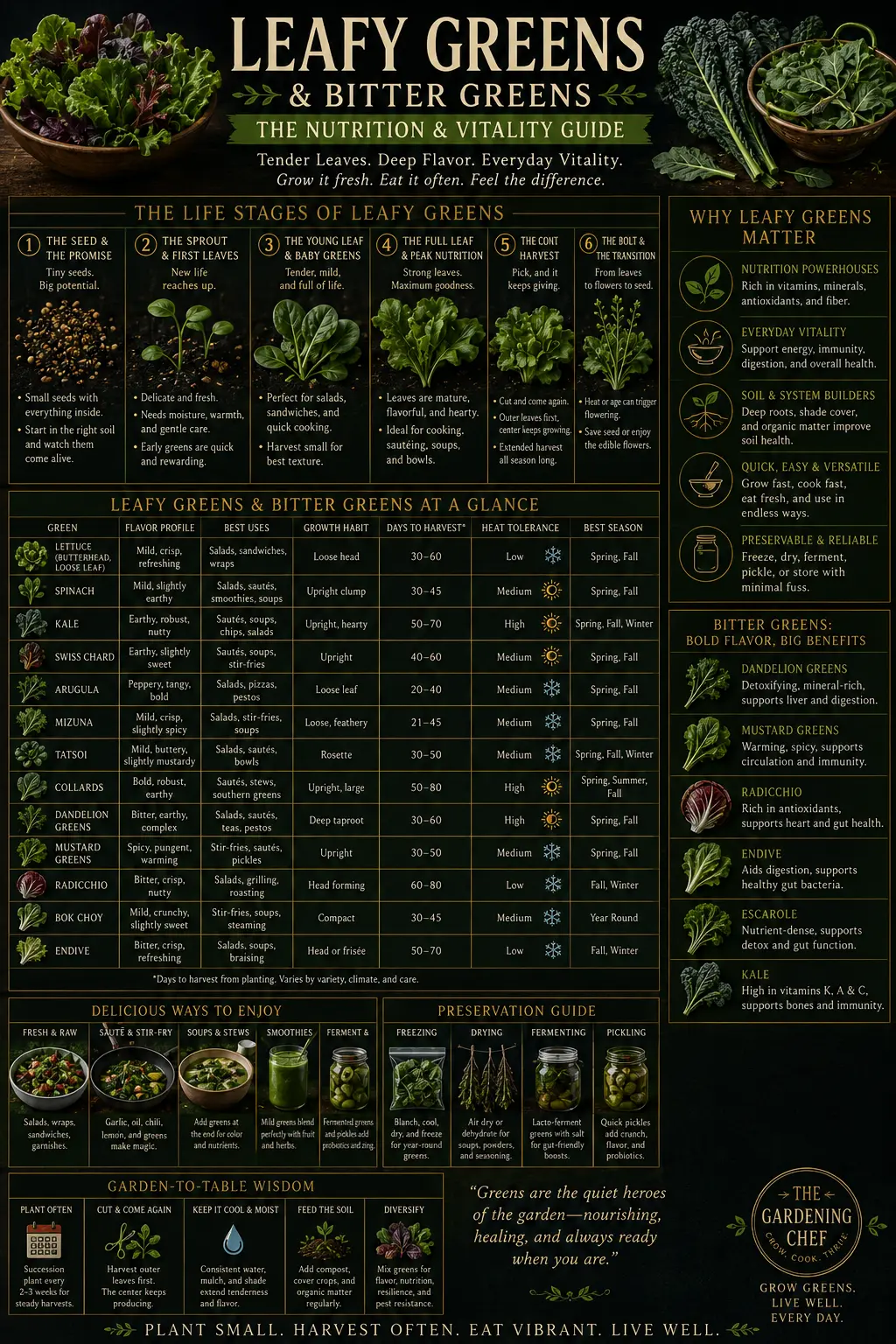
The Leafy Greens & Bitter Greens: Nutrition and Vitality Guide poster is designed as a visual kitchen and garden reference for cooks, gardeners, and anyone who wants to understand greens beyond “salad.”
Use the printable poster when you need to remember:
Which greens are best raw.
Which greens are best cooked.
Which greens are tender.
Which greens are bitter.
Which greens are spicy.
Which greens tolerate heat.
Which greens prefer cool seasons.
Which greens work for cut-and-come-again harvests.
Which greens can be preserved.
How to use greens in everyday meals.
How to pair bitter greens so they taste intentional.
How to build a steady harvest rhythm instead of one overwhelming planting.
This guide belongs in a kitchen, pantry, garden binder, seed-planning notebook, meal-prep station, seasonal planting plan, or harvest journal.
Download the Printable Leafy Greens & Bitter Greens Guide — $0.99
[Button: Download the Leafy Greens & Bitter Greens Guide]
The Core Lesson: Plant Small, Harvest Often
Leafy greens teach one of the most important garden rhythms:
Plant small. Harvest often. Eat vibrant.
Many crops ask you to wait for one big moment.
Greens often reward repeated attention.
You can harvest outer leaves while the center keeps growing. You can sow small patches every couple of weeks. You can grow baby greens for tenderness or let plants mature for larger cooking leaves. You can plant spring greens, fall greens, and in some climates, winter greens. You can use shade, containers, cold frames, row cover, and succession planting to stretch the harvest.
This changes how a gardener thinks.
Instead of asking:
“When is the harvest?”
You begin asking:
“How can I keep the harvest going?”
That is the leafy green mindset.
A little today.
A little next week.
Another sowing after that.
A fresh handful before dinner.
A cutting for lunch.
A bunch for soup.
A few bitter leaves to balance a rich meal.
Leafy greens are not only crops.
They are a rhythm.
The Life Stages of Leafy Greens
Leafy greens move quickly compared with many fruiting crops.
Each stage has a different kind of value.
Seed. Sprout. Baby leaf. Full leaf. Cut-and-come-again harvest. Bolting. Flowering. Seed.
Understanding these stages helps the gardener use greens at their best instead of forcing every leaf into the same role.
1. The Seed and the Promise
Leafy green seeds are often tiny.
Lettuce seeds. Mustard seeds. Kale seeds. Arugula seeds. Spinach seeds. Mizuna seeds. Tatsoi seeds. Endive seeds.
They look small enough to underestimate.
But inside each seed is the beginning of a meal.
A tray of baby greens can begin as a pinch of seed. A row of lettuce can begin as a packet. A succession planting can turn a handful of seeds into weeks of fresh harvests.
This is the promise stage.
The seed holds potential, but the gardener must give it the right beginning.
Moisture matters.
Temperature matters.
Soil contact matters.
Timing matters.
Light matters for some seeds.
Depth matters for most seeds.
Many greens prefer cooler weather. Some struggle in heat. Some germinate best in specific temperature ranges. A seed planted at the wrong time may fail, bolt quickly, or produce bitter leaves before the gardener ever gets a good harvest.
The seed teaches timing.
2. The Sprout and First Leaves
The sprout stage is delicate and hopeful.
Tiny leaves appear. The plant reaches upward. The row begins to show life.
This stage matters because young greens can be vulnerable. They may need steady moisture, protection from crusted soil, relief from slugs or flea beetles, and thinning so each plant has enough space to develop.
But sprouts also bring quick encouragement.
Leafy greens are often among the first crops to show visible progress.
That matters for morale.
A garden that gives early signs of life keeps the gardener engaged.
3. The Young Leaf and Baby Greens Stage
Baby greens are tender, mild, and quick.
This is one of the most valuable stages for salads, sandwiches, wraps, bowls, garnishes, and quick sautés.
Baby spinach, baby kale, baby lettuce, baby arugula, baby mustard, mizuna, tatsoi, and other greens can be harvested early for delicate texture.
The baby green stage teaches that maturity is not always the goal.
Sometimes the young stage is the premium harvest.
Baby greens are often sweeter, softer, and more flexible than mature leaves. They can be eaten raw more easily and fit into meals without heavy cooking.
But baby greens also require care.
They wilt quickly. They need gentle washing. They should be used fresh. They are valuable because they are tender.
The gardener learns to harvest with a light hand.
4. The Full Leaf and Peak Kitchen Stage
As greens mature, they become stronger.
The leaves grow larger. The flavor deepens. The texture changes. Some become tougher. Some become more bitter. Some become more substantial. Some move from salad greens into cooking greens.
This is the stage where the kitchen decision changes.
A mature kale leaf may be too firm for a delicate salad unless it is massaged, sliced thin, or cooked. Mature collards want braising, sautéing, simmering, or slow cooking. Mustard greens can become spicy and assertive. Swiss chard becomes earthy, colorful, and useful in soups and sautés. Escarole becomes perfect for beans and broth.
Full leaves are not worse than baby leaves.
They are different.
They ask for different cooking.
The best cook does not force every green into salad.
The best cook asks:
Does this leaf want to be raw, wilted, sautéed, simmered, braised, fermented, frozen, sauced, or preserved?
5. The Cut-and-Come-Again Harvest
Many greens can be harvested by taking outer leaves while allowing the center to keep growing.
This is one of the most useful techniques in the garden.
Instead of pulling the whole plant, the gardener harvests a few leaves at a time. The plant continues producing. The kitchen receives a steady supply. Waste is reduced because only what is needed is cut.
This is a perfect Gardening Chef lesson:
Harvest only what you can use.
Let the system keep producing.
Cut-and-come-again crops teach restraint, rhythm, and respect. They also make small gardens more productive because the same plant can feed the kitchen multiple times.
6. The Bolt and Transition
Eventually, many greens bolt.
Bolting means the plant shifts from leaf production to flowering and seed production. This often happens in response to heat, day length, stress, or maturity.
When greens bolt, the flavor often changes. Lettuce may become bitter. Arugula may become sharper. Mustard may become stronger. Leaves may toughen. The plant is moving from food production to reproduction.
This is not always failure.
Bolting can provide flowers for pollinators, seeds for saving, and lessons for next season. Some bolted parts may still be edible depending on the plant and stage, but the main leaf harvest usually declines.
Bolting teaches timing.
Greens are not permanent.
They are seasonal conversations.
The gardener must learn when to sow, when to harvest, when to replant, and when to let a plant finish its cycle.
Leafy Greens and Bitter Greens at a Glance
| Green | Flavor Profile | Best Uses | Growth Habit | Typical Days to Harvest | Heat Tolerance | Best Season |
|---|---|---|---|---|---|---|
| Lettuce | Mild, crisp, refreshing | Salads, sandwiches, wraps, lettuce cups | Loose-leaf or head | 30–60 | Low | Spring, fall |
| Spinach | Mild, slightly earthy | Salads, sautés, smoothies, soups, eggs | Upright clump | 30–45 | Low to medium-low | Spring, fall |
| Kale | Earthy, robust, slightly sweet after cold | Soups, sautés, chips, salads, bowls | Upright, hearty | 50–70 | Medium-high | Spring, fall, winter |
| Swiss Chard | Earthy, slightly sweet | Sautés, soups, stir-fries, gratins | Upright, colorful stems | 40–60 | Medium | Spring, summer, fall |
| Arugula | Peppery, tangy, bold | Salads, pizza, pesto, sandwiches | Loose-leaf | 20–40 | Medium-low | Spring, fall |
| Mizuna | Mild, crisp, slightly spicy | Salads, stir-fries, soups, bowls | Loose, feathery | 21–45 | Medium | Spring, fall |
| Tatsoi | Mild, buttery, slightly mustardy | Salads, sautés, soups, bowls | Rosette | 30–50 | Medium | Spring, fall, winter |
| Collards | Bold, robust, earthy | Braises, stews, sautés, Southern greens | Upright, large leaves | 50–80 | High | Spring, summer, fall |
| Dandelion Greens | Bitter, earthy, complex | Salads, sautés, teas, pestos, soups | Deep taproot | 30–60 | High | Spring, fall |
| Mustard Greens | Spicy, pungent, warming | Stir-fries, sautés, soups, pickles | Upright | 30–50 | Medium | Spring, fall |
| Radicchio | Bitter, crisp, nutty | Salads, grilling, roasting | Head-forming | 60–80 | Low | Fall, winter |
| Bok Choy | Mild, crunchy, slightly sweet | Stir-fries, soups, steaming, braising | Compact | 30–45 | Medium-low | Spring, fall |
| Endive | Bitter, crisp, refreshing | Salads, braising, soups, grilling | Head or frisée | 50–70 | Low | Fall, winter |
| Escarole | Mildly bitter, broad, hearty | Soups, beans, sautés, salads | Loose head | 50–70 | Medium-low | Fall, spring |
| Beet Greens | Earthy, tender when young | Sautés, soups, mixed greens, stems | Root crop with edible tops | 30–60 for greens | Medium | Spring, fall |
| Turnip Greens | Peppery, earthy, robust | Braises, sautés, soups, Southern greens | Root crop with edible tops | 30–60 for greens | Medium-high | Spring, fall |
| Microgreens | Concentrated, varied | Garnish, salads, sandwiches, bowls | Tray-grown seedlings | 7–21 | Indoor controlled | Year-round |
Lettuce: The Tender Gateway Green
Lettuce is often the first green people think of when they hear the word salad.
It is mild, crisp, refreshing, and accessible. It does not demand a complicated recipe. It can become salads, wraps, sandwiches, burger toppings, taco layers, lettuce cups, fresh bowls, and simple side dishes.
But lettuce is also a powerful beginner crop.
Loose-leaf lettuce can be harvested young and repeatedly. It grows quickly in cool weather and gives the gardener fast success. A pot or small patch of lettuce can change lunch within a few weeks.
Lettuce is best when grown in cool conditions. Heat can make it bolt and turn bitter. This is one reason store-bought lettuce often feels like a refrigerator product, while garden lettuce feels seasonal.
Lettuce teaches freshness.
It is not a storage crop. It is not a pantry crop. It is not a heavy cooking crop.
It is a daily-use crop.
Best Uses:
Salads, sandwiches, wraps, lettuce cups, burgers, tacos, fresh bowls, garnish.
Garden Value:
Lettuce is excellent for beginners, containers, succession planting, and early-season harvests. Loose-leaf types are especially useful for cut-and-come-again harvesting.
Kitchen Lesson:
Lettuce should be clean, crisp, dry enough to hold dressing, and used while fresh. Good salad is often less about complicated toppings and more about properly handled leaves.
Leafy Green Lesson:
Lettuce teaches that freshness has value even when it does not store long.
Spinach: The Soft Power Green
Spinach is tender, mild, and flexible.
It can be eaten raw as baby leaves, wilted into pasta, folded into eggs, added to soups, blended into smoothies, stirred into curries, or used in casseroles and fillings.
Spinach is one of the most useful greens because it cooks down quickly. A huge pile of leaves can become a small, tender portion in the pan. That can feel disappointing if you expected volume, but powerful if you understand its role.
Spinach is a concentrator.
It brings green nutrition and mild flavor without taking over the dish.
Spinach prefers cooler weather and may bolt in heat. It is often best in spring and fall. Baby spinach is excellent raw, while mature spinach is often better cooked.
Best Uses:
Salads, sautés, soups, eggs, smoothies, pasta, curries, casseroles, fillings.
Garden Value:
Spinach is useful because it grows quickly, fits small spaces, and works in both raw and cooked meals.
Kitchen Lesson:
Use baby spinach raw and mature spinach cooked. Add it near the end of cooking when you want it wilted but still green.
Leafy Green Lesson:
Spinach teaches versatility. A tender green can move from salad bowl to soup pot without losing its purpose.
Kale: The Resilient Cooking Green
Kale has become famous, but its value is real.
It is sturdy, hearty, earthy, and resilient. It can be cooked into soups, sautéed with garlic, baked into chips, massaged into salads, blended into smoothies, added to grain bowls, or simmered with beans.
Kale is not as delicate as lettuce or spinach.
That is its strength.
It can handle cold. Some varieties taste sweeter after frost. It can stand in the garden longer than many tender greens. It can be harvested leaf by leaf, giving repeated value over time.
But kale also needs good handling in the kitchen.
Mature kale can be tough if treated like lettuce. It often benefits from slicing thin, massaging with oil and salt, cooking, or pairing with acid, garlic, herbs, beans, potatoes, sausage, grains, or soups.
Kale is not a garnish.
It is a structure green.
Best Uses:
Soups, sautés, kale chips, salads, grain bowls, smoothies, beans, stews.
Garden Value:
Kale is excellent for extended harvest, cool-season growing, fall and winter gardens, and gardeners who want a reliable cooking green.
Kitchen Lesson:
Remove tough stems when needed. Slice thin for raw salads, massage with oil and salt, or cook until tender.
Leafy Green Lesson:
Kale teaches resilience. A strong leaf can feed you longer when treated properly.
Swiss Chard: The Colorful Workhorse
Swiss chard is one of the most beautiful cooking greens.
Its stems can be white, red, yellow, orange, pink, or rainbow-colored. Its leaves are broad, glossy, and generous. In the garden, chard looks almost ornamental. In the kitchen, it behaves like a practical workhorse.
Chard is earthy, slightly sweet, and useful in sautés, soups, stir-fries, gratins, casseroles, omelets, pasta, and bean dishes.
One of the best things about chard is that the stems and leaves can both be used, but they cook at different speeds. The stems are firmer and need more time. The leaves cook quickly. A thoughtful cook chops stems separately and starts them first.
That small technique turns chard from clumsy to elegant.
Swiss chard can tolerate warmer conditions better than some tender greens, making it useful when lettuce and spinach begin to struggle.
Best Uses:
Sautés, soups, stir-fries, gratins, pasta, eggs, beans, casseroles.
Garden Value:
Swiss chard provides long harvests, beautiful color, and repeated cut-and-come-again value.
Kitchen Lesson:
Separate stems from leaves. Start stems first, then add leaves later.
Leafy Green Lesson:
Swiss chard teaches full-plant use. The leaf and stem both matter.
Arugula: The Peppery Fast Green
Arugula is not shy.
It is peppery, tangy, bold, and fast-growing. It can turn a plain salad into something with personality. It can finish pizza, brighten sandwiches, become pesto, mix into pasta, or pair with lemon, Parmesan, olive oil, tomatoes, beans, eggs, and grilled meats.
Arugula grows quickly, which makes it one of the best crops for fast garden feedback.
But it can bolt quickly in heat, and its flavor can become stronger as conditions stress the plant. This is not always bad. Some people love assertive arugula. Others prefer it young and mild.
Arugula teaches the gardener to harvest early and often.
It also teaches that bitterness and pepperiness are not flaws.
They are flavor tools.
Best Uses:
Salads, sandwiches, pizza topping, pesto, pasta, grain bowls, eggs, beans.
Garden Value:
Arugula is excellent for quick harvests, succession planting, and cool-season beds.
Kitchen Lesson:
Use young arugula in salads and mature arugula in pestos, cooked dishes, or mixed with milder greens.
Leafy Green Lesson:
Arugula teaches boldness. Not every green should be mild.
Mizuna: The Feathery Salad and Stir-Fry Green
Mizuna is a Japanese mustard green with delicate, feathery leaves and a mild peppery flavor.
It is less aggressive than some mustard greens, which makes it especially useful for salads, bowls, soups, and quick stir-fries. Its texture is beautiful. A handful of mizuna can make a salad look more alive and a stir-fry feel more delicate.
Mizuna is one of those greens that helps people move beyond standard lettuce.
It brings shape, movement, and gentle spice.
It can be harvested young for baby greens or allowed to grow larger for cooking. It grows quickly and often performs well in cool weather.
Best Uses:
Salads, stir-fries, soups, bowls, garnish, mixed greens.
Garden Value:
Mizuna is valuable for gardeners who want fast-growing, visually interesting greens that work raw or cooked.
Kitchen Lesson:
Use mizuna when a dish needs lift, texture, and gentle peppery bite without the force of mature mustard greens.
Leafy Green Lesson:
Mizuna teaches texture. A green can change a dish by how it feels and looks, not only how it tastes.
Tatsoi: The Rosette Green
Tatsoi is compact, beautiful, and deeply useful.
It grows in a low rosette with spoon-shaped leaves. Its flavor is mild, buttery, and slightly mustardy. Young leaves can be eaten raw, while mature leaves can be sautéed, steamed, added to soups, or used in bowls.
Tatsoi is especially valuable in cool seasons and can tolerate cold better than many tender greens.
It is one of those crops that feels both practical and elegant. In the garden, the rosette shape is beautiful. In the kitchen, the leaves are tender enough for quick cooking but flavorful enough to matter.
Tatsoi is excellent with garlic, ginger, sesame, soy sauce, mushrooms, noodles, rice, eggs, broth, and stir-fry dishes.
Best Uses:
Salads, sautés, stir-fries, soups, bowls, steaming.
Garden Value:
Tatsoi is useful for cool-season gardens, small spaces, and gardeners who want Asian greens beyond bok choy.
Kitchen Lesson:
Cook tatsoi quickly when you want tenderness. Let its mild mustard note support the dish instead of overpowering it.
Leafy Green Lesson:
Tatsoi teaches compact abundance. A small plant can offer many useful leaves.
Collards: The Long-Cooking Strength Green
Collards are bold, sturdy, and deeply rooted in food traditions.
They are not delicate salad greens.
They are cooking greens.
Collards can be sliced and sautéed, simmered into stews, braised slowly, added to soups, wrapped around fillings, or cooked with beans, smoked meats, onions, garlic, vinegar, hot sauce, and broth.
Their flavor is earthy, strong, and satisfying.
Collards also handle heat better than many greens, which makes them useful in warmer seasons when lettuce and spinach are struggling. They can become large, productive plants that feed the kitchen over time.
The key with collards is respect.
They need enough cooking to become tender, or careful slicing if used raw. They pair beautifully with acid, fat, smoke, spice, and alliums.
Best Uses:
Braised greens, soups, stews, sautés, wraps, beans, Southern-style greens.
Garden Value:
Collards are valuable because they are productive, heat-tolerant, and substantial. They provide serious cooking leaves rather than fragile salad greens.
Kitchen Lesson:
Slice thin for quick cooking or give them time, broth, acid, and seasoning for deeper dishes.
Leafy Green Lesson:
Collards teach strength. Some greens become valuable through endurance.
Dandelion Greens: The Overlooked Bitter Green
Dandelion greens are one of the best examples of overlooked value.
Many people see dandelions as weeds. But dandelion greens have a long history of culinary use. They are bitter, earthy, and complex. Young leaves can be used raw in salads when mild enough. Mature leaves are often better sautéed, braised, added to soups, or balanced with garlic, lemon, vinegar, olive oil, beans, eggs, potatoes, or bacon.
The bitterness is the point.
Bitter greens help balance rich food. They wake up the palate. They connect the garden to older food traditions where bitter flavors were respected rather than avoided.
Dandelion greens should only be harvested from safe, unsprayed areas where you are certain of identification and cleanliness.
That matters.
A useful wild or lawn green is only useful if harvested safely.
Best Uses:
Salads, sautés, soups, pestos, teas, bitter green mixes, beans, eggs.
Garden Value:
Dandelion greens teach gardeners to see value in overlooked plants, but they must be approached with proper identification and clean harvest practices.
Kitchen Lesson:
Use young leaves raw and mature leaves cooked. Pair with fat, acid, garlic, beans, or eggs.
Bitter Green Lesson:
Dandelion teaches that bitterness can be useful. Not every valuable flavor is sweet.
Mustard Greens: The Spicy Cooking Green
Mustard greens bring heat.
They can be spicy, pungent, sharp, and warming. Some varieties are mild when young and powerful when mature. They can be eaten raw in small amounts, but many mustard greens shine in stir-fries, sautés, soups, braises, pickles, and mixed green dishes.
Mustard greens are excellent with garlic, ginger, chili, vinegar, pork, beans, rice, noodles, sesame, soy sauce, onions, and broth.
They are also beautiful in the garden, with frilly, broad, red, green, or purple leaves depending on variety.
Mustards grow quickly and often prefer cool seasons. Heat can make them stronger and push them toward bolting.
Best Uses:
Stir-fries, sautés, soups, braises, pickles, mixed greens, beans, rice dishes.
Garden Value:
Mustard greens are fast-growing, flavorful, and useful for gardeners who want more intensity than lettuce or spinach.
Kitchen Lesson:
Use small amounts raw for bite. Cook mature leaves when you want warmth and depth.
Bitter Green Lesson:
Mustard teaches heat. A green can season the dish instead of simply filling it.
Radicchio: The Bitter Jewel
Radicchio is beautiful and bold.
Its deep red-purple leaves and white ribs make it one of the most striking bitter greens. It is crisp, bitter, nutty, and slightly spicy. It can be used raw in salads, grilled, roasted, sautéed, or paired with rich, sweet, acidic, or salty ingredients.
Radicchio is a green that teaches balance.
Its bitterness can feel too strong alone, but when paired with olive oil, vinegar, citrus, cheese, nuts, honey, fruit, beans, grains, bacon, or roasted vegetables, it becomes sophisticated and memorable.
Radicchio is especially useful in fall and winter cooking. It brings color when many garden crops have faded.
Best Uses:
Salads, grilling, roasting, sautéing, grain bowls, bitter green mixes.
Garden Value:
Radicchio is valuable for gardeners who want cold-season color, bitterness, and high-end culinary appeal.
Kitchen Lesson:
Grilling or roasting can soften its bitterness and add sweetness. Raw radicchio works best when balanced with fat, acid, salt, and sweetness.
Bitter Green Lesson:
Radicchio teaches balance. Bitterness becomes beautiful when paired well.
Bok Choy: The Crisp Stir-Fry Green
Bok choy is tender, crisp, and quick-cooking.
It gives both leaf and stem. The stems are juicy and crunchy, while the leaves wilt quickly. This makes bok choy especially useful in stir-fries, soups, steaming, braising, noodle bowls, rice bowls, and broths.
Bok choy pairs well with garlic, ginger, soy sauce, sesame oil, mushrooms, chicken, tofu, noodles, rice, chili, scallions, and broth.
Like many Asian greens, bok choy is best when not overcooked. The goal is to keep some texture and freshness.
Bok choy can bolt in heat, so timing matters. It often performs best in spring and fall.
Best Uses:
Stir-fries, soups, steaming, braises, noodle bowls, rice bowls.
Garden Value:
Bok choy is compact, fast-growing, and excellent for gardeners who want quick cooking greens.
Kitchen Lesson:
Separate stems from leaves if needed. Cook stems first, then add leaves near the end.
Leafy Green Lesson:
Bok choy teaches contrast. Stem and leaf provide two textures from one plant.
Endive: The Crisp Bitter Salad Green
Endive brings bitterness, crunch, and elegance.
Depending on type, it may appear as curly frisée, broad-leaved endive, or tightly formed heads. It is often used in salads, but it can also be braised, grilled, added to soups, or paired with rich ingredients.
Endive works well with citrus, apples, pears, walnuts, blue cheese, goat cheese, bacon, mustard vinaigrette, cream, beans, and roasted vegetables.
Its bitterness is cleaner and more refined than some rougher bitter greens. It belongs in salads where contrast matters.
Endive teaches that bitterness can be crisp, fresh, and elegant rather than heavy.
Best Uses:
Salads, braising, soups, grilling, bitter green mixes, composed plates.
Garden Value:
Endive is useful for fall and winter salads, cool-season growing, and gardeners who want more sophisticated greens.
Kitchen Lesson:
Use endive when a salad needs texture, bitterness, and structure. Pair it with creamy, sweet, acidic, or nutty ingredients.
Bitter Green Lesson:
Endive teaches refinement. A bitter leaf can make a salad feel intentional.
Escarole: The Soup and Bean Green
Escarole is one of the most underrated greens in the kitchen.
It is mildly bitter, broad-leaved, and hearty enough for cooking but tender enough for some salads when young. It is especially good in soups and bean dishes.
Escarole and white beans is a classic combination for a reason. The green brings bitterness and body. The beans bring creaminess and protein. Garlic and olive oil tie everything together. Add broth, Parmesan, sausage, lemon, or chili flakes, and the dish becomes deeply satisfying.
Escarole belongs in the field guide because it bridges salad and soup.
It is not as tough as collards. It is not as delicate as lettuce. It sits in a useful middle ground.
Best Uses:
Soups, beans, sautés, salads, braises, Italian-style dishes.
Garden Value:
Escarole is valuable for cool-season gardens and cooks who want greens that can move from raw to cooked dishes.
Kitchen Lesson:
Use young escarole in salads and mature escarole in soups, beans, and braises.
Bitter Green Lesson:
Escarole teaches comfort. Bitter greens can be gentle when cooked with beans, garlic, and broth.
Beet Greens: The Bonus Harvest
Beet greens are often treated as secondary.
That is a mistake.
If you grow beets, you are growing two crops: roots and leaves. Young beet greens are tender and mild enough for salads. Mature beet greens become earthy cooking greens with colorful stems that can be sautéed, added to soups, folded into grain bowls, or cooked with garlic and vinegar.
Beet greens are especially valuable because they teach full-system use.
A gardener who throws away beet tops is discarding food, color, and nutrition.
The root matters.
The leaf matters too.
Best Uses:
Sautés, soups, grain bowls, mixed greens, eggs, pasta, beet-top pesto, stems cooked separately.
Garden Value:
Beet greens increase the total value of a beet planting. They are excellent for gardeners trying to use more of what they grow.
Kitchen Lesson:
Cook stems first and leaves second. Use younger leaves raw and mature leaves cooked.
Leafy Green Lesson:
Beet greens teach bonus yield. Sometimes the “extra” part of a crop is a harvest of its own.
Turnip Greens: The Peppery Root-Top Green
Turnip greens are strong, peppery, earthy, and practical.
Like beet greens, they come as part of a two-part crop. The root provides one harvest. The leaves provide another.
Young turnip greens can be tender and mildly spicy. Mature leaves are better cooked, braised, sautéed, or simmered with broth, onions, garlic, vinegar, beans, potatoes, smoked meats, or hot sauce.
Turnip greens belong in the field guide because they connect leafy greens to root crops and old food traditions.
They are not delicate.
They are useful.
Best Uses:
Braises, sautés, soups, Southern-style greens, beans, potatoes, mixed greens.
Garden Value:
Turnip greens provide fast, practical food and help gardeners get more value from root crop plantings.
Kitchen Lesson:
Use them when you want a stronger green that can handle acid, heat, broth, and long cooking.
Leafy Green Lesson:
Turnip greens teach efficiency. One planting can feed the kitchen in more than one way.
Microgreens: The Tiny High-Value Leaf
Microgreens are the smallest greens in this guide, but they deserve attention.
They are harvested after sprouting but before becoming mature plants. They can include radish, mustard, broccoli, kale, arugula, pea shoots, sunflower shoots, beet, basil, cilantro, and many other edible seedlings.
Microgreens are useful because they can be grown in trays, indoors, under simple lights or near bright windows, and harvested quickly.
They bring color, freshness, crunch, and concentrated flavor to sandwiches, salads, bowls, eggs, soups, and plated meals.
They also teach one of the most important beginner lessons:
You do not need land to begin producing fresh food.
A tray of microgreens can turn a kitchen counter into a tiny harvest system.
Best Uses:
Garnishes, salads, sandwiches, bowls, eggs, soups, tacos, wraps, plated dishes.
Garden Value:
Microgreens are excellent for apartments, winter growing, fast harvests, beginner confidence, and small-space food production.
Kitchen Lesson:
Use microgreens fresh and handle gently. Their value is freshness, color, and finishing power.
Leafy Green Lesson:
Microgreens teach immediacy. A small tray can produce real food quickly.
Bitter Greens: Bold Flavor, Big Benefits
Bitter greens deserve their own section because many modern eaters avoid bitterness.
That is a loss.
Bitterness is an important flavor. It balances richness, sharpens appetite, and makes meals feel more complete. Many traditional cuisines use bitter greens intentionally because they bring contrast to heavy, fatty, sweet, salty, or starchy foods.
Bitter greens include:
Dandelion greens.
Mustard greens.
Radicchio.
Endive.
Escarole.
Arugula.
Chicory.
Some mature kale.
Some mature collards.
Some turnip greens.
The secret is pairing.
Bitter greens often need one or more balancing partners:
Fat.
Acid.
Salt.
Sweetness.
Heat.
Creaminess.
Alliums.
Beans.
Grains.
Nuts.
Cheese.
Fruit.
Broth.
Smoke.
A bitter green with olive oil, lemon, garlic, and salt becomes more balanced. Radicchio with honey, walnuts, and cheese becomes sophisticated. Escarole with white beans becomes comfort. Mustard greens with pork, vinegar, or chili become bold and warming.
Bitterness is not a problem.
It is a tool.
The Bitter Greens Balancing Formula
| Bitter Green Problem | What to Add | Why It Works |
|---|---|---|
| Too sharp | Fat, olive oil, butter, bacon, cheese | Fat softens bitterness and rounds flavor. |
| Too heavy | Lemon, vinegar, citrus, pickled onions | Acid brightens and lifts the dish. |
| Too harsh | Sweetness, honey, fruit, roasted squash, raisins | Sweetness balances bitter edges. |
| Too flat | Salt, Parmesan, anchovy, olives, soy sauce | Salt deepens flavor and makes bitterness taste intentional. |
| Too intense | Beans, potatoes, grains, pasta, eggs | Starchy or protein-rich partners absorb and balance intensity. |
| Too raw-tasting | Heat, sautéing, braising, grilling, roasting | Cooking softens texture and changes bitter compounds. |
| Too one-note | Garlic, onion, chili, herbs, nuts | Aromatics add complexity and make bitterness part of a full flavor system. |
Delicious Ways to Enjoy Leafy Greens
Leafy greens become easier to use when you connect them to meal types.
Fresh and Raw
Best greens:
Lettuce.
Baby spinach.
Baby kale.
Arugula.
Mizuna.
Tatsoi.
Radicchio.
Endive.
Young dandelion greens.
Microgreens.
Use them in salads, wraps, sandwiches, bowls, garnishes, slaws, tacos, and fresh sides.
Raw greens are best when they are tender, clean, and well-dressed.
A good dressing matters. Oil, acid, salt, and sometimes sweetness can turn greens into a real dish.
The mistake is thinking raw greens are effortless.
They are simple, but they still need care.
Wash well. Dry well. Dress properly. Balance texture.
Sauté and Stir-Fry
Best greens:
Spinach.
Swiss chard.
Kale.
Bok choy.
Mustard greens.
Mizuna.
Tatsoi.
Collards.
Dandelion greens.
Beet greens.
Turnip greens.
Sautéed greens are one of the fastest ways to turn a harvest into dinner.
Garlic, olive oil, chili flakes, lemon, vinegar, ginger, sesame oil, onions, and broth can all help.
The key is not overcooking tender greens and not undercooking sturdy ones.
A quick spinach sauté may take only moments.
Collards need more time.
The pan should respect the leaf.
Soups and Stews
Best greens:
Kale.
Collards.
Swiss chard.
Escarole.
Spinach.
Mustard greens.
Bok choy.
Dandelion greens.
Turnip greens.
Beet greens.
Greens bring body, color, and nutrition to soups and stews.
They work especially well with beans, lentils, potatoes, sausage, chicken, broth, tomatoes, garlic, onions, and herbs.
A handful of greens can make soup feel alive.
Escarole and beans.
Kale and potatoes.
Spinach and lentils.
Collards and black-eyed peas.
Chard and white beans.
Bok choy and broth.
Mustard greens and noodles.
Soup is one of the best places to use greens that are no longer perfect for salad.
Smoothies and Juices
Best greens:
Spinach.
Baby kale.
Mild lettuce.
Mild chard.
Microgreens in small amounts.
Smoothies are best with milder greens unless the drink is designed for stronger flavors.
Spinach is popular because it blends easily and does not dominate. Kale can work, but it brings more texture and flavor. Bitter greens can be intense and should be used carefully.
The best smoothie green is the one that supports the drink rather than turning it into punishment.
Fruit, yogurt, citrus, ginger, herbs, and seeds can all help balance green flavor.
Ferments and Pickles
Best greens and parts:
Mustard greens.
Bok choy.
Cabbage-family greens.
Radish greens.
Chard stems.
Bok choy stems.
Mustard stems.
Some sturdy leafy greens.
Fermentation can turn greens into tangy, complex foods when done safely. Some greens are used in kimchi-style preparations, pickles, relishes, or mixed vegetable ferments.
Fermentation is a preservation tool, but also a flavor transformation.
This method requires salt, cleanliness, proper ratios, and safe handling. It is not the same as simply leaving greens in a jar.
Done well, fermentation turns fresh greens into condiments and side dishes with character.
Braising
Best greens:
Collards.
Kale.
Mustard greens.
Swiss chard.
Escarole.
Dandelion greens.
Turnip greens.
Braising is ideal for sturdy greens.
A little liquid, enough time, and good flavor partners can transform tough or bitter greens into something tender and satisfying.
Broth, garlic, onion, vinegar, smoked meat, beans, tomatoes, or chili can all help.
Braising teaches patience.
A tough leaf can become comfort if it is given the right environment.
Green Sauces and Pestos
Best greens:
Arugula.
Kale.
Spinach.
Dandelion greens.
Beet greens.
Mizuna.
Parsley and herb mixtures.
Mild lettuce in some blended sauces.
Green sauces are one of the smartest ways to use imperfect greens.
A leaf that is too torn for salad may still belong in pesto. A slightly strong arugula harvest can become a bold sauce. Kale can be blended with garlic, lemon, oil, nuts, and cheese. Dandelion greens can become a bitter pesto when balanced carefully.
Sauces turn leaves into flavor systems.
They also reduce waste.
The Leafy Greens Kitchen Decision Guide
| If your greens are… | Best Use | Why |
|---|---|---|
| Tiny and tender | Salads, sandwiches, garnish, microgreen-style use | Their value is freshness and delicacy. |
| Young and mild | Raw salads, wraps, bowls, quick sautés | They are flexible and need little cooking. |
| Mature and sturdy | Sauté, braise, soup, stew | Cooking improves texture and flavor. |
| Bitter | Pair with fat, acid, salt, sweetness, beans, grains, cheese, nuts | Balance makes bitterness useful. |
| Peppery | Mix with mild greens or use as accent | Strong greens work best with intention. |
| Slightly wilted | Soup, sauté, sauce, pesto | Texture matters less when cooked or blended. |
| Too abundant | Freeze, dry, ferment, sauce, soup base | Preservation extends the value. |
| Stems are firm | Cook stems first, leaves later | Stems and leaves have different cooking times. |
| Bolting | Harvest quickly, use flowers if edible, save seed if appropriate | The plant is shifting from leaf to reproduction. |
| Gritty | Wash thoroughly in changes of water | Clean greens are essential for good eating. |
Preservation Guide for Leafy Greens
Greens are fresh crops, but they can be preserved.
Different greens need different methods.
Refrigerating
Most greens should be stored cold and used relatively quickly.
Wash and dry carefully if prepping ahead. Excess moisture can speed spoilage. Some greens store best wrapped loosely in towels or stored in containers that manage humidity.
The goal is to protect freshness without trapping too much wetness.
For many households, the biggest leafy green waste happens in the refrigerator.
Greens do not usually fail because they were bad crops.
They fail because they entered storage without a plan.
Freezing
Many cooking greens can be blanched and frozen.
Best greens for freezing:
Spinach.
Kale.
Collards.
Swiss chard.
Mustard greens.
Bok choy.
Turnip greens.
Beet greens.
Frozen greens will not return to salad texture, but they are excellent in soups, stews, casseroles, sautés, sauces, egg dishes, and smoothies.
Freezing is one of the best ways to preserve an overflow of greens.
The key is to freeze greens in usable portions.
A giant frozen block is less helpful than meal-sized packs.
Drying
Some greens can be dried and powdered.
Kale, spinach, nettles, and other greens can become green powders when dried properly. These powders can be added to soups, sauces, smoothies, breads, pasta dough, seasoning blends, and broths.
Drying reduces volume dramatically.
A large pile of greens becomes a small jar.
That is preservation power.
Green powders should be dried thoroughly and stored properly to avoid moisture problems.
Fermenting
Some sturdy greens can be fermented in mixed vegetable ferments or kimchi-style preparations.
Fermentation requires salt, cleanliness, proper ratios, and safe handling. It is not the same as simply leaving greens in a jar.
Done well, it can turn fresh greens into tangy, complex condiments and side dishes.
Fermentation is especially useful when greens are paired with other vegetables, aromatics, and spices.
Pickling Stems
Some greens and stems can be pickled.
Chard stems, mustard stems, bok choy stems, and other sturdy parts can become quick pickles or refrigerator pickles.
This is one way to reduce waste and use parts that might otherwise be composted.
Stems often have more structure than leaves.
That makes them excellent candidates for quick preservation.
Pesto and Green Sauces
Greens can become sauces.
Arugula pesto.
Kale pesto.
Spinach sauce.
Dandelion green pesto.
Herb-and-green sauces.
Chimichurri-style mixes.
Green soup bases.
This is one of the best ways to turn slightly imperfect greens into something valuable.
A leaf with a torn edge may not belong in a salad.
But it may belong in a sauce.
Soup Bases and Meal Starters
One of the most practical ways to preserve greens is to cook them into future meals.
Sauté greens with garlic and onion, portion them, and freeze them as soup starters. Add blanched greens to broth cubes. Combine greens with beans and freeze meal bases. Cook down chard, kale, or spinach and freeze it flat in bags.
This is preservation for real life.
Not every preserved food needs to sit on a shelf.
Some of the most useful preserved foods wait in the freezer, ready to become dinner.
Leafy Greens Preservation Chart
| Method | Best Greens | Best Future Uses | Key Note |
|---|---|---|---|
| Refrigerating | Lettuce, spinach, arugula, mizuna, tatsoi, chard, kale | Fresh salads, sandwiches, quick cooking | Store dry enough to avoid rot, humid enough to avoid wilting. |
| Freezing | Spinach, kale, collards, chard, mustard, turnip greens, beet greens | Soups, stews, sautés, casseroles, smoothies | Texture changes, so use frozen greens in cooked dishes. |
| Drying | Kale, spinach, mild greens, some wild greens | Powders, soups, smoothies, seasoning blends | Dry thoroughly before storage. |
| Fermenting | Mustard greens, bok choy, cabbage-family greens | Condiments, sides, rice bowls, noodle bowls | Use safe fermentation practices. |
| Pickling Stems | Chard stems, bok choy stems, mustard stems | Refrigerator pickles, relishes, garnishes | Stems preserve better than delicate leaves. |
| Pesto/Sauce | Arugula, kale, spinach, dandelion, herbs | Pasta, sandwiches, eggs, bowls, soups | Balance strong greens with herbs, oil, nuts, garlic, acid. |
| Soup Base | Kale, chard, escarole, collards, spinach | Beans, lentils, broths, stews | Cook once and use later. |
Growing Leafy Greens: The Fresh Harvest Garden
Leafy greens are among the best crops for building a daily garden habit.
They grow quickly, respond to frequent harvest, and reward attention.
Plant Often
Succession planting is the secret to steady greens.
Instead of planting all your lettuce at once, plant a little every one to three weeks during suitable weather. This creates a rolling harvest instead of one overwhelming flush.
The same principle can work for arugula, spinach, baby greens, radishes grown for greens, mustard, mizuna, and other fast crops.
A steady garden is often better than a dramatic garden.
Cut and Come Again
Many greens can be harvested by cutting outer leaves first or cutting baby greens above the growing point.
This allows regrowth and extends harvest.
The key is knowing the plant.
Some greens regrow well. Some are better harvested as whole heads. Some can do both depending on stage.
Cut-and-come-again harvesting helps small gardens produce more.
Keep It Cool and Moist
Many leafy greens prefer cool conditions and steady moisture.
Heat stress can lead to bitterness, bolting, wilting, or poor texture. Shade cloth, mulch, afternoon shade, spring planting, fall planting, and protected winter growing can help extend the season.
Water matters because leaves are the crop.
If the plant is stressed, the leaves often show it quickly.
Feed the Soil
Greens need good soil.
Because the leaves are the harvest, nitrogen and organic matter matter. Compost, healthy soil structure, and steady fertility help produce strong leaves.
But too much fertilizer can create imbalance.
The goal is steady growth, not forced growth.
A healthy green should look vigorous, not artificially pushed.
Diversify the Greens
Do not grow only lettuce.
Grow a mix:
Mild greens.
Cooking greens.
Bitter greens.
Spicy greens.
Fast greens.
Cold-hardy greens.
Heat-tolerant greens.
Container greens.
Preservation greens.
Diversity protects the kitchen from boredom and the garden from failure.
If one green bolts, another may still produce.
If lettuce struggles in heat, chard or collards may keep going.
Diversity is resilience.
Use Containers and Small Spaces
Greens are excellent for containers.
A shallow container can grow lettuce, arugula, baby greens, or microgreens. A deeper pot can grow kale, chard, bok choy, or collards. Window boxes can hold cut-and-come-again lettuce mixes. Trays can grow microgreens indoors.
This makes greens ideal for apartment gardeners and beginners.
You do not need a full garden to start.
You need one container and a little attention.
Grow in the Right Season
Most greens are best in cool weather.
Spring and fall are prime seasons for lettuce, spinach, arugula, mizuna, tatsoi, bok choy, radicchio, endive, and escarole.
Kale, collards, chard, turnip greens, and some mustards can tolerate more difficult conditions depending on climate and variety.
The key is not forcing every green into every season.
Grow the green that matches the season.
That is how a garden becomes easier.
Common Leafy Green Mistakes
Mistake 1: Planting Too Much at Once
A huge patch of lettuce may sound exciting until it all matures at the same time.
Succession planting is better.
Plant small amounts regularly.
A steady harvest beats a refrigerator full of leaves you cannot use.
Mistake 2: Treating All Greens Like Salad
Some greens want to be cooked.
Mature kale, collards, mustard greens, dandelion greens, turnip greens, beet greens, and Swiss chard may be better sautéed, braised, simmered, or wilted than eaten raw.
Respect the leaf.
Mistake 3: Letting Greens Bolt Before Harvesting
Many greens move quickly from tender leaves to flowering stems in heat.
Harvest while leaves are at their best.
When bolting begins, adjust the plan: harvest quickly, let flowers feed pollinators, or save seed if appropriate.
Mistake 4: Not Washing Well
Greens can hold soil, grit, insects, and garden debris.
Wash carefully, especially loose-leaf greens and low-growing plants.
A gritty salad ruins the experience.
A clean leaf is part of good cooking.
Mistake 5: Ignoring Bitter Greens
Bitter greens are not failed lettuce.
They are their own category.
Learn to pair them with fat, acid, salt, sweetness, beans, garlic, cheese, nuts, and grains.
Bitterness handled well can make meals more interesting.
Mistake 6: Throwing Away Edible Stems and Tops
Chard stems, beet greens, turnip greens, bok choy stems, and mustard stems often have kitchen value.
Some need longer cooking.
Some can be pickled.
Some can be chopped into soups or stir-fries.
Do not compost usable food before asking what role it could play.
Mistake 7: Expecting Fresh Greens to Behave Like Storage Crops
Lettuce is not a potato.
Spinach is not a winter squash.
Greens are often daily-use crops. Their value is freshness and rhythm, not months of shelf storage.
Use them quickly, plant them regularly, preserve extras intelligently, and do not judge them by the wrong standard.
Common Problems and What They Usually Mean
| Problem | Likely Cause | What to Do |
|---|---|---|
| Greens bolt quickly | Heat, long days, stress, maturity | Plant in cooler seasons, succession sow, use shade cloth, harvest earlier. |
| Leaves taste bitter | Heat stress, bolting, maturity, variety | Harvest younger, grow in cooler weather, balance in cooking with fat/acid/salt. |
| Greens wilt in garden | Heat, dry soil, shallow roots, transplant stress | Water consistently, mulch, use afternoon shade, harvest in morning. |
| Yellowing leaves | Nutrient deficiency, overwatering, poor drainage, old leaves | Check soil, moisture, fertility, and plant age. Remove old leaves. |
| Holes in leaves | Flea beetles, slugs, caterpillars, other pests | Inspect closely, use row cover, improve sanitation, follow local extension guidance. |
| Poor germination | Seed too old, soil too hot/cold, poor moisture, planted too deep | Use fresh seed, correct season, shallow sowing, steady moisture. |
| Slimy stored greens | Too much moisture, poor airflow, damaged leaves | Dry greens before storage, remove damaged leaves, store properly. |
| Tough leaves | Maturity, heat, water stress, variety | Harvest younger or cook mature leaves. |
| Slow growth | Cold soil, poor fertility, low light, crowded seedlings | Thin properly, feed soil, improve light, wait for seasonal warmth. |
| Gritty leaves | Soil splash, poor washing, low-growing habit | Mulch soil, harvest carefully, wash in changes of water. |
A Quick Note About Nutrition
Leafy greens are widely valued because they can contribute vitamins, minerals, fiber, color, and plant compounds to the diet. Dark leafy greens are often associated with nutrient density, and many greens bring more to the plate than calories alone.
But this guide should avoid turning food into exaggerated medical claims.
A green is not magic.
It is food.
Its value comes from how it fits into a larger pattern: fresh meals, home cooking, seasonal eating, fiber-rich foods, varied plants, and reduced dependence on highly processed convenience meals.
That is powerful enough.
The goal is not to promise that greens cure everything.
The goal is to help people eat more real food more often.
A Quick Note About Oxalates, Goitrogens, Blood Thinners, and Sensitive Diets
Some greens contain compounds that may matter for certain people.
Spinach, Swiss chard, beet greens, and some other greens can be higher in oxalates. Cruciferous greens like kale, mustard greens, bok choy, collards, and turnip greens contain compounds often discussed in relation to thyroid health. Greens rich in vitamin K may matter for people taking certain blood-thinning medications.
For most people, variety and normal culinary use are appropriate. But anyone with kidney stone history, thyroid concerns, medication interactions, or medical dietary restrictions should follow professional guidance.
This is another reason diversity matters.
Do not build your entire green life around one leaf.
Eat a variety.
Cook some. Eat some raw. Rotate crops. Let food be food.
A Quick Note About Food Safety
Greens are eaten raw more often than many garden crops, so cleanliness matters.
Wash hands.
Use clean water.
Avoid harvesting from contaminated areas.
Keep compost and manure practices safe.
Wash leaves carefully.
Dry greens before storage.
Refrigerate promptly when needed.
Discard slimy, moldy, or spoiled greens.
Do not assume homegrown means automatically safe.
A good garden grows food.
A good kitchen protects it.
A Quick Note About Foraging and Wild Greens
Some leafy greens, like dandelion, may be foraged or harvested from lawns and wild spaces.
This requires caution.
Only harvest plants you can identify with certainty. Avoid areas treated with herbicides, pesticides, road runoff, pet waste, or unknown contamination. Do not assume every wild green is safe because it looks familiar.
Foraging can add value, but safety comes first.
When in doubt, do not harvest.
A Quick Note About Pets
Many leafy greens are not as concerning as alliums or nightshade foliage, but pets can still have digestive issues from large amounts of unfamiliar greens, spoiled produce, or heavily seasoned dishes.
Keep garlic, onions, chives, rich dressings, spicy foods, and heavily seasoned cooked greens away from pets.
Also keep compost piles and spoiled greens managed so pets do not eat moldy plant material.
A good kitchen garden feeds the household.
It should also protect it.
Leafy Greens as Wealth Garden Crops
In the Wealth Garden system, leafy greens are vitality and rhythm crops.
They are not primarily storage crops like potatoes.
They are not primarily abundance crops like squash and cucumbers.
They are not primarily compounding crops like garlic.
They are not primarily protein crops like beans and peas.
They are rhythm crops.
They teach frequent harvest. They teach quick returns. They teach seasonal timing. They teach freshness. They teach how small daily actions become nourishment.
A person who grows greens learns to visit the garden often.
That habit matters.
A few leaves for lunch.
A handful for soup.
A cutting for dinner.
A new sowing every few weeks.
A fall planting after summer crops slow down.
A tray of microgreens in winter.
A bunch of kale still standing after frost.
Leafy greens make the garden part of the daily meal pattern.
This is why they belong in The Gardening Chef Field Guide Library.
They are not the biggest crop.
They are the crop that keeps you connected.
The $10,000 Garden Insight: The Green Rhythm Effect
A packet of lettuce, spinach, kale, mustard, or arugula seeds may not seem like wealth.
But greens create value in a different way.
They reduce grocery trips. They improve everyday meals. They make home cooking easier. They add freshness to leftovers. They help fill soups, bowls, wraps, and salads. They provide quick success for beginners. They can be succession planted for steady harvest. They can be frozen, dried, sauced, or fermented when abundant.
The value is not only in one harvest.
It is in the rhythm.
A handful of greens every day can change how a household eats.
That matters because the best food system is not only the one that produces a giant harvest once.
It is the one that keeps feeding you.
Little by little.
Leaf by leaf.
Meal by meal.
A single salad may not look like much.
But a household that grows greens, cooks with greens, preserves extras, wastes less, and eats from the garden every week is building a different kind of food economy.
The garden becomes part of the kitchen.
The kitchen becomes part of the health system.
The habit becomes part of the household rhythm.
That is quiet wealth.
The 1% Garden Rule for Greens
Greens may be the perfect crop for the 1% Garden Rule.
Fifteen minutes is enough to:
Harvest a few outer leaves.
Water a container.
Check for pests.
Sow a small row.
Thin seedlings.
Wash greens for dinner.
Cut spinach for eggs.
Pick kale for soup.
Start a microgreen tray.
Remove bolting plants and replant.
This is why greens matter so much in a practical garden system.
They reward small, repeated action.
You do not need a full Saturday to build momentum.
You need a few minutes of attention, repeated often enough that the garden stays connected to the kitchen.
Greens turn the 1% rule into food.
The Leafy Green Harvest System
A good leafy green system has four layers.
| Layer | Purpose | Examples |
|---|---|---|
| Fast Fresh Layer | Quick daily harvest | Lettuce, arugula, baby spinach, microgreens |
| Cooking Layer | Meals with substance | Kale, chard, collards, mustard, bok choy |
| Bitter Balance Layer | Flavor complexity | Radicchio, endive, escarole, dandelion |
| Preservation Layer | Save surplus | Frozen spinach, dried kale powder, chard stem pickles, green sauces |
When these layers work together, greens stop being random.
They become a system.
Something fresh.
Something cooked.
Something bold.
Something saved.
That is how the garden keeps feeding you.
Download the Printable Leafy Greens & Bitter Greens Guide
If this guide helped you see greens differently, you can download the printable field guide version for your kitchen, pantry, garden binder, or meal-planning wall.
The Leafy Greens & Bitter Greens printable poster includes:
Life stages of leafy greens.
Tender greens and bitter greens.
Flavor profiles.
Best kitchen uses.
Growth habits.
Harvest timing.
Heat tolerance.
Best seasons.
Cooking ideas.
Preservation methods.
Garden-to-table wisdom.
Use it to remember when to harvest baby greens, when to cook mature greens, when to succession plant, when to preserve, and how to use bitterness as a flavor tool.
Launch price: $0.99
[Button: Download the Printable Leafy Greens & Bitter Greens Guide]
Frequently Asked Questions About Leafy Greens and Bitter Greens
What are the easiest leafy greens for beginners?
Loose-leaf lettuce, arugula, spinach, kale, Swiss chard, and microgreens are excellent beginner options. Loose-leaf lettuce and arugula give quick harvests, while kale and chard offer longer harvest windows.
What leafy greens grow fastest?
Arugula, baby lettuce, microgreens, mizuna, mustard greens, and baby spinach are among the faster options. Microgreens can be harvested especially quickly, depending on the crop.
What greens are best for cut-and-come-again harvesting?
Loose-leaf lettuce, kale, Swiss chard, arugula, mizuna, tatsoi, spinach, and some mustards can work well when harvested carefully. The key is to leave the growing center intact when the plant depends on it for regrowth.
Which leafy greens are best raw?
Lettuce, baby spinach, arugula, mizuna, tatsoi, endive, radicchio, microgreens, and young baby kale are good raw options. Mature sturdy greens often need slicing, massaging, or cooking.
Which greens are best cooked?
Kale, collards, Swiss chard, mustard greens, turnip greens, beet greens, bok choy, escarole, dandelion greens, and mature spinach are excellent cooked.
Why are my greens bitter?
Greens may become bitter because of heat stress, bolting, maturity, variety, or water stress. Some greens are naturally bitter and should be treated as bitter greens rather than failed salad greens.
What does bolting mean?
Bolting is when a plant shifts from leaf production to flowering and seed production. In many greens, bolting changes flavor and texture. It is often triggered by heat, day length, stress, or maturity.
Can leafy greens be frozen?
Yes. Many cooking greens can be blanched and frozen. Frozen greens are best used in cooked dishes like soups, stews, egg dishes, casseroles, and smoothies.
Can lettuce be preserved?
Lettuce is best fresh. It does not freeze well for normal eating because the texture collapses. If you have too much lettuce, use it quickly in salads, wraps, sandwiches, lettuce cups, blended soups, or share it.
What are bitter greens good with?
Bitter greens pair well with fat, acid, salt, sweetness, garlic, onions, beans, grains, nuts, cheese, fruit, broth, and smoky flavors.
Are dandelion greens safe to eat?
Dandelion greens can be edible when correctly identified and harvested from clean, unsprayed areas. Avoid areas exposed to herbicides, pesticides, pet waste, road runoff, or contamination.
What is the best way to avoid wasting greens?
Plant smaller amounts more often, harvest only what you need, store properly, cook imperfect leaves, freeze cooking greens, and turn extras into sauces, soup bases, or preserved components.
Where This Connects
If you are building the full Gardening Chef Field Guide Library, this leafy greens guide connects naturally to the rest of the system.
The Herb Flavor Multiplier Guide
Herbs and greens belong together. Basil, parsley, dill, mint, chives, cilantro, thyme, oregano, sage, and rosemary can help greens become salads, sauces, soups, and sides worth eating again and again.
The Garlic Field Guide
Garlic is one of the best partners for greens. Sautéed greens with garlic, soup with garlic and escarole, kale with roasted garlic, mustard greens with garlic and chili, or chard with garlic and beans show how one flavor engine can transform leaves.
The Onion Family Field Guide
Onions bring sweetness, structure, and depth to greens. Collards with onions, escarole and onion soup, chard with leeks, kale with shallots, and spinach with scallions all show how alliums help greens become meals.
Beans & Peas: The Protein and Soil Builder Guide
Greens and beans are one of the oldest and most useful food pairings. Escarole and white beans, collards and black-eyed peas, lentils with spinach, chickpeas with greens, and pea shoots in salads all show how protein and leaves complete each other.
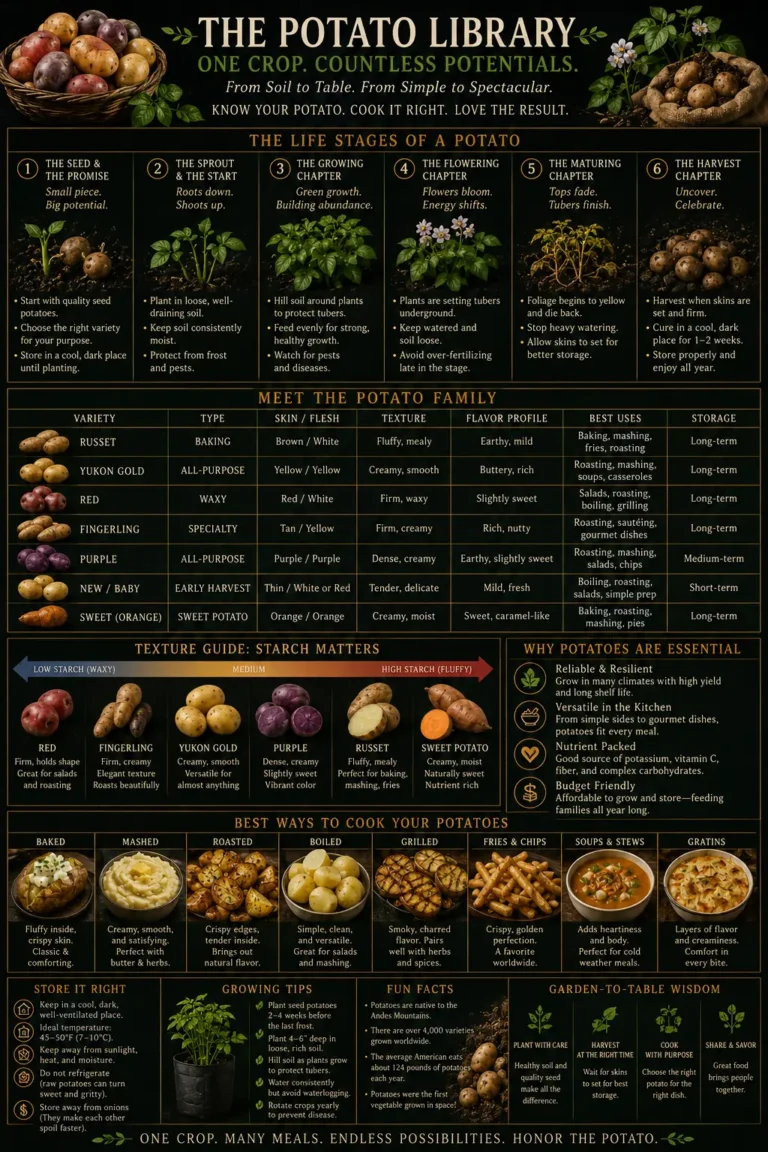
The Potato Field Guide
Greens and potatoes create comfort food with balance. Kale potato soup, spinach potato curry, chard and potatoes, potato salads with greens, and hash with leafy vegetables all show how greens lighten hearty foods.
The Pepper Library
Peppers bring heat and color to greens. Mustard greens with chili, collards with hot sauce, spinach with roasted peppers, kale with pepper flakes, and green stir-fries with fresh peppers all show how spice wakes up leaves.
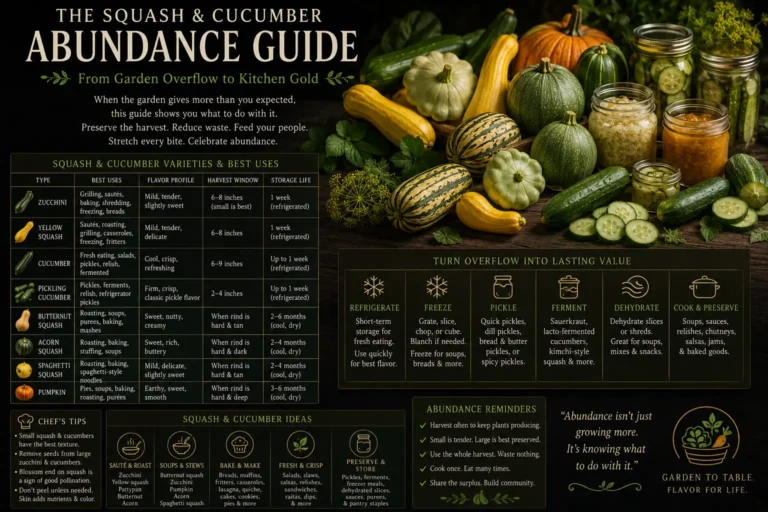
The Squash & Cucumber Abundance Guide
Cucumbers and tender greens build fresh salads, while squash and cooking greens build soups, gratins, casseroles, and sheet-pan meals. Together, they show the difference between fresh abundance and cooked abundance.
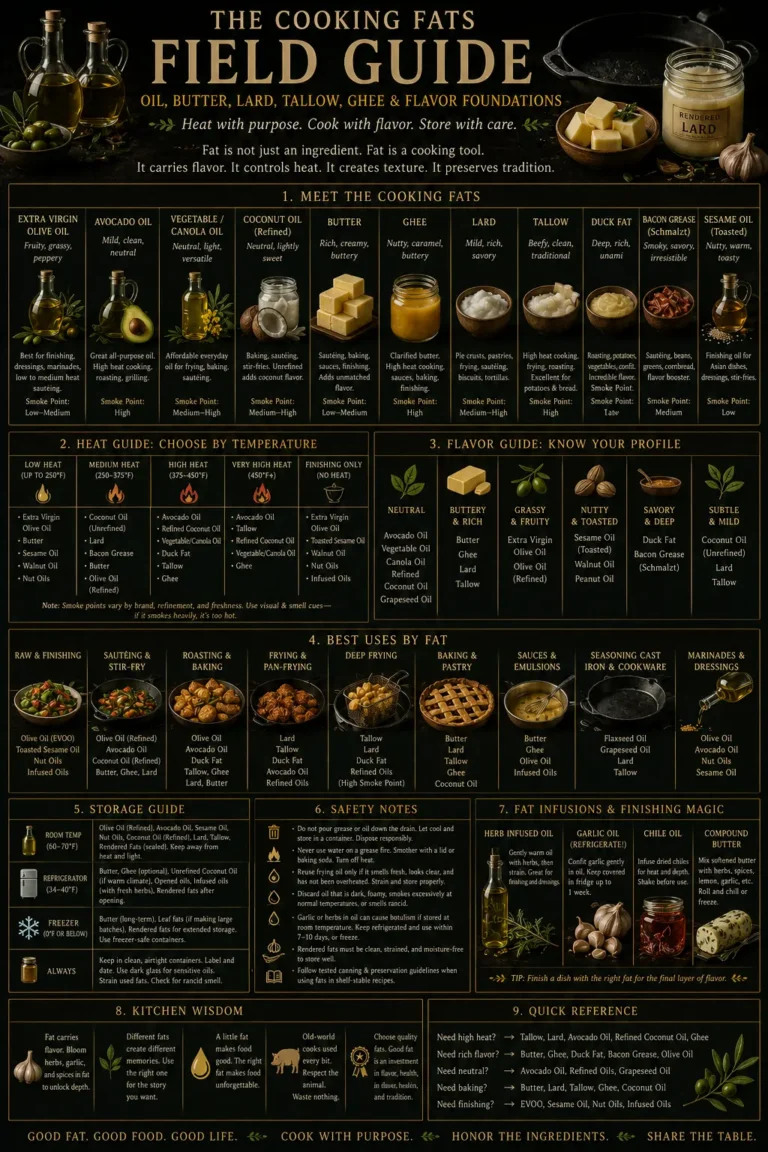
The Preservation Pantry Guide
Leafy greens naturally lead into freezing, drying, fermenting, pickling stems, green sauces, pesto, soup bases, and preserved meal components.
This leafy greens guide is one piece of a much larger system.
The more pieces you connect, the clearer the kitchen garden becomes.
The Leafy Greens Field Guide Lesson
Most people think greens are simply healthy.
But a gardener knows better.
A lettuce leaf can become freshness.
Spinach can become softness.
Kale can become resilience.
Chard can become color.
Arugula can become bite.
Mustard can become heat.
Radicchio can become beautiful bitterness.
Escarole can become comfort.
Dandelion can become overlooked value.
Bok choy can become crisp tenderness.
Beet greens can become bonus harvest.
Microgreens can become proof that food production can begin almost anywhere.
Leafy greens are not one ingredient.
They are a whole rhythm of harvest.
They ask you to plant small, harvest often, cook wisely, preserve what you can, and eat with the seasons.
That is the heart of The Gardening Chef.
Final Thought
A garden full of leafy greens rarely announces itself with drama.
It does not always give you the heavy basket, the giant pumpkin, the tower of tomatoes, or the pantry shelf full of winter squash.
Instead, it gives you something quieter.
A few leaves when you need them.
A meal made brighter.
A soup made deeper.
A salad made alive.
A bitter bite that balances richness.
A daily reason to step outside and notice what is ready.
That is why leafy greens matter.
They are the quiet heroes of the garden: nourishing, flexible, generous, and always ready when you are paying attention.
Plant small.
Harvest often.
Eat vibrant.
Live well.
Honor the leaf.