The Herb Flavor Multiplier Promise
This is not just an herb article.
It is a working kitchen-and-garden reference for people who want to cook with more confidence, grow herbs with purpose, reduce food waste, preserve flavor, and turn simple ingredients into meals that feel cared for.
A cook can use this guide to decide which herb belongs in soup, eggs, potatoes, sauces, salads, beans, fish, chicken, pasta, roasted vegetables, and dressings.
A gardener can use it to decide which herbs deserve space near the kitchen.
A beginner can use it to understand the difference between delicate herbs and hardy herbs.
A preserver can use it to turn extra herbs into dried herbs, herb salts, herb butters, vinegars, pesto, teas, and sauces.
A creator can use it to see how one small herb garden becomes recipes, printable guides, pantry products, cooking classes, gift bundles, and stories worth sharing.
Herbs are small.
But they are not minor.
They are flavor multipliers.
Save This Guide If You Want To
Choose the right herb for the meal.
Know when to add delicate herbs and hardy herbs.
Understand why basil, parsley, cilantro, dill, mint, chives, and tarragon usually belong near the end of cooking.
Understand why thyme, rosemary, oregano, sage, bay, savory, and marjoram can handle longer cooking.
Build a beginner herb garden that actually fits your kitchen.
Use herbs to make leftovers, pantry meals, eggs, potatoes, beans, rice, vegetables, meats, fish, soups, sauces, and salads taste better.
Preserve herbs as dried herbs, frozen herbs, herb butter, herb salt, pesto, chimichurri, herb vinegar, and tea.
Stop treating herbs like garnish and start using them like tools.
Start Here: Choose Your Reading Path
| If you are… | Start with… | You will learn… |
| A home cook | The Herb Decision Guide | Which herb solves which kitchen problem. |
| A beginner gardener | The Beginner Herb Garden Plan | Which herbs to grow first and where to put them. |
| A meal planner | Herbs by Cooking Method | How to use herbs in soups, sauces, eggs, potatoes, beans, and everyday meals. |
| A preserver | The Herb Preservation Ladder | How to dry, freeze, salt, butter, vinegar, and sauce your herbs. |
| A flavor geek | How Herbs Multiply Flavor | Why aroma, freshness, bitterness, fat, acid, and memory matter. |
| A creator or market gardener | The Herb Product Path | How herbs can become printables, sauces, salts, butters, bundles, classes, and content. |
The Herb Flavor Multiplier Guide
Small Leaves. Big Impact. Endless Possibilities.
Most people meet herbs at the end of a plate.
A little parsley scattered over pasta. A sprig of rosemary tucked beside roasted potatoes. Basil leaves torn over tomatoes. Chives snipped over eggs. Dill folded into potato salad. Mint dropped into tea.
At first, herbs can look decorative.
A garnish.
A little green.
Something nice, but not necessary.
But the more you cook, the more you realize that herbs are not decoration.
They are one of the fastest ways to change the entire direction of a meal.
A bowl of tomatoes becomes summer when basil enters. A pan of potatoes becomes memorable with rosemary and thyme. A heavy stew wakes back up with parsley. A simple egg becomes breakfast worth noticing with chives. Beans become brighter with cilantro, parsley, oregano, or dill. Butter becomes almost magical when sage touches it.
The lesson is simple:
Herbs are flavor multipliers.
They do not usually provide the bulk of the meal. They do not fill the pantry like potatoes, onions, beans, or winter squash. They do not always contribute many calories.
But they do something just as important.
They make everything else better.
That is why herbs deserve their own field guide.
Why Herbs Deserve Their Own Field Guide
A kitchen without herbs can still feed you.
But a kitchen with herbs can make simple food feel intentional.
This matters more than most people realize.
Home cooking often fails not because people lack food, but because the food available feels boring, repetitive, heavy, or unfinished. A pot of beans sits in the refrigerator. Roasted vegetables feel dull by the second day. Rice needs something. Eggs feel plain. Soup tastes flat. Potatoes need a reason to be exciting again.
Herbs solve that problem.
They bring freshness to leftovers. They bring aroma to inexpensive staples. They bring brightness to rich food. They bring memory to roasted dishes. They help cooks turn what they already have into something people actually want to eat.
This is the herb advantage.
A small plant can increase the value of everything around it.
A basil plant does not only produce basil. It makes tomatoes, pasta, sandwiches, salads, soups, oils, vinegars, and sauces more desirable.
A thyme plant does not only produce thyme. It deepens chicken, mushrooms, beans, roasted carrots, stocks, stews, and root vegetables.
A pot of chives does not only produce green stems. It turns eggs, potatoes, soups, sour cream, cream cheese, fish, and compound butter into something fresher.
That is why herbs belong at the center of The Gardening Chef system.
They are not the whole meal.
They unlock the meal.
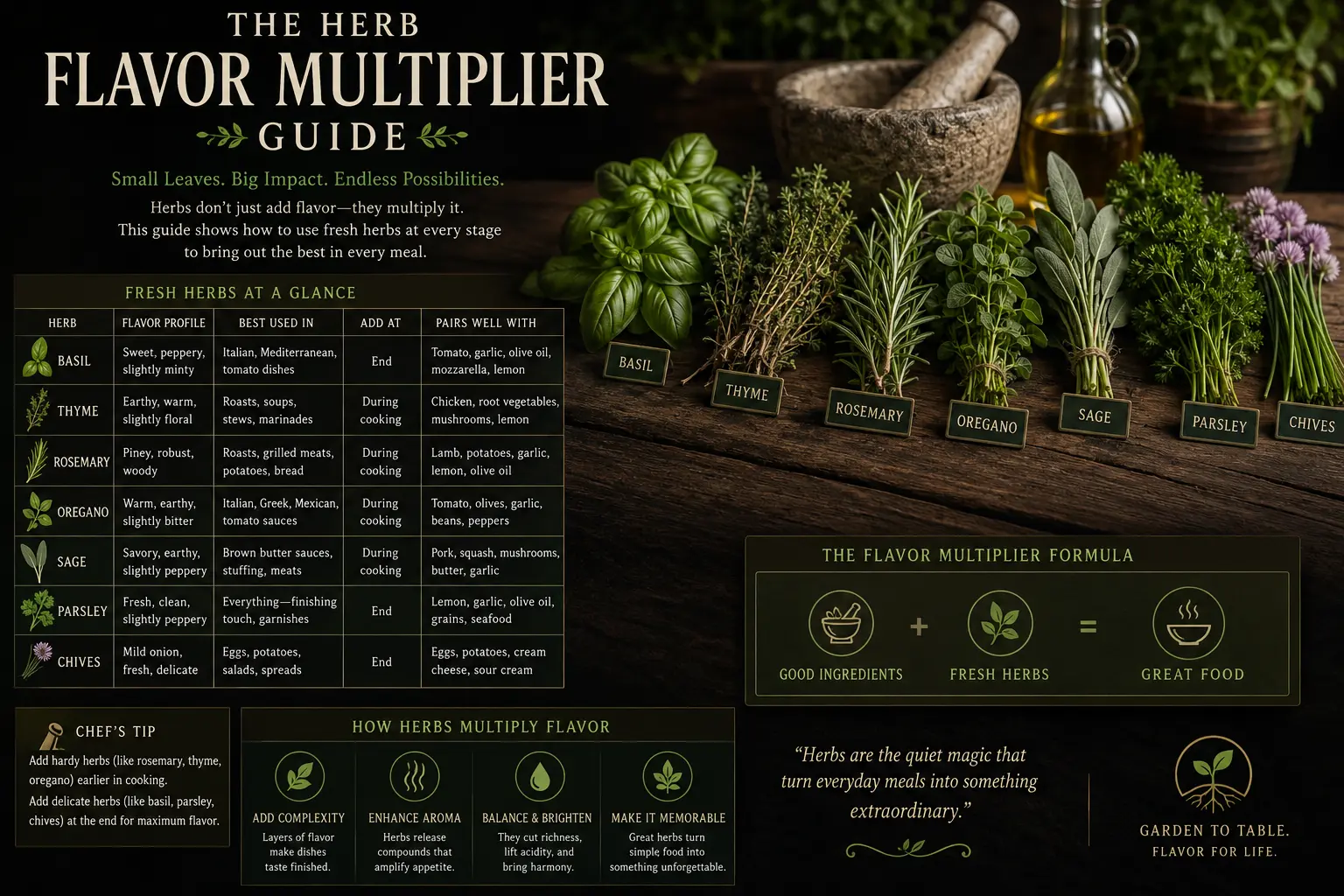
Field Guide Poster Preview
The Herb Flavor Multiplier poster is designed as a visual kitchen reference for cooks, gardeners, meal planners, and anyone who wants to make everyday food taste better.
Use it when you need to remember:
Which herbs are delicate.
Which herbs are hardy.
Which herbs should be added early.
Which herbs should be added at the end.
What each herb tastes like.
What each herb pairs with.
Which herbs belong in soups, sauces, eggs, potatoes, tomatoes, beans, fish, chicken, salads, dressings, and pantry meals.
This kind of guide belongs in a kitchen, pantry, garden binder, meal-planning notebook, cooking class, market table, or herb garden planning station.
Download the Printable Herb Flavor Multiplier Poster
Launch price: $0.99
[Button: Download the Herb Flavor Multiplier Guide]
The Herb Flavor Multiplier Formula
The basic formula is simple:
Good ingredients + fresh herbs = better food
But that simple formula hides a deeper kitchen truth.
Herbs help food taste finished.
They add aroma before the first bite. They add freshness after heat has softened a dish. They balance richness. They bring contrast. They connect ingredients that might otherwise feel separate. They make inexpensive staples feel cared for.
A potato is good.
A roasted potato with rosemary, thyme, garlic, parsley, olive oil, and salt is better.
Eggs are good.
Eggs with chives, parsley, butter, and pepper are better.
Tomatoes are good.
Tomatoes with basil, olive oil, salt, mozzarella, and a little acid are better.
Beans are good.
Beans with thyme, parsley, oregano, garlic, olive oil, and lemon are better.
Rice is good.
Rice with cilantro, mint, dill, scallions, or parsley becomes a different meal.
This is the real power of herbs.
They do not need to dominate.
They complete.
The Two Big Herb Families: Delicate Herbs and Hardy Herbs
One of the fastest ways to improve your cooking is to stop treating all herbs the same.
Some herbs are delicate.
Some herbs are hardy.
That difference determines when you should add them.
Many cooks accidentally flatten herbs by adding delicate herbs too early or by using hardy herbs as if they were fresh garnish. Once you understand the difference, your food immediately improves.
Delicate Herbs
Delicate herbs usually have soft leaves, fresh aromas, and bright flavor. They are often best used raw or added near the end of cooking.
Common delicate herbs include:
Basil
Parsley
Chives
Cilantro
Dill
Mint
Tarragon
These herbs bring lift, brightness, freshness, and aroma. If cooked too long, they can fade, darken, or lose their special character.
Delicate herbs are finishing herbs.
They belong in salads, dressings, eggs, yogurt sauces, fresh salsas, soups just before serving, pasta after cooking, compound butters, fresh sauces, grain bowls, and garnishes that actually contribute flavor.
Hardy Herbs
Hardy herbs usually have stronger leaves, woody stems, or deeper oils. They can handle heat better and often benefit from time.
Common hardy herbs include:
Thyme
Rosemary
Oregano
Sage
Bay
Savory
Marjoram
These herbs can go into the pot earlier so their oils have time to move into fat, broth, sauce, meat, beans, or vegetables.
Hardy herbs are foundation herbs.
They belong in roasts, soups, stews, braises, sauces, marinades, stocks, beans, stuffing, roasted vegetables, and slow-cooked dishes.
The Chef’s Rule
Add hardy herbs during cooking.
Add delicate herbs near the end.
That one rule can save a dish.
Fresh Herbs at a Glance
| Herb | Flavor Profile | Best Used In | Add At | Pairs Well With |
| Basil | Sweet, peppery, slightly minty | Tomato dishes, pasta, pesto, pizza, salads | End | Tomato, garlic, olive oil, mozzarella, lemon |
| Thyme | Earthy, warm, slightly floral | Roasts, soups, stews, marinades, beans | During cooking | Chicken, mushrooms, root vegetables, lemon |
| Rosemary | Piney, woody, strong | Roasts, grilled meats, potatoes, bread | During cooking | Lamb, potatoes, garlic, lemon, olive oil |
| Oregano | Warm, earthy, slightly bitter | Tomato sauces, Greek dishes, Mexican dishes, beans | During cooking | Tomato, olives, garlic, beans, peppers |
| Sage | Savory, earthy, musky, slightly peppery | Brown butter, stuffing, squash, pork, mushrooms | During cooking | Butter, squash, pork, poultry, beans |
| Parsley | Clean, green, fresh, slightly peppery | Finishing dishes, salads, soups, grains | End | Lemon, garlic, olive oil, seafood, grains |
| Chives | Mild onion, delicate, fresh | Eggs, potatoes, soups, spreads, salads | End | Eggs, potatoes, sour cream, cream cheese |
| Cilantro | Bright, citrusy, fresh | Salsa, tacos, curries, beans, rice | End | Lime, chile, tomato, avocado, beans |
| Dill | Grassy, fresh, slightly sweet | Fish, potatoes, yogurt, pickles, cucumbers | End | Lemon, cucumber, salmon, potatoes |
| Mint | Cool, sweet, bright | Tea, salads, lamb, fruit, yogurt sauces | End | Peas, berries, lemon, yogurt, lamb |
| Tarragon | Anise-like, elegant, delicate | Chicken, eggs, fish, cream sauces | End or gentle heat | Chicken, eggs, vinegar, butter, fish |
The Fast Herb Decision Guide
| If the dish needs… | Use… | Why it works |
| Freshness | Parsley, basil, cilantro, dill, mint | These herbs wake up food at the end. |
| Depth | Thyme, rosemary, oregano, sage | These herbs build flavor during cooking. |
| Onion-like finish | Chives | Chives add allium flavor without harshness. |
| Tomato lift | Basil, oregano, parsley, thyme | These herbs support tomato’s acid and sweetness. |
| Potato comfort | Rosemary, thyme, chives, parsley, dill | These herbs turn potatoes into complete meals. |
| Egg upgrade | Chives, parsley, dill, tarragon | These herbs make eggs taste fresh and intentional. |
| Bean brightness | Cilantro, parsley, oregano, thyme | These herbs keep beans from tasting heavy. |
| Fish balance | Dill, parsley, tarragon, chives | These herbs pair well with lemon, butter, and delicate proteins. |
| Richness control | Parsley, mint, dill, cilantro | These herbs cut through fat and heaviness. |
| Memory | Rosemary, sage, thyme | These herbs make roasted and slow-cooked food feel familiar and deep. |
Basil: The Tomato’s Best Friend
Basil is one of the clearest examples of the herb multiplier effect.
A tomato is already good.
But tomato with basil becomes something more.
The sweetness of the tomato, the richness of olive oil, the salt, the acidity, and the perfume of basil create a combination that feels almost inevitable. Caprese salad works because basil does not simply sit on top. It connects everything.
Basil is tender, aromatic, and easily bruised. It is best added at the end of cooking or used fresh. Long heat can darken the leaves and flatten the aroma.
That is why basil belongs in finishing moments.
Torn over pasta. Layered with tomatoes. Blended into pesto. Scattered over pizza after baking. Folded into salads. Stirred into soup just before serving.
Basil is one of the best beginner herbs because its value is obvious quickly. A single plant can become pesto, sandwiches, sauces, salads, herb oils, herb butter, and summer meals that people remember.
Best Uses
Tomato dishes, pesto, pasta, pizza, caprese salad, salads, sandwiches, soups, herb oils.
Garden Value
Basil grows quickly in warm weather and rewards regular harvesting. Pinching it correctly encourages fuller growth and teaches the beginner a powerful lesson: some plants produce more when you use them well.
Flavor Multiplier Lesson
Basil turns tomatoes into meals.
Thyme: The Quiet Foundation Herb
Thyme does not usually demand attention.
It works underneath.
A few sprigs can make chicken, mushrooms, beans, soups, stews, roasted carrots, potatoes, or stock taste deeper and more complete.
Thyme is a hardy herb. It can be added early and allowed to release its flavor slowly into fat, broth, sauce, or pan drippings. It is one of the great background herbs because it rarely needs to be the star.
It makes the dish taste like someone knew what they were doing.
Thyme is especially useful with chicken, lemon, garlic, mushrooms, potatoes, carrots, onions, beans, and slow-cooked meats.
Best Uses
Soups, stews, roasts, chicken, mushrooms, beans, stock, marinades, root vegetables.
Garden Value
Thyme is compact, often perennial, drought-tolerant once established, and excellent for containers, borders, and small herb gardens.
Flavor Multiplier Lesson
Thyme makes food taste deeper without making it taste only like thyme.
Rosemary: The Memory Herb
Rosemary announces itself before you taste it.
The smell alone can bring people back to roasted potatoes, grilled lamb, focaccia, chicken, holiday kitchens, or wood-fired meals.
It is piney, woody, resinous, and strong. That strength is both its gift and its danger.
Too much rosemary can make food taste like a pine branch. The right amount can make a dish unforgettable.
Rosemary is a hardy herb. It can handle roasting, grilling, baking, and longer cooking. It is especially good with potatoes, lamb, chicken, garlic, olive oil, lemon, white beans, mushrooms, bread, and roasted vegetables.
A sprig in a roasting pan can perfume the whole dish. Finely chopped rosemary in focaccia can make the kitchen smell like a bakery. Rosemary, garlic, olive oil, and potatoes may be one of the simplest examples of herbs multiplying value.
Best Uses
Roasted potatoes, grilled meats, lamb, chicken, focaccia, bread, beans, roasted vegetables, marinades.
Garden Value
Rosemary is a strong container herb in many regions and a perennial shrub in warmer climates. It prefers good drainage and should not be overwatered.
Flavor Multiplier Lesson
Rosemary turns roasting into memory.
Oregano: The Sauce Connector
Oregano is warm, earthy, slightly bitter, and deeply connected to tomatoes, garlic, olive oil, beans, peppers, grilled meats, and Mediterranean cooking.
It is one of the herbs that makes sauces feel complete.
Many people know oregano from pizza and Italian-American cooking, but its role is much wider. It appears in Greek, Mediterranean, Mexican, and many other food traditions. It works with tomato, olives, feta, lemon, beans, peppers, onions, roasted meats, and grilled vegetables.
Oregano can be used fresh or dried, but dried oregano is especially useful because its flavor holds up well. Unlike some delicate herbs, oregano keeps much of its value when dried.
Oregano is a hardy herb. It can be added during cooking, especially in sauces, soups, beans, marinades, and roasted dishes.
Best Uses
Tomato sauce, pizza, beans, Greek salads, marinades, roasted vegetables, soups, stews, grilled meats.
Garden Value
Oregano is often perennial, productive, and easy to dry. It is excellent for gardeners who want both fresh and pantry value.
Flavor Multiplier Lesson
Oregano connects tomato, garlic, oil, and heat into a recognizable flavor system.
Sage: The Brown Butter Herb
Sage is one of the most misunderstood herbs.
It is strong, earthy, savory, slightly peppery, and almost musky. It does not behave like parsley or basil. You do not usually throw handfuls of sage into a dish for freshness.
Sage is deeper than that.
It belongs with brown butter, pork, sausage, squash, stuffing, mushrooms, beans, poultry, and autumn cooking. When sage leaves hit butter and the butter begins to brown, the whole kitchen changes. The aroma becomes nutty, savory, and rich.
That is why sage feels connected to comfort food.
It works beautifully with butternut squash, pumpkin, sweet potatoes, pork, chicken, turkey, white beans, mushrooms, cream sauces, and pasta.
Sage is hardy, but powerful. Use it with respect.
Best Uses
Brown butter sauces, stuffing, squash, pork, sausage, mushrooms, beans, poultry, pasta.
Garden Value
Sage is perennial in many regions and useful fresh or dried. Its leaves are strong, beautiful, and long-lasting in the garden.
Flavor Multiplier Lesson
Sage turns fat into flavor.
Parsley: The Brightener
Parsley is often treated like garnish, which is one of the great kitchen mistakes.
Parsley is not decoration.
Parsley is freshness.
It brings clean, green, slightly peppery brightness to dishes that might otherwise feel heavy. A handful of chopped parsley can wake up beans, soups, stews, roasted vegetables, grain bowls, seafood, pasta, potatoes, eggs, and sauces.
Parsley works because it balances.
Rich food needs brightness. Slow-cooked food needs freshness. Garlic needs green lift. Lemon needs herbal body. Olive oil needs something clean to carry.
Parsley belongs at the end.
Add it too early and it disappears. Add it at the finish and the dish wakes up.
Best Uses
Soups, stews, beans, grains, seafood, potatoes, salads, sauces, roasted vegetables, garlic-heavy dishes.
Garden Value
Parsley is a high-use herb. It may not feel flashy, but it improves a wide range of meals and earns its place in almost every kitchen garden.
Flavor Multiplier Lesson
Parsley makes heavy food feel alive again.
Chives: The Gentle Onion Finish
Chives are delicate, mild, and incredibly useful.
They bring a soft onion flavor without the sharpness of raw onion or the intensity of garlic. That makes them perfect for eggs, potatoes, sour cream, cream cheese, soups, salads, compound butter, fish, and simple vegetable dishes.
Chives are best added at the end.
Heat can flatten their delicate flavor, so they shine as a finishing herb. Snipped over scrambled eggs, baked potatoes, potato soup, deviled eggs, or creamy spreads, chives make food look and taste fresher.
Their purple flowers are also edible and beautiful, adding color and a mild onion note to salads and garnishes.
Best Uses
Eggs, potatoes, soups, salads, dips, spreads, cream cheese, sour cream, fish, compound butter.
Garden Value
Chives are reliable, compact, perennial in many climates, and excellent for containers or kitchen gardens. They provide repeated harvests with little effort.
Flavor Multiplier Lesson
Chives add onion flavor without taking over.
Cilantro: The Bright Heat Partner
Cilantro is one of the most polarizing herbs.
Some people love it. Some people do not. But in the right kitchen system, cilantro is essential.
It is bright, citrusy, fresh, and deeply connected to lime, chile, tomato, avocado, beans, rice, grilled meats, curries, chutneys, and fresh salsas.
Cilantro is delicate. It should usually be added at the end or used raw. Its freshness is the point.
It can turn beans into something brighter. It can make tacos feel complete. It can lift a curry. It can cool heat. It can connect lime and chile into a balanced bite.
Cilantro also teaches gardeners about timing because it tends to bolt in heat. It is often better as a cool-season herb or succession-planted crop.
Best Uses
Salsa, tacos, beans, rice, curries, chutneys, salads, grilled meats, lime-based sauces.
Garden Value
Cilantro teaches timing, succession planting, and seed value. When it bolts, it can produce coriander seed, giving the gardener another useful kitchen ingredient.
Flavor Multiplier Lesson
Cilantro turns heat and acid into harmony.
Dill: The Fresh Pickle Herb
Dill tastes like freshness with a memory of pickles.
It is grassy, bright, slightly sweet, and unmistakable. It belongs with cucumbers, yogurt, salmon, potatoes, eggs, lemon, vinegar, cabbage, carrots, and cream-based sauces.
Dill is delicate and best used near the end when working with fresh leaves. It loses character when cooked too long.
Dill makes simple food feel refreshing.
A potato salad with dill feels brighter. A cucumber salad with dill feels cleaner. A yogurt sauce with dill feels complete. Fish with lemon and dill feels balanced.
Dill is a bridge between the herb garden and the pickle jar.
Best Uses
Pickles, cucumbers, potato salad, salmon, yogurt sauces, eggs, cabbage, carrots, fresh salads.
Garden Value
Dill is useful for leaves, flowers, seeds, and pollinators. It can support beneficial insects and provide both fresh herb value and seed value.
Flavor Multiplier Lesson
Dill turns freshness into preservation memory.
Mint: The Cooling Herb
Mint is bright, cool, sweet, and powerful.
It is refreshing in tea, fruit salads, yogurt sauces, lamb dishes, grain salads, peas, desserts, drinks, and herb syrups. It can make heavy food feel lighter and sweet food feel fresher.
But mint is also aggressive in the garden.
It spreads quickly and can take over beds if planted carelessly. For many gardeners, mint belongs in a container.
In the kitchen, mint should be used with awareness. Too much can push food toward toothpaste or candy. The right amount brings lift, coolness, and surprise.
Mint is excellent with peas, lemon, berries, watermelon, yogurt, lamb, tea, cucumber, chocolate, and many summer drinks.
Best Uses
Tea, fruit salads, yogurt sauces, lamb, peas, desserts, drinks, grain salads, herb syrups.
Garden Value
Mint is productive, vigorous, and beginner-friendly if contained. It is one of the easiest herbs to harvest regularly.
Flavor Multiplier Lesson
Mint turns heat, sweetness, and richness into refreshment.
Tarragon: The Elegant Herb
Tarragon is not loud.
It is elegant.
Its flavor is delicate, slightly sweet, and anise-like, which means it carries a gentle licorice note. That flavor can be strange if used carelessly, but beautiful when paired with the right foods.
Tarragon belongs with chicken, eggs, fish, butter, cream, vinegar, mustard, and delicate sauces. It is one of the classic herbs in French cooking and is especially important in bearnaise-style flavors, vinaigrettes, and fine herb blends.
Tarragon should usually be added near the end or treated with gentle heat. Long cooking can dull its aroma.
Best Uses
Chicken, eggs, fish, cream sauces, vinaigrettes, butter sauces, mustard dressings.
Garden Value
French tarragon is usually propagated by division or cuttings rather than seed, because seed-grown “tarragon” may not have the same culinary quality. This makes it a slightly more advanced but very rewarding herb.
Flavor Multiplier Lesson
Tarragon makes simple food taste refined.
How Herbs Multiply Flavor
Herbs multiply flavor in several different ways. Understanding those jobs makes you a better cook.
1. Herbs Add Aroma
Aroma is a major part of flavor. Rosemary, basil, mint, cilantro, dill, thyme, and sage often announce themselves before the first bite.
That aroma changes how the meal feels.
2. Herbs Add Freshness
Parsley, cilantro, dill, mint, basil, and chives can make cooked food taste alive again. This is especially important for leftovers, beans, soups, stews, roasted vegetables, and rich dishes.
3. Herbs Add Depth
Thyme, rosemary, sage, oregano, and bay can build the background flavor of a dish. They help sauces, soups, stocks, beans, meats, and roasted vegetables taste more complete.
4. Herbs Add Balance
Rich food needs brightness. Acidic food needs body. Sweet food may need contrast. Bitter food may need warmth. Herbs help balance those forces.
5. Herbs Add Memory
Rosemary can make potatoes feel nostalgic. Sage can make butter taste like autumn. Dill can make cucumbers feel like pickles. Basil can make tomatoes feel like summer.
This is one of the most powerful things herbs do.
They make food memorable.
Herbs by Cooking Method
Fresh Finish
Use delicate herbs at the end when you want brightness.
Best herbs: parsley, basil, chives, cilantro, dill, mint, tarragon.
Best uses: soups, eggs, salads, bowls, pasta, roasted vegetables, tacos, beans, fish.
Warm Fat
Some herbs bloom beautifully in butter, olive oil, drippings, or sauces.
Best herbs: sage, rosemary, thyme, oregano.
Best uses: brown butter, roasted potatoes, pan sauces, garlic oil, beans, vegetables.
Long Simmer
Hardy herbs can season a dish slowly.
Best herbs: thyme, rosemary, oregano, sage, bay.
Best uses: soups, stews, stocks, braises, beans, tomato sauce.
Raw Sauce
Herbs can become the sauce instead of the garnish.
Best herbs: basil, parsley, cilantro, mint, dill, oregano, tarragon.
Best uses: pesto, chimichurri, salsa verde, chutney, yogurt sauce, vinaigrette.
Vinegar and Acid
Herbs pair beautifully with vinegar, lemon, lime, and pickling liquids.
Best herbs: tarragon, dill, chives, parsley, mint, cilantro, basil.
Best uses: dressings, quick pickles, marinades, herb vinegars, cucumber salads.
Dairy and Cream
Herbs can lift creamy foods.
Best herbs: chives, dill, parsley, tarragon, mint.
Best uses: sour cream, yogurt sauce, cream cheese, butter, eggs, creamy soups, fish sauces.
The Herb Preservation Ladder
| Level | Method | Best Starting Herbs | What It Teaches |
| 1 | Fresh use | Basil, parsley, chives, cilantro, dill, mint | Harvest timing and daily kitchen value |
| 2 | Refrigeration | Parsley, cilantro, dill, chives | Short-term storage and waste reduction |
| 3 | Freezing | Basil, parsley, cilantro, chives, dill | Future cooking value |
| 4 | Drying | Thyme, rosemary, oregano, sage, mint | Pantry preservation |
| 5 | Herb butter | Chives, parsley, rosemary, thyme, sage, dill | Fat as flavor carrier |
| 6 | Herb salt | Rosemary, thyme, oregano, parsley, sage | Seasoning and shelf-stable flavor |
| 7 | Sauces and pesto | Basil, parsley, cilantro, mint, oregano | Turning herbs into the dish |
| 8 | Herb vinegar | Tarragon, chives, dill, basil, rosemary | Acid, dressings, marinades, and pickles |
| 9 | Tea and infusions | Mint, lemon balm, thyme, sage, rosemary | Beverage and ritual value |
Herb Preservation Guide
Drying Herbs
Drying works best for herbs with stronger oils and lower moisture.
Best herbs to dry: thyme, rosemary, oregano, sage, mint, bay, savory, marjoram.
Dry herbs in small bundles, on screens, in a dehydrator, or in a warm dry space with good airflow. Store them only when fully dry. Keep dried herbs away from heat, light, and moisture.
Dried herbs are not always inferior to fresh herbs. They are different tools. Dried oregano, thyme, rosemary, and sage can be extremely useful in winter cooking.
Freezing Herbs
Freezing is excellent for herbs you want to use in cooked dishes later.
Chop herbs and freeze them in ice cube trays with water, olive oil, or broth. This works well for parsley, basil, cilantro, chives, and dill.
Frozen herbs will not return to fresh garnish texture, but they are excellent for soups, sauces, stews, sautés, beans, and braises.
Herb Butter
Herb butter is one of the easiest ways to turn herbs into instant kitchen value.
Mix softened butter with chopped herbs, garlic, lemon zest, salt, pepper, or spices. Roll into a log and refrigerate or freeze.
Use herb butter on bread, potatoes, vegetables, fish, steak, eggs, pasta, rice, or roasted squash.
Herb Salt
Herb salt turns fresh herbs into seasoning.
Blend or finely chop herbs with salt, then dry the mixture until shelf-stable. Herb salt can be used on roasted vegetables, potatoes, eggs, grilled meats, soups, popcorn, and salads.
Best herbs for herb salt: rosemary, thyme, oregano, sage, parsley, basil, dill.
Pesto and Herb Sauces
Pesto is not only for basil.
Parsley pesto, cilantro sauce, mint chutney, dill yogurt sauce, tarragon vinaigrette, and chimichurri with parsley and oregano can all turn herbs into the dish itself.
This is where herbs move from supporting role to main event.
Herb Vinegar
Herb vinegar captures aroma and acid together.
Tarragon vinegar, chive blossom vinegar, basil vinegar, dill vinegar, and rosemary vinegar can become tools for dressings, marinades, sauces, and pickles.
Herb Tea
Some herbs become beverages.
Mint, lemon balm, thyme, sage, rosemary, and basil can all be used in teas or infusions depending on preference and safe use.
The plant is not only for dinner.
It can become a ritual.
The Beginner Herb Garden Plan
You do not need a large garden to grow useful herbs.
A good beginner herb system might include:
Basil for tomatoes, pesto, pasta, and summer meals.
Parsley for finishing soups, beans, grains, seafood, and vegetables.
Chives for eggs, potatoes, soups, and creamy dishes.
Thyme for soups, stews, chicken, beans, and roasted vegetables.
Rosemary for potatoes, bread, chicken, lamb, and roasted dishes.
Mint in a container for tea, fruit, yogurt, drinks, and sauces.
That small herb garden can change the way you cook.
The best herb garden is not the one with the longest plant list.
It is the one that matches your kitchen.
Grow Herbs by the Way You Cook
| If you cook… | Grow… |
| Italian and Mediterranean food | Basil, oregano, parsley, rosemary, thyme |
| Mexican and salsa-heavy food | Cilantro, oregano, chives, mint |
| Soups and stews | Thyme, parsley, sage, rosemary, bay |
| Eggs and potatoes | Chives, parsley, dill, rosemary, thyme |
| Fish and seafood | Dill, parsley, tarragon, chives |
| Beans and grains | Parsley, cilantro, oregano, thyme |
| Tea and drinks | Mint, lemon balm, basil |
| Roasted vegetables | Rosemary, thyme, sage, parsley |
| Creamy sauces and dressings | Dill, chives, tarragon, parsley |
Growing Herbs: Practical Garden Notes
Put Herbs Where You Will Harvest Them
Herbs should be easy to reach.
A pot near the back door may be more valuable than a perfect herb bed across the yard. Convenience increases harvest. Harvest increases value.
Harvest Often
Many herbs respond well to regular harvesting. Basil becomes bushier when pinched correctly. Chives can be snipped repeatedly. Parsley can produce for a long season. Thyme and oregano can be trimmed and dried. Mint keeps producing if managed.
Harvesting is not just taking.
It is tending.
Keep Mint Contained
Mint is useful, but aggressive.
Grow it in a container unless you truly want it to spread. This is an important garden lesson: a useful plant still needs boundaries.
Know Annual vs Perennial Herbs
Some herbs are annuals. Some are perennials. Some depend on climate.
Basil, cilantro, and dill are commonly grown as annuals.
Chives, thyme, oregano, sage, mint, rosemary in warmer climates, and tarragon in suitable climates are perennial in many regions.
This matters because perennial herbs become long-term assets in the garden.
Common Herb Mistakes
Mistake 1: Adding Delicate Herbs Too Early
Basil, parsley, chives, cilantro, dill, mint, and tarragon often lose their freshness when cooked too long.
Add them at the end.
Let them stay alive.
Mistake 2: Using Too Much Rosemary or Sage
Strong herbs can dominate.
Rosemary and sage are powerful. Use them carefully until you understand their strength.
You can always add more.
You cannot easily remove too much.
Mistake 3: Treating Dried and Fresh Herbs the Same
Dried herbs are more concentrated and behave differently.
Hardy herbs often dry well. Delicate herbs often lose some magic when dried.
Fresh basil and dried basil are not the same ingredient. Fresh parsley and dried parsley are not the same experience.
Use the right form for the job.
Mistake 4: Letting Herbs Flower Too Soon
Some herbs change flavor after flowering or bolting.
Basil can become tougher and more bitter once it flowers heavily. Cilantro bolts quickly in heat. Dill changes as it moves from leaf production to flower and seed.
Flowers are not always bad.
But they change the plant’s purpose.
Mistake 5: Growing Herbs You Do Not Cook With
A beautiful herb garden that never enters the kitchen is decoration.
That is fine if beauty is the goal.
But if the goal is The Gardening Chef system, herbs need to be harvested, used, preserved, and connected to meals.
Flavor unused is value wasted.
Honor the harvest.
Common Herb Problems and What They Usually Mean
| Problem | Likely Cause | What to Do |
| Leggy basil or cilantro | Not enough light, crowding | Move to brighter light, pinch or harvest properly, thin plants |
| Yellowing leaves | Overwatering, poor drainage, nutrient stress | Check soil moisture, improve drainage, avoid soggy roots |
| Basil flowering early | Heat, maturity, lack of harvesting | Pinch flower buds, harvest regularly, succession plant |
| Cilantro bolting | Heat and long days | Grow in cooler seasons, succession plant, allow some to seed |
| Rosemary decline | Overwatering or poor drainage | Use well-drained soil, avoid wet roots |
| Mint taking over | Aggressive spreading habit | Grow in containers or contained beds |
| Weak flavor | Too much water, low light, wrong harvest timing | Improve sunlight, harvest at peak growth, avoid overwatering |
| Powdery mildew | Poor airflow, humidity, crowding | Improve spacing, water at soil level, prune lightly |
| Woody thyme or oregano | Age, lack of trimming | Trim after flowering, refresh plantings when needed |
| Herbs wilting after harvest | Poor storage | Store stems in water or wrapped properly in the refrigerator |
The Herb as a Wealth Garden Crop
In the Wealth Garden system, herbs are multiplier crops.
They are not stability crops like potatoes.
They are not growth crops like tomatoes.
They are not storage crops like garlic.
They are multiplier crops.
Their job is to increase the value of other foods.
This is why herbs matter so much.
A few leaves of basil can make tomatoes more desirable. A handful of parsley can make beans more exciting. Rosemary can make potatoes memorable. Thyme can make soup taste deeper. Chives can make eggs feel finished. Mint can turn water, tea, fruit, or yogurt into something refreshing.
Herbs help people eat the food they already have.
That reduces waste.
That improves meals.
That increases satisfaction.
That supports home cooking.
That saves money over time.
Herbs may be small, but their effect is large.
That is the multiplier.
$10,000 Garden Insight: The Herb Multiplier Effect
A single herb plant does not look like much.
It may cost only a few dollars.
At first, it seems like a small convenience. You snip basil for pasta. You cut chives for eggs. You grab parsley for soup. You add rosemary to potatoes.
But then the system expands.
You stop buying small plastic herb packs that wilt in the refrigerator. You cook at home more often because your food tastes better. You waste less because leftovers can be refreshed with herbs. You begin preserving surplus as herb butter, herb salt, pesto, dried herbs, teas, sauces, and vinegars.
Then another possibility appears.
You take cuttings. You divide plants. You collect seeds. You dry leaves. You make small jars of herb salt. You prepare pesto. You bundle herbs for neighbors. You create recipes around what is growing.
The value is no longer just the herb.
It is the meals the herb improves.
It is the waste it prevents.
It is the products it can become.
It is the skill you gain by learning how flavor works.
A pot of herbs can make basic ingredients feel abundant. It can turn beans, potatoes, eggs, tomatoes, rice, chicken, soups, and vegetables into meals people actually want to eat.
That matters because wealth is not only what you earn.
It is also what you stop wasting.
Herbs help protect value already in the kitchen.
They are small leaves with system-level impact.
How Herbs Become Products
Herbs are one of the easiest garden crops to imagine as value-added products because they move naturally from fresh harvest to preserved flavor.
A herb plant can feed dinner, but it can also create jars, labels, bundles, recipes, classes, printable guides, and gifts.
Possible herb products include:
Fresh herb bundles.
Dried herb jars.
Herb salt blends.
Herb butter logs.
Pesto and herb sauces.
Herb vinegar.
Tea blends.
Recipe cards.
Seed packets from open-pollinated herbs.
Kitchen garden starter kits.
Printable herb pairing charts.
Cooking class handouts.
That does not mean every gardener needs to sell herbs.
But it does show something important.
A herb garden is not just a garnish patch.
It is a small flavor economy.
Where This Connects
The Herb Flavor Multiplier Guide connects naturally to the rest of The Gardening Chef Field Guide Library.
| Pair Herbs With… | What It Becomes |
| Tomatoes | Caprese, tomato sauce, salsa, bruschetta, summer salads |
| Onions and garlic | Soup bases, sauces, marinades, roasted vegetables, compound butter |
| Peppers | Salsa, hot sauce, relishes, herb oils, chili, fajitas |
| Potatoes | Roasted potatoes, potato salad, soup, hash, baked potatoes |
| Beans and peas | Bean salads, soups, stews, rice bowls, herb sauces |
| Leafy greens | Salads, vinaigrettes, sautés, soups, herb dressings |
| Squash and cucumbers | Pickles, yogurt sauces, salads, grilled vegetable platters |
| Fish and seafood | Dill sauce, parsley finish, tarragon butter, chive cream |
| Chicken and meats | Thyme roasts, rosemary marinades, sage butter, oregano rubs |
| Eggs and dairy | Chive eggs, dill yogurt, tarragon omelets, herb butter |
Each guide stands alone, but together they teach the larger system:
Grow with purpose.
Cook with intention.
Preserve the surplus.
Honor the harvest.
A Quick Note About Pets
Many culinary herbs are commonly grown around homes, but not all herbs are appropriate for pets, and concentrated herbal oils can be risky.
Keep herb oils, strong herbal preparations, and large amounts of herbs away from pets unless you know they are safe.
Also remember that garlic, onions, chives, and other alliums can be harmful to dogs and cats. Since chives are included in many herb gardens, they deserve special caution.
A good kitchen garden feeds the household.
It should also protect the household.
What Makes This Herb Guide Worth Saving
A save-worthy herb guide does three things.
It helps you choose the right herb.
It helps you use the herb at the right time.
It helps you turn the herb into something more than garnish.
That is what this Herb Flavor Multiplier Guide is designed to do.
It gives the cook a flavor map.
It gives the gardener a planting plan.
It gives the preserver a preservation ladder.
It gives the creator a product path.
Most importantly, it helps readers see herbs differently.
Most people see herbs as a small finishing touch.
This guide shows them as a system.
Fresh leaves. Dried herbs. Butter. Salt. Vinegar. Tea. Pesto. Sauces. Gifts. Products. Meals worth remembering.
That is what a good field guide should do.
It should not merely tell you what something is.
It should teach you how to see.
Download the Printable Herb Flavor Multiplier Guide
If this guide helped you see herbs differently, the printable Herb Flavor Multiplier Guide is designed to live where real decisions happen: the kitchen wall, garden binder, pantry shelf, meal-planning station, market booth, cooking class, or herb garden planning table.
The printable guide includes:
Fresh herbs at a glance.
Flavor profiles.
Best uses.
When to add each herb.
Best food pairings.
Chef’s tips.
The flavor multiplier formula.
How herbs add complexity, aroma, brightness, balance, and memory.
Use it to remember which herbs belong in soups, sauces, eggs, potatoes, tomatoes, beans, roasts, salads, dressings, and everyday meals.
Launch price: $0.99
[Button: Download the Printable Herb Flavor Multiplier Guide]
Final Thought: Small Leaves, Big Impact
Most people think herbs are garnish.
But a cook knows better.
Basil can become summer.
Thyme can become depth.
Rosemary can become memory.
Oregano can become sauce.
Sage can become comfort.
Parsley can become freshness.
Chives can become the finishing touch.
Cilantro can become brightness.
Dill can become preservation memory.
Mint can become refreshment.
Tarragon can become elegance.
Herbs are not small because they are unimportant.
They are small because they are concentrated.
And the better you understand them, the better you cook, the better you grow, and the less you waste.
That is the heart of The Gardening Chef.
Grow it. Snip it. Smell it. Taste it. Multiply the meal.
Honor the Harvest.