Types of Tomatoes: The Tomato Field Guide
Slice, sauce, dry, preserve, and grow with purpose.
Most people meet tomatoes as a slice.
A red round thing on a sandwich. A wedge in a salad. A few pieces scattered across a taco. A soft layer between lettuce and bread.
That is the ordinary tomato.
Useful. Familiar. Easy to overlook.
But anyone who has grown tomatoes knows the truth is much bigger than that.
A tomato plant does not give you one ingredient. It gives you decisions.
Do you pick it early and make fried green tomatoes? Do you wait until it is fully ripe and slice it thick for a sandwich? Do you grow cherry tomatoes for snacking? Do you grow paste tomatoes for sauce? Do you dry small tomatoes until they become little bursts of concentrated summer? Do you roast them, freeze them, can them, ferment them, or save the seeds?
That is the real tomato lesson.
A tomato is not just a tomato. It is a garden-to-kitchen system.
Some tomatoes are built for fresh eating. Some are built for sauce. Some are built for drying. Some are built for canning. Some are grown because they are beautiful. Some are grown because they produce heavily. Some are grown because the flavor is unforgettable, even if the plant is fussy.
The better you understand the different types of tomatoes, the better you cook.
And the better you garden.
Why Tomatoes Deserve Their Own Field Guide
Tomatoes are one of the great gateway crops.
They are often one of the first plants new gardeners want to grow, and for good reason. A ripe tomato from the garden can change how a person thinks about food. The flavor is different. The texture is different. The smell is different. Even the way it feels in your hand is different.
A store tomato is often chosen for shipping.
A garden tomato can be chosen for flavor.
That difference matters.
But tomatoes also teach a deeper lesson: crops should be grown with an end use in mind.
If you want sandwiches, grow slicers and beefsteaks.
If you want sauce, grow paste tomatoes.
If you want snacking, grow cherry and grape tomatoes.
If you want color and story, grow heirlooms.
If you want pantry value, grow tomatoes you can roast, dry, can, or freeze.
This is the heart of The Gardening Chef system:
Grow with purpose. Cook with intention. Preserve the seasons.
A tomato guide should not simply list varieties. It should help you decide what each tomato is for. That is why understanding the different types of tomatoes matters so much.
The question is not only:
“What tomato should I grow?”
The better question is:
What job do I want my tomatoes to do?
That question changes everything.
The Gardening Chef Rule: Purpose Determines Value
A beefsteak tomato is not better than a paste tomato.
It is better for slicing.
A paste tomato is not better than a cherry tomato.
It is better for sauce.
A cherry tomato is not better than a sauce tomato.
It is better for snacking, roasting, and drying.
The right tomato depends on the job.
That is the first rule of this field guide:
Purpose determines value.
A tomato becomes more valuable when you know how to use it. A garden becomes more productive when you plant with a plan. A harvest becomes less wasteful when every basket already has a direction.
That is why this guide is not just about tomato names.
It is about decisions.
Types of Tomatoes and Their Best Uses
Tomato categories can overlap. A cherry tomato can be roasted into sauce. A paste tomato can be eaten fresh. An heirloom can be sliced, sauced, or saved for seed.
But each tomato type has a natural strength.
The goal is not to trap tomatoes in rigid categories. The goal is to help the cook and gardener make better choices.
The easiest way to understand the many types of tomatoes is to stop asking which one is “best” and start asking what each one does well.
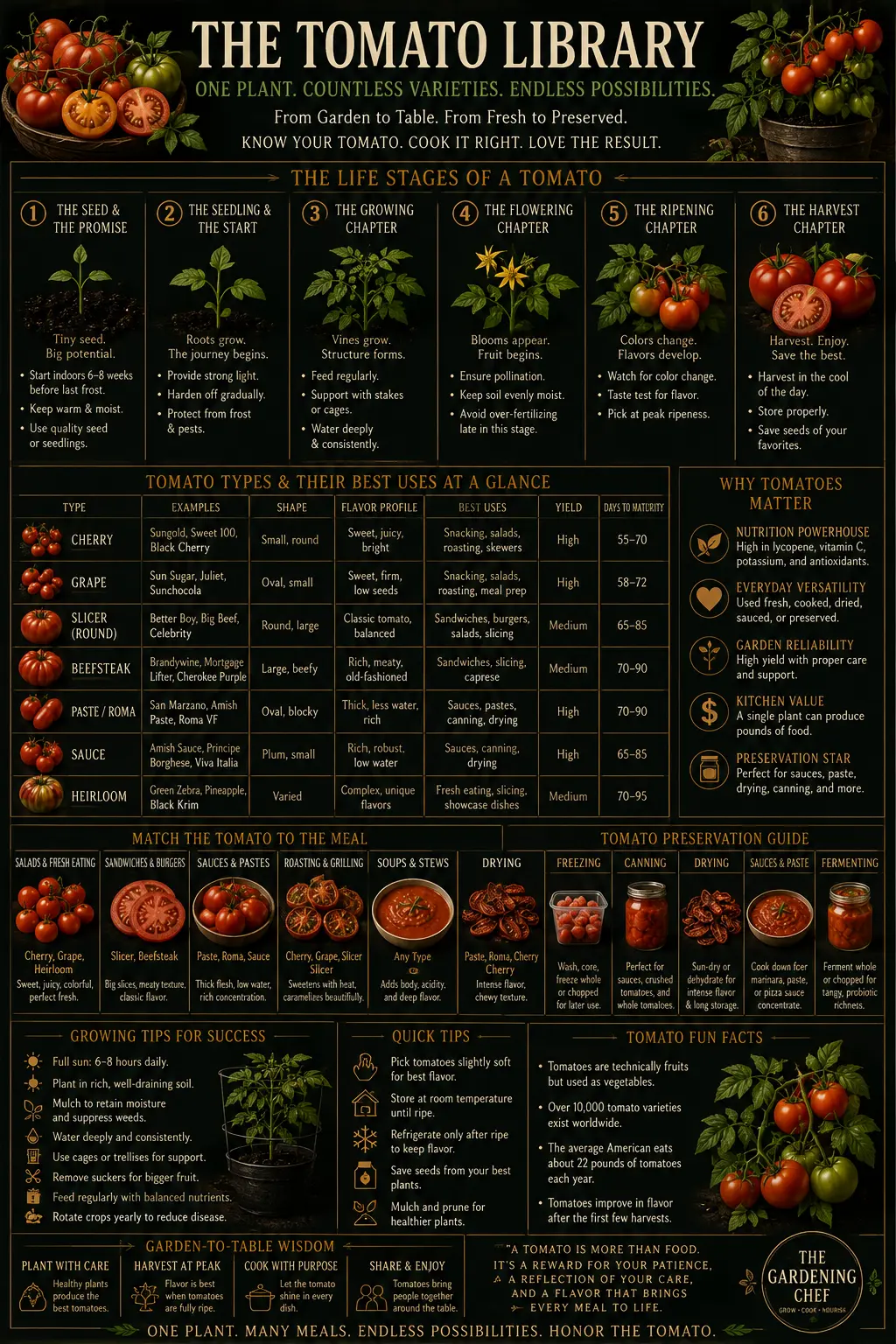
| Tomato Type | Best Known For | Best Uses | Kitchen Note |
|---|---|---|---|
| Cherry Tomatoes | Sweetness, juice, snacking | Fresh eating, salads, roasting, skewers, drying, quick sauces | Small tomatoes can deliver huge daily value. |
| Grape Tomatoes | Firmness, low moisture, shape | Snacking, salads, lunch boxes, meal prep, roasting | Excellent when you want tomatoes that hold together. |
| Slicer Tomatoes | Classic tomato balance | Sandwiches, burgers, salads, slicing, fresh eating | The everyday tomato for fresh meals. |
| Beefsteak Tomatoes | Large size, thick slices, juicy flesh | Sandwiches, platters, burgers, caprese-style dishes | Built for dramatic slices and summer meals. |
| Paste Tomatoes | Thick walls, fewer seeds, low moisture | Sauce, paste, canning, pasta, roasting, soups | The workhorse tomato for cooking down. |
| Sauce Tomatoes | High yield, balanced juice and solids | Sauce, soup, canning, freezing, large batches | Often overlaps with paste tomatoes but may be juicier. |
| Heirloom Tomatoes | Flavor, color, story, seed saving | Fresh eating, special dishes, tomato platters, seed saving | Often seasonal, beautiful, and deeply expressive. |
This is why a good field guide to the types of tomatoes should do more than name them. It should help you understand how each tomato moves from garden to kitchen.
A tomato variety is not just a label.
It is a clue.
Cherry Tomatoes: The Snack Tomato
Cherry tomatoes are often the tomato that converts children, beginners, and casual gardeners into believers.
They are small, sweet, juicy, and easy to eat straight from the vine. They do not need much preparation. A bowl of cherry tomatoes on the counter can disappear without anyone turning on the stove.
But cherry tomatoes are not only for snacking.
Roast them and they collapse into sweetness. Toss them with pasta and they become a quick sauce. Skewer them for grilling. Halve them for salads. Dry them until they become chewy, concentrated bursts of flavor.
Cherry tomatoes are one of the best examples of a small crop with high daily value.
They may not look like much one at a time.
But when a plant is producing handful after handful, day after day, they become one of the most useful tomatoes in the garden.
Best For
Fresh eating, salads, roasting, snacking, skewers, quick sauces, drying.
Garden Value
Cherry tomatoes are excellent for beginners because they tend to be productive and encouraging. Many varieties keep producing over a long season, especially when harvested regularly.
Kitchen Value
Cherry tomatoes are one of the easiest tomatoes to use quickly. They need almost no prep and can move from snack bowl to salad to sheet pan to pasta in minutes.
Chef Tip
When cherry tomatoes begin to pile up, roast them with olive oil, garlic, salt, and herbs. They will shrink, sweeten, and become a sauce base, pizza topping, pasta addition, or freezer treasure.
Grape Tomatoes: The Firm Little Workhorse
Grape tomatoes are similar to cherry tomatoes, but they usually have a firmer texture and less juice.
That makes them extremely useful for meal prep, salads, lunch boxes, and dishes where you do not want the tomato to collapse immediately. They hold their shape better than many cherry tomatoes, which makes them practical.
They are also excellent roasted.
Because they are small and firm, grape tomatoes can concentrate beautifully in the oven. With olive oil, salt, garlic, and herbs, they become sweet, savory, and deeply useful.
Best For
Snacking, salads, roasting, meal prep, lunch boxes, pasta bowls.
Garden Value
Grape tomatoes are a strong choice for gardeners who want steady small harvests that store slightly better on the counter than very delicate cherry types.
Kitchen Value
Grape tomatoes are dependable. They may not always have the explosive sweetness of the best cherry tomatoes, but their texture makes them useful in everyday cooking.
Chef Tip
Use grape tomatoes when you want tomatoes that stay neat in a dish. They are excellent for lunch salads, grain bowls, skewers, and roasted vegetable trays.
Slicer Tomatoes: The Classic Table Tomato
The slicer is what many people picture when they hear the word tomato.
Round. Red. Juicy. Balanced. Familiar.
A good slicer tomato belongs on sandwiches, burgers, salads, breakfast plates, and summer platters. It should have enough acidity to stay bright, enough sweetness to feel ripe, and enough structure to hold a slice.
This is the tomato that teaches why homegrown matters.
A sandwich made with a real garden slicer is not the same sandwich. The tomato is not background anymore. It becomes the reason the sandwich exists.
Best For
Sandwiches, burgers, salads, slicing, fresh eating.
Garden Value
Slicer tomatoes are essential if your kitchen uses tomatoes fresh. They may not always be the best for sauce, but they are among the most satisfying tomatoes to harvest and eat immediately.
Kitchen Value
Slicers are the bridge between garden and table. They are not trying to become sauce or powder or paste. Their highest calling is often immediate pleasure.
Chef Tip
For a perfect tomato sandwich, use a ripe slicer, good bread, salt, and enough fat to carry the flavor. Mayonnaise, olive oil, buttered toast, cheese, or avocado can all help the tomato shine.
Beefsteak Tomatoes: The Summer Centerpiece
Beefsteak tomatoes are the dramatic tomatoes.
Large. Heavy. Juicy. Often irregular. Sometimes almost too big for the bread.
These are tomatoes made for thick slices. A single beefsteak can cover a sandwich. A platter of sliced beefsteaks with salt, herbs, olive oil, and fresh mozzarella can become dinner.
Beefsteaks are not always the easiest tomatoes to grow. Some need strong support, steady water, good airflow, and patience. But when they succeed, they feel like a reward.
They are not just tomatoes.
They are summer trophies.
Best For
Slicing, sandwiches, tomato platters, burgers, fresh eating, caprese-style meals.
Garden Value
Beefsteaks are high-impact crops. They may not produce as many individual fruits as smaller tomatoes, but each fruit can deliver serious kitchen value.
Kitchen Value
Beefsteaks are for meals where the tomato is the centerpiece. They are not background ingredients. They are the reason the plate exists.
Chef Tip
Do not hide a great beefsteak tomato. Slice it thick, season it well, and keep the rest of the dish simple.
Paste Tomatoes: The Sauce Builder
Paste tomatoes are built for cooking down.
They usually have thicker walls, fewer seeds, and less water than slicers. That means they reduce into sauce more efficiently. You spend less time boiling away liquid and more time building flavor.
Roma tomatoes are the classic example, but there are many paste types worth growing.
Paste tomatoes are not always the most exciting fresh tomato. Some can taste less juicy than slicers. But in a pot with garlic, olive oil, herbs, and time, they reveal their purpose.
They are the tomato of sauce day.
Best For
Sauce, paste, canning, pasta, soups, roasting, batch cooking.
Garden Value
Paste tomatoes are one of the best choices for gardeners who want pantry value. If you want jars of sauce, freezer packs, or tomato paste, grow tomatoes designed for that job.
Kitchen Value
Paste tomatoes are production tomatoes. Their value is not always obvious in a sandwich, but it becomes clear when a basket cooks down into thick sauce.
Chef Tip
If you want to make sauce regularly, do not rely only on juicy slicers. Grow paste tomatoes on purpose. The right tomato saves time, fuel, and frustration.
Sauce Tomatoes: The Batch Cooking Tomato
Sauce tomatoes overlap with paste tomatoes, but it is useful to think of them as a broader kitchen category.
A sauce tomato may not always be as dry or meaty as a paste tomato. It may have more juice, but still enough flavor and solids to cook beautifully. These tomatoes are ideal when you want volume.
They are for the big pot.
The simmering pot. The kitchen that smells like garlic and basil. The afternoon when the harvest is too large for sandwiches and must become something that lasts.
Best For
Sauces, soups, canning, freezing, roasting, large batch cooking.
Garden Value
Sauce tomatoes are excellent for turning abundance into storage. They help the garden move from fresh eating into preservation.
Kitchen Value
Sauce tomatoes turn harvest pressure into future meals. When the counter is full and the tomatoes are softening, sauce is often the answer.
Chef Tip
A mixed tomato sauce can be excellent. Use paste tomatoes for body, slicers for juice, cherry tomatoes for sweetness, and heirlooms for character.
Heirloom Tomatoes: The Flavor Story
Heirloom tomatoes are often grown for flavor, beauty, history, and seed saving.
They may be striped, purple, yellow, green, pink, orange, black, or red. They may be perfectly round or deeply ribbed. They may crack more easily, bruise more easily, or produce less predictably than modern hybrids.
But a great heirloom tomato can stop people mid-bite.
That is why gardeners grow them.
Heirlooms remind us that productivity is not the only form of value. Flavor has value. Color has value. Story has value. Seed saving has value.
They are not always the safest choice if you need uniform harvest and maximum reliability.
But they are often the tomatoes people remember.
Best For
Fresh eating, tomato platters, special dishes, seed saving, flavor exploration.
Garden Value
Heirlooms are excellent for gardeners who want variety, beauty, seed-saving potential, and memorable flavor. Save seeds only from open-pollinated varieties when you want plants that come back true to type.
Kitchen Value
Heirlooms are best when you let their differences show. Use them sliced, salted, layered, and displayed. Their color and shape are part of the dish.
Chef Tip
Do not force heirlooms into perfect uniformity. Their irregularity is part of their value. A platter of mixed heirlooms can be more exciting than a perfectly identical tomato tray.
Choosing Tomatoes by Purpose
Once you understand the major types of tomatoes, the next step is choosing based on your actual household.
Do not start with the seed catalog.
Start with the table.
What do you eat? What do you cook? What do you preserve? What do you wish you had more of in winter? What do your children snack on? What do you buy over and over again?
That is how you choose.
| If You Want… | Grow These Tomatoes | Why |
|---|---|---|
| Tomato sandwiches | Slicers, beefsteaks, flavorful heirlooms | They give you thick slices, juice, and fresh summer flavor. |
| Easy garden snacks | Cherry and grape tomatoes | They produce small, frequent harvests and require little prep. |
| Homemade sauce | Paste tomatoes, sauce tomatoes, mixed ripe tomatoes | They cook down into useful meal bases. |
| Canning projects | Paste and sauce tomatoes | They provide volume, body, and preservation value. |
| Roasted tomato packs | Cherry, grape, paste, slicers | Roasting concentrates sweetness and makes freezer-friendly flavor. |
| Drying and powder | Cherry, grape, small paste tomatoes | Smaller tomatoes dry faster and concentrate well. |
| Colorful platters | Heirlooms, beefsteaks, slicers | They create visual impact and memorable flavor. |
| Seed saving | Open-pollinated heirlooms | They can produce plants true to type when properly saved. |
| Beginner confidence | Cherry, grape, slicer, paste | This mix gives snacking, slicing, and sauce without overcomplication. |
The Gardening Chef Lesson
Do not grow tomatoes only because they look interesting.
Grow tomatoes because they have a job.
Then grow a few interesting ones because curiosity belongs in the garden too.
The Six-Basket Tomato Harvest System
Tomatoes often arrive in waves.
At first, there are only a few. Then suddenly the counter fills. The windowsill fills. The bowl fills. The basket fills. The gardener who was waiting all season for tomatoes suddenly has more than the kitchen can handle.
That is where waste begins.
Not because the garden failed.
Because the harvest did not have a system.
The Six-Basket Tomato Harvest System gives every tomato a destination.
| Basket | What Goes In | What It Becomes |
|---|---|---|
| Fresh Basket | Slicers, beefsteaks, cherry tomatoes, heirlooms | Sandwiches, salads, caprese, salsa, tomato toast, platters |
| Roast Basket | Cherry, grape, slicers, paste tomatoes, mixed ripe tomatoes | Roasted tomato packs, pasta sauce, pizza toppings, soup base |
| Sauce Basket | Paste, sauce, overripe but sound tomatoes | Marinara, pizza sauce, soup, braising base, freezer sauce |
| Dry Basket | Cherry, grape, small paste tomatoes | Dried tomato pieces, tomato chips, tomato powder |
| Preserve Basket | Paste and sauce tomatoes, salsa blends | Canned tomatoes, salsa, sauce, freezer packs, fermented condiments |
| Seed Basket | Best open-pollinated fruits from healthy plants | Seeds for next year, garden continuity, future value |
This system turns abundance into direction.
Instead of asking, “What am I going to do with all these tomatoes?”
You ask:
“Which basket does this tomato belong in?”
That small shift can save the harvest.
When to Harvest Tomatoes: Know the Signs
Tomatoes change as they ripen. The trick is knowing what stage serves your purpose.
A tomato does not become useful only when it is fully red. Green tomatoes, breaker tomatoes, turning tomatoes, nearly ripe tomatoes, ripe tomatoes, and overripe tomatoes all have possible uses.
| Stage | What It Looks Like | Flavor and Texture | Best Use |
|---|---|---|---|
| Green | Fully green and firm | Tart, firm, less sweet | Fried green tomatoes, chutney, pickles, end-of-season harvests |
| Breaker | First blush of color | Beginning to soften and sweeten | Counter ripening, protected harvest, some cooked uses |
| Turning | More color spreading | Flavor improving, texture still firm | Ripen indoors, use soon, protect from pests or weather |
| Nearly Ripe | Mostly colored but still firm | Good balance of flavor and texture | Slicing, salads, sandwiches, transport |
| Ripe | Full color, fragrant, slightly soft | Best sweetness, acidity, juice, aroma | Fresh eating, sauce, roasting, seed saving |
| Overripe | Very soft, sometimes split | Deep flavor but fragile | Sauce, soup, fermentation, immediate use |
| On the Vine | Ripens naturally outdoors | Often best flavor if conditions are good | Fresh eating, showcase fruit, seed saving |
A tomato harvested at the wrong stage is not always a failure.
It may simply need a different use.
Green Tomatoes: The Underrated Stage
Green tomatoes are firm, tart, and less sweet. They are not just unripe red tomatoes. In the kitchen, they behave like their own ingredient.
They can be fried, pickled, turned into relish, made into chutney, or cooked into savory dishes where acidity and firmness are useful.
Green tomatoes are especially valuable at the end of the season when frost threatens. Instead of losing them, you can harvest and use them.
One caution: tomato leaves and stems should not be eaten, and green tomatoes contain more natural alkaloids than fully ripe fruit. Traditional green tomato recipes are common, but treat green tomatoes as a culinary ingredient to use intentionally, not as something to eat in large raw quantities.
Chef Tip
Green tomatoes are not failed ripe tomatoes. They are tart, firm cooking tomatoes. Use them where structure and acidity are welcome.
Breaker and Turning Tomatoes: The Protection Stage
The breaker stage is when the tomato first begins to show color. The turning stage is when that color spreads.
These tomatoes are no longer fully green, but they are not yet ripe. This stage matters because tomatoes can continue ripening off the vine once the ripening process has begun.
That can be useful.
If birds, squirrels, insects, cracking, disease pressure, or heavy rain threaten your harvest, picking tomatoes at the breaker or turning stage can protect value before it is lost.
This is not always the romance of vine-ripened perfection.
But it is practical gardening.
A tomato saved at the right time is better than a perfect tomato lost to the ground.
Garden Wisdom
The best harvest is not always the latest harvest. Sometimes the best harvest is the one that makes it safely to the kitchen.
Ripe Tomatoes: The Peak Eating Stage
A ripe tomato should feel alive in the hand.
Not hard. Not mushy. Heavy for its size. Fragrant near the stem. Colored according to its variety.
This is the stage for tomato sandwiches, caprese salad, fresh salsa, tomato toast, summer platters, and simple meals where the tomato itself does the work.
A ripe tomato does not need much.
Salt. Olive oil. Basil. Bread. Maybe a little cheese.
That is enough.
The better the tomato, the less it needs.
Chef Tip
When a tomato is truly ripe, do less. Let the tomato carry the dish.
Overripe Tomatoes: The Sauce Signal
Overripe tomatoes are too soft for slicing but often excellent for cooking.
This is where the tomato moves from plate to pot.
If the tomato is still sound, with no mold or spoilage, it can be trimmed and used quickly in sauce, soup, roasted tomato puree, or fermentation.
The key is urgency.
An overripe tomato is stored value at risk.
Use it now, or lose it.
Garden Wisdom
The compost pile should not be the first plan for overripe tomatoes. Sauce, soup, roasting, drying, fermentation, or seed saving may still be possible.
Tomato Kitchen Decision Guide
Sometimes you do not need a long explanation.
You need the right tomato for the job.
| Kitchen Goal | Best Tomato Choice | Why It Works |
|---|---|---|
| BLT or tomato sandwich | Slicer, beefsteak, flavorful heirloom | Thick slices, juice, acidity, and summer flavor |
| Caprese salad | Beefsteak, slicer, heirloom | Fresh texture and beautiful presentation |
| Quick snack | Cherry or grape tomatoes | Sweet, small, easy to eat fresh |
| Lunch box tomato | Grape tomatoes | Firm texture and less mess |
| Fresh salsa | Slicer, cherry, grape, paste, heirloom blends | Balance of juice, sweetness, acidity, and texture |
| Marinara sauce | Paste and sauce tomatoes | Body, solids, and cooking efficiency |
| Pizza sauce | Paste tomatoes, roasted tomatoes | Concentrated flavor and less excess water |
| Tomato soup | Sauce tomatoes, paste tomatoes, roasted mixed tomatoes | Flavor, body, and sweetness |
| Drying | Cherry, grape, small paste tomatoes | Smaller size and better concentration |
| Tomato powder | Fully dried tomatoes | Concentrated pantry seasoning |
| Canning | Paste and sauce tomatoes | Volume, body, and storage value |
| Seed saving | Open-pollinated heirlooms | Better chance of true-to-type future plants |
The Gardening Chef Rule
Do not ask, “What tomato is best?”
Ask, “Best for what?”
Tomato Flavor Systems
Tomatoes are powerful because they connect so easily to other ingredients.
A tomato can become Italian, Mexican, Southern, Mediterranean, Middle Eastern, Indian, or completely personal depending on what surrounds it.
The tomato is not only an ingredient.
It is a flavor base.
| Flavor System | Tomato Partners | What It Becomes |
|---|---|---|
| Italian Garden | Basil, garlic, oregano, olive oil, pasta, mozzarella | Marinara, pizza sauce, caprese, bruschetta |
| Salsa Garden | Peppers, onions, cilantro, lime, garlic | Fresh salsa, roasted salsa, fermented salsa |
| Southern Summer | Corn, okra, beans, basil, bacon, biscuits | Tomato gravy, succotash, tomato sandwiches, stewed tomatoes |
| Mediterranean Table | Olive oil, cucumber, herbs, feta, lemon | Salads, mezze, roasted tomatoes, grain bowls |
| Pantry Kitchen | Garlic, onions, dried herbs, beans, pasta | Soups, sauces, braises, pantry meals |
| Preservation Pantry | Salt, vinegar, jars, dehydrator, freezer | Sauce, dried tomatoes, powder, salsa, canned tomatoes |
Tomatoes become more useful when you stop seeing them alone.
A tomato plus basil becomes caprese, sauce, pizza, pasta, and summer salad.
A tomato plus pepper becomes salsa, chili, shakshuka, roasted vegetables, and hot sauce.
A tomato plus onion becomes soup, sauce, stew, relish, and pantry base.
A tomato plus time becomes winter food.
Preservation Options: Make Summer Last
Tomatoes are one of the great preservation crops because they can move into so many forms.
They can become sauce, paste, canned tomatoes, frozen tomatoes, dried tomatoes, roasted tomatoes, fermented salsa, soup base, or powder.
The preservation method depends on the tomato type and the future use.
| Method | Best Tomatoes | What It Creates | Best Future Use |
|---|---|---|---|
| Freeze | Cherry, grape, sauce, paste, chopped tomatoes | Easy stored tomatoes | Sauces, soups, stews |
| Dry | Cherry, grape, small paste tomatoes | Concentrated tomato pieces | Pasta, bread, salads, oil blends |
| Can | Paste and sauce tomatoes | Shelf-stable jars | Year-round cooking |
| Roast and Freeze | Cherry, grape, slicers, paste tomatoes | Deep flavor packs | Pasta, pizza, soups, eggs |
| Make Sauce | Paste and sauce tomatoes | Ready cooking base | Pasta, lasagna, soups, braises |
| Ferment | Ripe tomatoes, salsa blends | Tangy preserved condiment | Salsa, sauces, toppings |
| Dry Into Powder | Fully dried tomatoes | Tomato seasoning | Soups, rubs, sauces, popcorn, breads |
Food Safety Note for Canning
Tomatoes vary in acidity. If canning tomatoes for shelf storage, use tested recipes from reliable food preservation sources and follow proper acidification and processing instructions. Do not guess with canning.
Freezing and drying are more forgiving for beginners.
Freeze: The Beginner Preservation Method
Freezing tomatoes is one of the easiest ways to preserve a harvest.
You can freeze whole tomatoes, chopped tomatoes, roasted tomatoes, or sauce. The texture will soften after thawing, so frozen tomatoes are best used in cooked dishes.
This method is perfect when the garden is producing faster than your schedule allows.
Freeze now. Cook later.
That alone can save a harvest.
Best For
Sauces, soups, stews, chili, braises, and future cooking.
Chef Tip
Freeze tomatoes in meal-sized portions. A freezer full of random bags is less useful than a freezer full of future sauce starters.
Dry: The Flavor Concentration Method
Drying tomatoes removes water and concentrates flavor.
Small tomatoes work especially well because they dry faster and become sweet, chewy, and intense. Sun-dried style tomatoes, dehydrated cherry tomatoes, and tomato chips can all become pantry treasures.
Dried tomatoes can be added to pasta, breads, salads, sauces, soups, and grain bowls.
Drying turns a fresh summer ingredient into a winter seasoning.
Best For
Cherry tomatoes, grape tomatoes, small paste tomatoes, tomato chips, pantry snacks, tomato powder.
Chef Tip
Dry tomatoes until they are fully dry for storage. If they still contain moisture, they may need refrigeration or freezing to stay safe.
Can: The Pantry Method
Canning is how tomatoes become winter wealth.
Crushed tomatoes, diced tomatoes, sauce, salsa, and whole peeled tomatoes can all become shelf-stable pantry staples when processed safely.
This is one of the most satisfying garden transformations.
A summer harvest becomes a row of jars.
Those jars become meals months later.
A canned tomato is not just preserved food.
It is preserved time.
Best For
Paste tomatoes, sauce tomatoes, large harvests, pantry planning, winter meals.
Food Safety Reminder
Use tested canning recipes and proper acidification. Tomato acidity varies, and safe canning is not the place to improvise.
Roast and Freeze: The Deep Flavor Method
Roasting tomatoes before freezing gives you a major flavor advantage.
Heat concentrates sweetness, reduces water, and adds caramelized depth. Roasted tomatoes can be frozen in small portions and used later in pasta, soup, pizza, beans, eggs, or sauces.
This method is excellent for mixed tomatoes that are too many to eat fresh but not enough for a huge canning session.
Roast them.
Freeze them.
Thank yourself later.
Best For
Cherry tomatoes, grape tomatoes, slicers, paste tomatoes, mixed ripe tomatoes.
Chef Tip
Add garlic, herbs, and olive oil before roasting if you know how you will use them later. Leave them plain if you want more flexibility.
Make Sauce: The Kitchen Ritual
Tomato sauce is one of the great bridges between garden and kitchen.
It begins with abundance.
A bowl becomes a pot. The pot begins to simmer. Garlic enters. Herbs enter. The kitchen changes.
Sauce is not just preservation.
It is transformation.
A pile of tomatoes becomes something ready to feed people. Something that can be frozen, canned, shared, gifted, or used as the foundation for many meals.
This is why sauce tomatoes matter.
They turn surplus into structure.
Best For
Paste tomatoes, sauce tomatoes, overripe but sound tomatoes, mixed tomato harvests.
Chef Tip
A great garden sauce does not have to be one variety. Some of the best sauces come from blending tomato types: paste for body, cherry for sweetness, slicer for juice, heirloom for character.
Ferment: The Living Condiment Method
Fermented tomatoes can become salsa, hot sauce blends, relish, or tangy condiments.
Fermentation adds acidity and complexity. It can make tomatoes taste brighter, deeper, and more alive. This method works especially well when tomatoes are combined with peppers, garlic, herbs, and salt.
Fermentation is not the same as canning. It requires its own safe practices and is often stored refrigerated once ready.
Think of fermented tomatoes as living flavor.
Best For
Fresh salsa blends, ripe tomatoes, tomato-pepper mixtures, small batches, refrigerator condiments.
Chef Tip
Fermented tomato salsa can be bright, tangy, and complex, but it should be made with safe fermentation practices and stored properly.
Dry Into Powder: The Secret Pantry Trick
Tomato powder is one of the most underrated preservation methods.
When tomatoes are fully dehydrated until crisp, they can be ground into powder. That powder can be added to soups, sauces, spice blends, bread dough, pasta dough, popcorn seasoning, dry rubs, and emergency pantry meals.
It is concentrated tomato flavor in a jar.
Tomato powder teaches a powerful lesson:
A garden does not only produce food.
It can produce ingredients.
Best For
Fully dried tomatoes, pantry seasoning, soup mixes, spice blends, tomato salt, homemade rubs.
Chef Tip
Tomato powder loves moisture. Store it airtight, keep it dry, and consider making small batches so it stays fresh and useful.
Companion Plants: Friends That Help Tomatoes Thrive
Companion planting is not magic.
It is design.
The goal is to place plants together so they support the garden system in useful ways. Some companions may help attract pollinators. Some may confuse pests. Some may improve ground cover. Some simply belong together because they make the kitchen more useful.
A companion plant should earn its space.
Basil
Basil is a classic tomato companion because it shares the kitchen beautifully. Whether or not it improves tomato flavor in the soil, it absolutely improves tomato value in the kitchen.
Tomato plus basil is a system.
Sauce. Caprese. Pizza. Pasta. Salad.
Grow them together because you use them together.
Marigold
Marigolds are often planted near tomatoes because they may help with certain pest pressures, especially in the soil depending on the type and situation. They also bring color and pollinator value.
They are not a cure-all.
But they are useful system plants.
Garlic
Garlic can help confuse or discourage some pests with its strong scent, and it belongs naturally near tomato in the kitchen.
Tomato and garlic are one of the great culinary partnerships.
Nasturtium
Nasturtiums can attract pollinators and may act as trap crops for certain pests. Their flowers and leaves are edible, adding peppery brightness to salads.
They are beautiful, useful, and functional.
That is the kind of plant The Gardening Chef loves.
Quick Growing Tips for Better Tomatoes
Tomatoes are generous, but they are not effortless.
They need sun, support, moisture, airflow, and attention. A tomato plant that is ignored can become a tangled, stressed, disease-prone mess. A tomato plant that is supported and observed can become one of the most productive crops in the garden.
Give Them Sun
Tomatoes need strong light. In most gardens, aim for 6–8 hours of sun daily. Less sun usually means less fruit and slower ripening.
Water Consistently
Tomatoes do best with steady moisture. Deep, consistent watering is better than shallow, erratic watering. Uneven watering can contribute to cracking and blossom end rot issues.
Mulch the Soil
Mulch helps retain moisture, reduce soil splash, moderate temperature, and suppress weeds. It is one of the simplest ways to improve tomato performance.
Support the Plant
Many tomatoes need cages, stakes, or trellises. A sprawling tomato plant is harder to harvest, harder to manage, and often more prone to disease problems.
Support is not decoration.
Support is infrastructure.
Harvest Regularly
Regular harvesting keeps the plant productive and prevents fruit from becoming overripe on the vine. Do not let value rot because you failed to collect it.
Know Your Variety
Determinate tomatoes tend to produce a concentrated harvest window. Indeterminate tomatoes keep growing and producing through the season if conditions allow.
That difference matters when planning sauce days, fresh eating, and preservation.
Tomato Problems to Watch For
A field guide should help you see not only opportunity, but warning signs.
The solution is not panic.
The solution is observation.
Tomatoes reward the gardener who pays attention.
Check leaves. Check watering. Check airflow. Check fruit. Check stems. Check soil moisture.
A small problem noticed early is often manageable.
A small problem ignored can become the harvest.
| Problem | What You May Notice | Common Contributing Factors | What to Do |
|---|---|---|---|
| Blossom End Rot | Dark sunken spot on blossom end of fruit | Uneven moisture, calcium uptake issues, stress | Water consistently, mulch, avoid extreme swings, support healthy roots |
| Cracking | Splits in tomato skin | Heavy rain or watering after dry periods | Keep moisture steady, harvest nearly ripe fruit before storms |
| Sunscald | Pale or damaged patches on exposed fruit | Too much direct sun on fruit, loss of leaf cover | Maintain foliage, avoid over-pruning, provide support |
| Early Blight | Lower leaves yellowing with dark spots | Soil splash, humidity, plant stress | Mulch, prune lower leaves, improve airflow, remove infected debris |
| Late Blight | Rapid dark lesions, plant collapse in severe cases | Cool wet conditions, disease pressure | Remove affected plants when necessary, avoid overhead watering, monitor closely |
| Septoria Leaf Spot | Small leaf spots, often lower leaves first | Wet foliage, soil splash, humidity | Mulch, prune, improve airflow, clean up debris |
| Hornworms | Large chewed leaves, missing foliage, green caterpillars | Tomato/tobacco hornworms | Handpick, inspect regularly, encourage beneficial insects |
| Aphids | Clusters of small insects, sticky residue, curling leaves | Tender growth, pest buildup | Rinse off, prune heavily infested areas, encourage beneficial insects |
| Whiteflies | Tiny white insects flying when disturbed | Warm conditions, plant stress | Monitor undersides of leaves, use gentle control methods early |
| Fusarium or Verticillium Wilt | Wilting, yellowing, plant decline | Soilborne disease pressure | Use resistant varieties, rotate crops, remove infected plants |
| Poor Fruit Set | Flowers drop, few tomatoes form | Heat stress, cold, poor pollination, water stress | Maintain steady care, support pollinators, wait for better conditions |
Garden Wisdom
Tomato problems are messages. The plant is telling you something about water, soil, airflow, weather, pests, disease, or stress.
Listen early.
A Quick Note About Pets and Tomato Plants
Ripe tomato fruit is commonly eaten by people, but tomato plants belong to the nightshade family. The leaves, stems, and unripe green parts of the plant can be harmful to pets if eaten.
Keep tomato foliage, pruned stems, and garden scraps away from dogs and cats.
A productive garden should feed the household.
It should also protect it.
The Tomato as a Growth Crop
In the Wealth Garden system, tomatoes are a classic growth crop.
They require setup. They require support. They require attention. But when the season turns in their favor, they can produce abundance quickly.
That abundance creates choices.
Eat fresh. Make sauce. Freeze. Dry. Can. Ferment. Share. Sell. Save seed.
A tomato plant is not just a plant.
It is a seasonal production engine.
But like all growth assets, tomatoes also carry risk. They can be affected by weather, disease, pests, water swings, and poor support. That is why the best tomato gardens are not random.
They are designed.
Soil. Sun. Support. Variety. Harvest timing. Preservation plan.
That is how a tomato crop becomes more than summer produce.
That is how it becomes a system.
The Garden Wealth Connection
Tomatoes are one of the clearest examples of garden wealth because they produce value in layers.
A single tomato plant can create:
Fresh food.
Better meals.
Reduced grocery spending.
Sauce for later.
Frozen meal bases.
Dried tomato pieces.
Tomato powder.
Seeds for next year.
Compost for future soil.
Knowledge for future seasons.
That is why a tomato is more than a crop.
It is a system that can keep producing value after the first harvest is gone.
A tomato sandwich is immediate value.
A jar of sauce is stored value.
A packet of saved seed is future value.
A lesson learned from a failed plant is knowledge value.
A guide that teaches someone else how to grow better tomatoes is shared value.
This is the deeper lesson:
The harvest is not the end of the system. It is the beginning of the next decision.
Frequently Asked Questions About Types of Tomatoes
What are the main types of tomatoes?
The main types of tomatoes include cherry tomatoes, grape tomatoes, slicer tomatoes, beefsteak tomatoes, paste tomatoes, sauce tomatoes, and heirloom tomatoes. Each type has different strengths in the kitchen and garden.
What types of tomatoes are best for beginners?
Cherry tomatoes, grape tomatoes, slicers, and paste tomatoes are good beginner choices. Cherry and grape tomatoes are encouraging because they produce small frequent harvests. Slicers are useful for fresh eating. Paste tomatoes are helpful if you want sauce or preservation.
What types of tomatoes are best for sandwiches?
Slicer tomatoes, beefsteak tomatoes, and flavorful heirlooms are usually best for sandwiches. They provide large slices, juice, acidity, and classic summer tomato flavor.
What types of tomatoes are best for sauce?
Paste tomatoes and sauce tomatoes are best for sauce because they usually have more solids and less excess water. Roma-style tomatoes are common paste tomatoes, but many other sauce varieties exist.
What types of tomatoes are best for drying?
Cherry tomatoes, grape tomatoes, and small paste tomatoes are often best for drying because they are smaller and concentrate well. Larger tomatoes can be dried too, but they usually take longer and may need more preparation.
What types of tomatoes are best for canning?
Paste and sauce tomatoes are commonly used for canning because they provide body and volume. Always use tested canning recipes and proper acidification instructions for shelf-stable tomato products.
Are heirloom tomatoes better than hybrid tomatoes?
Not always. Heirlooms are often prized for flavor, beauty, history, and seed saving. Hybrids may offer better disease resistance, uniformity, productivity, or reliability. The better choice depends on your goal.
Can green tomatoes ripen indoors?
Yes, tomatoes that have reached the breaker or turning stage can often continue ripening indoors. Fully green tomatoes may or may not ripen well depending on maturity, variety, and conditions.
Should tomatoes be refrigerated?
For best flavor, ripe tomatoes are often kept at room temperature if they will be eaten soon. However, refrigeration can be useful when tomatoes are fully ripe and you need to slow spoilage. Let refrigerated tomatoes come back toward room temperature before eating when possible.
Why do tomatoes crack?
Tomatoes often crack when they take up water quickly after a dry period. Heavy rain, inconsistent watering, and rapid growth can all contribute. Mulch and steady moisture help reduce cracking.
Why do tomatoes get blossom end rot?
Blossom end rot is often linked to calcium uptake problems, commonly made worse by uneven watering, root stress, or rapid growth. Consistent moisture, mulch, and healthy soil management are key.
Can I freeze tomatoes whole?
Yes. Whole tomatoes can be frozen and used later in cooked dishes. The texture will soften after thawing, so frozen tomatoes are best for sauces, soups, stews, and cooked recipes.
Can I save seeds from any tomato?
You can save seeds, but if you want plants that grow true to type, save seeds from open-pollinated or heirloom tomatoes. Hybrid tomato seeds may not produce the same plant as the parent.
What tomato should I grow if I only have room for one plant?
Choose based on your kitchen. If you want snacks, grow a cherry tomato. If you want sandwiches, grow a slicer. If you want sauce, grow a paste tomato. If you want beauty and flavor exploration, grow an heirloom.
Download the Printable Tomato Field Guide
If this guide helped you see tomatoes differently, the printable Tomato Field Guide poster is designed to live where you make decisions:
The kitchen.
The pantry.
The garden binder.
The seed planning table.
The preservation shelf.
The poster includes:
- Tomato types and best uses
- Harvest timing signs
- Preservation options
- Companion plants
- Quick growing tips
- Kitchen and garden decision notes
Launch price: $0.99
[Button: Download the Tomato Field Guide Poster] – Coming Soon
Where This Connects
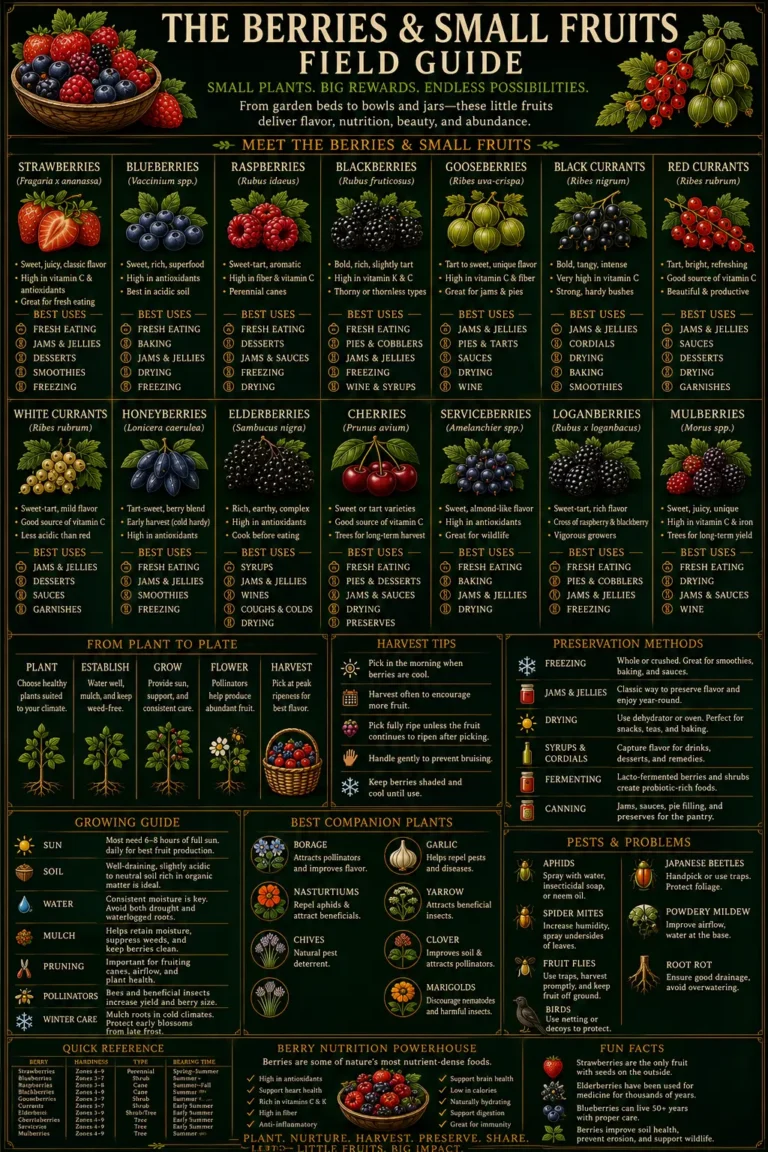
If you are building the full Gardening Chef Field Guide Library, this tomato guide connects naturally to the other field guides.
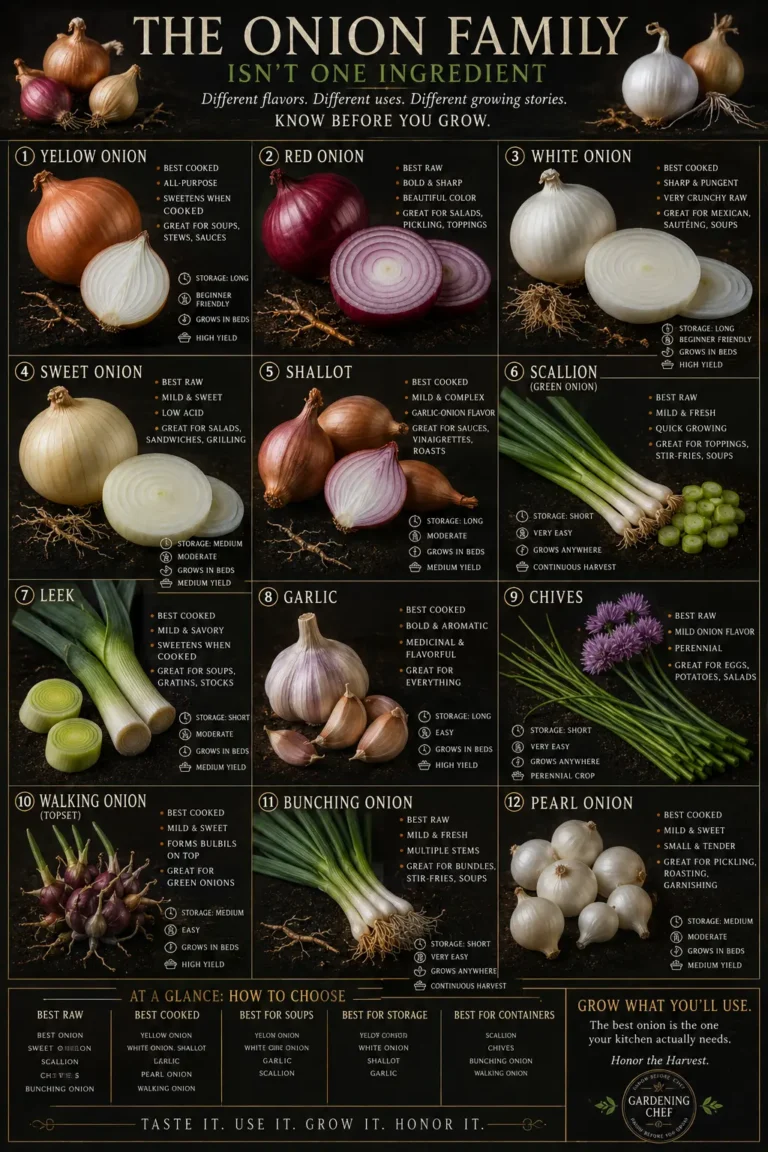
The Onion Family Isn’t One Ingredient
Tomatoes and onions form the base of sauces, salsas, soups, stews, and pantry meals. Understanding onions helps you build better tomato dishes.
The Pepper Library: One Plant, Many Chapters
Tomatoes and peppers share the nightshade family and often grow side by side in the garden. Together, they become salsa, sauce, chili, roasted vegetables, hot sauce, and preserved flavor.
The Herb Flavor Multiplier Guide
Tomatoes become far more powerful when paired with basil, parsley, oregano, thyme, cilantro, rosemary, chives, and mint.
This is the puzzle system.
Each guide stands alone.
But the more pieces you connect, the clearer the kitchen garden becomes.
The Tomato Field Guide Lesson
Most people think tomatoes are simple because they are familiar.
But familiar does not mean simple.
A tomato can be a slice, a sauce, a powder, a jar, a seed, a snack, a salad, a preserved meal, or a memory of summer in the middle of winter.
The tomato plant does not hand you one harvest.
It hands you choices.
And the better you understand those choices, the more valuable the plant becomes.
That is the final lesson of the Tomato Field Guide:
Purpose determines value.
Grow it well.
Harvest it at the right time.
Use it with intention.
Preserve what you cannot eat today.
One garden.
Endless possibilities.
Taste it. Use it. Grow it. Preserve it. Honor the Harvest.