What One Failing Garden Bed Taught Me About Money, Systems, and Survival
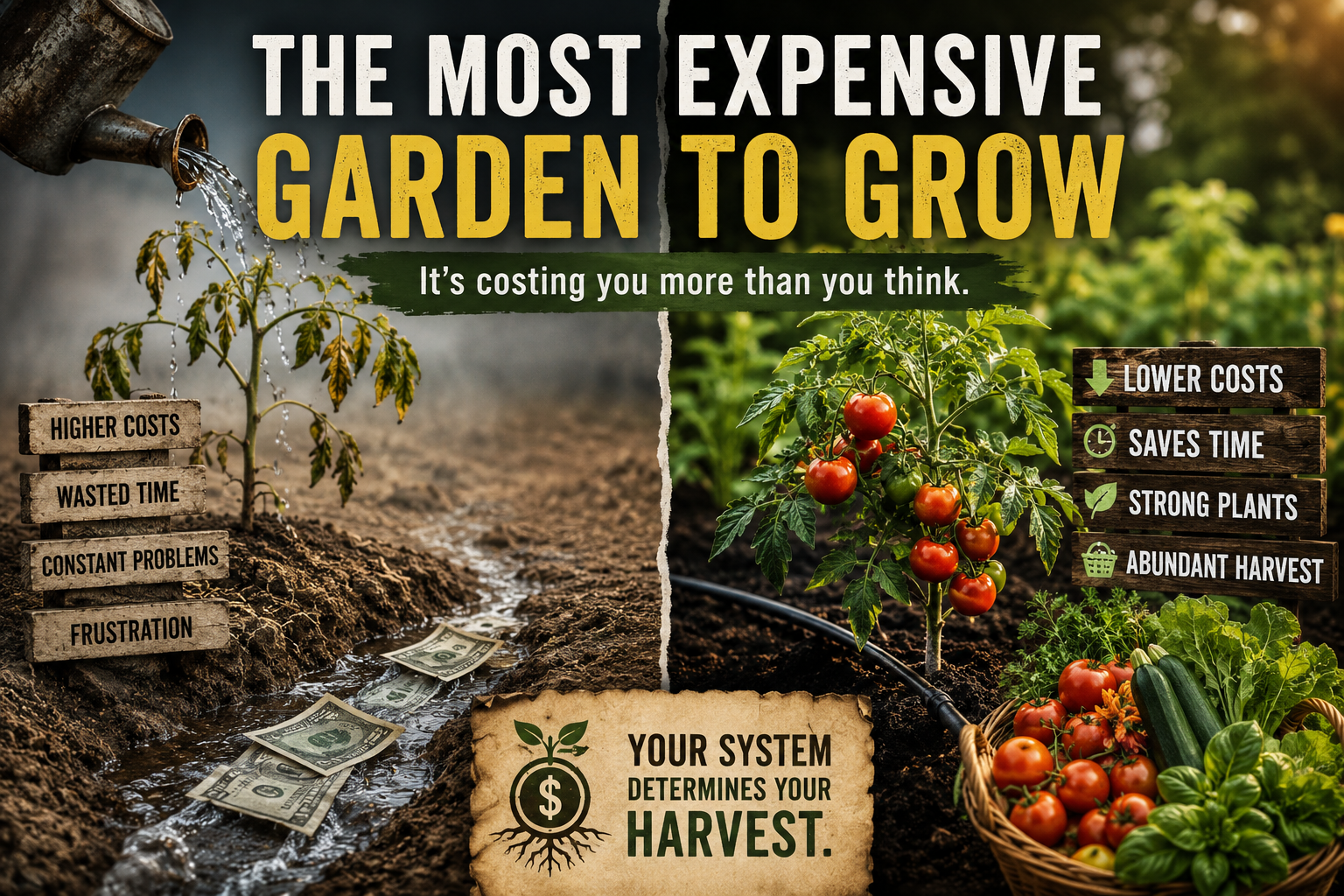
There was a season when I could not understand why one part of my garden kept failing.
It wasn’t dramatic failure. Nothing collapsed all at once. It was quieter than that. The kind of slow, frustrating underperformance that makes you question everything without giving you a clear answer.
The plants would start strong enough. Seeds would sprout. Leaves would form. At a glance, everything looked fine.
But as the weeks went on, something always slipped.
The soil would dry out faster than I expected. Water would run through instead of soaking in. Plants that should have thrived seemed to stall. Some yellowed earlier than they should have. Others never quite reached their potential.
So I did what most people do.
I worked harder.
I watered more often. I bought better soil in small bags from the store. I added fertilizer when things looked weak. When a plant struggled too much, I replaced it. When something didn’t grow well, I tried a different variety.
Each decision made sense on its own.
But nothing really fixed the problem.
If anything, it felt like the effort kept increasing while the results stayed the same.
It took me longer than I’d like to admit to realize what was happening.
The issue wasn’t what I was planting.
It wasn’t even how much effort I was putting in.
It was the kind of system I was working inside.
That part of the garden was expensive to maintain.
Not in a single obvious way, but in dozens of small, constant ways that added up over time.
The soil didn’t hold water well, so I had to water more frequently. That meant more time and more attention just to keep things alive. Because the soil structure was weak, nutrients didn’t stay where they were needed, so I kept adding more. Because I didn’t have a proper compost system set up in that space, everything had to be brought in from outside instead of built over time.
Nothing I was doing was wrong.
But everything I was doing cost more than it should have.
And once I saw that clearly in the garden, I started noticing the same pattern somewhere else.
Not in soil.
In money.
The System That Makes Everything Cost More
There are ways of living where almost every decision costs more than it should.
Not because someone is careless.
Not because they aren’t trying.
But because the system they are operating inside doesn’t allow for anything else.
I’ve seen it, and I suspect you have too.
It shows up in small, ordinary ways that don’t look like major problems at first.
Someone buys groceries a few items at a time instead of in bulk. Not because they want to, but because they can’t afford the upfront cost of buying more at once. Over time, they end up paying more per unit for the same food.
Someone relies on quick meals or convenience stores instead of cooking from scratch. Not because they don’t understand the difference, but because they don’t have the time, the tools, or the energy after long days just to get through it.
Someone drives an older car that constantly needs repairs because replacing it requires money they don’t have. Each repair feels smaller than the cost of a new vehicle, but over time, those repairs add up to something much larger.
Someone pays fees just to access their own money—check-cashing fees, overdraft fees, late fees—because the system they’re in doesn’t give them the same options others take for granted.
None of these decisions are irrational.
They are responses.
Just like watering more often in poor soil is a response.
The problem is not the decision itself.
The problem is the system that forces that decision to be made over and over again.
The Garden Version of the “Poor Man’s Tax”
If you strip away the financial language and look at it through the garden, it becomes easier to see.
Imagine two gardeners.
One has the ability to bring in a full load of compost at the beginning of the season. They can prepare their soil in a way that holds water, retains nutrients, and supports plant life long-term.
The other buys small bags of soil week after week.
At first, it doesn’t seem like a big difference. A bag here, a bag there. It feels manageable. It fits the moment.
But over time, the difference becomes obvious.
The first gardener builds a foundation that reduces effort. Watering becomes easier. Plants grow more consistently. Each season improves the next.
The second gardener keeps paying to maintain the same baseline. Water drains away faster. Nutrients don’t stay in place. Improvements never quite accumulate.
After one season, the gap is small.
After several seasons, it’s not.
And the frustrating part is this:
The second gardener may actually be working harder.
This is what people often miss when they talk about effort and outcomes.
Effort does not exist in isolation.
It exists inside a system.
Why Strategic Decisions Are Not Always Available
One of the hardest lessons to accept is that “better decisions” are not always available options.
We like to believe that with enough discipline or intelligence, we can always choose the optimal path.
But in reality, good decisions require certain conditions.
They require space—physical and mental.
They require time.
They require margin.
They require the ability to think beyond the immediate moment.
In the garden, that might mean having space to build compost instead of throwing scraps away. It might mean having time to observe soil moisture instead of reacting after plants are already stressed. It might mean having the resources to improve soil structure instead of constantly replacing what is lost.
In life, it looks very similar.
Strategic buying—buying in bulk, planning ahead, investing in higher-quality items—requires upfront capital that not everyone has available.
Cooking from scratch requires time, energy, and access to ingredients that may not be convenient.
Avoiding fees requires buffers—extra money in an account, time to track and manage systems, the ability to absorb small shocks without everything cascading.
Without those conditions, people are pushed into short-term decisions that solve immediate problems but create long-term cost.
Again, not because they are making poor choices.
Because they are operating within constraints.
The Cost You Don’t See on a Receipt
There is another layer to this that doesn’t show up in numbers immediately.
Time.
Energy.
Attention.
In that difficult section of my garden, I wasn’t just spending more money.
I was spending more time watering. More time adjusting. More time reacting to problems that shouldn’t have existed in the first place.
It was exhausting in a quiet way.
The same thing happens in financial life.
Time is spent fixing problems instead of building systems. Energy is used responding to issues instead of planning ahead. Attention is fragmented across small, urgent needs instead of focused on long-term improvement.
This is part of the real cost.
And it compounds just as much as money does.
The Moment It Shifted
The change didn’t happen when I found a better plant.
It didn’t happen when I worked harder.
It happened when I stopped trying to fix everything at once and focused on a single, foundational change.
I chose one section of the garden and committed to improving the soil there.
Not dramatically. Not perfectly.
Just consistently.
I added organic matter. I paid attention to how it held water. I stopped trying to force quick results and started building something that would support future growth.
At first, nothing looked different.
But over time, everything did.
That section needed less water. Plants held their color longer. Growth became more predictable. Problems still happened, but they didn’t cascade.
The system had changed.
And once that happened, effort started building instead of being spent.
The Real Lesson
This is where the deeper realization sits.
Some systems don’t fail because of bad decisions.
They struggle because they make good decisions more expensive.
Once you see that, something important shifts.
You stop asking, “What’s the best move right now?”
And start asking, “What part of this system is making everything harder?”
That question doesn’t always have a quick answer.
But it leads you somewhere better.
It leads you toward leverage.
Toward stability.
Toward building something that reduces future cost instead of increasing it.
Where This Connects
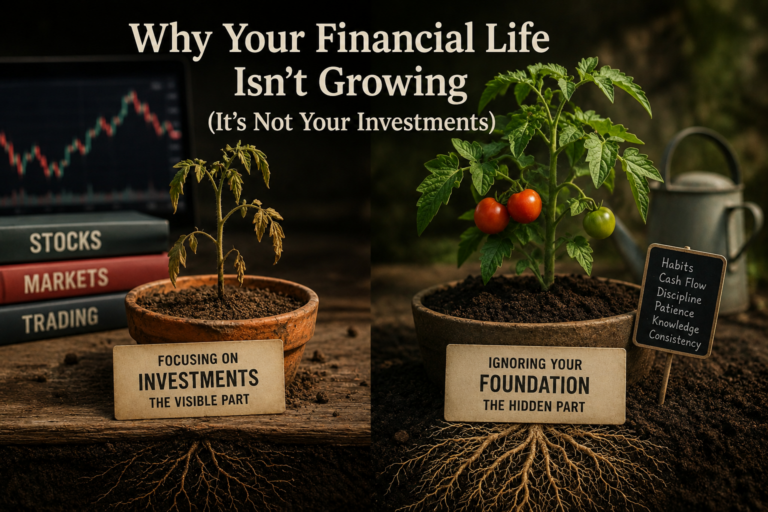
If this feels familiar—if it feels like effort keeps disappearing instead of building—then the next place to look is the foundation itself.
That’s where this idea continues:
→ Soil Before Stocks
And if the thought of changing everything at once feels overwhelming, there is a smaller, more realistic way in:
→ The 1% Garden Rule
And if you want to see what happens when a system finally begins to work with you instead of against you:
→ The $10,000 Garden
Some gardens struggle not because the gardener is doing something wrong…
But because the system they are working inside makes everything harder.
Once you see that, you stop blaming the plant.
And you begin improving the soil.
Wealth is not accumulated.
It is cultivated. 🌱