A list of vegetables to harvest in September can tell you what is ready, but it cannot tell you what each plant is still worth.
Some of my earliest lessons about harvesting never felt like lessons at all. I simply loved going over to see my grandfather. We would walk through the garden, notice what needed attention, pick whatever was ready, and eventually carry something back toward the house. The work often continued after we left the rows. Corn still had to be husked. Beans still needed their ends snipped. There were vegetables spread out in front of us and enough repetitive work to keep our hands occupied while the conversation wandered wherever it wanted to go.
Looking back, I realize how much education was hiding inside those ordinary afternoons. A good ear of corn became something I could recognize by feel before opening it; the difference between a tender bean and one left too long became obvious with repetition; healthy plants became familiar simply because I had spent enough time around them. Harvesting was never only the removal of food from the garden. It was one of the places where knowledge moved from one person to another.
A Different Way to Think About Vegetables to Harvest in September
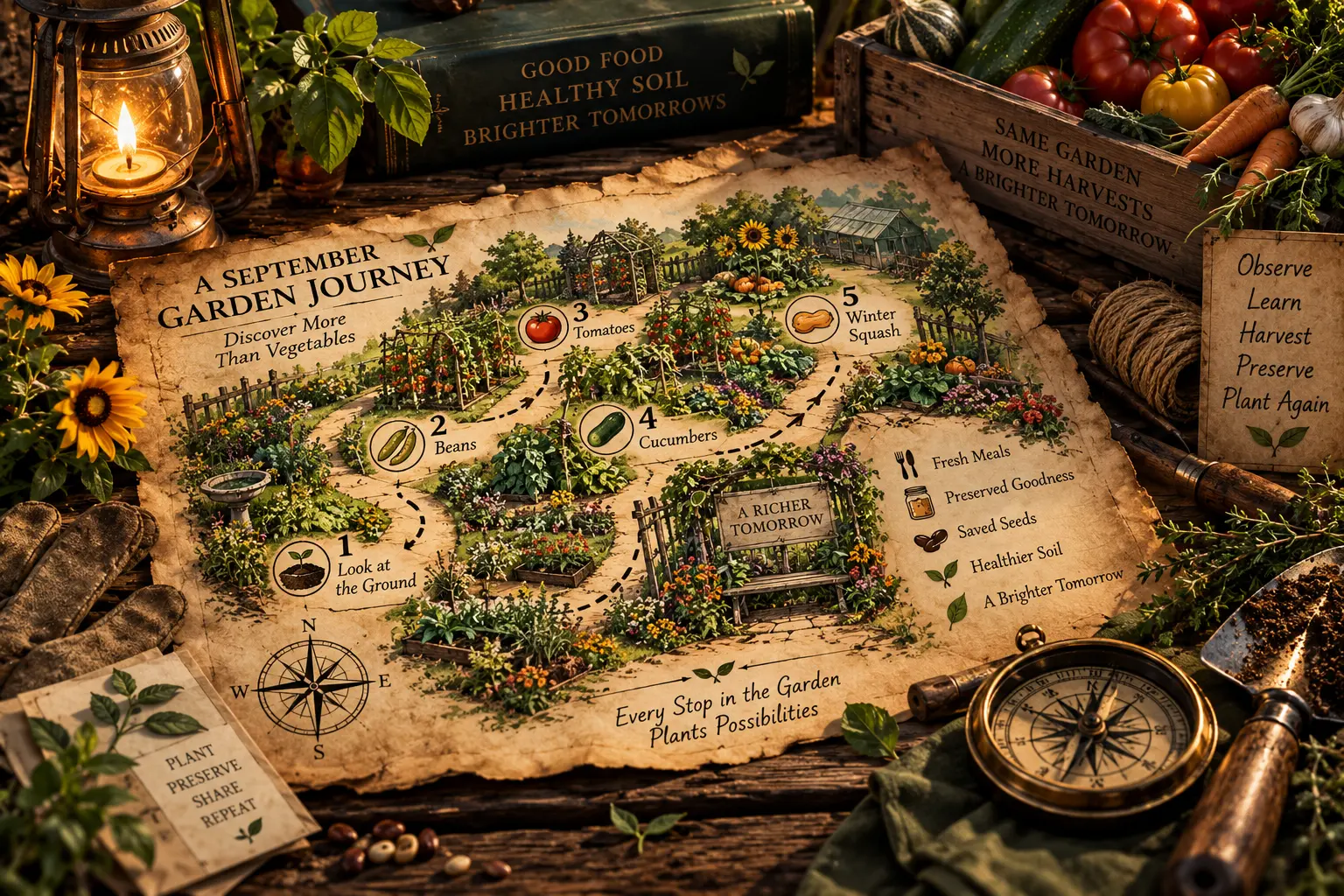
That is the kind of September garden tour I want to take with you—not a list of five vegetables followed by five paragraphs telling you when to pick them. Imagine instead that we are actually walking through the garden together. Every so often I am going to ask you to stop, touch something, smell something, move something aside, crack something open, or make a decision before I tell you what I see.
A great garden guide does not simply point toward a plant and give you its name; it changes what you notice. So before we start filling the harvest basket, slow down. The garden has more to show us than vegetables.
On this walk, the five vegetables to harvest in September are green beans, tomatoes, sweet corn, jalapeños, and potatoes; from there, we’ll follow the garden into herbs, ginger, compost, disease clues, weather, and the wildlife we might otherwise walk right past.
Before We Harvest Anything, Look at the Ground
Our first stop is not especially glamorous. This part of the garden used to hold cucumbers, and I neglected to get one of my August succession crops planted into the empty space. By September the consequences are beginning to show: the soil is exposed, the summer sun has been hitting it directly, and the surface looks harder and drier than the neighboring beds.
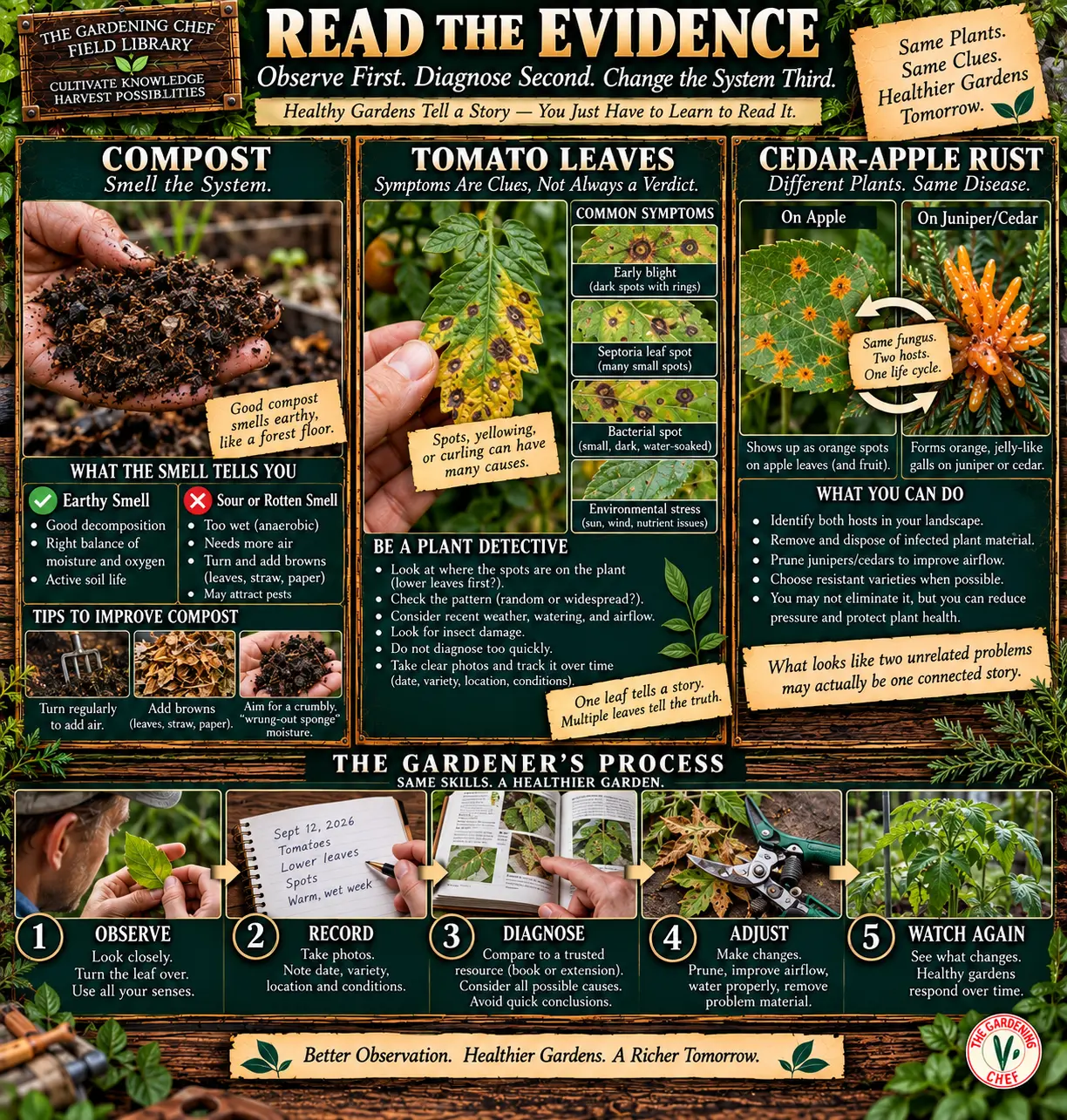
Put your hand over that bare ground for a moment. If the sun has been out, notice the heat radiating back, then scratch the surface with your fingers. Depending on the weather, the top may be dry and crusted even when some moisture remains deeper down.
A few steps farther on, the garden looks different because I used grass clippings as mulch. We had rain a couple of nights ago, so rather than assume the mulch helped, move some of the grass aside and touch the soil underneath. What do you notice?
The difference is usually immediate: the covered soil feels cooler and still holds moisture that the exposed bed has already begun losing. Grass clippings can be useful mulch, provided they have not recently been treated with herbicides you do not want in the vegetable garden and are not piled so deeply that they mat into a dense, airless layer.
What the Soil Reveals
Before putting the mulch back, scratch gently into the darker soil and smell it. What does it remind you of?
That familiar earthy smell after rain is partly associated with compounds such as geosmin produced by soil microorganisms. The smell alone cannot certify healthy soil, but it reminds us that what lies beneath our feet is habitat, not merely dirt holding plants upright. Look more closely for roots, decomposing clippings, worms, fungal threads, beetles, or other movement.
We are not trying to diagnose an entire soil ecosystem from one square foot. We are practicing the habit that will follow us through the whole tour: look before assuming.
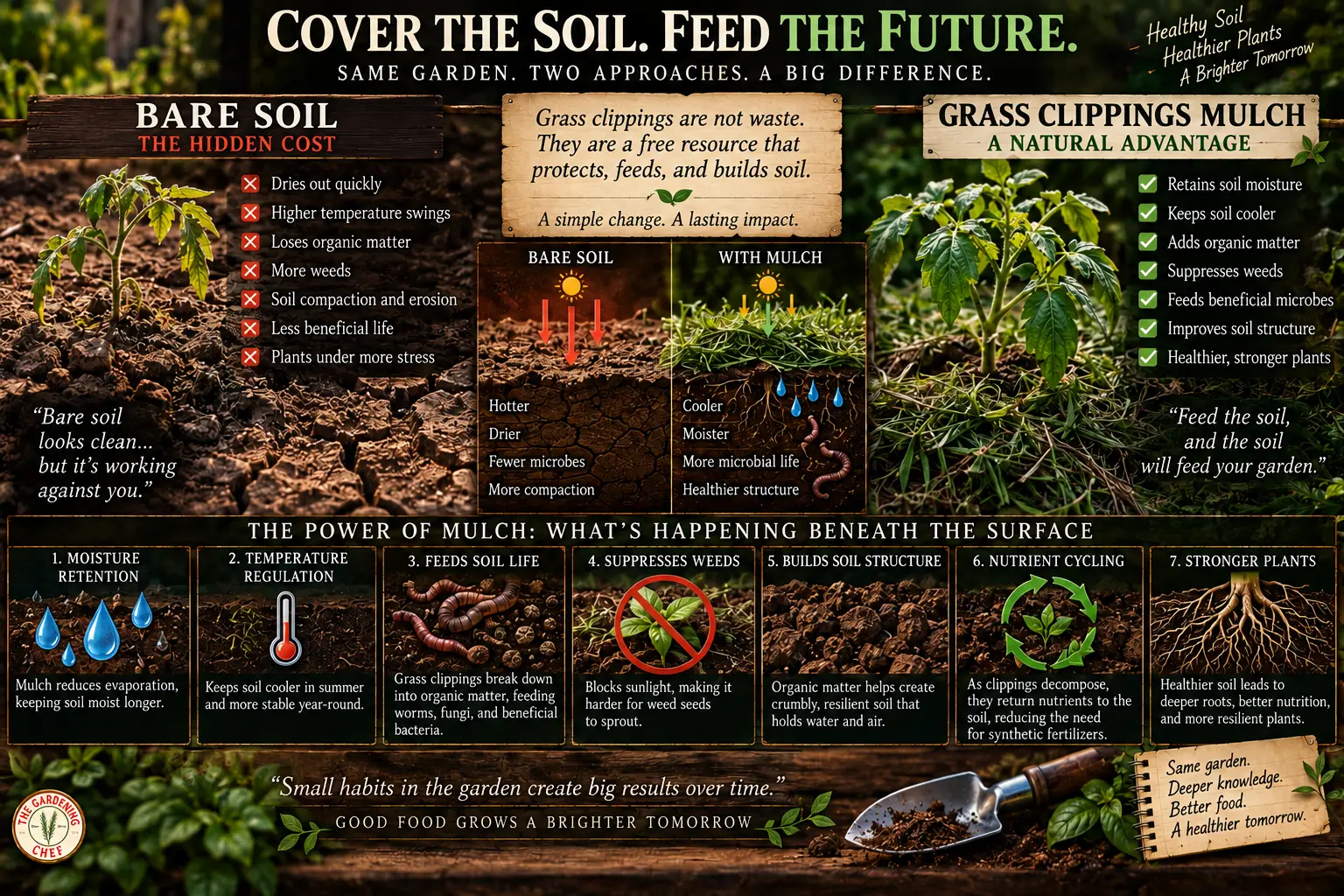
Bare soil loses moisture, organic matter and biological activity faster. A simple layer of grass-clipping mulch can help conserve moisture, moderate soil temperature, feed soil life and build healthier soil over time.
The picture fills in the rest: covering the soil affects far more than moisture alone. What happens at the surface changes the environment in which the next crop has to live.
Why Vegetables to Harvest in September Have Hidden Value
During the height of summer, harvesting can feel wonderfully obvious. Beans are ready, so we pick beans. A tomato reaches the stage we want, so it goes into the basket. Cucumbers seem to double in size overnight, and our greatest challenge may simply be keeping up.
September is different because several seasons seem to exist in the same garden at once.
Green beans are still producing here. Tomatoes are still coming in. Corn is ready. Jalapeños are hanging on the plants. Basil, sage, thyme, and rosemary still have plenty to offer the kitchen. My potatoes are underground waiting for me to remember them, while the ginger is playing a different game because I am watching the weather for the first frost.
Elsewhere the grapes have finished producing, the Triple Crown thornless blackberries are entering another stage, and I am thinking about relocating strawberries.
The garden has not simply stopped; it has changed assignments.
The beginner’s September question is usually, “What can I harvest now?” That is a perfectly reasonable place to begin, but there is a better question available to us:
What to Do With Vegetables to Harvest in September
What is the best thing this plant can give me now?
Sometimes the answer is dinner; another day it may be food for winter. The plant might instead be offering next year’s seed, a cutting from an exceptional specimen, something worth trying to overwinter, or evidence of a disease problem that should change the way we garden next season.
By September, the garden has already had months to show us what it can do. Spring was full of promises. September has evidence.
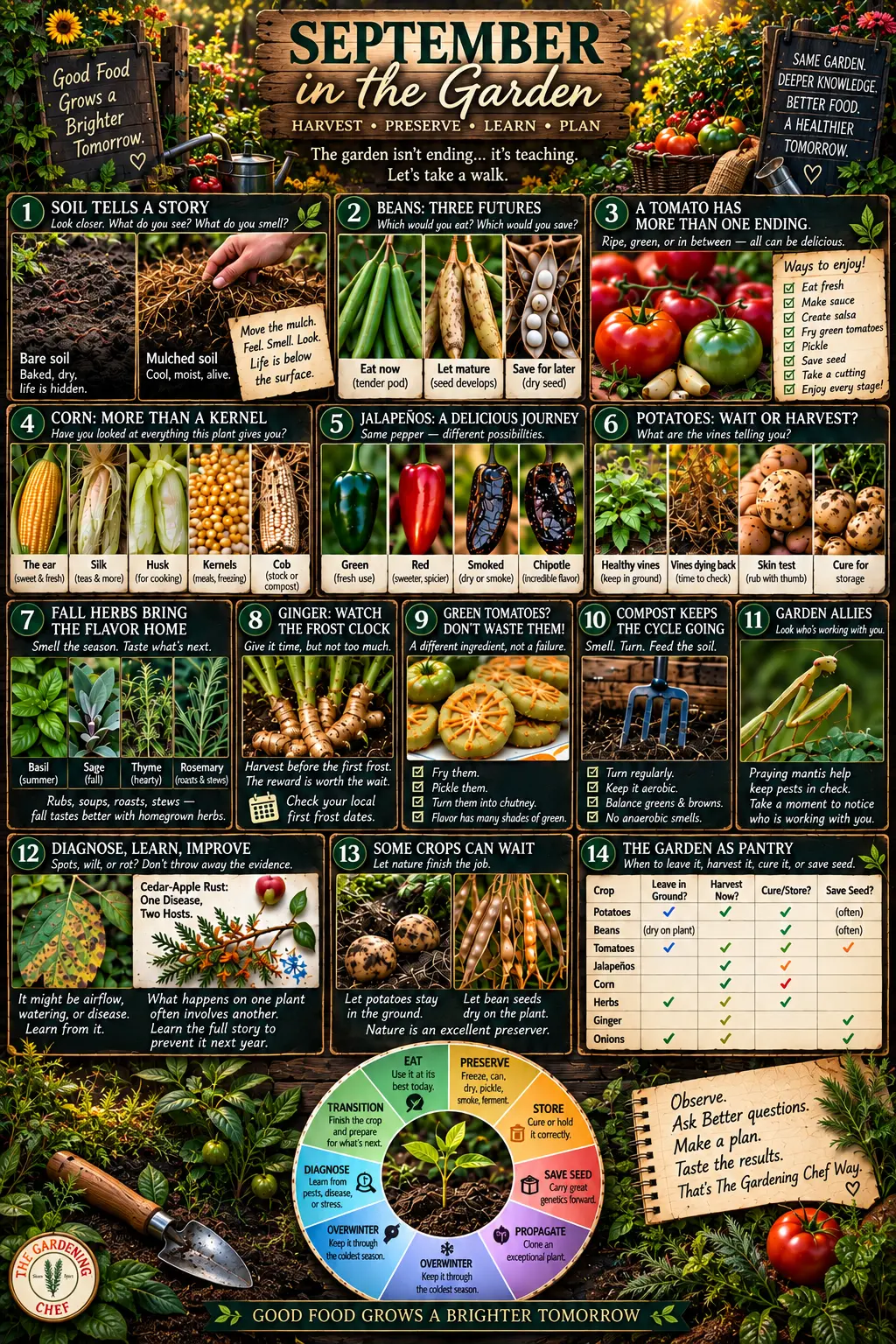
Now let’s walk through five vegetables to harvest in September and see what each one can still give us.
Stop at the Bean Row and Pick Two
Do not grab the basket yet. Pick one bean you would be happy to eat tonight, then find another pod that has clearly remained on the plant much longer. Hold them side by side. Bend the young bean and feel how crisp and tender it is; then open the older pod and notice the seeds developing inside and how much the pod itself has changed.
For most of summer, I harvest those younger pods before the seeds become large because that is the stage I want at the table. Regular picking also encourages many bean plants to keep producing instead of completing seed production.
When Dinner Becomes Next Year’s Seed
September gives us permission to change the assignment. Look back down the row. Was there a plant that produced especially well, handled your conditions better than its neighbors, or simply gave you beans you loved? If it is a suitable open-pollinated variety, that plant may now be more valuable as next year’s seed than as tonight’s side dish.
I stop picking some of its pods young and let them mature until they become dry, papery, and brown. When a fully dry pod rattles, the plant has finished another job. At that point I bring those pods inside rather than leaving them indefinitely to rain, humidity, insects, animals, mold, or splitting.
Before we leave the row, make the decision: Which beans are dinner—and which plants have earned a place in next year’s garden?
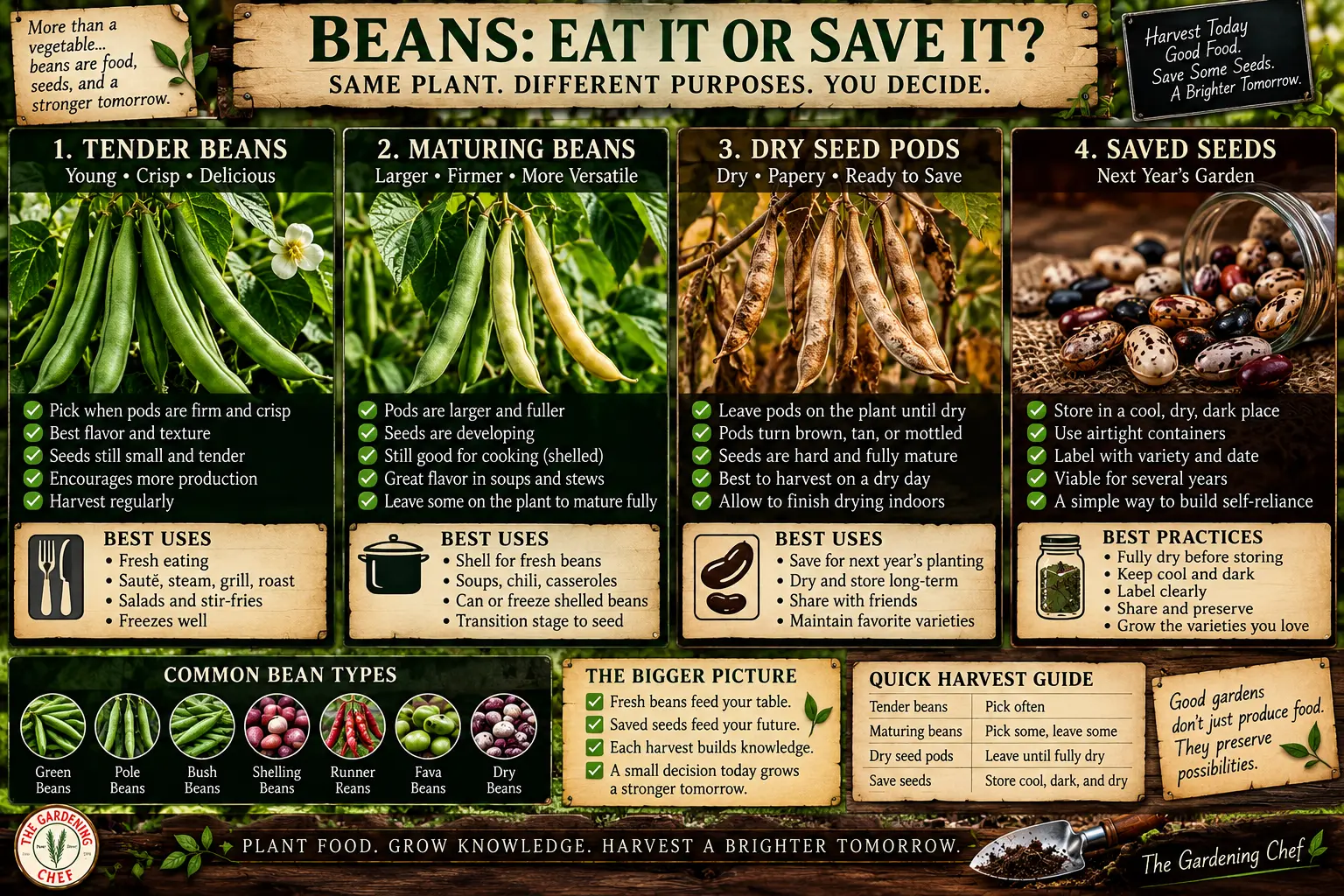
One row can therefore feed us today, stock the pantry, and carry part of this year’s garden into the next.
If you are not ready to give up fresh beans when the outdoor row finishes, I also use succession planting to grow fresh green beans indoors through winter.
At the Tomato Plants, Stop Looking Only for Red
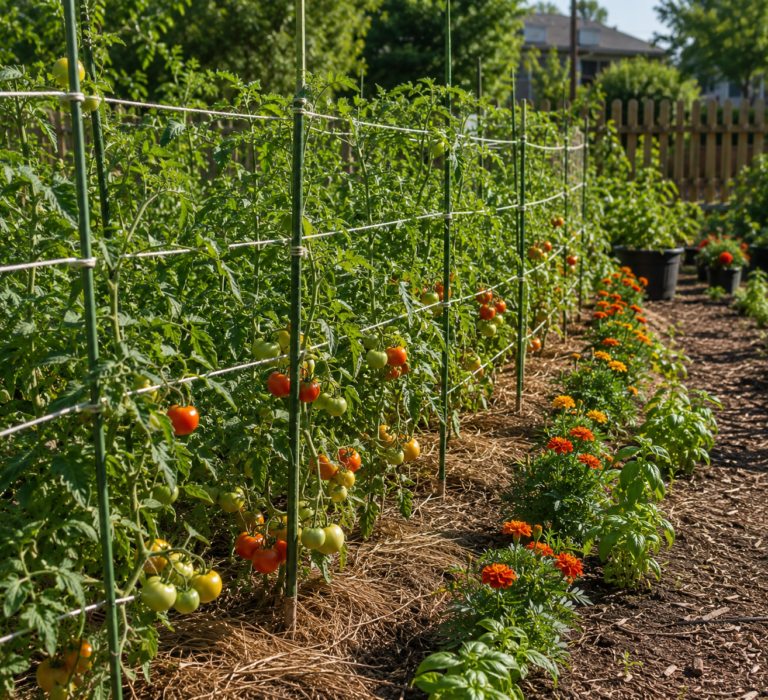
Now we arrive at the tomatoes, where September becomes far more interesting. Stand back for a moment and look at the whole plant before reaching for anything. Which fruits are fully ripe, which are beginning to change color, and which are mature but still green? Are there tiny fruits with enough season left to become useful? Are the leaves healthy, or are you seeing spotting, yellowing, wilting, or dieback?
Choose two tomatoes—one ripe and one full-sized but green—and cut them open. Compare their color, aroma, texture, seed development, and firmness. If the ripe tomato is sound, taste it. That is the obvious reward of the September tomato patch, especially when the fruit is still warm from the garden.
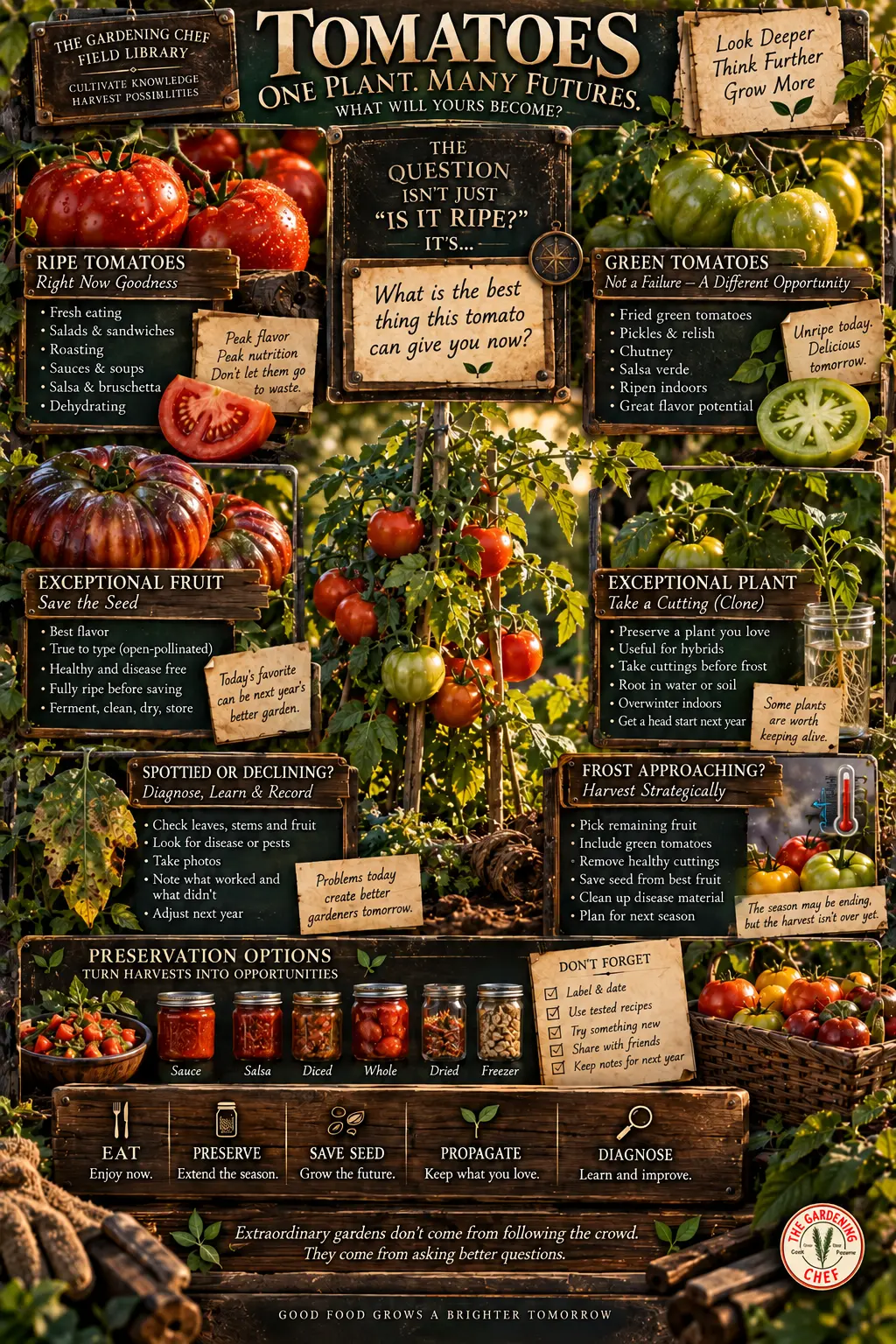
Then look again at the green tomato. Do not call it a failed red tomato; the chef sees another ingredient. That fruit may head toward the skillet, a pickle jar, relish, or another tested preservation recipe. The important change is not the recipe itself but realizing that green does not necessarily mean unfinished or useless. Sometimes the kitchen simply gives the harvest another future.
From Harvest to the Plant’s Next Future
September is also when different harvests begin meeting one another. Tomatoes and jalapeños arriving now may join onions and garlic harvested and cured earlier. That word matters: curing is the post-harvest drying and healing process that helps certain crops store well; hardening off is something we do when acclimating living plants to outdoor conditions.
Put those ingredients together and suddenly we have salsa. For fresh salsa, the cook has tremendous freedom. If we are canning it for shelf storage, however, creativity has boundaries: use a tested recipe rather than improvising the proportions of low-acid vegetables and acid.
Before we leave, look at the tomato plants themselves. Is there one you would want again?
That question gives us two very different ways forward. If the variety is appropriate for seed saving, an exceptional fruit may carry the lineage into another generation. If the individual plant itself is what impressed us, a healthy cutting can attempt to preserve that particular plant. Seed carries a lineage forward with genetic variation; a cutting attempts to preserve the individual.
September has given us enough evidence to decide which future is worth pursuing.
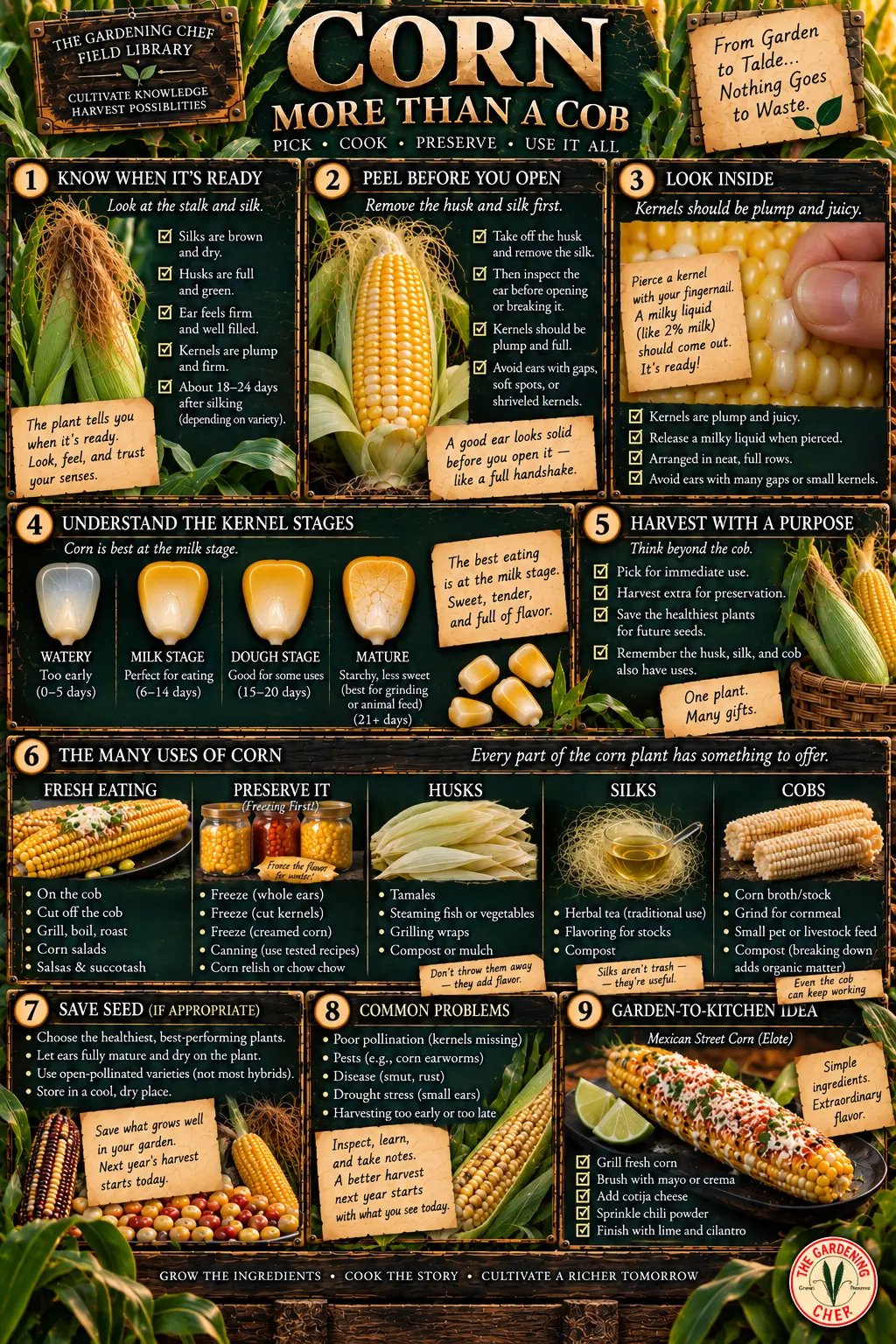
Feel the Corn Before You Open It
As we approach the corn, resist the temptation to peel it open.
First, feel the ear through the husk. Does it feel full from base to tip? Look at the silk. Has it dried and browned?
Now pull back only enough husk to expose a kernel and press it with your thumbnail.
What comes out?
If the liquid is still watery and clear, we may be early. When the kernel releases that cloudy, milky liquid, we are much closer to the sweet-corn harvest window we are looking for.
Taste one if you are comfortable doing so. Notice the sweetness, the juice, and the tenderness.
Corn teaches us to pay attention because that ideal eating stage does not wait forever. The plant is telling us, “Now.”
But before we drop the ear into the basket, look at what is still in your hands.
The Gardening Chef does not see only kernels.
Has every part of this plant actually finished its useful work?
That question is where an ordinary ear of corn becomes something much more interesting.
The Jalapeños Ask a Different Question
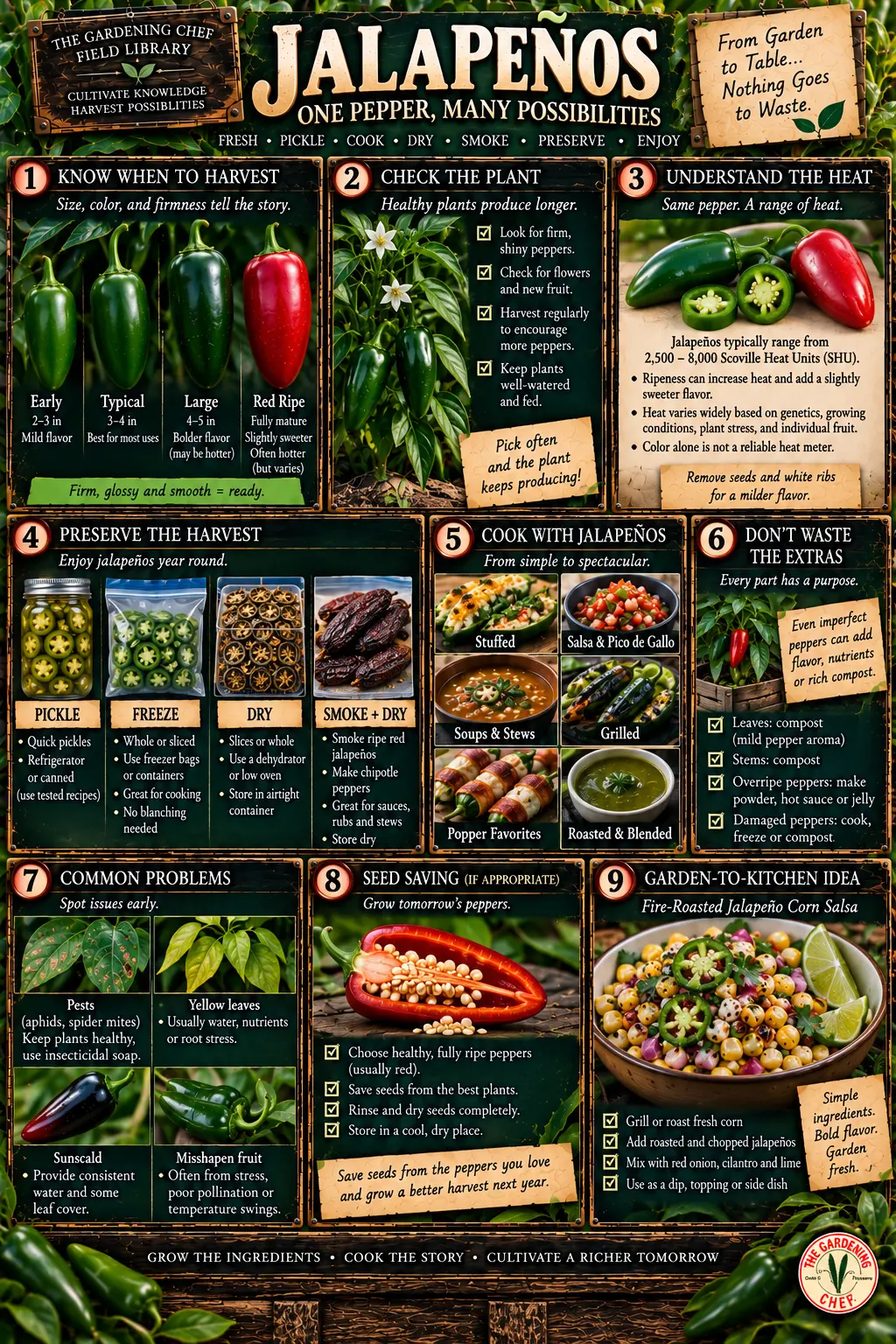
Now walk over to the pepper plants and find two fruits if you can: one green jalapeño and another that has reached its mature color.
Hold them side by side. Touch the skin and notice the firmness. And afterward, keep those fingers away from your eyes—pepper oils can turn a garden lesson into a memorable one very quickly.
Do not assume the green pepper is unfinished and the red one is simply “better.” A green jalapeño is already a legitimate harvest stage. Letting the fruit mature can change its sweetness, flavor, and sometimes its heat, although color alone does not tell us exactly how hot that pepper will be.
There is one transformation I especially want you to remember.
Smoke a mature jalapeño and dry it, and you have chipotle.
Same pepper. Different future.
Now step back and look at the plant rather than the fruit.
Did this plant earn another season?
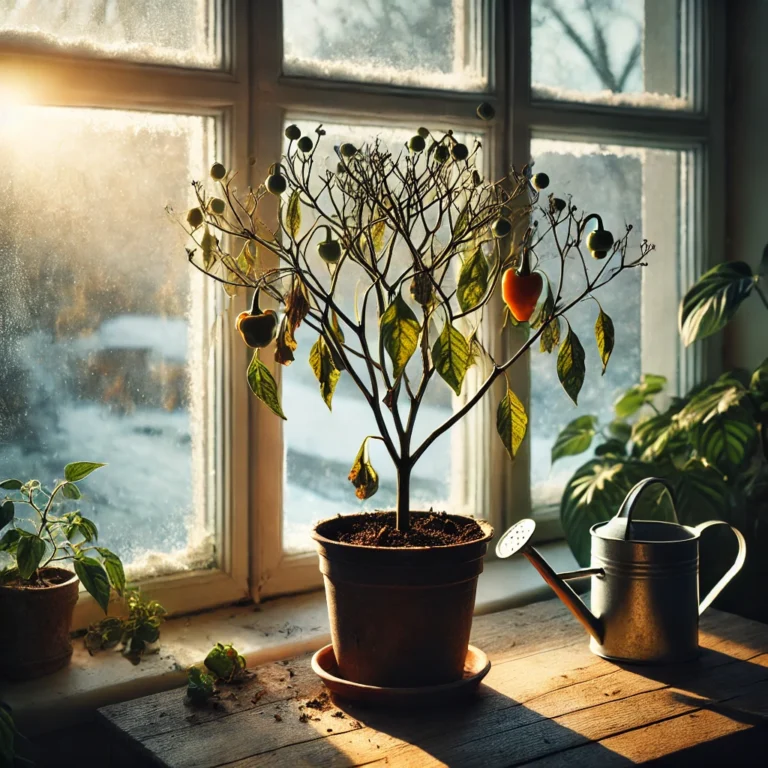
Peppers are tender perennials, even though gardeners in colder climates often grow them as annuals. An exceptional healthy plant may be worth trying to overwinter indoors. A cutting is another experiment, although peppers are usually less cooperative than basil or tomatoes.
And this is where September matters.
Do not wait until a frost warning arrives at 8:30 at night to decide that you suddenly want to save the plant.
September gives us time to choose, experiment, and try again if the first attempt fails.
Let’s Dig One Potato Before We Decide About the Rest
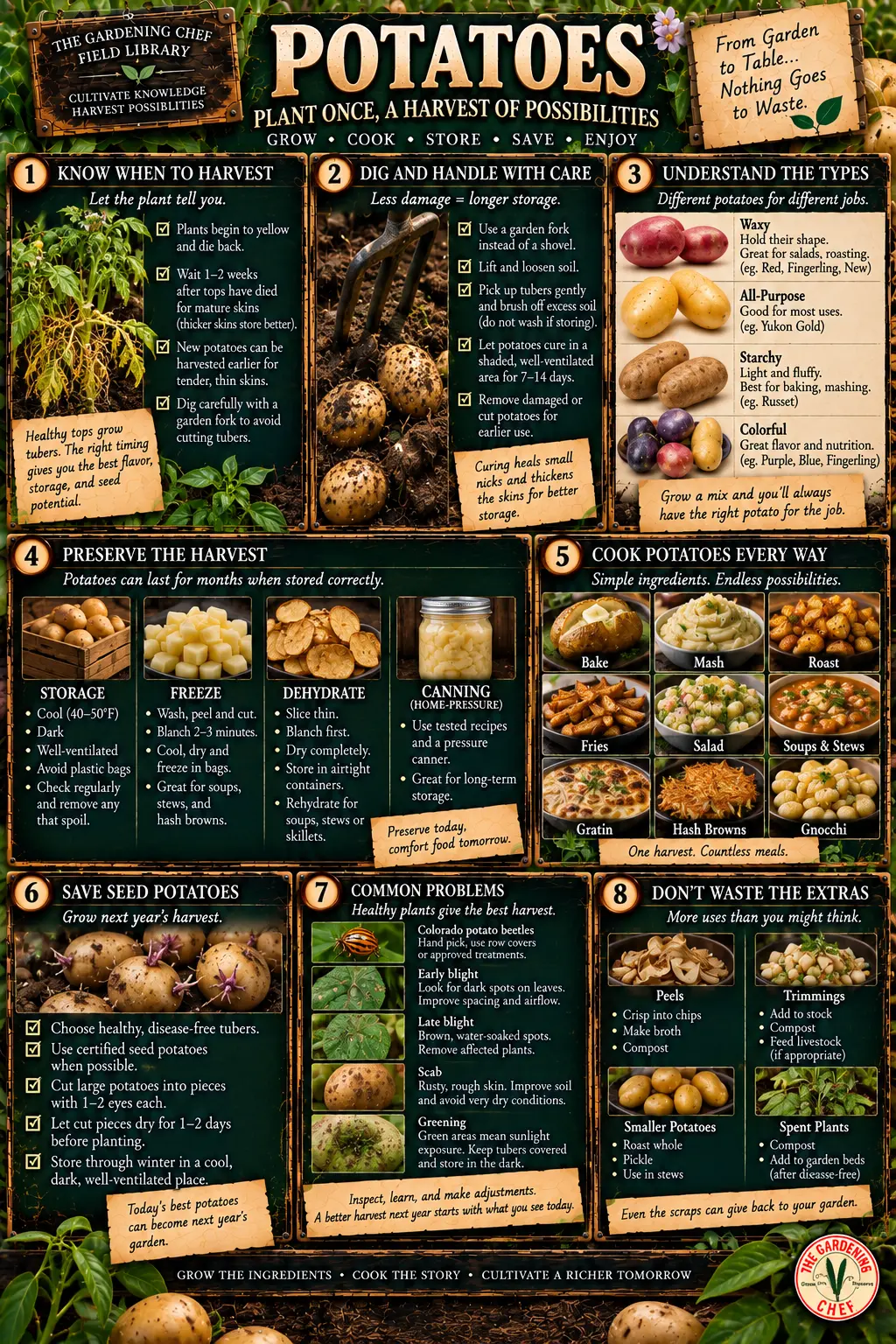
Of all the vegetables to harvest in September, potatoes may be the best at teaching observation because most of the harvest is hidden from us.
Before digging, look at the vines. Are they still lush and green, beginning to yellow, or mostly finished? What we see above ground gives us our first clue about what may be happening below.
Now let’s dig one.
Loosen the soil carefully and lift a tuber without stabbing it if you can. Brush away the loose soil and rub the skin gently with your thumb.
Does the skin stay firmly attached, or does it rub away easily?
That small test tells us more than the calendar does.
If the crop is still developing, leaving it in the ground may make sense. But once the potatoes are mature, remember something important:
The soil is not a magic root cellar.
Cold, excessive moisture, disease pressure, and approaching hard frost can turn useful waiting into unnecessary risk.
Now look at the potato in your hand.
Did our fork nick it? Is the skin sound? Is it healthy enough for storage, or has this one volunteered for dinner?
What condition is this tuber in—and what future fits it best?
Smell the Herb Garden Before We Touch It
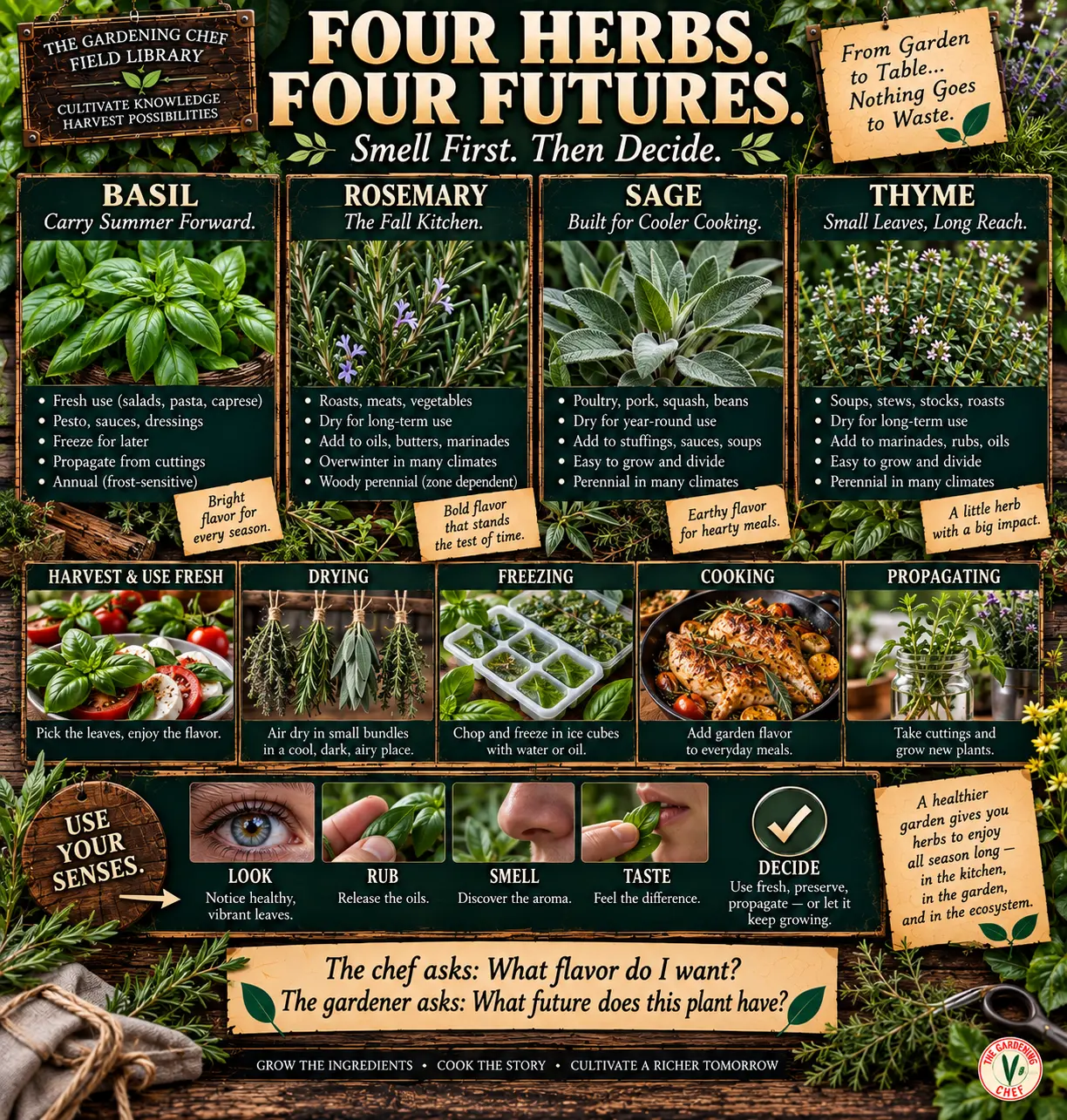
Now I want you to walk past the herbs without touching anything at first. What do you smell? Perhaps almost nothing. Rub one rosemary leaf lightly between your fingers and smell again, then do the same with thyme, sage, and basil.
Basil still tastes like summer to me. It pulls me toward pesto, tomatoes, caprese, and fresh sauces. Rosemary, sage, and thyme point in another direction entirely—toward roasts, soups, beans, braises, and the cooler-weather kitchen.
But the gardener has a second question:
What future should each plant have?
Some herbs should be harvested now. Some are worth drying or freezing. A particularly good plant may deserve propagation. Others may be better left growing, depending on the plant and the climate.
So do not harvest everything simply because fall is approaching.
The chef asks what flavor we want, while the gardener asks what should happen next. The Gardening Chef has to answer both.
Now Find the Ginger and Look at the Weather
Ginger asks us to pay attention to a completely different signal.
I am not watching for the same natural dieback cycle I watch with potatoes. Ginger is a warm-climate crop, and in a temperate garden the approaching frost becomes part of my decision.
This is one place where I want you to pull out your phone. Look at the upcoming nighttime temperatures and think about your local first-frost timing, then look back at the ginger. Would another couple of weeks of favorable weather allow those rhizomes to size up more? If so, leaving them alone may make sense. If damaging cold is approaching, the equation changes.
The harvest date is therefore not written on a September calendar hanging in the kitchen.
The plant, the weather, and our intended use are negotiating it together.
This is why I resist gardening advice that gives a month and stops there. The calendar tells us when to start paying attention. Observation tells us what to do.
Cold does not affect every crop the same way. In fact, some crops respond in ways that seem almost backwards, which is why it is worth understanding why carrots taste sweeter after frost.
Before We Leave This Side of the Garden, Stop at the Compost
Do not look inside first. Smell it. What does the compost tell you?
An earthy smell generally makes me happier than something strongly sour, putrid, or rotten. An unpleasant smell is not merely an inconvenience—it is evidence that moisture, oxygen, or the balance of material may need our attention.
Now look inside. Is the pile soggy and compacted? Too dry? Turn a portion and notice what changes when air reaches material that had been buried.
A compost pile is not simply somewhere we throw scraps and wait.
It is a biological system we manage.
That matters even more when diseased plants are involved. Unless I know my composting process can reliably destroy the pathogen, I would rather remove seriously diseased material appropriately than return next year’s problem to my own garden.
Sometimes stewardship means knowing what not to recycle back into the system.
Look Under the Tomato Leaves Before You Walk Past Them
Now we reach a part of the tour that rarely appears in a beautiful harvest photograph.
Turn over one of the older tomato leaves.
What do you see?
Spots? Yellowing? Holes? Wilting? Something beginning around the edges or lower leaves?
Resist the urge to name it immediately.
A spot is a clue, not a diagnosis. Similar-looking symptoms can come from disease, insects, weather, nutrition, water stress, or several things working together.
Look at the pattern and where it began, then think about recent weather, irrigation, airflow, crowding, and soil splash.
If the same problem keeps appearing where foliage stays wet or crowded, that gives us something useful to experiment with next year.
Photograph it. Record the date, variety, and location while the evidence is still in front of you.
A diseased plant may leave the garden. The information should stay.
Now Look Up at the Apple Tree, Then Over at the Cedar
This is one of my favorite examples of how diagnosis can change the way we see an entire property.
Imagine finding strange orange spotting on an apple leaf.
Now turn around.
Is there an eastern red cedar or another juniper somewhere in the landscape?
Cedar-apple rust does something fascinating: part of its life cycle occurs on junipers or cedars and another part on apples and related plants.
Suddenly two strange-looking plants are not two separate mysteries.
They are chapters in the same story.
That does not mean the solution is simply to remove every cedar nearby. The larger lesson is more valuable: sometimes the cause of what we see cannot be understood by staring harder at the affected plant.
We have to understand the system around it.
That is the kind of knowledge worth harvesting.
Before We Head Back, Watch the Garden Move
Stand still for a moment—really still. What moves?
As if the garden wanted to make the point for me, a praying mantis appeared while I was working on this article. I almost missed it at first. It stood on the railing with the garden behind it, still enough to disappear into the scene until movement gave it away.
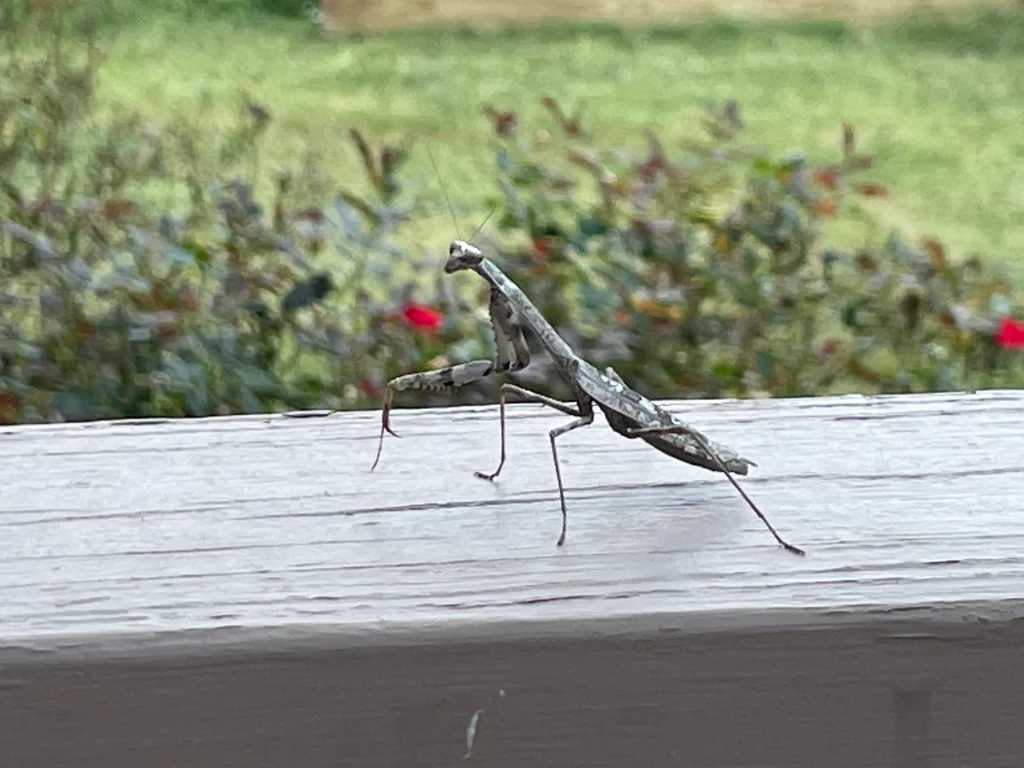
If we spot one, resist the urge to simplify the lesson into “good bug.”
Watch it.
A praying mantis is a predator, but it is not employed by us. It does not carry a list dividing insects into garden pests and garden helpers. It may capture insects we dislike, including grasshoppers, flies, and moths, but it can also catch pollinators and other beneficial insects.
That is part of what makes a garden fascinating.
The closer we look, the less often nature fits neatly into our categories.
If you only came to the garden to pick tomatoes, you might never notice the mantis at all.
If you are learning to observe, the garden suddenly contains another entire layer of activity.
What Vegetables to Harvest in September Can Teach Us
By now our basket may be full, but food is no longer the only thing we have collected.
We have gathered seed, clues, plants worth saving, preservation decisions, and ideas for next year.
Even the parts of the garden that appear to be failing can still produce something valuable: information.
That is what makes September so useful. There is still time to act on what the garden is showing us—to save a plant, photograph a symptom, improve a system, mark a seed crop, or change the way we grow something next year.
A simple list of vegetables to harvest in September can therefore become something much more valuable: a record of what worked, what failed, what deserves saving, and what we should change next year.
The garden is giving us answers while there is still time to ask better questions.
What My Grandfather’s Garden Was Really Teaching Me
When I think back to those afternoons with my grandfather, I do not remember anyone sitting me down with a textbook about crop maturity, soil biology, seed genetics, or preservation science. I remember walking. Looking. Working. Picking. Husking corn. Trimming beans. Talking while our hands were busy.
The knowledge arrived almost invisibly because it was attached to something real.
That may be one of the things I most want The Gardening Chef to preserve.
A garden can teach us botany, ecology, observation, patience, and stewardship. A kitchen can teach us chemistry, timing, flavor, preservation, resourcefulness, and culture. Put the two together and the tomato in our hand stops being merely a tomato. We begin seeing dinner, salsa, seed, sauce, pickles, a cutting, a disease clue, a preservation project, and evidence about whether this plant deserves another place in the garden next year.
No one gains that kind of knowledge alone. What eventually looks like mastery in one person is usually hundreds of lessons passed along by gardeners, cooks, farmers, chefs, teachers, family members, books, experiments, mistakes, and meals.
My grandfather was part of that education.
Many others came afterward.
And the garden continues teaching every year.
The difference is whether we are paying attention.
Take One More Walk
So take one more walk through your own September garden. This time, do not begin by asking what you can pick. Move the mulch and touch the soil. Smell the rosemary, open a bean pod, press a corn kernel, and cut the green tomato. Look beneath a spotted leaf, smell the compost, then stand still long enough to notice what moves.
Then ask the question that changes the entire harvest:
What is this garden trying to show me right now?
The answer may be dinner. It may be food for winter, next year’s seed, a plant worth saving, a disease worth understanding, a design worth changing, or a lesson you did not know the garden was offering.
That is the September harvest I do not want us to lose.
What is still growing in your September garden, and what decision are you trying to make about it? Tell me roughly where you garden too. I want to see what September looks like as this garden tour travels across the country.