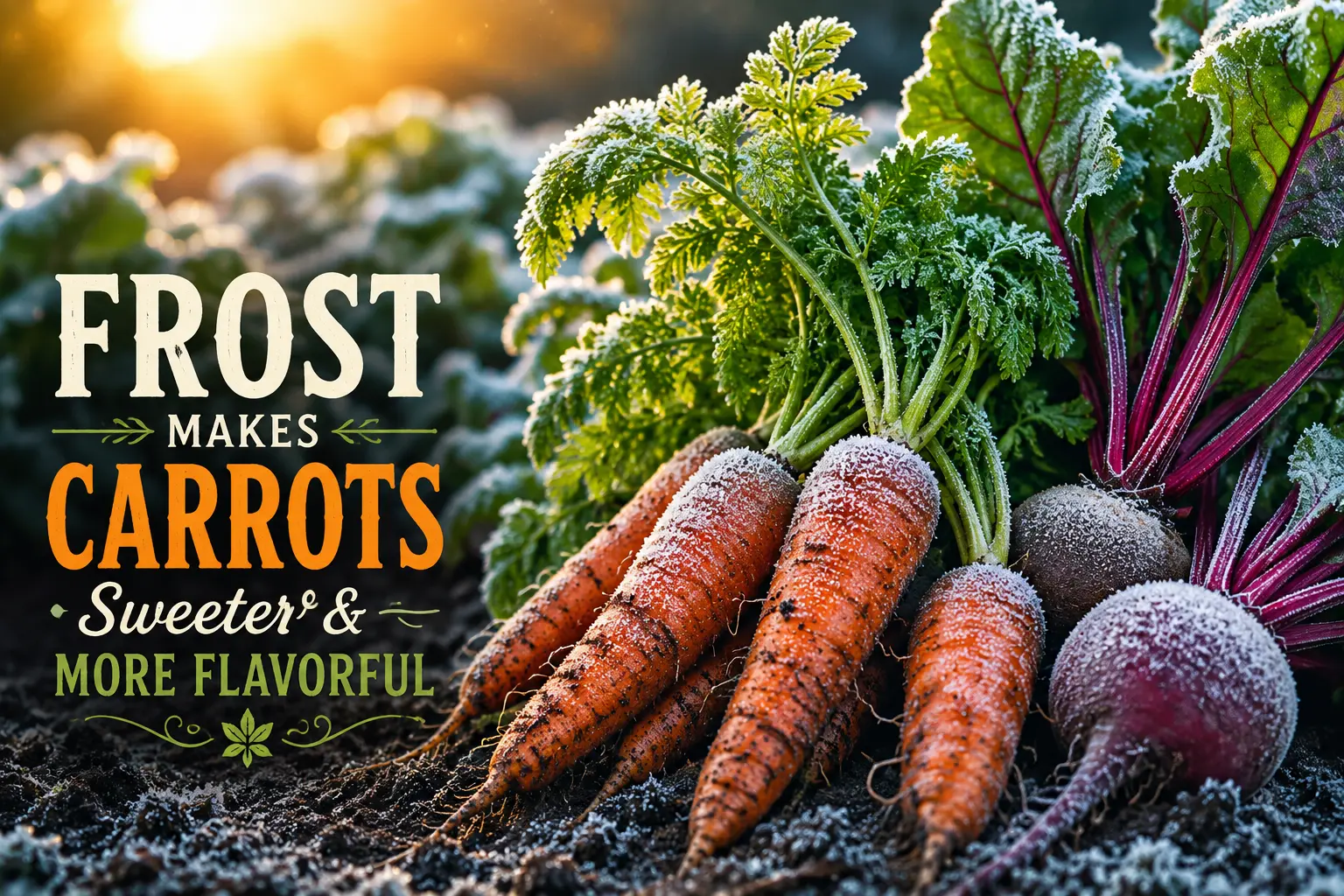
A little frost can turn an ordinary garden carrot into something surprisingly close to nature’s candy. Carrots taste sweeter after frost because cold temperatures trigger changes inside the root that increase its natural sugars.
If you have ever harvested carrots late in the season and thought they tasted sweeter than the ones you pulled in summer, you probably weren’t imagining it. Cold weather can actually change what is happening inside the carrot.
Why Carrots Taste Sweeter After Frost
As temperatures fall, carrots can increase the amount of sugar in their cells. Those dissolved sugars help lower the freezing point of the fluid inside the plant’s cells, providing some protection against cold temperatures.
For us, there is a delicious side effect: more sugar can mean a sweeter-tasting carrot.
Gardeners often call this winter sweetening. Carrots are one of the classic examples, but they are not alone. Beets, turnips and rutabagas can also become sweeter after cold weather, along with several cool-season crops such as kale, Brussels sprouts and other leafy greens.
A light frost can improve carrot sweetness, although that does not mean carrots should simply be left outside indefinitely. Extreme cold and frozen soil eventually make harvesting difficult and can damage crops. Oregon State University specifically notes that a light frost can increase carrot sweetness.
Use Frost as Part of Your Garden Plan
Instead of thinking of the first fall frost only as the end of the gardening season, you can sometimes use it as part of your harvest strategy.
Look at the days to maturity on your carrot seed packet and count backward from your area’s average first frost date. Then give yourself a little extra time because plants grow more slowly as autumn days become shorter and cooler.
A useful rule of thumb is to add roughly two additional weeks when planning a fall crop. Oregon State calls this the fall factor.
Gardening Chef Tip: Try harvesting some carrots before the first frost and leaving another group in the garden until after a light frost. Taste them side by side. Sometimes the garden is the best classroom you have.
Frost doesn’t always have to be the gardener’s enemy. With the right crops and timing, cold weather can actually become one of the ingredients in your harvest.
Keep planting seeds of knowledge: Explore more Field Notes from The Gardening Chef.