Beauty You Can Taste. Flowers You Can Use. A Garden That Feeds More Than the Eye.
Most people meet flowers as decoration.
A vase on the table. A border along the garden path. A splash of color beside the vegetables. A basket of blooms near the front porch. A pretty thing, grown mostly to be admired.
But some flowers are more than beautiful.
Some flowers belong in the kitchen.
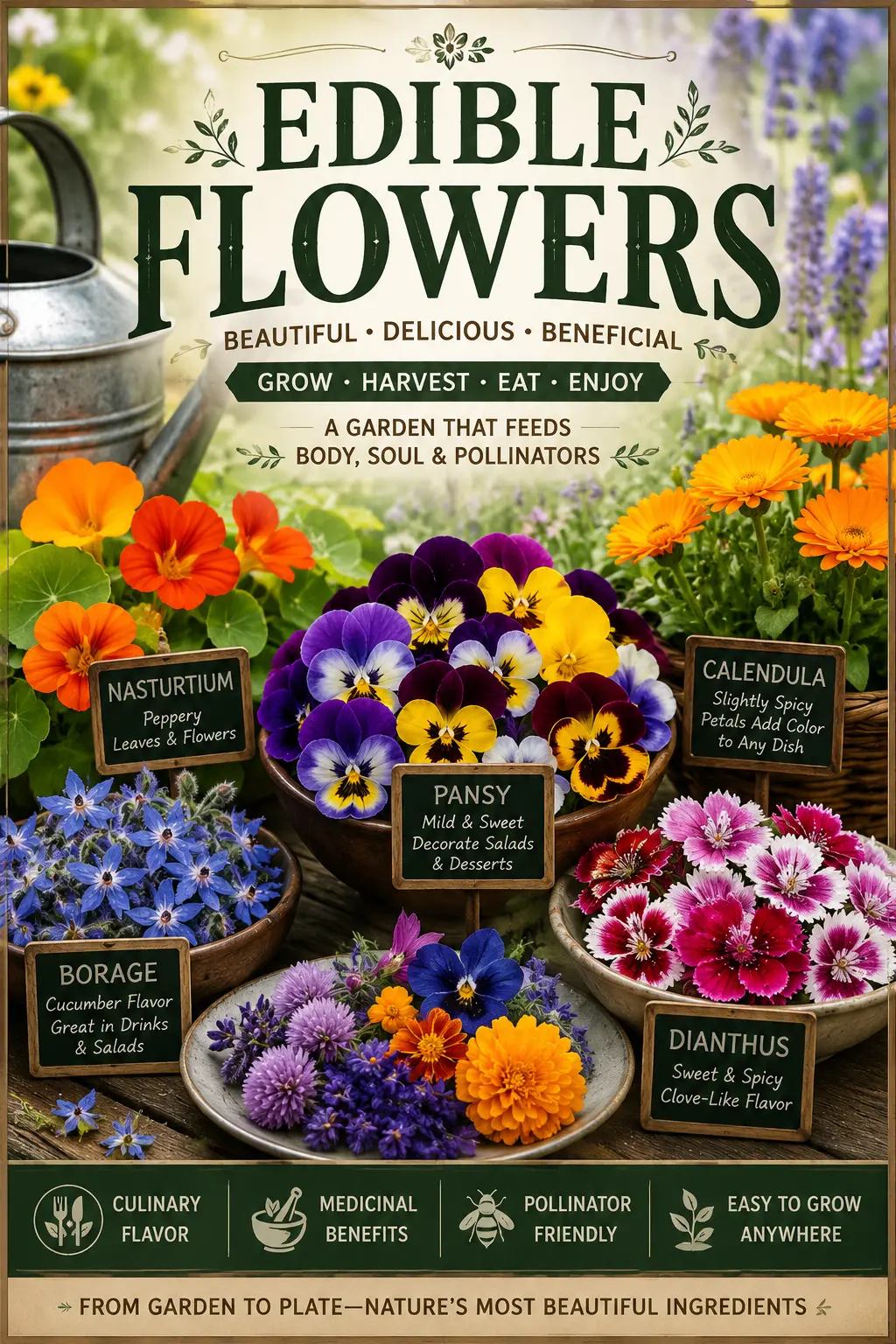
A nasturtium can bring peppery brightness to a salad. Calendula petals can scatter golden color over rice, bread, soup, and butter. Pansies can turn a simple dessert into something memorable. Borage can bring a cool cucumber note to drinks and summer plates. Chive blossoms can turn vinegar pink and carry a gentle onion flavor into dressings and potato salads.
Once you see flowers this way, the garden changes.
The flower bed is no longer separate from the kitchen garden.
It becomes part of it.
Edible flowers are not just garnish. They are color, flavor, pollinator support, seasonality, conversation, and delight. They help a gardener grow beauty with purpose. They help a cook finish food with care. They help children, guests, and readers see the garden as something alive, generous, and surprising.
That is why edible flowers deserve their own field guide.
The Edible Flowers Promise
This is not just a flower article.
It is a practical garden-to-kitchen reference for people who want to grow beautiful plants, support pollinators, cook with more confidence, decorate food naturally, reduce waste, and turn a simple flower bed into something useful.
A cook can use this guide to decide which edible flowers belong in salads, drinks, desserts, vinegars, butters, teas, compound salts, and summer meals.
A gardener can use it to decide which flowers deserve space near herbs, vegetables, fruit, paths, patios, and pollinator beds.
A beginner can use it to understand the most important edible flower rule: not all flowers are edible, and not all parts of edible plants are edible.
A preserver can use it to turn flowers into infused vinegars, dried petals, floral sugars, syrups, teas, ice cubes, butters, and beautiful finishing touches.
A creator can use it to see how one edible flower garden becomes recipes, printable guides, board covers, field guide posters, market bundles, tea blends, garden classes, and stories worth sharing.
Edible flowers are beautiful.
But they are not only beautiful.
They are useful beauty.
Save This Guide If You Want To
Choose edible flowers that are safe, practical, and beautiful.
Understand which flowers are best for salads, desserts, drinks, savory dishes, teas, vinegars, and garnishes.
Learn why nasturtiums, calendula, pansies, borage, dianthus, chive blossoms, lavender, chamomile, roses, and squash blossoms all play different kitchen roles.
Build a beginner edible flower garden that supports both the plate and the pollinators.
Harvest flowers at the right time for better flavor, color, and freshness.
Preserve edible flowers through drying, vinegar, sugar, ice cubes, syrups, and compound butters.
Avoid common mistakes like eating unidentified flowers, using florist flowers, eating pesticide-treated blooms, or assuming every part of a plant is safe.
Turn a flower bed into a garden-to-kitchen system.
Start Here: Choose Your Reading Path
| If you are… | Start with… | You will learn… |
|---|---|---|
| A home cook | The Edible Flower Decision Guide | Which flowers belong in salads, drinks, desserts, savory dishes, and finishing touches. |
| A beginner gardener | The Beginner Edible Flower Garden Plan | Which edible flowers are easiest to grow first. |
| A cautious reader | The Safety Rules for Edible Flowers | How to avoid the biggest edible flower mistakes. |
| A preserver | The Edible Flower Preservation Ladder | How flowers become vinegars, sugars, teas, syrups, butters, and ice cubes. |
| A pollinator gardener | The Flower Bed With Benefits | How edible flowers can support beauty, food, and beneficial insects. |
| A creator or market gardener | How Edible Flowers Become Products | How flowers become posters, recipe cards, tea blends, garnish packs, and seasonal bundles. |
The First Rule: Not Every Flower Belongs on the Plate
Before we get carried away with beauty, we have to say the important thing clearly.
Not all flowers are edible.
Some flowers are poisonous. Some are only partly edible. Some are safe in small culinary amounts but not meant to be eaten by the handful. Some plants have edible petals but bitter or unsafe stems, leaves, seeds, bulbs, or roots. Some flowers are technically edible but unpleasant. Some are dangerous because they were sprayed with chemicals not intended for food crops.
So the first edible flower rule is simple:
Do not eat a flower unless you are certain what it is, certain it is edible, and certain it was grown safely for food.
Colorado State University Extension emphasizes proper identification, pesticide-free growing, peak harvest, and introducing edible flowers slowly so reactions or stomach upset can be noticed. It also warns against eating flowers from florists, garden centers, nurseries, roadside areas, or plants treated with unsafe chemicals.
University of Minnesota Extension makes the same point: edible flowers should be safe to eat, pesticide-free, and appropriate for the dish, and for many edible flowers it is best to eat petals rather than assuming the whole plant is edible.
This guide is about flowers grown intentionally for the kitchen.
Not mystery flowers.
Not florist flowers.
Not roadside flowers.
Not “I think this is edible” flowers.
A good field guide begins with wonder.
A useful field guide also begins with caution.
The Edible Flower System at a Glance
| Flower Role | What It Adds | Best Uses | Garden Value |
|---|---|---|---|
| Peppery flowers | Bite, lift, sharpness | Salads, sandwiches, savory plates, butters | Adds flavor and visual color |
| Sweet floral flowers | Beauty, softness, delicate aroma | Desserts, cakes, fruit, tea plates | Strong visual appeal |
| Herbal flowers | Familiar herb flavor in bloom form | Vinegars, butters, dressings, garnishes | Connects herb garden to flower use |
| Cooling flowers | Freshness, cucumber notes, summer feeling | Drinks, salads, chilled soups | Supports summer harvest meals |
| Color petals | Natural color and finishing beauty | Rice, butter, bread, soups, salads | Easy way to make simple food feel special |
| Vegetable blossoms | Mild vegetable flavor and edible structure | Stuffing, frying, sautéing, soups | Connects flower harvest to vegetable production |
| Pollinator flowers | Nectar, habitat, movement, life | Garden borders, vegetable edges, herb beds | Attracts beneficial insects and supports biodiversity |
Edible Flowers at a Glance
| Flower | Flavor Profile | Best Used In | Kitchen Note |
|---|---|---|---|
| Nasturtium | Peppery, watercress-like, floral | Salads, sandwiches, compound butter, savory plates | Flowers and leaves are both useful; flowers are best fresh. |
| Calendula | Tangy, peppery, slightly bitter | Salads, soups, rice, breads, butter, tea blends | Use petals for golden color and mild flavor. |
| Pansy / Viola | Mild, sweet, leafy, floral | Desserts, salads, cakes, frozen treats | Beautiful whole-flower garnish when grown safely. |
| Borage | Cucumber-like, cool, fresh | Drinks, salads, teas, chilled dishes | Blue flowers are striking; use lightly and intentionally. |
| Dianthus | Sweet, clove-like, spicy | Desserts, teas, salads, baked goods | Use petals; remove the bitter white base. |
| Chive Blossom | Mild onion, savory, floral | Vinegar, potatoes, eggs, salads, dressings | Great allium flower, but keep away from pets. |
| Lavender | Strong floral, herbal, slightly resinous | Shortbread, sugar, tea, honey, syrups | Use culinary lavender sparingly. Too much tastes soapy. |
| Chamomile | Apple-like, floral, gentle | Tea, syrups, desserts, infusions | Best known as a tea flower; use carefully with allergy awareness. |
| Rose | Fragrant, floral, sweet to spicy | Sugars, syrups, desserts, teas, jams | Flavor varies by variety and fragrance. |
| Squash Blossom | Mild, tender, vegetable-like | Stuffed, fried, sautéed, soups | Harvest male blossoms carefully to preserve fruit production. |
| Marigold / Signet Marigold | Citrus, peppery, sometimes bitter | Salads, garnishes, teas | Use the right edible type; flavor varies widely. |
| Cornflower | Mild, floral, cucumber-like | Garnish, salads, teas, baked goods | Useful for color more than strong flavor. |
Colorado State University Extension’s edible annual flower guide lists several practical edible flowers, including borage, calendula, dianthus, nasturtium, violas, marigold, cornflower, snapdragon, zinnias, and others, with flavor notes and culinary uses.
Why Edible Flowers Deserve Their Own Field Guide
A vegetable garden teaches usefulness.
A flower garden teaches beauty.
An edible flower garden teaches both at once.
That is why edible flowers belong inside The Gardening Chef Field Guide Library. They connect gardening, cooking, pollinators, preservation, creativity, hosting, and seasonal memory.
A tomato tastes like summer.
A tomato salad with basil and nasturtium tastes like summer with intention.
A plain cake is dessert.
A cake with pansies, rose petals, or calendula becomes a moment.
A glass of water is hydration.
A glass with borage flowers, mint, cucumber, and ice becomes hospitality.
A bowl of greens is food.
A bowl of greens with calendula, chive blossoms, and edible petals becomes something people notice.
That matters.
People eat with their eyes before they eat with their forks. Beauty invites attention. Color changes expectation. A small flower can make a simple meal feel cared for.
But edible flowers also do something deeper.
They teach the gardener to ask better questions.
Can this flower feed pollinators?
Can it feed people?
Can it brighten a salad?
Can it become vinegar?
Can it become tea?
Can it make children curious?
Can it make a visitor ask, “Wait, you can eat that?”
That question is powerful.
Because once someone realizes a flower can be beautiful and useful, they start seeing the whole garden differently.
The Five-Basket Edible Flower System
When edible flowers begin blooming, do not treat every blossom the same. Give the harvest a job before it wilts.
| Basket | What Goes In | What It Becomes |
|---|---|---|
| Fresh Garnish Basket | Pansies, violas, nasturtiums, borage, calendula petals | Salads, desserts, grain bowls, plates, tea trays |
| Savory Flavor Basket | Nasturtium, chive blossoms, calendula, herb flowers | Butters, vinegars, sandwiches, potatoes, eggs, dressings |
| Drink Basket | Borage, mint flowers, lavender, chamomile, rose, violas | Ice cubes, teas, syrups, lemonade, cocktails, mocktails |
| Preserve Basket | Calendula, rose, lavender, chamomile, cornflower | Dried petals, sugars, salts, teas, vinegars, syrups |
| Pollinator Basket | Flowers left on the plant | Bees, beneficial insects, seed production, garden resilience |
The lesson is simple:
Do not harvest every bloom.
Do not ignore every bloom.
Harvest with purpose.
Leave with purpose.
That is how an edible flower garden feeds the table without robbing the garden of life.
The Fast Edible Flower Decision Guide
| If the dish needs… | Use… | Why it works |
|---|---|---|
| Peppery bite | Nasturtium | Adds fresh sharpness like watercress. |
| Golden color | Calendula petals | Adds brightness to rice, butter, bread, salads, and soups. |
| Dessert beauty | Pansies, violas, rose petals | Adds color without overwhelming flavor. |
| Cucumber freshness | Borage | Works beautifully in drinks, salads, and summer dishes. |
| Mild onion flavor | Chive blossoms | Adds allium flavor and color to vinegar, potatoes, eggs, and dressings. |
| Floral aroma | Lavender, rose, chamomile | Adds fragrance to teas, sugars, syrups, and desserts. |
| Edible structure | Squash blossoms | Can be stuffed, fried, sautéed, or added to soups. |
| Pollinator support | Leave some blooms unharvested | Keeps the garden alive and productive. |
Nasturtium: The Peppery Bloom
Nasturtium is one of the best edible flowers for beginners because its flavor is obvious.
It does not whisper.
It speaks.
The leaves and flowers have a peppery, watercress-like bite that makes them useful in savory food. A few blossoms can brighten a salad. A leaf can sit inside a sandwich. Chopped nasturtium can move into compound butter. Whole flowers can turn a plate into something cheerful without becoming too sweet or perfumed.
Nasturtium is especially useful because it bridges the gap between flower and salad green. It feels ornamental, but it behaves like food.
Use nasturtiums with tomatoes, cucumbers, soft cheeses, eggs, potato salad, herb butter, fish, chicken salad, and garden sandwiches.
Best Uses
Salads, sandwiches, savory plates, herb butter, compound cheese, picnic food, edible garnish.
Garden Value
Nasturtiums are generous, colorful, and beginner-friendly. They grow well in beds and containers and make the edge of a vegetable garden feel abundant.
Field Guide Lesson
Nasturtium teaches that a flower can season a meal.
Calendula: The Golden Kitchen Petal
Calendula is one of the most useful edible flowers because it gives the kitchen color.
The petals are bright, cheerful, and easy to scatter. They can be used in salads, breads, rice, soups, butters, egg dishes, and tea blends. Their flavor is often described as tangy, peppery, and slightly bitter, but their greatest gift is color.
Calendula makes food look alive.
A bowl of rice with calendula petals feels different from plain rice. A compound butter with calendula looks intentional. A salad with orange and yellow petals feels like it came from a garden instead of a bag.
Use calendula when a dish needs warmth, brightness, and visual energy.
Best Uses
Salads, rice, soups, breads, butters, tea blends, egg dishes, garnish.
Garden Value
Calendula is a strong beginner flower and may reseed in some gardens. It belongs near herbs, greens, and kitchen paths where it can be harvested often.
Field Guide Lesson
Calendula turns color into kitchen value.
Pansies and Violas: The Dessert Flowers
Pansies and violas are the flowers people remember.
They are delicate, colorful, expressive, and beautiful enough to make a simple dish feel designed. Their flavor is generally mild, sweet, leafy, and floral, which makes them especially useful in desserts and salads where beauty matters as much as intensity.
Use them on cakes, cupcakes, cookies, fruit plates, salads, cheese boards, frozen ice cubes, tea trays, and spring desserts.
They are not usually the strongest flavor flower.
That is not their role.
Their role is visual wonder.
A pansy on a cake says, “Someone cared.”
Best Uses
Desserts, cakes, salads, tea plates, fruit, frozen ice cubes, decorative garnishes.
Garden Value
Pansies and violas are cool-season favorites in many areas. They are useful for spring and fall garden beauty and can fit well in containers.
Field Guide Lesson
Pansies and violas turn simple food into occasion food.
Borage: The Cucumber Star
Borage is one of the most surprising edible flowers.
The flowers are blue, star-shaped, and almost unreal-looking. Their flavor is commonly described as cucumber-like, which makes them a natural fit for summer food and drinks.
Use borage flowers with cucumber water, lemonade, iced tea, salads, chilled soups, yogurt sauces, fruit, and summer plates. They are especially beautiful frozen into ice cubes.
Borage also belongs in the pollinator garden. Its flowers attract bees and beneficial insects, making it useful beyond the kitchen.
Use it lightly and intentionally as a culinary flower, not as a bulk green or medical herb. That distinction matters.
Best Uses
Drinks, salads, cucumber dishes, tea, chilled soups, summer garnish, ice cubes.
Garden Value
Borage can become large and vigorous. Give it space. It can reseed in some gardens and often becomes a pollinator magnet.
Field Guide Lesson
Borage turns refreshment into a flower.
Dianthus: The Clove-Sweet Petal
Dianthus brings a sweet, spicy, clove-like flavor that feels old-fashioned in the best way.
It belongs with desserts, teas, sugars, baked goods, fruit, and delicate salads. The important kitchen rule is to use the petals and remove the bitter white base where the petal attaches.
Dianthus is not a flower to use heavily.
It is a finishing flower.
A few petals can add fragrance and charm. Too much can feel perfumed or distracting.
Use it where a small clove note makes sense: cakes, cookies, tea, fruit, cream, and light desserts.
Best Uses
Desserts, teas, fruit, baked goods, salads, floral sugars.
Garden Value
Dianthus is beautiful in borders and containers and can work well near patios or kitchen paths where it is easy to harvest.
Field Guide Lesson
Dianthus teaches restraint.
Chive Blossoms: The Allium Flower
Chive blossoms are one of the most practical edible flowers because they taste like something cooks already understand.
Onion.
But softer. Brighter. More floral. More beautiful.
The purple blossoms can be broken apart and scattered over potatoes, eggs, salads, soups, cream cheese, compound butter, and savory dishes. They are also excellent in vinegar. Chive blossom vinegar becomes pink, oniony, and useful for dressings and potato salads.
This is one of the best edible flowers for people who want flavor first and beauty second.
Best Uses
Vinegar, potatoes, eggs, salads, soups, dressings, compound butter, cream cheese.
Garden Value
Chives are perennial in many climates, easy to grow, and productive. They belong in kitchen gardens, herb beds, and containers.
Field Guide Lesson
Chive blossoms turn a familiar flavor into a beautiful ingredient.
Pet Safety Note
Chives are an allium, and the ASPCA lists chives as toxic to dogs, cats, and horses. Keep chive plants, cuttings, and chive blossom foods away from pets.
Lavender: The Strong Perfume Flower
Lavender is powerful.
That is the first thing to know.
Used well, it can bring a beautiful floral-herbal aroma to shortbread, sugar, tea, honey, syrup, cream, fruit, and desserts. Used carelessly, it can make food taste like soap.
The kitchen lavender rule is simple:
Use culinary lavender.
Use less than you think.
Pair it with lemon, honey, cream, berries, vanilla, chocolate, or shortbread.
Lavender is best as an accent, not a main ingredient.
Best Uses
Shortbread, sugar, tea, honey, syrup, cream, fruit desserts, lemonade.
Garden Value
Lavender likes sun and excellent drainage. It can be a strong pollinator plant and a beautiful edge plant in the right climate.
Field Guide Lesson
Lavender teaches that strong flowers need a light hand.
Chamomile: The Tea Flower
Chamomile belongs to the quiet side of the edible flower garden.
Its flavor is gentle, floral, and often apple-like. Most people know it as tea, but chamomile can also appear in syrups, desserts, honey, cream, and gentle infusions.
Chamomile should be treated like an infusion flower.
You harvest, dry, steep, and let time pull the flavor out.
It does not shout on the plate like nasturtium or pansy. It settles into the cup.
Best Uses
Tea, syrups, honey, cream, desserts, gentle infusions.
Garden Value
Chamomile can be grown in beds or containers and harvested for dried tea flowers.
Field Guide Lesson
Chamomile turns flowers into ritual.
Rose: The Fragrant Classic
Roses are edible when they are correctly identified, pesticide-free, and grown safely for food. But not every rose tastes the same.
The more fragrant the rose, the more flavor it usually brings.
Rose petals can be used in sugars, syrups, jams, desserts, teas, honey, fruit dishes, and celebratory plates. Their flavor can range from sweet and floral to spicy and perfumed.
The white base of the petal can be bitter, so many cooks remove it.
Roses are a reminder that edible flowers do not always need to be unusual. Sometimes the familiar plant outside the door has a kitchen life too.
Best Uses
Syrups, sugars, tea, honey, desserts, fruit, jams, special occasion dishes.
Garden Value
Roses can be long-term garden assets, but only use petals from plants grown without unsafe sprays.
Field Guide Lesson
Rose teaches that fragrance can become flavor.
Squash Blossoms: The Vegetable Flower
Squash blossoms are different from many edible flowers because they are not just garnish.
They are food.
They have body. They can be stuffed. They can be fried. They can be sautéed. They can be tucked into quesadillas, soups, pastas, and summer vegetable dishes.
The key garden lesson is to understand male and female blossoms. Female blossoms are attached to the developing fruit. Male blossoms grow on stems and are often the better choice for harvesting if you still want squash production.
Do not take every flower.
Take what the plant can spare.
Best Uses
Stuffed blossoms, fritters, sautés, quesadillas, soups, pasta, summer plates.
Garden Value
Squash blossoms connect vegetable production to flower harvest. They are seasonal, tender, and best used fresh.
Field Guide Lesson
Squash blossoms remind us that flowers can be harvest, not just decoration.
The Beginner Edible Flower Garden Plan
You do not need a giant flower garden to begin.
A strong beginner edible flower garden can start with six plants:
| Plant | Why Grow It |
|---|---|
| Nasturtium | Peppery flowers and leaves for salads and savory plates. |
| Calendula | Colorful petals for salads, rice, butter, tea, and garnish. |
| Pansies or violas | Beautiful edible flowers for desserts, salads, and visual appeal. |
| Borage | Blue cucumber-flavored flowers for drinks and pollinators. |
| Chives | Perennial herb with edible blossoms and practical kitchen value. |
| Squash | Vegetable crop with edible blossoms and harvest value. |
This small edible flower garden teaches the whole system.
Peppery.
Sweet.
Colorful.
Herbal.
Cooling.
Savory.
Pollinator-friendly.
Useful.
The best edible flower garden is not the one with the longest plant list.
It is the one you actually harvest and use.
Grow Edible Flowers by Kitchen Purpose
| If you want to make… | Grow… |
|---|---|
| Beautiful salads | Nasturtium, calendula, pansies, violas, borage |
| Dessert decorations | Pansies, violas, rose petals, dianthus, lavender |
| Drinks and ice cubes | Borage, mint flowers, lavender, rose, violas |
| Savory dishes | Nasturtium, chive blossoms, squash blossoms, calendula |
| Tea blends | Chamomile, lavender, rose, calendula |
| Vinegars | Chive blossoms, nasturtium, calendula, herb flowers |
| Pollinator borders | Borage, calendula, chives, nasturtium, herbs in bloom |
| Kids’ garden wonder | Pansies, borage, nasturtium, calendula |
| Market table beauty | Pansies, calendula, edible blossom mix, herb flowers |
How to Harvest Edible Flowers
Edible flowers are delicate. Harvesting them well matters.
The best harvest usually happens in the morning after dew has dried but before the day becomes hot. Choose flowers that are fresh, open, clean, and free from insects or disease. Use clean scissors or pinch carefully, then place flowers gently in a shallow container.
Do not crush them.
Do not pack them tightly.
Do not let them sit in the sun.
Many edible flowers are best used the same day, but some can be stored briefly in the refrigerator between slightly damp paper towels. Colorado State University Extension recommends gently rinsing fresh flowers with cool running water, storing washed flowers between damp paper towels, and refrigerating until ready to use.
The Harvest Rule
Pick for freshness.
Handle for beauty.
Use before the magic fades.
The Edible Flower Preservation Ladder
| Level | Method | Best Starting Flowers | What It Teaches |
|---|---|---|---|
| 1 | Fresh use | Nasturtium, pansy, borage, calendula | Harvest timing and plate value |
| 2 | Refrigeration | Pansies, violas, borage, calendula | Short-term storage and gentle handling |
| 3 | Ice cubes | Borage, pansies, violas, mint flowers | Drinks, presentation, summer hosting |
| 4 | Drying | Calendula, rose, lavender, chamomile, cornflower | Pantry color, tea, and long-term use |
| 5 | Floral sugar | Lavender, rose, dianthus, calendula | Aroma capture and dessert use |
| 6 | Vinegar | Chive blossoms, nasturtium, calendula, herb flowers | Acid, color, dressings, and marinades |
| 7 | Syrup | Rose, lavender, chamomile, violet | Drinks, desserts, and seasonal flavor |
| 8 | Compound butter | Chive blossoms, calendula, nasturtium | Fat as flavor carrier |
| 9 | Candied petals | Pansies, violas, rose petals | Special occasion preservation |
Colorado State University Extension notes that edible flowers may be used fresh or preserved and gives examples including dried flowers, flower-scented sugars, vinegars, oils, teas, syrups, jellies, and candied flowers; it also cautions that homemade flavored oils and vinegars have limited shelf life and should be refrigerated.
Edible Flower Preservation Guide
Drying Flowers
Drying works best for flowers with petals that hold color and aroma.
Best flowers to dry include calendula, rose petals, lavender, chamomile, cornflower, and some violas.
Dry flowers in a single layer in a warm, dry, well-ventilated place, or use a dehydrator at a gentle setting. Store only when fully dry. Keep dried petals away from light, heat, and moisture.
Use dried petals in teas, salts, sugars, baking, bath-free culinary jars, pantry labels, and seasonal gift blends.
Floral Sugar
Floral sugar is one of the easiest ways to capture aroma.
Layer clean, dry rose petals, lavender, dianthus petals, or other suitable edible petals with sugar. Let the aroma infuse, then sift out the petals if desired.
Use floral sugar in tea, shortbread, whipped cream, fruit, lemonade, and desserts.
Edible Flower Vinegar
Vinegar is where edible flowers become practical.
Chive blossoms turn vinegar pink and oniony. Nasturtiums can add peppery brightness. Calendula petals add color. Herb flowers add subtle flavor.
Use flower vinegars in salad dressings, potato salads, marinades, slaws, beans, roasted vegetables, and quick pickles.
Keep homemade infused vinegars refrigerated unless you are following tested preservation guidance.
Flower Ice Cubes
This is the easiest edible flower project for beginners.
Place clean borage flowers, pansies, violas, mint flowers, or small petals in an ice cube tray. Fill with water and freeze.
Use in lemonade, iced tea, sparkling water, mocktails, cocktails, or party pitchers.
It is simple.
It is beautiful.
It makes people ask questions.
Compound Flower Butter
Compound butter turns delicate flowers into everyday flavor.
Mix softened butter with chive blossoms, calendula petals, nasturtium petals, herbs, lemon zest, salt, or pepper. Roll into a log and chill.
Use on bread, potatoes, corn, fish, roasted vegetables, eggs, or savory pancakes.
Candied Flowers
Candied flowers are special occasion flowers.
Pansies, violas, and rose petals are common choices. Use safe egg-white methods or pasteurized products to reduce food safety risk, dry carefully, and store properly.
These are not everyday food.
They are celebration food.
Common Edible Flower Mistakes
Mistake 1: Eating Flowers Without Positive Identification
This is the biggest mistake.
Never guess. Never assume. Never eat a flower because it “looks like” another edible flower.
Common names are confusing. Scientific names are safer. When in doubt, do not eat it.
Mistake 2: Eating Florist Flowers
Florist flowers are for display, not dinner.
They may have been treated with chemicals not approved for food crops. The same caution applies to roadside flowers and many nursery plants.
Grow your own from safe seed or buy edible flowers specifically grown for food.
Mistake 3: Assuming Every Part of the Plant Is Edible
One part of a plant may be edible while another part is not.
Petals may be fine while leaves, roots, bulbs, stamens, pistils, or seeds are not. University of Minnesota Extension specifically warns not to assume all plant parts are safe and says that for most edible flowers, eating only the petals is best.
Mistake 4: Using Too Many Flowers at Once
Edible flowers are often strongest as accents.
A salad should not feel like chewing through a bouquet. A dessert should not taste like perfume. A drink should not feel like potpourri.
Use restraint.
Let flowers finish the dish, not bury it.
Mistake 5: Forgetting Allergies and Sensitivities
Even edible plants can bother some people.
Introduce new edible flowers slowly and in small amounts. That gives you a chance to notice sensitivity, stomach upset, or allergic response before serving larger portions.
Mistake 6: Harvesting Every Bloom
Flowers also feed pollinators.
Leave some blooms behind. Let the bees work. Let the plant continue. Let the garden stay alive.
A good edible flower garden feeds more than the plate.
Common Edible Flower Problems and What They Usually Mean
| Problem | Likely Cause | What to Do |
|---|---|---|
| Few flowers | Too much shade, too much nitrogen, immature plants | Move to more sun, reduce heavy feeding, give plants time |
| Chewed petals | Insects, slugs, beetles, caterpillars | Hand-pick pests, improve airflow, harvest clean flowers |
| Flowers wilt quickly after harvest | Heat, rough handling, delayed cooling | Harvest in morning, keep cool, use shallow containers |
| Bitter flavor | Wrong plant part, old flower, hot weather, variety | Use petals only, harvest younger blooms, taste before serving |
| Weak flavor | Variety choice, overwatering, poor timing | Choose flavorful flowers and harvest at peak |
| Mildew on foliage | Humidity, crowding, poor airflow | Improve spacing, water at soil level, remove affected growth |
| Plants stop blooming | Lack of harvest, heat stress, end of season | Deadhead, water consistently, succession plant |
| Borage or calendula reseeds freely | Natural self-seeding habit | Thin volunteers or let them become part of the system |
| Nasturtiums make leaves but few flowers | Too much fertility, especially nitrogen | Use leaner soil, reduce feeding |
| Flowers unsafe to eat | Pesticides, unknown source, wrong identification | Do not eat; grow food-safe flowers yourself |
The Flower Bed With Benefits
Edible flowers belong in the kitchen garden because they do more than look pretty.
They attract attention.
They attract pollinators.
They attract curiosity.
They turn the vegetable garden into a place people want to visit.
University of Minnesota Extension notes that edible flowers can add flavor and garnish foods, add interest to landscapes, and provide food and habitat for pollinators and other beneficial insects.
That is the edible flower advantage.
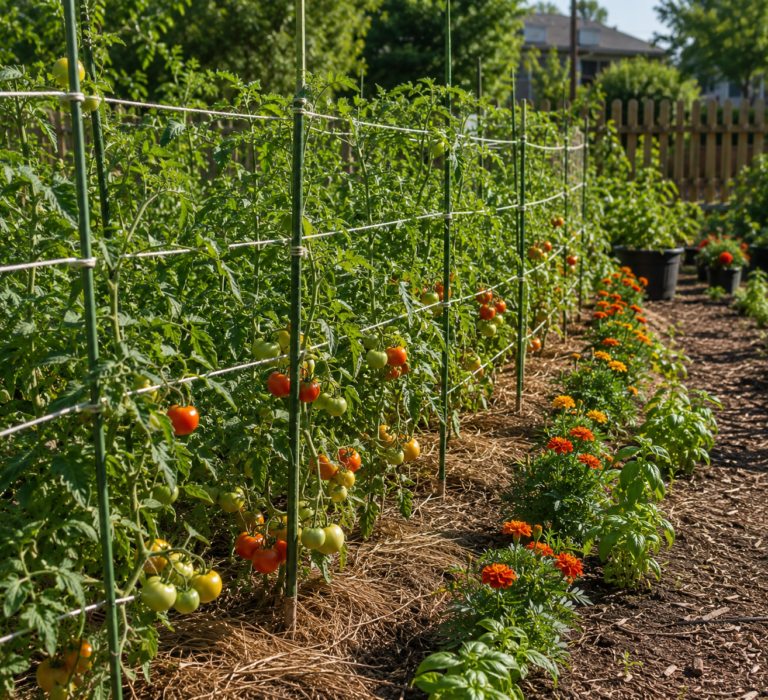
A border of calendula, nasturtiums, chives, borage, and violas is not just decoration. It is a living edge between beauty and use.
It can feed bees.
It can feed people.
It can teach children.
It can finish meals.
It can become content.
It can become products.
It can make the garden feel magical without becoming impractical.
That is exactly where The Gardening Chef lives.
Between beauty and usefulness.
Pet Safety in the Edible Flower Garden
A flower can be safe for people and still be unsafe for pets.
That matters.
Chive blossoms are a good example. They are useful edible flowers for people, but chives are toxic to dogs, cats, and horses according to the ASPCA.
Many ornamental plants can also be toxic to pets, and cats are especially vulnerable to certain flowers and plant parts. The ASPCA maintains searchable toxic and non-toxic plant lists for dogs, cats, and horses.
The practical rule is this:
Grow edible flowers for people with clear labels.
Keep pet-risk plants out of reach.
Do not let pets graze freely in an edible flower bed.
Do not assume “natural” means safe.
A good garden feeds the household.
It should also protect the household.
The Edible Flower as a Wealth Garden Crop
In the Wealth Garden system, edible flowers are multiplier crops.
They are not calorie crops like potatoes.
They are not pantry anchors like beans.
They are not flavor foundations like onions and garlic.
They are not preservation powerhouses like peppers.
They are experience multipliers.
Their job is to increase the perceived value of everything around them.
A salad with edible flowers feels more intentional.
A dessert with petals feels more memorable.
A pitcher of lemonade with borage ice cubes feels more generous.
A vinegar infused with chive blossoms feels like a crafted product.
A basket of herbs and edible flowers feels like a market offering.
That matters because value is not only calories.
Value is use.
Value is desire.
Value is beauty.
Value is memory.
Value is the meal people actually want to eat.
Edible flowers help people notice the harvest.
They make the ordinary feel cared for.
They turn the garden into a story.
That is why they belong in the system.
$10,000 Garden Insight: The Beauty Multiplier
A packet of edible flower seeds does not look like wealth.
It looks like a packet of seeds.
But the system expands.
Calendula petals become color. Nasturtiums become salad bite. Borage becomes drink garnish. Chive blossoms become vinegar. Pansies become dessert beauty. Lavender becomes sugar. Chamomile becomes tea. Roses become syrup. Squash blossoms become dinner.
Then the value grows again.
Those same flowers become photos. Pins. Field guides. Printable posters. Recipe cards. Tea blends. Edible garnish packs. Market bundles. Garden classes. Gift jars. Seasonal stories. Website traffic. Products.
The flower itself may be small.
The attention it creates is not.
That is the beauty multiplier.
And in a world where people scroll past ordinary, beauty with usefulness has power.
How Edible Flowers Become Products
Edible flowers are one of the easiest garden categories to turn into visual products because they are naturally beautiful.
A single edible flower garden can become:
Fresh garnish packs.
Salad flower mixes.
Dried calendula petals.
Chive blossom vinegar.
Floral sugars.
Lavender sugar.
Rose syrup.
Chamomile tea blends.
Flower ice cube kits.
Recipe cards.
Printable edible flower charts.
Pinterest board covers.
Garden class handouts.
Market table signs.
Seed-starting guides.
Pollinator garden bundles.
Edible flower field guide posters.
Not every gardener needs to sell edible flowers.
But every creator should notice the product path.
Edible flowers are not just content.
They are visual content.
That makes them powerful for Pinterest, field guides, posters, recipe posts, seasonal newsletters, and garden-to-kitchen storytelling.
Where This Connects
The Edible Flowers Field Guide connects naturally to the rest of The Gardening Chef Field Guide Library.
| Pair Edible Flowers With… | What It Becomes |
|---|---|
| Herbs | Floral herb butters, teas, vinegars, garnishes, syrups |
| Tomatoes | Summer salads with basil, nasturtiums, chive blossoms, calendula |
| Onion Family | Chive blossom vinegar, savory flower dressings, potato salad |
| Peppers | Colorful salsas, spicy salads, edible flower garnish, chile-flower honey |
| Leafy Greens | Flower-topped salads, bitter green balance, edible color |
| Beans and Peas | Flowered bean salads, pea shoots, herb dressings |
| Squash and Cucumbers | Squash blossoms, cucumber-borage drinks, summer platters |
| Potatoes | Chive blossom potatoes, flower butters, picnic salads |
| Berries | Rose, violet, lavender, and berry desserts |
| Preservation Pantry | Dried petals, floral sugars, vinegars, syrups, teas |
| Cooking Fats | Flower compound butters, herb-flower oils for immediate use |
Each guide stands alone.
Together, they teach the larger system:
Grow with purpose.
Cook with intention.
Preserve the surplus.
Honor the Harvest.
What Makes This Guide Worth Saving
A save-worthy edible flower guide does three things.
It protects the reader from unsafe mistakes.
It helps the gardener choose flowers with purpose.
It helps the cook turn beauty into real kitchen value.
That is what this Edible Flowers Field Guide is designed to do.
It gives the cook a flavor map.
It gives the gardener a planting plan.
It gives the preserver a preservation ladder.
It gives the creator a product path.
Most importantly, it helps readers see flowers differently.
Most people see flowers as decoration.
This guide shows them as a system.
Fresh garnish. Salad color. Peppery bite. Floral sugar. Chive blossom vinegar. Borage ice cubes. Calendula petals. Pansy desserts. Squash blossom dinners. Pollinator support. Market bundles. Pinterest images. Field guide posters. Garden stories.
That is what a good field guide should do.
It should not merely tell you what something is.
It should teach you how to see.
Download the Printable Edible Flowers Field Guide
If this guide helped you see flowers differently, the printable Edible Flowers Field Guide is designed to live where real decisions happen: the kitchen wall, garden binder, pantry shelf, seed-starting table, meal-planning station, market booth, cooking class, or edible flower garden planning table.
The printable guide includes:
Edible flowers at a glance.
Flavor profiles.
Best kitchen uses.
Harvesting notes.
Safety reminders.
Pollinator value.
Preservation ideas.
Beginner flower garden plan.
Garden-to-kitchen pairing chart.
Use it when choosing edible flowers, planning a pollinator border, decorating salads, finishing desserts, freezing flower ice cubes, making chive blossom vinegar, drying calendula petals, or teaching someone that flowers can feed more than the eye.
Launch price: $0.99
[Button: Download the Printable Edible Flowers Field Guide]
Final Thought: Beauty With a Job
A garden can be beautiful.
A garden can be useful.
The best gardens are both.
That is the lesson of edible flowers.
Nasturtium can become pepper.
Calendula can become color.
Pansy can become celebration.
Borage can become refreshment.
Dianthus can become spice.
Chive blossom can become vinegar.
Lavender can become aroma.
Chamomile can become ritual.
Rose can become memory.
Squash blossom can become dinner.
These flowers are not small because they are unimportant.
They are small because they are concentrated.
A little color. A little fragrance. A little flavor. A little wonder.
And suddenly the meal feels different.
The garden feels different.
The harvest feels honored.
Grow it. Harvest it. Taste it. Share it.
Honor the Harvest.