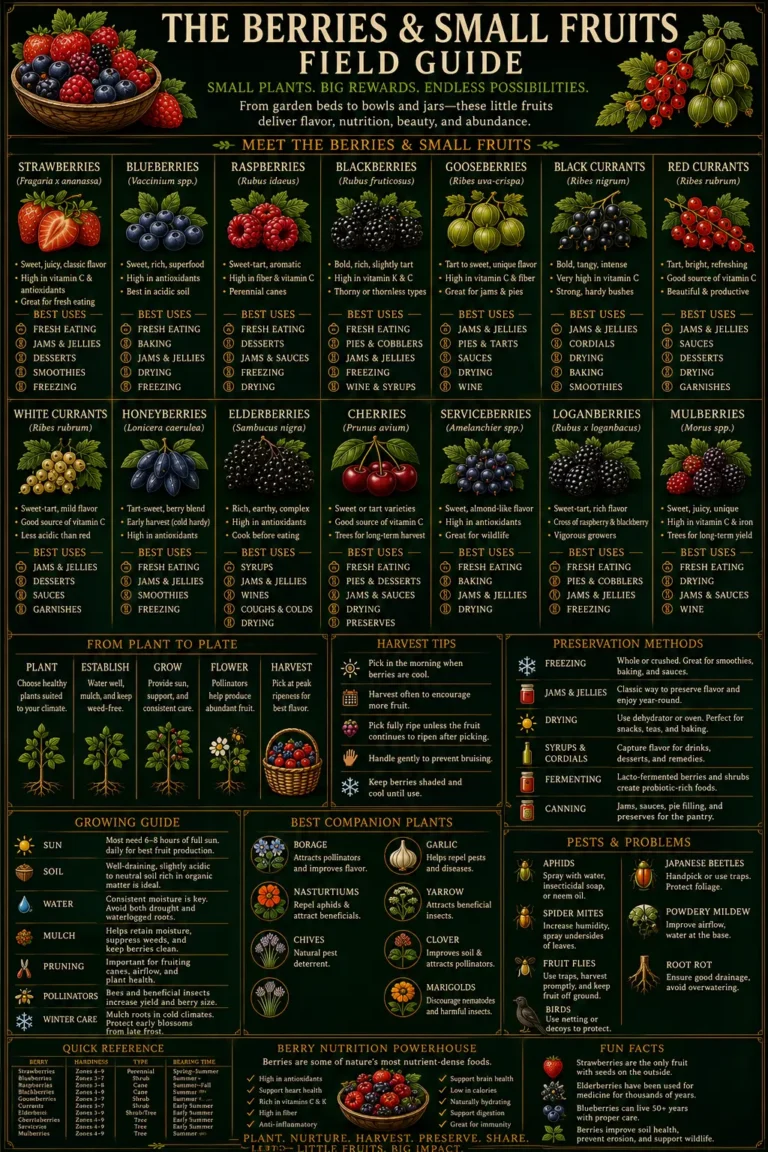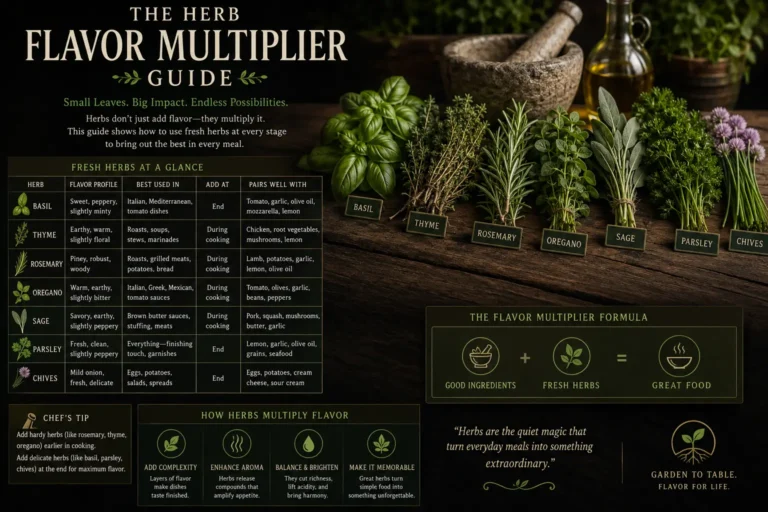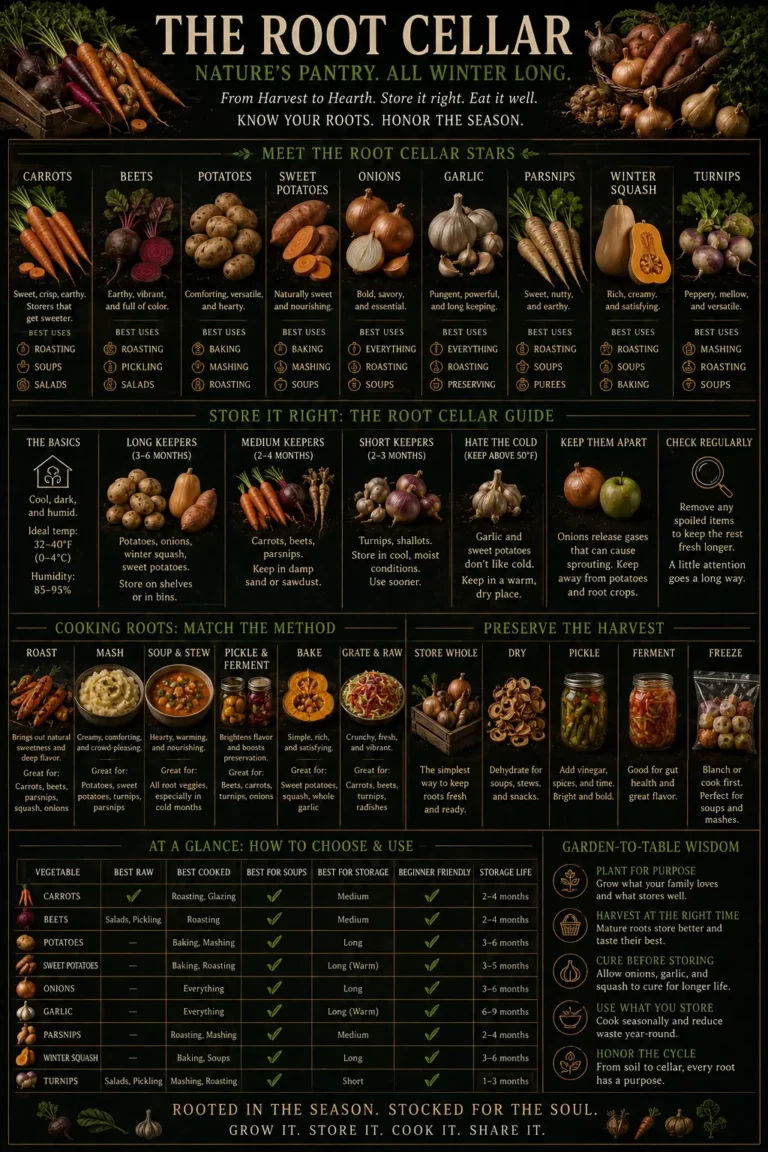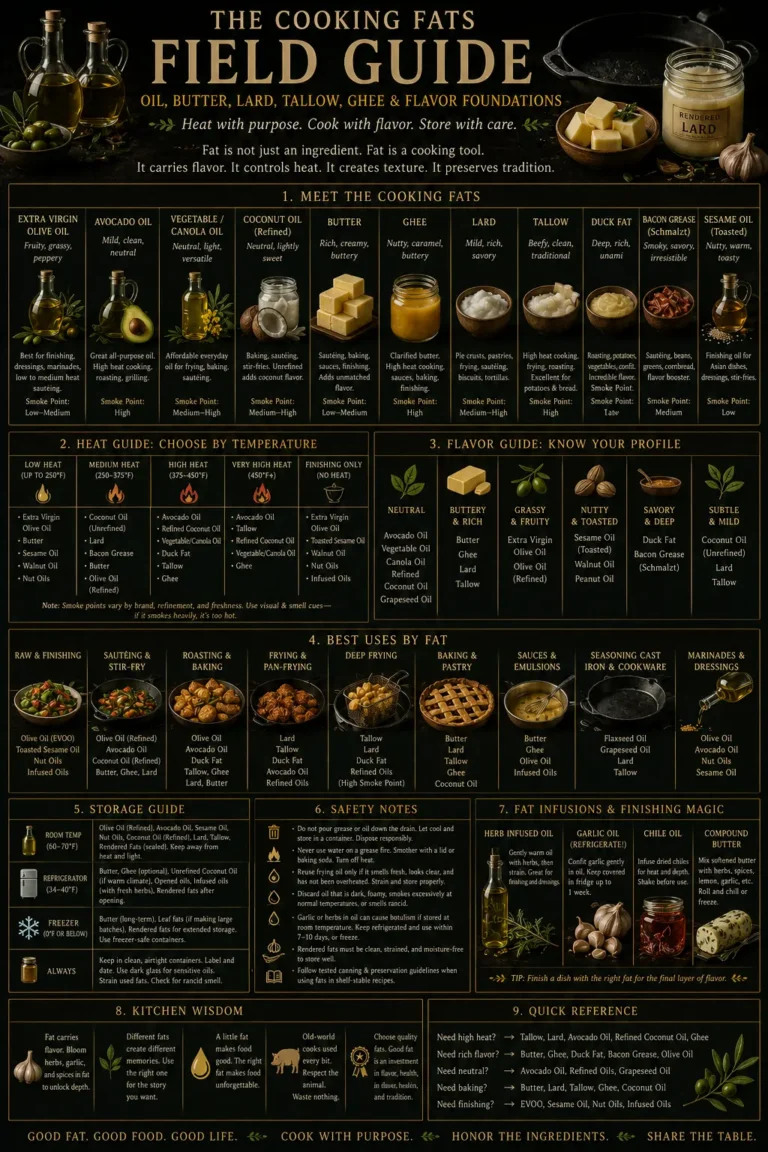
The Potato Field Guide
Not Every Potato Cooks the Same
A Kitchen Garden Field Guide for Baking, Boiling, Mashing, Roasting, Frying, Storing, and Growing Potatoes
The Potato Field Guide Promise
This is not just a potato article.
It is a working kitchen-and-garden reference for people who want to cook with more confidence, grow food with purpose, store harvests wisely, and understand why one of the most familiar crops in the kitchen is also one of the easiest to misuse.
A cook can use this guide to choose the right potato for mashed potatoes, baked potatoes, potato salad, soups, fries, gratins, roasting, casseroles, and comfort food.
A gardener can use it to understand which potatoes are worth growing, when to harvest new potatoes versus storage potatoes, how to grow potatoes in beds or containers, and why potatoes are one of the clearest examples of practical food security.
A pantry builder can use it to store potatoes properly, avoid waste, and understand why potatoes belong in a root cellar, storage pantry, or winter meal system.
A creator, homesteader, or teacher can use it to turn one ordinary crop into field guides, recipes, posters, meal plans, storage lessons, preservation content, and a deeper story about value.
Because potatoes are not one ingredient.
They are a family of textures.
Some are fluffy. Some are creamy. Some are waxy. Some hold their shape. Some fall apart. Some store well. Some are best eaten young. Some are grown for comfort. Some are grown for calories. Some are grown because winter meals need something reliable beneath them.
Save this guide if you want to:
Choose the best potatoes for baking, mashing, roasting, boiling, soups, fries, chips, potato salad, and gratins.
Understand the difference between russet potatoes, Yukon Gold potatoes, red potatoes, fingerling potatoes, purple potatoes, new potatoes, and sweet potatoes.
Know why potato starch and moisture change the way a recipe turns out.
Store potatoes properly so they last longer and waste less.
Grow potatoes in garden beds, raised beds, grow bags, buckets, or containers.
Connect potatoes to onions, garlic, herbs, peppers, root cellars, pantry cooking, and The Gardening Chef Field Guide Library.
Start Here: Choose Your Reading Path
| If you are… | Start with… | You will learn… |
|---|---|---|
| A home cook | The Potato Texture Guide | Why russets, Yukon Golds, reds, fingerlings, and new potatoes cook differently. |
| A beginner gardener | Growing Potatoes: The Underground Harvest | How potatoes grow, why hilling matters, and how containers can become potato systems. |
| A meal planner | Best Potatoes by Cooking Method | Which potato to use for baking, mashing, roasting, soups, salads, fries, and gratins. |
| A pantry builder | Potato Storage: Store It Right | How to store potatoes safely and reduce waste. |
| A flavor builder | Potato Flavor Systems | How potatoes work with onions, garlic, herbs, peppers, fats, and dairy. |
| A Wealth Garden reader | The Potato as a Stability Crop | Why potatoes represent calories, storage, comfort, security, and hidden value. |
The Potato Field Guide
Most people think a potato is a potato.
You buy a bag. You bring it home. You boil it, bake it, mash it, roast it, fry it, or throw it into soup.
And sometimes it works beautifully.
The baked potato splits open, fluffy and steaming. The mashed potatoes turn silky. The roasted potatoes crisp at the edges. The potato salad holds together in clean, tender cubes. The soup becomes comforting instead of cloudy. The fries land crisp outside and soft inside.
Other times, something feels wrong.
The mashed potatoes turn gluey. The potato salad falls apart. The baked potato never becomes fluffy. The roasted potatoes brown outside but stay dense inside. The soup becomes grainy instead of creamy. The fries go limp instead of crisp.
When that happens, most people blame the recipe.
But often, the recipe was not the problem.
The potato was.
That is the first lesson of this field guide:
The right potato changes everything.
And the deeper lesson is even better:
A potato is not just a side dish.
It is stored energy.
It is pantry value.
It is underground wealth.
Why Potatoes Deserve Their Own Field Guide
Potatoes are familiar enough to be taken for granted.
That is exactly why they need a field guide.
A tomato announces itself with color. A pepper announces itself with heat. An onion announces itself with aroma. Herbs announce themselves with fragrance.
A potato waits underground.
It does not show off. It does not perfume the garden. It does not ask for attention. It stores energy quietly beneath the soil.
But when harvest comes, the lesson is unmistakable.
A few seed potatoes can become pounds of food. A grow bag can produce dinner. A raised bed can become a pantry. A storage crop can carry value into winter.
Potatoes are one of the clearest garden examples of practical wealth. They turn soil, water, sunlight, and time into dense, useful food.
But to get the most value from them, you have to understand the real kitchen question:
What do I want this potato to do?
That question changes the meal.
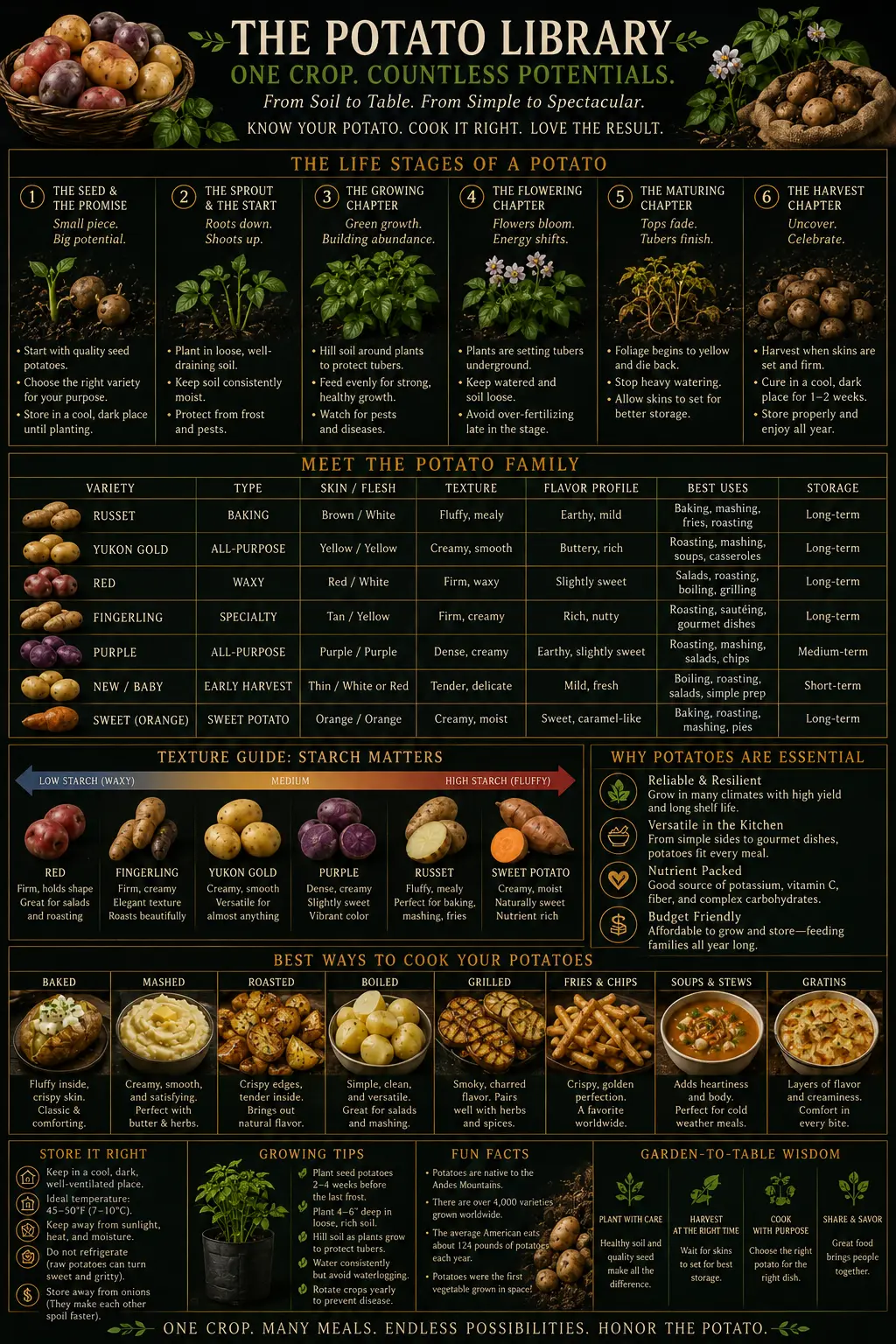
Field Guide Poster Preview
The Potato Kitchen Field Guide poster is designed as a practical kitchen and garden reference.
Use it when you need to remember:
Which potatoes are best for baking.
Which potatoes are best for mashing.
Which potatoes are best for boiling.
Which potatoes are best for roasting.
Which potatoes are best for potato salad.
Which potatoes are best for soups and stews.
Which potatoes are best for fries and chips.
How starch affects cooking.
How to store potatoes properly.
How to grow potatoes with better results.
This is not just a potato poster.
It is a decision map.
Download the printable Potato Field Guide poster — $0.99
[Button: Download the Potato Field Guide]
The Potato Texture Guide: Waxy, Creamy, and Floury Potatoes
The most important thing to understand about potatoes is texture.
Texture is shaped mostly by starch and moisture.
High-starch potatoes tend to be dry, fluffy, and light when cooked. Low-starch potatoes tend to be moist, firm, and waxy. Medium-starch potatoes sit between those two worlds.
Once you understand that, potato cooking begins to make sense.
| Potato Type | Texture | Best Uses | Kitchen Note |
|---|---|---|---|
| Russet Potato | High starch, dry, fluffy | Baking, mashing, fries, hash browns, loaded potatoes | Best when you want lightness, crispness, and fluff. |
| Yukon Gold Potato | Medium starch, creamy, all-purpose | Roasting, mashing, soups, casseroles, gratins | The great all-purpose potato. |
| Red Potato | Low starch, waxy, firm | Boiling, potato salad, roasting, hash, soups | Holds shape well after cooking. |
| Fingerling Potato | Waxy, buttery, firm | Roasting, grilling, salads, special side dishes | Small, flavorful, and elegant. |
| Purple Potato | Varies, often medium to waxy | Roasting, mashing, salads, colorful plates | Adds visual impact and earthy flavor. |
| New / Baby Potato | Thin skin, tender, moist | Boiling, steaming, roasting, salads | Best eaten fresh and simply. |
| Sweet Potato | Sweet, moist, dense; not a true potato | Baking, roasting, mashing, casseroles, soups | Different plant, different behavior. |
The goal is not to memorize every variety.
The goal is to learn the pattern.
Fluffy potatoes fall apart. Waxy potatoes hold together. Creamy potatoes bridge the middle.
Russet Potatoes: The Baking Potato
Russets are the classic baking potato.
They have thick, rough skin and a high-starch interior that becomes light, dry, and fluffy when baked. That is why a russet splits open so beautifully under butter, sour cream, chives, cheese, chili, broccoli, bacon, or roasted vegetables.
A russet wants heat.
It wants to be baked, fried, mashed, shredded into hash browns, or turned into something crisp.
Because russets are high in starch and lower in moisture, they are also excellent for French fries. The inside becomes tender while the outside can become golden and crisp. They make good mashed potatoes too, especially when handled gently and not overworked.
But russets are not ideal for every dish.
If you boil them aggressively, they can break apart. If you use them in potato salad, they may crumble instead of holding clean cubes. If you stir them too much in a mash, they can become gummy.
A russet is not bad at those jobs.
It simply has a different nature.
Best For:
Baking, mashing, fries, hash browns, loaded potatoes, gnocchi, crispy roasting.
Kitchen Lesson:
Use russets when you want fluff, crispness, or a potato that breaks down easily.
Garden Value:
Russets are valuable for gardeners who want classic comfort-food potatoes and storage potential. They are especially useful if your kitchen leans toward baked potatoes, mashed potatoes, fries, hash browns, and winter meals.
Yukon Gold Potatoes: The All-Purpose Potato
Yukon Gold potatoes are one of the best everyday potatoes because they bridge the gap between starchy and waxy.
They are creamy without being too firm. They mash well without becoming too dry. They roast beautifully. They work in soups, casseroles, gratins, and simple boiled potato dishes. They have a naturally buttery flavor that makes even basic cooking taste better.
If someone only wants to keep one type of potato in the kitchen, Yukon Gold is one of the strongest choices.
It will not bake up quite as fluffy as a russet. It will not hold shape quite as firmly as a red potato. But it does almost everything well.
That is its power.
Best For:
Roasting, mashing, soups, casseroles, gratins, boiling, everyday cooking.
Kitchen Lesson:
Use Yukon Gold when you want creaminess, versatility, and reliable results.
Garden Value:
Yukon Gold-style potatoes are valuable because they reduce decision fatigue. They are the kitchen potato for people who want one crop that can serve many meals.
Red Potatoes: The Waxy Potato That Holds Together
Red potatoes are firm, moist, and waxy.
That makes them excellent for boiling, potato salad, roasting, hash, soups, stews, and dishes where you want the potato to keep its shape.
A red potato does not fall apart easily.
That is why it works so well in potato salad. You can boil it, cube it, dress it, chill it, and still recognize the pieces. In soups and stews, red potatoes hold their structure instead of dissolving into the broth.
They also roast well, especially when cut into halves or chunks with olive oil, salt, herbs, garlic, or onions.
Red potatoes are not usually the best choice for fluffy mashed potatoes. They can become dense or gluey if overworked. But for structure and firmness, they are excellent.
Best For:
Boiling, potato salad, roasting, hash, soups, stews, gratins.
Kitchen Lesson:
Use red potatoes when the potato needs to survive the cooking process as a visible piece.
Garden Value:
Red potatoes are especially useful for gardeners who want dependable table potatoes, early harvests, and potato salad crops.
Fingerling Potatoes: The Small Specialty Potato
Fingerlings look different immediately.
Long, narrow, irregular, and often beautifully colored, they feel more like a chef’s potato than a bulk storage crop.
Fingerling potatoes usually have a waxy, buttery texture. They roast beautifully because their shape creates a good balance between skin, flesh, and surface area. Split lengthwise and roasted cut-side down, they can become crisp outside and creamy inside.
They also shine in salads, warm side dishes, grilled plates, and simple preparations where the potato itself is meant to be noticed.
Fingerlings are not usually the cheapest potato at the grocery store.
That is part of why they are valuable in the garden.
When you grow them yourself, you can bring a restaurant-style ingredient into everyday meals.
Best For:
Roasting, grilling, salads, warm side dishes, special meals.
Kitchen Lesson:
Use fingerlings when you want a potato that feels intentional, elegant, and deeply flavorful without much fuss.
Garden Value:
Fingerlings are high-perceived-value potatoes. They may not be your main calorie crop, but they upgrade meals and make the harvest feel special.
Purple Potatoes: The Color and Conversation Potato
Purple potatoes bring something most potatoes do not:
Visual drama.
Slice one open and the color can stop people in their tracks. Some are deep violet. Some are marbled. Some hold their color after cooking better than others.
In the kitchen, purple potatoes can be roasted, mashed, boiled, used in salads, or folded into mixed potato platters. Their flavor is often earthy and slightly nutty. Some varieties are waxier, while others are more all-purpose.
The important thing is to use them where color matters.
A purple potato salad. A roasted potato platter. A dramatic mash. A composed plate. A harvest board.
Purple potatoes remind us that food is not only nutrition and calories.
It is also beauty.
Best For:
Roasting, mashing, salads, colorful side dishes, mixed potato platters.
Kitchen Lesson:
Use purple potatoes when visual impact is part of the meal.
Garden Value:
Purple potatoes are excellent for gardeners who want variety, beauty, and conversation. They teach that value can come from appearance as well as yield.
New Potatoes and Baby Potatoes: The Early Harvest
New potatoes are not a separate variety.
They are young potatoes harvested early.
Their skins are thin. Their texture is tender. Their flavor is fresh and delicate. They are usually smaller, sweeter, and more moist than fully mature storage potatoes.
New potatoes should be treated simply.
Boil them gently. Steam them. Roast them whole. Toss them with butter, olive oil, salt, herbs, garlic, chives, parsley, dill, or a little lemon.
This is not the potato for long storage.
It is the potato for right now.
That is its purpose.
Best For:
Boiling, steaming, roasting, salads, simple side dishes.
Kitchen Lesson:
Use new potatoes when freshness and tenderness matter more than storage.
Garden Value:
New potatoes give gardeners an early reward. They are excellent for morale because they let you harvest before the full storage crop is ready.
Sweet Potatoes: The Not-Quite-Potato
Sweet potatoes appear in this guide because people cook them like potatoes, shop for them near potatoes, and often compare them to potatoes.
But botanically, they are not true potatoes.
Regular potatoes are usually varieties of Solanum tuberosum, a member of the nightshade family. Sweet potatoes are Ipomoea batatas, a different plant entirely.
That difference matters.
Sweet potatoes are naturally sweet, moist, and dense. They can be baked, mashed, roasted, turned into fries, used in casseroles, added to soups, or made into pies and breads.
They do not have the same starch behavior as russets or red potatoes. A sweet potato will not give you the same classic fluffy baked potato experience. It brings its own kind of richness.
A sweet potato is not a substitute potato.
It is its own ingredient.
Best For:
Baking, roasting, mashing, casseroles, soups, pies, fries.
Kitchen Lesson:
Use sweet potatoes when you want sweetness, color, and dense nutrition.
Garden Value:
Sweet potatoes are warm-season crops that can produce heavily in the right conditions. They also teach an important gardening lesson: similar kitchen uses do not always mean similar plants.
The Starch Guide: Why Potato Texture Changes Everything
Potato cooking becomes much easier once you understand starch.
Think of potatoes on a simple spectrum:
Waxy → Creamy → Floury
Waxy potatoes hold shape.
Floury potatoes fall apart.
Creamy potatoes sit between them.
This affects almost every cooking method.
| Starch Level | Texture | Examples | Best Uses |
|---|---|---|---|
| Low Starch / Waxy | Firm, moist, holds shape | Red potatoes, fingerlings, many new potatoes | Boiling, salads, gratins, soups |
| Medium Starch / All-Purpose | Creamy, balanced | Yukon Gold, some purple potatoes | Roasting, mashing, soups, casseroles |
| High Starch / Floury | Dry, fluffy, breaks down | Russet potatoes | Baking, fries, fluffy mash, hash browns |
If a dish needs clean cubes, use waxy potatoes.
If a dish needs fluff, use high-starch potatoes.
If a dish needs flexibility, use all-purpose potatoes.
That one decision can save a recipe.
Best Potatoes by Cooking Method
Best Potatoes for Baking
The best potatoes for baking are high-starch potatoes, especially russets.
A baked russet works because the interior becomes light and fluffy while the skin becomes firm enough to hold everything together. This is the potato that welcomes butter, sour cream, chives, cheese, chili, broccoli, bacon, roasted vegetables, or anything else you want to pile on top.
Yukon Gold potatoes can be baked too, but they become creamier rather than fluffy.
Sweet potatoes can also be baked, but they belong in their own category. They become soft, sweet, and dense rather than dry and fluffy.
Best Choices:
Russet, sweet potato, large Yukon Gold.
Chef’s Note:
If the goal is a classic steakhouse-style baked potato, choose russet.
Best Potatoes for Mashing
Mashed potatoes depend on texture.
Russets make light, fluffy mashed potatoes. Yukon Golds make creamy, buttery mashed potatoes. A mix of the two can be excellent.
Red potatoes can be mashed, but they should be handled gently and usually produce a denser, more rustic mash.
The biggest mistake with mashed potatoes is overworking them. Potatoes contain starch, and when that starch is beaten too aggressively, the mash can become gummy.
A good mash is not just about the potato.
It is about restraint.
Best Choices:
Russet, Yukon Gold, or a mix of both.
Chef’s Note:
For fluffy mash, use russet. For creamy mash, use Yukon Gold. For balanced mash, combine them.
Best Potatoes for Roasting
Roasting is where many potato types shine.
Yukon Golds roast beautifully because they become crisp outside and creamy inside. Red potatoes roast well because they hold their shape. Fingerlings are excellent because of their size, shape, and buttery texture. Purple potatoes bring color and visual appeal. New potatoes roast well when kept whole or halved.
Russets can roast too, especially when parboiled first or cut for crisp edges, but they are more likely to break apart.
Best Choices:
Yukon Gold, red potatoes, fingerlings, purple potatoes, new potatoes.
Chef’s Note:
For crispy edges and creamy centers, Yukon Gold is hard to beat.
Best Potatoes for Boiling
Boiling sounds simple, but it exposes potato choice quickly.
Waxy potatoes hold their shape better in water. Red potatoes, fingerlings, new potatoes, and Yukon Golds are usually strong choices.
Russets can be boiled for mash, but they are more likely to break down if cooked too long or handled roughly.
Best Choices:
Red potatoes, fingerlings, new potatoes, Yukon Gold.
Chef’s Note:
Boiling is best when the potato matches the goal. Boil waxy potatoes for clean pieces. Boil russets when you intend to mash.
Best Potatoes for Potato Salad
Potato salad needs structure.
The potato must be cooked until tender but still hold its shape after mixing with dressing.
That is why waxy potatoes are usually best.
Red potatoes, fingerlings, and new potatoes are excellent choices. Yukon Golds can also work if handled carefully.
Russets tend to break apart and become mealy in potato salad unless you are intentionally making a softer, mashed-style version.
Best Choices:
Red potatoes, fingerlings, new potatoes, Yukon Gold.
Chef’s Note:
If you want clean cubes, avoid high-starch potatoes.
Best Potatoes for Soups and Stews
Soups and stews require a choice.
Do you want the potato to hold shape?
Or do you want it to break down and thicken the broth?
For clean pieces, use red potatoes, Yukon Gold, or waxy potatoes. For thickening, use russets or a mix.
In many soups, Yukon Gold is the perfect middle ground. It holds enough shape while still adding creaminess.
Best Choices:
Yukon Gold, red potatoes, russet depending on desired texture.
Chef’s Note:
Choose the potato based on whether you want structure or body.
Best Potatoes for Fries and Chips
Fries usually need high starch.
That is why russets are the classic choice. They fry crisp outside and tender inside.
For chips, starch and slice thickness matter. Russets work well, but some specialty potatoes can also make beautiful chips.
Sweet potato fries are delicious, but they behave differently. They often need more help to crisp because they contain more sugar and moisture than classic russets.
Best Choices:
Russet for classic fries. Russet, purple, or specialty potatoes for chips. Sweet potato for sweet fries.
Chef’s Note:
Classic fries want russet. Sweet potato fries are their own category.
Best Potatoes for Gratins and Casseroles
Gratins need potatoes that slice cleanly and cook into tender layers without turning to mush.
Yukon Gold and red potatoes are excellent for this. They hold structure while still becoming creamy.
Russets can work, but they tend to absorb liquid and break down more.
Best Choices:
Yukon Gold, red potatoes, fingerlings.
Chef’s Note:
A gratin is about layers. Choose potatoes that can hold them.
The Fast Potato Decision Guide
| If the dish needs… | Choose… | Why it works |
|---|---|---|
| Fluffy baked potato | Russet | High starch creates a light interior. |
| Creamy mash | Yukon Gold | Naturally creamy and buttery. |
| Fluffy mash | Russet | Breaks down easily when handled correctly. |
| Potato salad cubes | Red potatoes, fingerlings, new potatoes | Waxy texture holds shape. |
| Crispy roasted pieces | Yukon Gold, fingerlings, red potatoes | Good balance of structure and browning. |
| Soup body | Yukon Gold or russet | Adds creaminess or thickens broth. |
| Clean soup pieces | Red potatoes or waxy potatoes | Holds shape in liquid. |
| Classic fries | Russet | High starch helps crisp exterior and tender interior. |
| Visual drama | Purple potatoes | Adds color and conversation. |
| Fresh garden reward | New potatoes | Tender, thin-skinned, early harvest. |
Potato Flavor Systems: How Potatoes Work With Other Ingredients
Potatoes are rarely alone.
That is part of their power.
They are foundation crops that absorb, carry, soften, and support other flavors. A plain boiled potato is simple. But potatoes with the right partners become comfort food, pantry meals, holiday dishes, breakfast skillets, soups, gratins, roasts, and full dinners.
Potatoes and Onions
Potatoes and onions are one of the great kitchen partnerships.
Onions bring sweetness, depth, aroma, and savory structure. Potatoes bring body, comfort, starch, and weight.
Together they become hash, potato leek soup, gratins, roasted trays, breakfast skillets, stews, casseroles, and storage meals.
Potatoes and Garlic
Garlic turns potatoes from plain to memorable.
Mashed potatoes with roasted garlic. Roasted potatoes with minced garlic. Fries with garlic salt. Potato soup with garlic and herbs. Garlic butter potatoes. Garlic mashed Yukon Golds.
Garlic gives the potato direction.
Potatoes and Herbs
Herbs finish what potatoes start.
Rosemary brings memory. Thyme brings depth. Chives bring freshness. Dill brings brightness. Parsley lifts heavy dishes. Sage leans autumnal and savory.
A potato without herbs can feed you.
A potato with herbs can make you want another bite.
Potatoes and Peppers
Peppers bring color, heat, and movement to potatoes.
Think breakfast hash, roasted potato trays, paprika potatoes, spicy potato tacos, potato curry, pepper-and-potato skillets, and soups.
Peppers wake potatoes up.
Potatoes and Fats
Potatoes love fat because fat carries heat, flavor, and texture.
Butter makes mashed potatoes rich. Olive oil helps roasted potatoes crisp. Bacon grease gives hash depth. Duck fat creates luxury. Cream makes gratins tender. Sour cream finishes a baked potato with tang.
The potato is humble.
The fat decides whether it becomes simple, rustic, elegant, or unforgettable.
Potato Storage: Store It Right
Potatoes are storage crops, but they are not invincible.
Good storage protects the harvest.
Store potatoes in a cool, dark, well-ventilated place. Keep them away from sunlight, heat, and excess moisture. Do not refrigerate raw potatoes for ordinary storage, because cold temperatures can change their starches and sugars in ways that affect flavor, texture, and cooking.
Keep potatoes away from onions when possible. They prefer different storage conditions, and keeping them together in a closed space can encourage faster spoilage.
Also watch for greening.
Green areas on potatoes indicate exposure to light and may be associated with increased natural toxins. If a potato is heavily green, bitter, soft, moldy, or excessively sprouted, do not treat it as normal food.
Best Storage Conditions for Potatoes:
Cool.
Dark.
Ventilated.
Dry enough to prevent rot, but not so dry they shrivel quickly.
Away from sunlight.
Away from onions when possible.
Checked regularly.
Kitchen Lesson:
A potato stored poorly loses value before it ever reaches the pan.
Potato Storage Mistakes to Avoid
Mistake 1: Storing Potatoes in Sunlight
Light exposure can turn potatoes green and increase natural toxins. Keep potatoes in the dark.
Mistake 2: Refrigerating Raw Potatoes for Long-Term Storage
Refrigeration can alter potato starches and sugars. A cool pantry, cellar, basement area, or proper storage zone is usually better.
Mistake 3: Storing Potatoes With Onions
Potatoes and onions are both pantry crops, but they are not ideal storage companions. Store separately when possible.
Mistake 4: Forgetting to Check the Bin
One rotting potato can affect others. Stored crops still need attention.
Mistake 5: Treating Sweet Potatoes Like Regular Potatoes
Sweet potatoes prefer warmer storage than regular potatoes. Too much cold can damage them.
Growing Potatoes: The Underground Harvest
Growing potatoes feels different from growing tomatoes or peppers.
With tomatoes, you can watch the fruit develop.
With potatoes, the real work happens underground.
That teaches patience.
You plant seed potatoes or potato pieces with eyes. Green growth appears above the soil. As the plant grows, tubers form beneath the surface. Many gardeners hill soil or mulch around the plants as they grow to protect developing potatoes from sunlight and support better production.
Then comes the harvest.
You dig.
And the soil gives back what it has been hiding.
Few garden moments feel more like treasure hunting.
Basic Potato Growing Tips
Plant in loose, well-draining soil.
Choose certified seed potatoes when possible.
Give plants full sun.
Keep soil consistently moist during tuber formation.
Hill soil or mulch around plants as they grow.
Avoid exposing tubers to sunlight.
Harvest new potatoes early or wait for mature storage potatoes.
Cure mature storage potatoes before long-term storage.
Store only sound, undamaged potatoes.
Garden Lesson:
Potatoes teach hidden value. The system may be working even when you cannot see the final harvest yet.
The Grow Bag Potato Method
Potatoes are one of the best crops for teaching people that they do not need a traditional garden bed to begin.
A grow bag, large container, bucket with drainage holes, raised bed, or deep planter can become a potato system.
You start with soil.
Add seed potatoes.
Cover.
Water.
Hill or add more soil or mulch as they grow.
Wait.
Harvest.
For small-space gardeners, potatoes in containers can be a powerful first lesson in production. The yield may not match a large garden bed, but the experience is unforgettable.
You turn a bag of soil into food.
That matters.
Potato Problems to Watch For
A good field guide should help readers notice issues early.
Common potato problems include:
Green potatoes from light exposure.
Scab.
Early or late blight.
Colorado potato beetles.
Wireworms.
Poor tuber formation.
Rot from wet soil.
Hollow heart.
Sunburned tubers.
Excessive sprouting in storage.
The goal is not fear.
The goal is stewardship.
Potatoes reward gardeners who pay attention to soil, moisture, airflow, seed quality, plant stress, pest pressure, and storage.
Common Potato Problems and What They Usually Mean
| Problem | Likely Cause | What to Do |
|---|---|---|
| Green potatoes | Tubers exposed to light | Hill plants, mulch well, store in darkness, discard heavily green potatoes. |
| Poor tuber formation | Heat stress, poor soil, inconsistent moisture, weak seed potatoes | Improve soil, water consistently, plant at the right time, use certified seed potatoes. |
| Rot | Wet soil, poor drainage, damaged tubers | Improve drainage, avoid overwatering, harvest gently, store only sound potatoes. |
| Scab | Soil conditions, susceptible varieties | Use resistant varieties when available and avoid overly dry soil during tuber formation. |
| Blight symptoms | Disease pressure, wet foliage, infected plant material | Improve airflow, rotate crops, remove infected material, follow local extension guidance. |
| Colorado potato beetles | Pest pressure | Inspect plants early, remove eggs or larvae when feasible, use appropriate controls if needed. |
| Sunburned tubers | Soil washed away or tubers exposed | Hill soil or mulch to keep potatoes covered. |
| Excessive sprouting in storage | Storage too warm, too much time, light exposure | Store cooler and darker, check regularly, use sprouting potatoes promptly if still safe and sound. |
A Quick Note About Potato Safety
Potatoes belong to the nightshade family.
The part we usually eat is the tuber, but potato leaves, stems, sprouts, green tubers, and heavily green peelings should not be treated as normal food.
Green potatoes and sprouts can contain higher levels of natural glycoalkaloids. If potatoes are heavily green, bitter, soft, moldy, or badly sprouted, it is safer to discard them.
Good food stewardship includes knowing when not to use something.
A Quick Note About Pets
Potato plants, green tubers, sprouts, and leaves can be harmful to pets if eaten.
Keep potato foliage, sprouts, raw peelings from green potatoes, garden scraps, and compost access away from dogs and cats.
Cooked plain potato flesh may be commonly eaten by people, but that does not make the whole potato plant safe for pets.
A productive garden should feed the household.
It should also protect it.
The Potato as a Stability Crop
In The Wealth Garden system, potatoes are a stability crop.
They are not flashy. They are not delicate. They are not just garnish.
They are food with weight.
A potato crop can help feed a household. It can support winter meals. It can reduce grocery dependence. It can create comfort, calories, and security.
This is a different kind of value than herbs or tomatoes.
Herbs are flavor multipliers.
Tomatoes are growth crops.
Peppers are transformation crops.
Garlic is a compounding crop.
Potatoes are storage and stability.
They remind us that wealth is not always colorful.
Sometimes wealth is buried.
Sometimes it is quiet.
Sometimes it is plain.
Sometimes it waits in a basket in the cellar, ready when needed.
That is not glamorous.
But it is powerful.
The $10,000 Garden Insight: Stored Energy Has Value
A potato does not look like a luxury crop.
That is part of its lesson.
Herbs impress through aroma. Tomatoes impress through color. Peppers impress through heat. Garlic impresses through intensity.
Potatoes impress later.
They impress when dinner needs substance.
They impress when the grocery bill is high.
They impress when winter meals need comfort.
They impress when a basket of stored food becomes soup, hash, mash, roast, fries, gratin, or breakfast.
A potato crop does not only produce food.
It produces options.
That is one of the overlooked forms of wealth.
A household with stored food is not in the same position as a household with an empty pantry. A gardener who can turn soil into calories has a different relationship with money, meals, and resilience.
This is why potatoes belong in the larger $10,000 Garden path.
Not because one potato bed automatically creates $10,000.
But because a true wealth system is built from many layers of value:
Food replaced.
Meals improved.
Waste reduced.
Storage extended.
Skills gained.
Surplus protected.
Confidence built.
Potatoes teach the stability layer.
They are not the whole system.
They are one of the blocks that keeps the system standing.
What Makes This Guide Worth Saving
Do not treat all potatoes the same.
Do not use russets when you need clean potato salad cubes.
Do not use red potatoes when you want the fluffiest baked potato.
Do not overwork mashed potatoes.
Do not store potatoes in light.
Do not forget that new potatoes are a harvest stage, not a storage crop.
Do not treat sweet potatoes as if they behave exactly like potatoes.
Do not grow potatoes without a plan for storage, meals, and harvest timing.
A save-worthy field guide does three things at once.
It teaches the reader something they did not know.
It gives them a decision tool they can use immediately.
And it makes them want the visual reference nearby when the real kitchen moment arrives.
This Potato Field Guide gives the cook a texture map, gives the gardener a growing plan, gives the pantry builder a storage reminder, and gives The Gardening Chef reader another piece of the larger system.
That is what turns content from interesting into useful.
And useful is what readers come back for.
Frequently Asked Questions About Potatoes
What is the best potato for baking?
Russet potatoes are usually the best choice for classic baked potatoes because their high-starch interior becomes light and fluffy.
What is the best potato for mashed potatoes?
Russets make fluffy mashed potatoes. Yukon Golds make creamy mashed potatoes. A mix of russet and Yukon Gold can give a balanced mash.
What is the best potato for potato salad?
Red potatoes, fingerlings, new potatoes, and Yukon Golds are strong choices because they hold their shape better than russets.
What is the best potato for roasting?
Yukon Gold, red potatoes, fingerlings, purple potatoes, and new potatoes all roast well. Yukon Golds are especially good for crispy edges and creamy centers.
What is the best potato for fries?
Russet potatoes are the classic choice for French fries because their high starch helps create a crisp outside and fluffy inside.
Are sweet potatoes actually potatoes?
No. Sweet potatoes are not true potatoes. They are a different plant with different cooking behavior.
Can potatoes and onions be stored together?
It is better to store them separately when possible. They prefer different storage conditions, and keeping them together in a closed space can encourage faster spoilage.
Why do potatoes turn green?
Potatoes turn green when exposed to light. Green areas can indicate increased natural toxins, so heavily green potatoes should not be treated as normal food.
Can potatoes be grown in containers?
Yes. Potatoes can grow in grow bags, large containers, buckets with drainage holes, raised beds, and deep planters. Containers are one of the best ways for beginners to experience the underground harvest.
What potato should a beginner grow first?
Beginner gardeners often do well with early potatoes, red potatoes, Yukon Gold-style potatoes, or container-friendly varieties from reputable seed potato suppliers. The best choice depends on your climate, growing season, and cooking goals.
Where This Connects
If you are building the full Gardening Chef Field Guide Library, this potato guide connects naturally to the rest of the system.
The Onion Family Is Not One Ingredient
Potatoes and onions form the base of soups, hashes, roasts, gratins, stews, breakfast skillets, and storage meals.
The Garlic Field Guide
Garlic turns potatoes into roasted garlic mash, garlic fries, garlic butter potatoes, potato soups, and deeply savory comfort food.
The Herb Flavor Multiplier Guide
Rosemary, thyme, parsley, chives, dill, sage, and oregano all show how herbs can multiply the value of simple potatoes.
The Pepper Library
Potatoes and peppers meet in breakfast hash, roasted vegetable trays, soups, stews, curries, tacos, casseroles, and comfort food.
The Tomato Field Guide
Tomatoes and potatoes share the nightshade family but behave very differently in the kitchen and garden. Together, they build soups, stews, sauces, casseroles, and pantry meals.
The Root Cellar Field Guide
Potatoes naturally lead into root crops, storage crops, winter food systems, and the larger idea of pantry wealth.
This is the puzzle system.
Each guide stands alone.
But the more pieces you connect, the clearer the kitchen garden becomes.
The Potato Field Guide Lesson
The potato teaches one of the most practical kitchen lessons:
Purpose determines potato choice.
A russet is not better than a red potato.
It is better for baking.
A red potato is not better than a russet.
It is better for holding shape.
A Yukon Gold is not better than either.
It is better when you want flexibility.
A fingerling is not better because it is small and fancy.
It is better when you want elegance, texture, and visual appeal.
A sweet potato is not better or worse.
It is simply not the same plant.
The right potato depends on the job.
That is why this field guide matters.
It helps the cook stop asking:
What potatoes do I have?
And start asking:
What do I want this potato to do?
That question changes the meal.
Final Thought
Most people overlook potatoes because potatoes are familiar.
But familiar does not mean simple.
A potato can become a baked meal, a silky mash, a crisp fry, a tender salad, a thick soup, a golden roast, a winter storage crop, or a hidden harvest pulled from the soil.
The potato plant does not hand you one ingredient.
It hands you stored energy.
It hands you options.
And the better you understand those options, the more valuable the crop becomes.
Choose the right potato. Cook it the right way. Store it with care. Grow it with patience.
The right potato.
The right cooking.
Every time.
Grow it. Know it. Cook it. Store it. Share it.
Honor the Harvest.