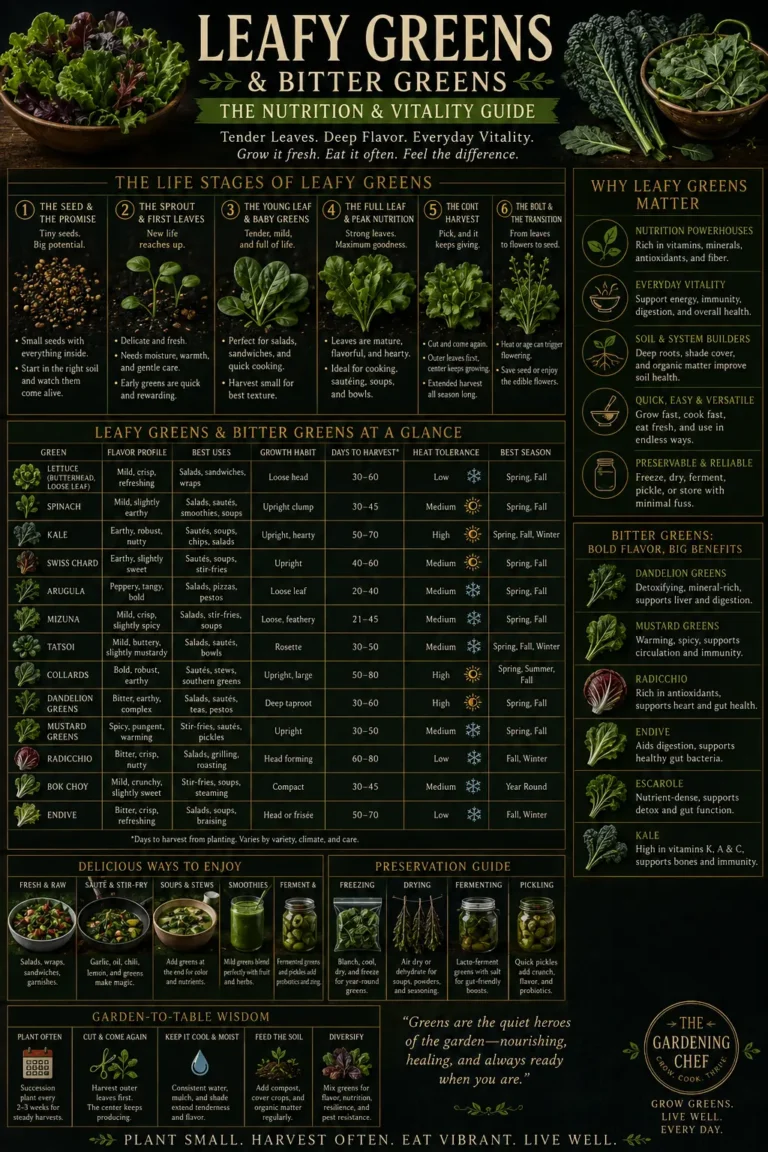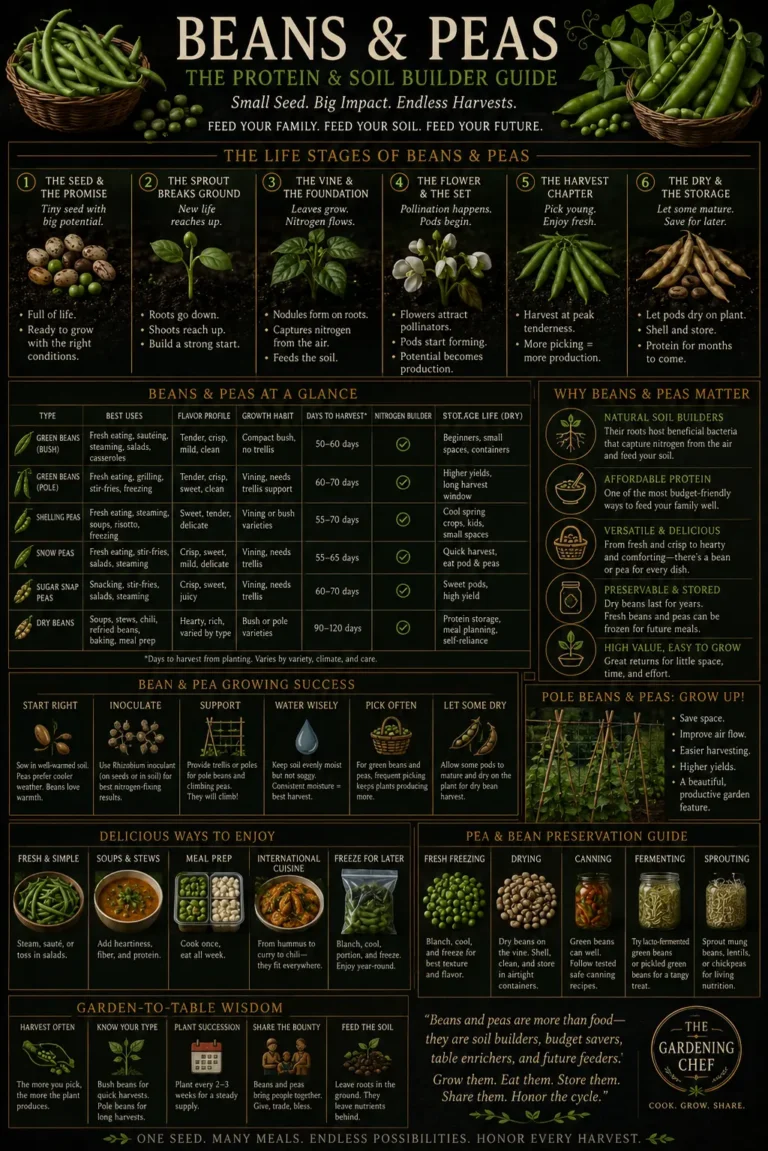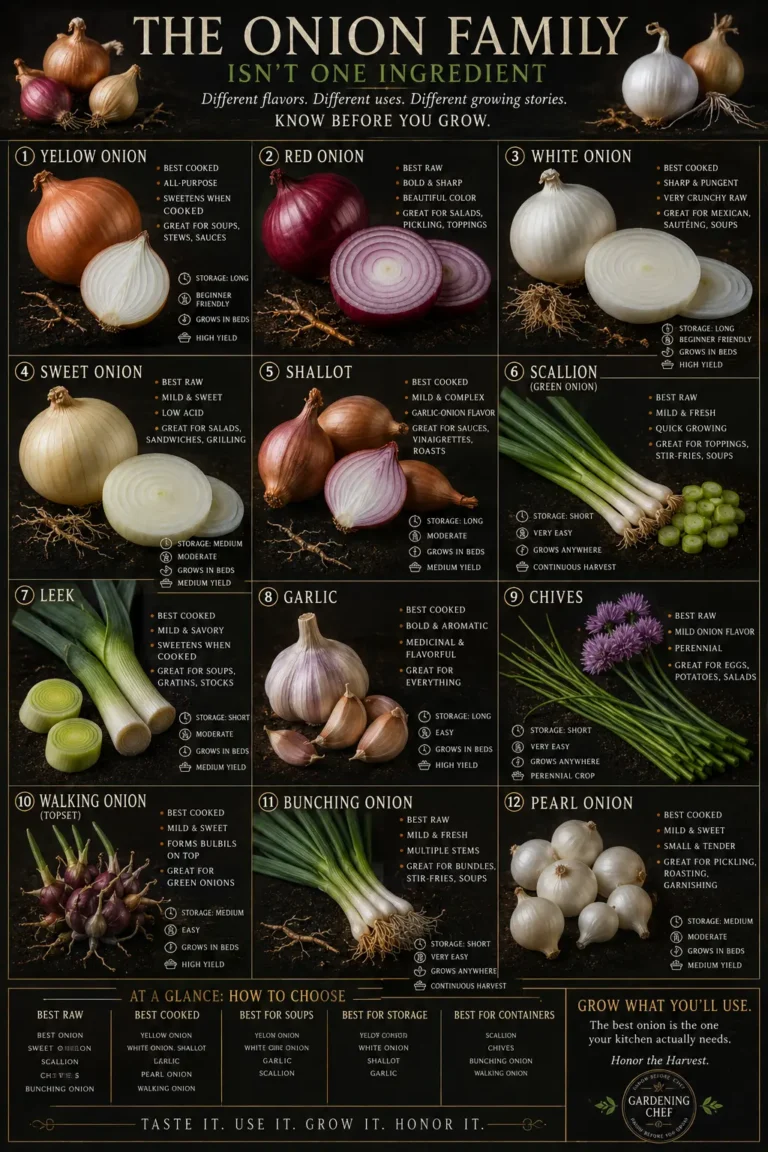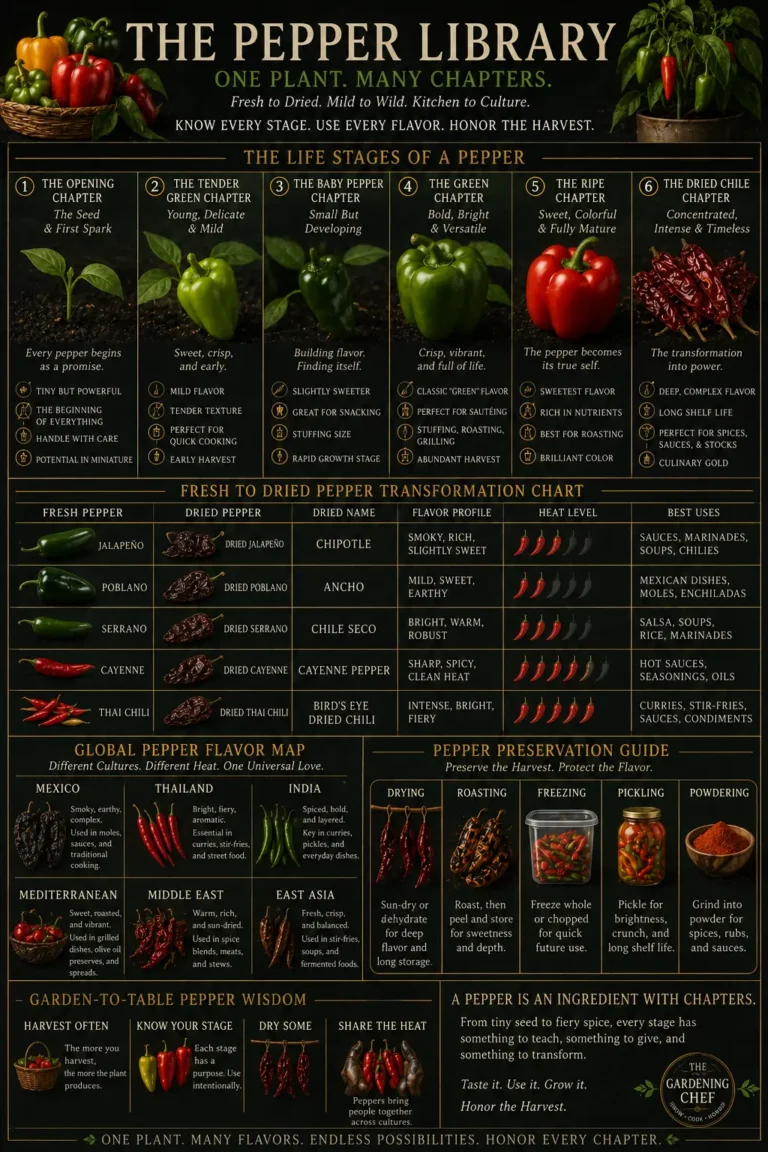
One Plant Family. Incredible Diversity. Endless Kitchen Value.
A Garden-to-Kitchen Guide for Growing, Cooking, Preserving, and Using Brassicas
The Brassica Family Field Guide Promise
This is not just a broccoli article.
It is not just a cabbage article.
It is not just a kale article.
It is a full kitchen-and-garden guide to one of the most important food plant families a gardener can grow: the brassicas.
A gardener can use this guide to understand what to plant, when to plant it, which crops need cool weather, which crops bolt quickly, which crops need protection from pests, and which crops can carry the garden into fall and winter.
A cook can use it to understand why broccoli, cauliflower, cabbage, kale, collards, Brussels sprouts, kohlrabi, bok choy, mustard greens, turnips, radishes, rutabagas, arugula, and napa cabbage behave so differently in the kitchen.
A preserver can use it to turn cabbage into sauerkraut, napa cabbage into kimchi-style ferments, greens into freezer packs, radishes into pickles, kale into chips or powder, and roots into storage crops.
A beginner can use it to stop feeling confused by this plant family and start seeing the pattern.
A Wealth Garden reader can use it to understand one of the deepest lessons in the garden:
One plant family can become many harvests when you understand the form.
Brassicas are not one crop.
They are a family of possibilities.
Save this guide if you want to:
Understand the difference between broccoli, cauliflower, cabbage, kale, collards, Brussels sprouts, kohlrabi, bok choy, mustard greens, turnips, radishes, rutabagas, arugula, and napa cabbage.
Know which brassicas are leaves, heads, flower buds, roots, stems, seeds, or side buds.
Learn which brassicas are best raw, roasted, steamed, sautéed, braised, stir-fried, fermented, pickled, frozen, dried, or stored.
Grow brassicas in spring, fall, and winter systems.
Prevent common brassica problems like cabbage worms, flea beetles, aphids, root maggots, bolting, poor heading, and clubroot.
Use edible parts that often get wasted, including broccoli stems, cauliflower leaves, cabbage outer leaves, radish greens, turnip greens, kohlrabi leaves, and kale stems.
Build a more resilient kitchen garden with cool-season crops, storage crops, repeated-harvest greens, and preservation crops.
Start Here: Choose Your Reading Path
| If you are… | Start with… | You will learn… |
|---|---|---|
| A beginner gardener | The Core Lesson: Brassicas Are a Family of Forms | Why one plant family gives leaves, roots, buds, heads, stems, seeds, and ferments. |
| A home cook | Cooking Brassicas: Know Your Method | How to avoid mushy, sulfurous brassicas and make them taste excellent. |
| A preserver | Brassica Preservation Guide | Which brassicas freeze, ferment, pickle, dry, or store best. |
| A pest-frustrated gardener | Common Brassica Pests and Problems | How to think about row covers, cabbage worms, flea beetles, aphids, root maggots, and crop rotation. |
| A meal planner | Brassicas in the Kitchen | Which flavor partners make broccoli, cabbage, kale, cauliflower, collards, and bok choy memorable. |
| A Wealth Garden reader | The Brassica Diversity Multiplier | Why this family creates options, resilience, nutrition, preservation, and year-round meals. |
Brassica Family Master Index
| Section | Use it when… |
|---|---|
| The Guide Promise | You want the big-picture reason this family matters. |
| Why Brassicas Deserve Their Own Guide | You want to understand brassicas as a kitchen-garden system. |
| The Family-of-Forms Lesson | You want the “aha” moment behind leaves, buds, heads, roots, stems, and seeds. |
| Brassicas at a Glance | You need a fast comparison chart. |
| Meet the Brassica Family | You want crop-by-crop guidance. |
| From Seed to Harvest | You want to understand growth stages and timing. |
| Cooking Brassicas | You want the best method for each crop. |
| How to Use Every Part | You want to stop wasting edible stems, leaves, roots, and greens. |
| Preservation Guide | You want freezing, fermenting, pickling, dehydrating, and root-cellaring options. |
| Growing Brassicas Successfully | You want better harvests and fewer failures. |
| Pests and Problems | You want realistic brassica pest strategy. |
| Flavor Pairings | You want brassicas to taste better. |
| Harvest Calendar | You want spring, summer, fall, and winter planning. |
| Wealth Garden Connection | You want the deeper systems lesson. |
| FAQ | You want quick answers to common brassica questions. |
The Brassica Family Field Guide
Some plant families are easy to overlook because they feel familiar.
Broccoli on a dinner plate.
Cabbage in a slaw.
Kale in a smoothie.
Cauliflower roasted in a hot oven.
Brussels sprouts browned in a skillet.
Mustard greens folded into soup.
Bok choy sizzling in a stir-fry.
Radishes sliced over buttered bread.
Turnips mashed into winter comfort.
Arugula scattered over pizza.
They seem like separate ingredients.
But they are not.
They belong to one of the most important food plant families in the garden and kitchen: the brassicas.
The Brassica family, often discussed alongside cruciferous vegetables or cole crops, is one of the great examples of how much diversity can come from a shared botanical foundation. A single group of related plants has given us leaves, stems, flower buds, heads, roots, seeds, oils, spices, ferments, slaws, soups, stir-fries, storage crops, and some of the most nutrient-dense vegetables a gardener can grow.
This is why the Brassica Family Field Guide deserves its own place in the library.
Brassicas are not one vegetable.
They are a whole food system.
Why Brassicas Deserve Their Own Field Guide
Brassicas are among the most useful crops for anyone trying to build a serious garden-to-table kitchen.
They can provide fresh greens in cool weather, dense heads for storage, roots for winter meals, flower buds for quick harvest, and bold leaves for soups, sautés, ferments, and braises.
They also teach some of the most important lessons in gardening.
They teach timing because many of them prefer cool weather.
They teach pest management because cabbage worms, flea beetles, aphids, root maggots, and other pests love them as much as we do.
They teach harvest awareness because a broccoli head or cauliflower curd can go from perfect to overmature quickly.
They teach preservation because cabbage becomes sauerkraut, kale can be frozen, radishes can be pickled, and mustard greens can be fermented.
Most importantly, brassicas teach that plant parts matter.
With brassicas, the useful harvest might be:
The flower bud, as in broccoli.
The curd, as in cauliflower.
The head, as in cabbage.
The leaf, as in kale, collards, bok choy, mustard greens, arugula, and cabbage.
The side bud, as in Brussels sprouts.
The swollen stem, as in kohlrabi.
The root, as in turnips, rutabagas, and radishes.
The seed, as in mustard seed.
The ferment, as in sauerkraut and kimchi-style cabbage preparations.
That makes this family unusually valuable.
The kitchen lesson is simple:
Do not treat every brassica the same. Know the part you are eating. Match the cooking method to the plant.
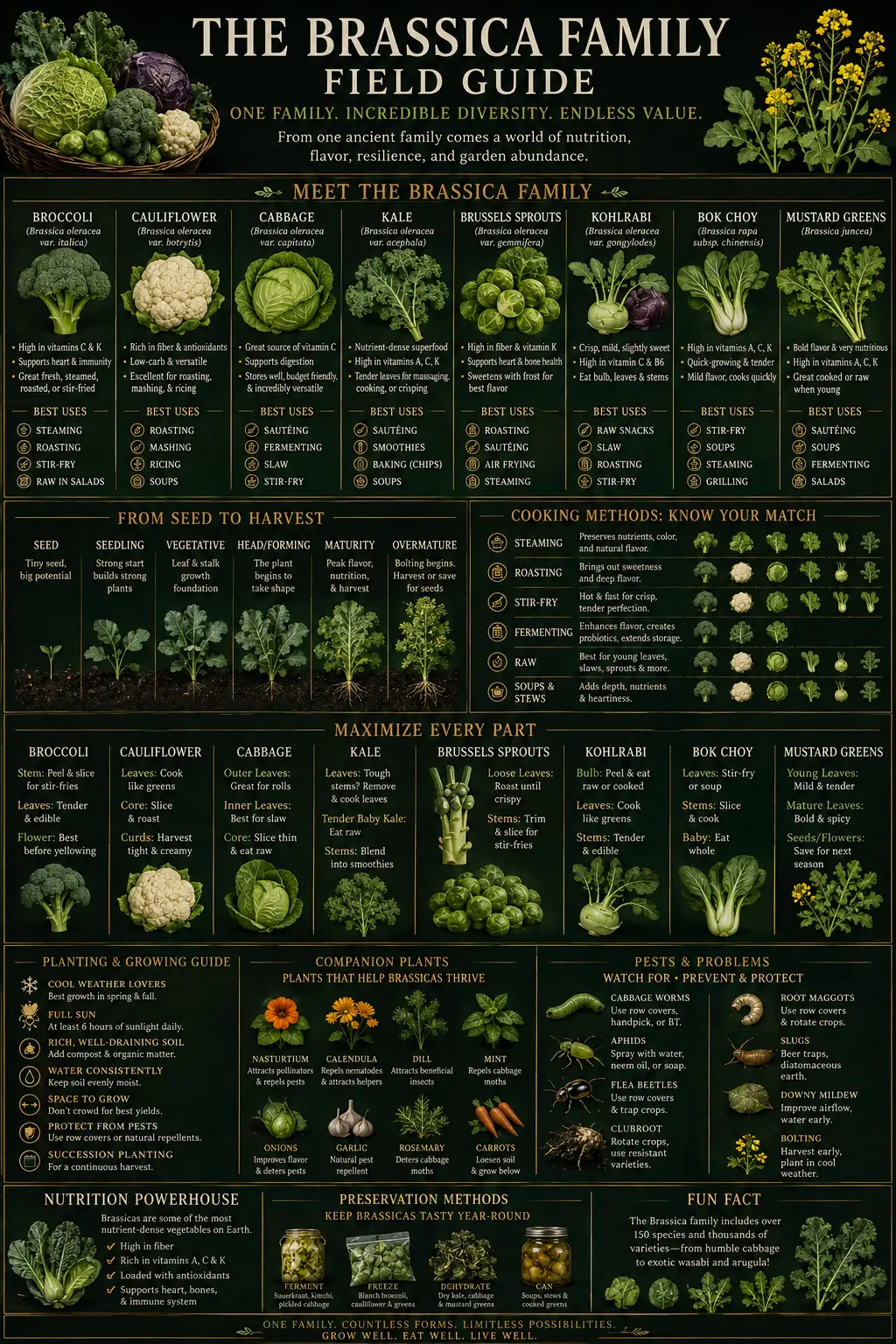
Field Guide Poster Preview
The Brassica Family Field Guide poster is designed as a quick visual kitchen and garden reference. It helps you see the family at a glance: broccoli, cauliflower, cabbage, kale, Brussels sprouts, kohlrabi, bok choy, mustard greens, and their many relatives.
Use the printable poster when you need to answer:
What part am I eating?
Should I roast it, steam it, sauté it, ferment it, stir-fry it, braise it, pickle it, or eat it raw?
Is this a cool-season crop?
What pests should I watch for?
Can I preserve it?
How do I use every part?
Which crops give quick harvests?
Which crops feed the winter kitchen?
Which crops are best for beginners?
Which crops need more patience?
The poster gives the map.
This field guide gives the deeper explanation.
Download the Printable Brassica Family Field Guide — $0.99
[Button: Download the Brassica Family Field Guide]
The Core Lesson: Brassicas Are a Family of Forms
The biggest mistake people make with brassicas is thinking of them as individual vegetables first.
Broccoli is broccoli.
Cabbage is cabbage.
Kale is kale.
Cauliflower is cauliflower.
That is true in the kitchen, but botanically and agriculturally, these crops are connected.
Many familiar brassicas are different cultivated forms of the same species. Broccoli, cauliflower, cabbage, kale, Brussels sprouts, collards, and kohlrabi are all forms of Brassica oleracea, selected over time for different edible parts. University of Minnesota Extension describes collards and kale as leafy forms of the same species as broccoli, cauliflower, and cabbage.
One selection emphasized leaves and became kale and collards.
One emphasized a tight terminal bud and became cabbage.
One emphasized flower buds and became broccoli.
One emphasized the flowering structure and became cauliflower.
One emphasized side buds and became Brussels sprouts.
One emphasized a swollen stem and became kohlrabi.
That is extraordinary.
It means the brassica family is a lesson in selection, adaptation, and purpose.
The same plant lineage can become many ingredients depending on what humans choose to cultivate.
A brassica is not just a vegetable.
It is a family of possibilities.
Brassicas at a Glance
| Crop | Main Edible Part | Flavor Profile | Best Uses | Best Season | Garden Difficulty |
|---|---|---|---|---|---|
| Broccoli | Flower buds, stems, leaves | Green, mild, slightly sweet | Steaming, roasting, stir-fry, soups | Spring, fall | Moderate |
| Cauliflower | Flower curd, leaves | Mild, nutty, slightly sweet | Roasting, mashing, soups, “rice” | Spring, fall | Moderate to hard |
| Cabbage | Head, outer leaves | Sweet, crisp, mild to pungent | Slaw, sautéing, fermenting, soups | Spring, fall, storage winter | Moderate |
| Kale | Leaves, tender stems | Earthy, robust, sweeter after cold | Sautés, soups, chips, smoothies, salads | Spring, fall, winter | Easy to moderate |
| Collards | Large leaves, stems | Bold, hearty, earthy | Braising, soups, wraps, sautés | Spring, summer, fall | Easy |
| Brussels Sprouts | Side buds, leaves | Nutty, sweet after frost | Roasting, sautéing, shredding | Fall, early winter | Moderate to hard |
| Kohlrabi | Swollen stem, leaves | Crisp, mild, sweet, broccoli-like | Raw snacks, slaw, roasting, stir-fry | Spring, fall | Easy to moderate |
| Bok Choy | Leaves, stems | Mild, juicy, slightly sweet | Stir-fry, soups, steaming, grilling | Spring, fall | Easy |
| Mustard Greens | Leaves, seeds | Spicy, pungent, peppery | Sautéing, soups, fermenting, salads | Spring, fall | Easy |
| Turnip | Root and greens | Mild to peppery, earthy | Roasting, mashing, soups, greens | Spring, fall | Easy |
| Radish | Root, greens, pods | Peppery, crisp | Raw, pickled, roasted, salads | Spring, fall | Easy |
| Arugula | Leaves, flowers | Peppery, nutty, sharp | Salads, pizza, pesto, sandwiches | Spring, fall | Easy |
| Rutabaga | Root and greens | Sweet, earthy, cabbage-like | Roasting, mashing, stews | Fall, winter storage | Moderate |
| Napa Cabbage | Loose head leaves | Tender, mild, sweet | Kimchi, stir-fry, soups, wraps | Spring, fall | Moderate |
| Broccoli Raab / Rapini | Buds, leaves, stems | Bitter, earthy, pungent | Sautéing, pasta, garlic, chili | Spring, fall | Moderate |
| Kohlrabi Leaves | Leaves | Kale-like, mild brassica | Sautés, soups, braises | Spring, fall | Bonus crop |
Meet the Brassica Family
Broccoli: The Flower Bud Vegetable
Broccoli is often treated as a simple green side dish, but it is actually an unopened flower harvest.
The head we eat is made of tightly packed flower buds. If left too long in the garden, those buds loosen and open into yellow flowers.
That timing matters.
A good broccoli harvest is firm, compact, and deep green. Once the buds begin to separate or yellow, the flavor becomes stronger and the texture declines. Broccoli is best harvested before the flowers fully reveal themselves.
In the kitchen, broccoli is extremely versatile. It can be steamed, roasted, stir-fried, added to soups, folded into casseroles, or eaten raw with dips. Roasting brings out sweetness. Steaming preserves a clean green flavor. Stir-frying gives broccoli a crisp-tender texture.
The stem is often wasted, but it should not be. Peel the tough outer layer and the inner stem becomes sweet, tender, and excellent for stir-fries, slaws, soups, or roasting.
Best Uses:
Steaming, roasting, stir-fry, soups, casseroles, raw trays, broccoli slaw.
Garden Lesson:
Broccoli teaches timing. Harvest before the flower opens.
Kitchen Lesson:
Use the head, stem, and leaves. The plant gives more than one harvest.
Wealth Garden Lesson:
A beginner sees one head. A skilled gardener sees main head, side shoots, stems, leaves, freezer packs, soup, slaw, and compost value.
Cauliflower: The Pale Curd With a Short Window
Cauliflower is one of the more demanding brassicas, but also one of the most rewarding.
The edible portion is called the curd, and it is sensitive to growing conditions. Heat, stress, inconsistent moisture, or delayed harvest can reduce quality.
Traditional white cauliflower often needs protection from sun exposure to keep the head pale. Some varieties are self-blanching, meaning their leaves naturally curl around the curd. Others may need the outer leaves gently tied over the head as it forms.
In the kitchen, cauliflower has become famous because it adapts so well. It can be roasted into nutty florets, mashed as a potato-like side, blended into soup, grated into cauliflower rice, or used as a base for vegetable-forward dishes.
But the best cauliflower dishes usually respect its need for browning.
Roasted cauliflower with olive oil, salt, garlic, and herbs is far more flavorful than overboiled cauliflower.
Best Uses:
Roasting, mashing, soups, gratins, curries, cauliflower rice, pickles, purées.
Garden Lesson:
Cauliflower teaches consistency. Stress shows up in the harvest.
Kitchen Lesson:
Dry heat brings out its best flavor.
Wealth Garden Lesson:
Cauliflower is a precision crop. It teaches that some harvests require steadiness, not just enthusiasm.
Cabbage: The Storage Crop of the Brassica World
Cabbage may be the most important brassica in human food history.
It stores well, feeds families, ferments beautifully, and works in both raw and cooked dishes.
A cabbage head is a tight bundle of leaves. Some varieties are round and dense. Others are loose and tender. Green cabbage is reliable and versatile. Red cabbage brings color and deeper flavor. Savoy cabbage has crinkled leaves that are tender and excellent in soups, rolls, and sautés. Napa cabbage is looser and milder, prized in kimchi-style ferments, stir-fries, soups, and fresh wraps.
Cabbage can be eaten raw as slaw, sautéed with onions, simmered in soups, stuffed as cabbage rolls, fermented into sauerkraut or kimchi-style preparations, or stored in a root cellar depending on variety.
For a food-resilience garden, cabbage is powerful because it bridges fresh eating and preservation.
Best Uses:
Slaw, sauerkraut, kimchi-style ferments, soups, braises, rolls, stir-fries, storage.
Garden Lesson:
Cabbage teaches storage and patience.
Kitchen Lesson:
Cabbage becomes more valuable when you learn fermentation.
Wealth Garden Lesson:
A cabbage head is not one meal. It is slaw today, soup tomorrow, stir-fry later, and sauerkraut for winter.
Kale: The Resilient Leaf Crop
Kale is one of the most forgiving and useful brassicas.
It tolerates cool weather, can survive frost, and often tastes sweeter after cold exposure. Unlike broccoli or cauliflower, kale is not a one-time harvest. It can be harvested leaf by leaf over a long season.
There are many types of kale. Curly kale is common and sturdy. Lacinato kale, also called dinosaur kale, has long dark leaves and a deeper flavor. Red Russian kale is tender and excellent for salads when young. Siberian types are cold tolerant and useful in harsh climates.
In the kitchen, kale can be sautéed, added to soups, baked into chips, blended into smoothies, or massaged raw with oil and acid for salads. Mature kale can be tough, so it often benefits from chopping, cooking, or massaging.
Best Uses:
Soups, sautés, kale chips, smoothies, salads, grain bowls, beans, stews.
Garden Lesson:
Kale teaches repeated harvest.
Kitchen Lesson:
Texture matters. Tender baby kale and mature kale are different ingredients.
Wealth Garden Lesson:
Kale is a rhythm crop. It keeps giving when harvested correctly.
Collards: The Long-Cooking Strength Green
Collards are closely related to kale, but they bring a different personality to the kitchen.
Their leaves are broad, strong, and well suited to braising. They are a staple in many traditional foodways because they are productive, hardy, and deeply satisfying when cooked well.
Collards can tolerate heat better than many brassicas, which makes them especially valuable in warmer gardens. They can be harvested leaf by leaf, allowing the plant to keep producing.
In the kitchen, collards shine when cooked slowly with aromatics, broth, vinegar, smoked meats, beans, or spices. They can also be used as wraps when lightly blanched, or finely sliced and sautéed.
Best Uses:
Braised greens, soups, stews, wraps, beans, Southern-style greens, sautés.
Garden Lesson:
Collards teach endurance.
Kitchen Lesson:
Some greens become better with time, heat, and seasoning.
Wealth Garden Lesson:
Collards are resilience leaves. They keep feeding the kitchen when more delicate greens have faded.
Brussels Sprouts: The Patience Crop
Brussels sprouts are one of the most misunderstood brassicas.
They grow as small buds along a tall central stalk, and they require a long season. They are often best after cool weather improves their sweetness.
In the garden, Brussels sprouts need time, fertility, and consistent care. They are not usually the best beginner brassica, but they are worth growing if you have a long enough cool season.
In the kitchen, Brussels sprouts are at their best when roasted, sautéed, shredded raw into salads, or browned in a skillet. The key is avoiding overboiling, which brings out sulfurous flavors and mushy texture.
Cutting sprouts in half and roasting them until caramelized transforms them. High heat, oil, salt, and enough space on the pan make all the difference.
Best Uses:
Roasting, sautéing, shredding, skillet browning, salads, gratins.
Garden Lesson:
Brussels sprouts teach patience and vertical harvest.
Kitchen Lesson:
Browning turns bitterness into sweetness.
Wealth Garden Lesson:
Brussels sprouts teach delayed reward. Not every valuable crop is quick.
Kohlrabi: The Swollen Stem That Eats Like a Root
Kohlrabi looks strange to many beginners, but it is one of the most useful brassicas once you understand it.
The round bulb-like part is not actually a root. It is a swollen stem.
Its flavor is mild, crisp, and slightly sweet, somewhere between broccoli stem, cabbage, and turnip. Young kohlrabi is excellent raw. Peel the tough outer skin and slice it into sticks, slaws, salads, or quick pickles. It can also be roasted, stir-fried, or added to soups.
The leaves are edible too and can be cooked like kale or collards.
Kohlrabi is especially valuable because it matures relatively quickly and offers both a crisp raw vegetable and a cooked green.
Best Uses:
Raw sticks, slaw, salads, pickles, roasting, stir-fry, soups, cooked greens.
Garden Lesson:
Kohlrabi teaches unusual forms.
Kitchen Lesson:
Peel it well and use both bulb and leaves.
Wealth Garden Lesson:
Kohlrabi proves that odd-looking crops can become high-value kitchen crops when the cook understands them.
Bok Choy: The Fast Stir-Fry Brassica
Bok choy is a tender, fast-growing brassica especially valued in Asian cooking.
It has juicy stems and tender leaves, giving two textures in one plant.
It grows best in cool weather and can bolt in heat. Baby bok choy is especially useful because it matures quickly and can be cooked whole, halved, steamed, grilled, or stir-fried.
In the kitchen, the stems need slightly more cooking time than the leaves. This makes bok choy perfect for quick cooking: stems first, leaves last.
It works beautifully with garlic, ginger, soy sauce, sesame oil, mushrooms, noodles, rice, broth, and chili.
Best Uses:
Stir-fries, soups, steaming, grilling, braising, noodle bowls, rice bowls.
Garden Lesson:
Bok choy teaches speed.
Kitchen Lesson:
Separate stems and leaves for better texture.
Wealth Garden Lesson:
Bok choy gives quick results and high kitchen impact from a small footprint.
Mustard Greens: The Spicy Brassica
Mustard greens are bold.
They bring heat, spice, and pungency to the kitchen. Young leaves can be eaten raw in salads for a peppery bite. Mature leaves are better cooked, where their intensity softens.
Mustard greens are excellent sautéed with garlic, added to soups, fermented, pickled, or cooked with beans. They are also useful as cover crops in some garden systems, though brassica cover crops should be planned carefully because they can host some pests and diseases that affect related vegetable crops. University of Minnesota Extension notes that many cover crop mixes include Brassica-family plants and warns vegetable growers to consider crop-family disease issues when rotating related crops.
Mustard seed, from related mustard plants, becomes one of the world’s most important spices. This gives mustard greens a dual identity: leaf crop and spice family.
Best Uses:
Sautés, soups, braises, ferments, pickles, mixed greens, beans, rice dishes.
Garden Lesson:
Mustard teaches intensity.
Kitchen Lesson:
Heat can be a flavor tool, not just a warning.
Wealth Garden Lesson:
Mustard gives leaf, spice, cover-crop potential, and culinary force from one family line.
Turnips: The Fast Root-and-Greens Crop
Turnips are brassicas grown mainly for their swollen roots, though the greens are also edible and valuable.
Turnips are faster, sharper, and often more peppery than rutabagas. Young turnips can be eaten raw, sliced into salads, roasted, mashed, added to soups, or cooked with their greens.
Turnip greens are strong, peppery, and useful in braises, soups, sautés, and Southern-style cooking.
This makes turnips one of the best two-part brassica crops.
Root below.
Greens above.
A beginner sees a root crop.
A skilled gardener sees two harvests.
Best Uses:
Roasting, mashing, soups, stews, pickles, ferments, raw slaws, turnip greens.
Garden Lesson:
Turnips teach speed and dual harvest.
Kitchen Lesson:
Roast or mash to bring out sweetness. Use greens while fresh.
Wealth Garden Lesson:
Turnips teach efficiency. One planting can feed the kitchen above and below ground.
Rutabagas: The Winter Storage Brassica
Rutabagas are the deeper, sweeter, denser cousins of turnips.
They are often larger, more golden-fleshed, and better suited for long cooking. They pair beautifully with butter, cream, onions, potatoes, carrots, parsnips, thyme, bay, pork, beef, and broth.
Rutabagas are old-world storage crops.
They may not be trendy, but they are deeply useful.
They can be mashed, roasted, stewed, grated into slaws, added to pasties, or used in mixed root dishes.
Rutabagas extend the brassica family into the root cellar and winter kitchen.
Best Uses:
Mashing, roasting, soups, stews, gratins, root blends, pasties.
Garden Lesson:
Rutabagas teach storage and humility.
Kitchen Lesson:
Cook long enough to bring out sweetness and soften texture.
Wealth Garden Lesson:
Rutabagas are winter wealth crops. They may be humble, but they last.
Radishes: The Fast Peppery Root
Radishes are one of the fastest garden crops.
They are perfect for beginners because they give quick feedback. Their roots are crisp and peppery, their greens are edible, and some varieties can be grown for edible seed pods.
Small spring radishes are excellent raw with butter and salt, sliced into salads, tucked into tacos, or quick-pickled. Larger daikon and winter radishes can be fermented, stir-fried, grated, roasted, or stored depending on type.
Radishes are not just garnish.
They are speed, crunch, spice, root, green, pod, pickle, and soil-opening energy.
Best Uses:
Raw eating, pickles, ferments, slaws, salads, tacos, roasted radishes, edible pods.
Garden Lesson:
Radishes teach momentum.
Kitchen Lesson:
Peppery roots wake up simple meals.
Wealth Garden Lesson:
Radishes are fast-feedback crops. They help beginners believe the garden is working.
Arugula: The Peppery Leaf Relative
Arugula is often treated as a salad green, but it belongs in the broader brassica conversation.
It is fast, peppery, nutty, and bold. It bolts quickly in heat, but that does not make it a failure. Young leaves are excellent in salads. Larger leaves can become pesto, sauces, pizza toppings, sandwiches, and cooked greens. Flowers are edible and attractive to pollinators.
Arugula is one of the best crops for teaching that strong flavor is not a defect.
It is direction.
Best Uses:
Salads, pizza, pesto, sandwiches, pasta, eggs, grain bowls, edible flowers.
Garden Lesson:
Arugula teaches speed and transition.
Kitchen Lesson:
Peppery greens can finish a dish like an herb.
Wealth Garden Lesson:
Arugula turns small leaves into big flavor.
Napa Cabbage: The Kimchi and Stir-Fry Cabbage
Napa cabbage is tender, mild, sweet, and deeply useful.
It forms a loose, elongated head rather than a dense round head. Its leaves are softer and juicier than many storage cabbages, making it excellent for kimchi-style ferments, stir-fries, soups, wraps, dumpling fillings, and slaws.
Napa cabbage is one of the best brassicas for people who want to understand the bridge between fresh eating and fermentation.
Its texture holds salt and seasoning beautifully.
It becomes more than cabbage.
It becomes a preserved flavor system.
Best Uses:
Kimchi-style ferments, stir-fries, soups, wraps, dumplings, slaws.
Garden Lesson:
Napa cabbage teaches tenderness and timing.
Kitchen Lesson:
Its mildness makes it an ideal carrier for garlic, ginger, chili, scallion, fish sauce, soy, sesame, and fermentation.
Wealth Garden Lesson:
Napa cabbage turns fresh harvest into preserved culture.
Broccoli Raab / Rapini: The Bitter Budding Green
Broccoli raab, also called rapini, is not the same as heading broccoli.
It is grown for tender stems, leaves, and small budding shoots. Its flavor is more bitter, earthy, and assertive, which makes it especially good with garlic, chili flakes, olive oil, sausage, pasta, beans, lemon, and Parmesan.
This crop belongs in the brassica guide because it teaches one of the most important kitchen truths:
Bitter does not mean bad.
Bitter means it needs the right partner.
Best Uses:
Sautéing, pasta, beans, garlic and chili, soups, braises.
Garden Lesson:
Rapini teaches quick timing and bold flavor.
Kitchen Lesson:
Blanch or sauté to soften bitterness, then pair with fat, acid, garlic, and heat.
Wealth Garden Lesson:
Strong-flavored crops expand the kitchen beyond mild vegetables.
From Seed to Harvest: Understanding Brassica Growth
Brassicas move through recognizable stages. Understanding these stages helps you harvest at the right time and avoid disappointment.
1. Seed Stage
Brassica seeds are usually small, round, and quick to germinate under the right conditions.
Many prefer cool soil and steady moisture.
This is where succession planting begins. Instead of planting all brassicas at once, stagger plantings so harvest does not arrive all at the same time.
The seed stage teaches planning.
A single packet may contain weeks or months of food if planted in rhythm.
2. Seedling Stage
Young brassica seedlings are tender and vulnerable.
They need good light, airflow, steady moisture, and protection from pests. Leggy seedlings often result from insufficient light.
At this stage, consistency matters.
A stressed seedling may never reach full potential.
This is also the stage where row covers can be especially useful because pests often attack young plants early.
3. Vegetative Stage
The plant builds leaves, stems, and roots.
For kale, collards, mustard greens, arugula, and bok choy, this may already be harvest time.
For broccoli, cabbage, cauliflower, Brussels sprouts, and kohlrabi, this stage builds the plant body that will support the later harvest.
Healthy leaves now usually mean better harvest later.
The vegetative stage teaches investment.
The plant must build itself before it can feed you fully.
4. Head, Bud, Root, or Stem Formation
This is the crop-specific stage.
Broccoli forms a head of flower buds.
Cauliflower forms a curd.
Cabbage forms a tight head.
Kohlrabi swells its stem.
Brussels sprouts form buds along the stalk.
Turnips and radishes swell their roots.
At this point, moisture and temperature swings can matter a lot. University of Minnesota Extension notes that cool-season vegetables, including brassicas like broccoli, cabbage, and cauliflower, do best with cool but moderate early growth conditions; temperature stress can contribute to bitterness or crop failure.
The formation stage teaches stability.
Stress shows up in the harvest.
5. Harvest Stage
This is where timing becomes everything.
Broccoli should be harvested before yellow flowers open.
Cauliflower should be cut when the curd is firm.
Cabbage should be harvested when heads are dense.
Radishes should be pulled before becoming woody.
Bok choy should be harvested before bolting.
Kale and collards can often be harvested leaf by leaf.
Turnips can be harvested young for sweetness or mature for storage.
The harvest stage teaches observation.
The plant is ready when the plant is ready, not when the calendar feels convenient.
6. Bolting and Flowering Stage
Bolting is not always failure, but it changes the crop.
Leaves may become bitter or tough. Roots may become woody. Heads may loosen. Stems may lengthen. Flowers appear.
However, flowers can feed pollinators, and seeds can sometimes be saved from open-pollinated varieties if isolation and seed purity are managed carefully.
Bolting teaches transition.
The crop is moving from feeding you to reproducing itself.
Cooking Brassicas: Know Your Method
Brassicas can be delicious or disappointing depending on how they are cooked.
The same family that gives us crisp slaws, sweet roasted sprouts, spicy mustard greens, and fermented cabbage can also become mushy, sulfurous, and bland if handled poorly.
The key is matching the crop to the method.
| Cooking Method | Best Brassicas | Why It Works | Chef’s Note |
|---|---|---|---|
| Raw | Cabbage, kohlrabi, radish, arugula, baby kale, young mustard, napa cabbage | Preserves crunch and sharpness | Slice thin and balance with acid, salt, fat, or sweetness. |
| Steaming | Broccoli, cauliflower, bok choy, kale | Preserves clean flavor and color | Do not overcook; finish with oil, butter, lemon, or sauce. |
| Roasting | Cauliflower, Brussels sprouts, broccoli, cabbage wedges, turnips, rutabagas | Brings out sweetness and browning | Use high heat and avoid crowding the pan. |
| Sautéing | Kale, collards, mustard greens, cabbage, bok choy | Softens leaves and concentrates flavor | Start with garlic, onion, chili, or ginger. |
| Braising | Collards, cabbage, kale, mustard greens | Turns tough leaves tender | Add broth, acid, aromatics, and time. |
| Stir-Frying | Broccoli, bok choy, cabbage, kohlrabi, mustard greens | Keeps texture crisp and fresh | Cut evenly and cook hot and fast. |
| Fermenting | Cabbage, napa cabbage, mustard greens, radish, turnip | Preserves harvest and develops acidity | Salt levels, cleanliness, and temperature matter. |
| Soups and Stews | Cabbage, kale, collards, turnips, rutabagas, bok choy | Adds body, nutrition, and depth | Add tender greens near the end; roots earlier. |
The Brassica Flavor Problem and How to Fix It
Many people think they dislike brassicas.
Often, they dislike overcooked brassicas.
Overboiled cabbage, mushy broccoli, gray Brussels sprouts, and limp cauliflower can develop strong sulfurous aromas and unpleasant texture. That does not mean the vegetable is bad.
It means the cooking method failed the ingredient.
Brassicas need one of three things:
Quick cooking.
Dry heat.
Or enough time and seasoning to transform.
Broccoli wants crisp-tender timing.
Cauliflower wants roasting and browning.
Cabbage wants either raw crunch, fermentation, or slow sweetness.
Collards want braising.
Brussels sprouts want caramelization.
Bok choy wants quick heat.
Mustard greens want balance.
Radishes want crunch or pickling.
Kohlrabi wants peeling and freshness.
When you match the method, brassicas stop tasting like punishment.
They start tasting like purpose.
How to Use Every Part
One of the best ways to honor brassicas is to stop throwing away edible parts.
Broccoli stems can be peeled and sliced.
Cauliflower leaves can be roasted or sautéed.
Cabbage outer leaves can be used in soups, stocks, or ferments if clean and tender enough.
Kale stems can be chopped finely, sautéed longer than the leaves, pickled, or blended into sauces.
Kohlrabi leaves can be cooked like greens.
Turnip and radish greens can be sautéed, added to soups, or made into pesto.
Mustard flowers can attract pollinators, and seeds can become spice if properly harvested.
Broccoli side shoots can provide additional harvest after the main head is cut.
Cabbage cores can flavor stock.
Stems can become slaw.
Leaves can become wraps.
This is where a brassica garden becomes more efficient.
A beginner harvests the obvious part.
A skilled gardener harvests the plant.
Use-Every-Part Brassica Chart
| Crop | Commonly Used Part | Often-Wasted Edible Part | Best Use for the “Extra” |
|---|---|---|---|
| Broccoli | Head | Stem, leaves, side shoots | Peel stems for slaw or stir-fry; cook leaves like greens. |
| Cauliflower | Curd | Leaves, core | Roast leaves; use core in soup or purée. |
| Cabbage | Head | Outer leaves, core | Soups, stocks, ferments, stir-fries. |
| Kale | Leaves | Stems | Chop fine, sauté first, pickle, or blend into sauces. |
| Collards | Leaves | Stems | Finely chop for braises or stocks. |
| Kohlrabi | Swollen stem | Leaves | Cook leaves like kale or collards. |
| Turnip | Root | Greens | Sauté, braise, or add to soups. |
| Radish | Root | Greens, seed pods | Pesto, sautés, soups, pickles. |
| Mustard | Leaves | Flowers, seeds | Edible flowers, seed saving, spice. |
| Brussels Sprouts | Sprouts | Leaves, tops | Cook leaves like collards or cabbage. |
| Bok Choy | Stems and leaves | Whole plant is usable | Cook stems first, leaves last. |
Brassica Preservation Guide
Brassicas are excellent preservation crops.
Some are best fermented. Others freeze well. Some store fresh under the right conditions. Some become pickles, powders, sauces, and soup starters.
| Preservation Method | Best Brassicas | How to Use It | Notes |
|---|---|---|---|
| Refrigeration | Broccoli, cauliflower, bok choy, kale, greens | Short-term storage in bags or containers | Use tender crops quickly. |
| Freezing | Broccoli, cauliflower, kale, collards, mustard greens | Blanch, cool, drain, freeze | Best for cooking later. |
| Fermenting | Cabbage, napa cabbage, radish, turnip, mustard greens | Sauerkraut, kimchi-style ferments, fermented greens | One of the highest-value preservation methods. |
| Pickling | Radish, turnip, kohlrabi, cabbage stems | Vinegar brines or quick pickles | Excellent for crunchy crops. |
| Root Cellaring | Cabbage, rutabaga, turnip | Cool, humid storage | Choose storage varieties. |
| Dehydrating | Kale, cabbage, mustard greens | Dry for powders, soup additions, chips | Best when fully dried and stored airtight. |
| Sauces and Pastes | Arugula, kale, mustard greens, radish greens | Pesto, green sauces, spicy pastes | Great way to use imperfect leaves. |
Freezing Brassicas
Freezing is one of the easiest preservation methods for broccoli, cauliflower, kale, collards, mustard greens, and other cooking greens.
The key is blanching.
The National Center for Home Food Preservation explains that blanching vegetables before freezing slows or stops enzyme action that can cause loss of flavor, color, and texture.
Frozen brassicas will not return to raw texture, but they are excellent in soups, casseroles, stir-fries, egg dishes, gratins, stews, and meal-prep mixes.
Freeze in usable portions.
A freezer bag labeled “kale for soup” is more useful than an anonymous frozen block.
Fermenting Brassicas
Fermentation may be the highest-value brassica preservation method.
Cabbage becomes sauerkraut.
Napa cabbage becomes kimchi-style ferments.
Radishes and turnips become bright, acidic sides.
Mustard greens can become pungent fermented greens.
The National Center for Home Food Preservation gives research-based sauerkraut guidance and emphasizes salt, clean containers, and keeping cabbage submerged under brine during fermentation.
Fermentation is not just storage.
It is transformation.
It turns a fresh crop into a living flavor system.
Pickling Brassicas
Pickling works especially well for crunchy brassicas:
Radishes.
Turnips.
Kohlrabi.
Cabbage stems.
Cauliflower.
Mustard stems.
Broccoli stems.
Quick pickles can be refrigerated and eaten soon. Shelf-stable pickles require tested recipes, correct acidity, and proper processing.
Do not guess with canning.
A sealed jar is not automatically a safe jar.
Dehydrating Brassicas
Kale chips are the obvious example, but dehydration can go further.
Kale, cabbage, mustard greens, collard pieces, and radish greens can be dried for powders, soup mixes, seasoning blends, and pantry additions.
Dehydrated brassicas must be fully dried and stored airtight.
Moisture is the enemy.
A jar of green powder can turn a large pile of leaves into a small pantry tool.
Root Cellaring Brassicas
Some brassicas belong in the storage pantry.
Cabbage, rutabagas, turnips, and winter radishes can store well under the right conditions.
Not every variety stores equally well, so choose storage types if winter keeping is your goal.
Storage brassicas extend the harvest beyond fresh eating.
They are part of the bridge between garden and pantry.
Growing Brassicas Successfully
Brassicas are not difficult once you understand their preferences, but they are less forgiving when planted at the wrong time or left unprotected from pests.
1. Grow Them in Cool Weather
Most brassicas prefer cool conditions.
Spring and fall are the main seasons. Some, like collards and kale, tolerate more heat. Others, like bok choy and arugula, bolt quickly when days get hot.
For many gardeners, fall brassicas are easier than spring brassicas because cooling weather improves flavor and reduces some stress.
University of Minnesota Extension notes that cool-season crops include brassicas such as broccoli, cabbage, and cauliflower, and that temperature stress can affect bitterness and crop success.
2. Give Them Full Sun
Most brassicas grow best with strong sunlight.
Leafy types may tolerate partial shade, especially in warmer weather, but heading crops like broccoli, cauliflower, and cabbage need strong light for best results.
Weak light often means weak plants.
Weak plants invite disappointment.
3. Feed the Soil
Brassicas are generally moderate to heavy feeders.
They benefit from fertile soil rich in organic matter. Compost, balanced fertility, and steady moisture help produce strong leaves and heads.
Weak fertility often leads to small plants and disappointing harvests.
A cabbage cannot form a strong head from weak growth.
A broccoli plant cannot make a strong crown without a strong body.
4. Keep Moisture Consistent
Inconsistent watering can cause stress, poor heading, bitterness, splitting cabbage heads, woody roots, and lower quality.
Mulch helps conserve moisture and keep soil temperatures more stable.
Brassicas want steady growth.
They do not respond well to neglect followed by rescue.
5. Give Them Space
Crowding reduces airflow and increases disease risk.
It also limits head development in cabbage, broccoli, and cauliflower.
Leafy crops can be planted closer if harvested young, but full-size plants need room.
The plant’s final form should guide spacing.
A cabbage head needs room to become a cabbage head.
6. Use Row Covers Early
Floating row covers are one of the best tools for brassicas.
They can protect young plants from cabbage worms, flea beetles, root maggot flies, and other pests.
The key is installing them before pests arrive.
Do not wait until damage is obvious.
Row cover is prevention, not apology.
7. Practice Crop Rotation
Avoid planting brassicas in the same spot year after year.
Rotating plant families helps reduce disease and pest buildup, especially clubroot and soil-borne issues. University of Minnesota Extension’s broccoli and cabbage guidance recommends planting where related crops such as cabbage, cauliflower, broccoli, Brussels sprouts, collards, kale, mustard, turnip, or rutabaga have not grown for the past four years.
This is especially important in small gardens where it is easy to put “the greens” in the same bed every season.
Rotation is not just a farm idea.
It belongs in backyard gardens too.
Common Brassica Pests and Problems
Brassicas attract pests.
This does not mean they are bad crops.
It means they are valuable crops in an ecosystem.
University of Minnesota Extension lists aphids, cabbage loopers, cabbage maggots, cutworms, diamondback moths, flea beetles, imported cabbage worms, and swede midge among pests of broccoli, cabbage, cauliflower, kale, and other cole crops.
Cabbage Worms
These are the green caterpillars that chew holes in leaves and hide along veins.
They come from white cabbage butterflies.
Handpicking, row covers, beneficial insects, and targeted organic controls can help. The best strategy is early observation.
Once the leaves are full of holes, you are reacting.
Row cover helps you prevent.
Cabbage Loopers
Loopers are caterpillars that move with a looping motion and chew leaf holes.
They can damage cabbage, broccoli, kale, cauliflower, and other brassicas.
They often hide well, so inspect undersides of leaves and inner growth.
Flea Beetles
Flea beetles make tiny shot-hole damage in leaves, especially on young plants.
They are a major issue for arugula, mustard, radish, turnip, and young brassica seedlings.
Row covers, trap crops, strong plant growth, and good timing help reduce damage.
Young plants are most vulnerable.
A mature kale plant can survive damage that would destroy a seedling.
Aphids
Aphids cluster on tender growth and under leaves.
They can distort growth and contaminate harvests.
Strong water sprays, insecticidal soap, beneficial insects, healthy spacing, and regular inspection can help.
Brassica aphids can hide inside tight heads, so catching them early matters.
Root Maggots
Root maggots attack roots of cabbage, radish, turnip, and related crops.
They can cause tunneling, wilting, stunting, and ruined roots.
Row covers, crop rotation, and avoiding planting into infested areas are important.
Root pests remind us that not all problems are visible above the soil.
Slugs
Slugs chew irregular holes, especially in cool, damp weather.
They love tender seedlings and low leaves.
Reduce hiding places, use traps where appropriate, improve airflow, and protect young plants.
Slug damage often appears overnight, which makes inspection important.
Clubroot
Clubroot is a serious soil-borne disease that causes swollen, distorted roots and stunted plants.
Prevention matters because it can persist in soil.
Rotate crops, avoid moving contaminated soil, manage drainage, and seek local extension guidance if clubroot appears.
Clubroot is not a casual issue.
It is a systems issue.
Downy Mildew and Leaf Diseases
Crowded plants, overhead watering, and poor airflow can increase disease pressure.
Space plants well and water at soil level when possible.
Healthy spacing is not wasted space.
It is disease prevention.
Bolting
Bolting happens when plants flower prematurely, often due to heat, stress, or day length.
Once bolting begins, leaf quality often declines. Choose proper varieties and plant in the correct season.
Bolting is not always failure.
But it is always information.
Companion Plants for Brassicas
Companion planting should be used thoughtfully.
It is not magic, but good plant diversity can support pollinators, beneficial insects, pest confusion, and better garden function.
Good companions may include:
Dill and cilantro for beneficial insects.
Calendula and nasturtium for pollinators and trap-cropping roles.
Mint-family herbs nearby, but preferably contained, because mint spreads aggressively.
Onions and garlic near brassicas may help confuse some pests, though results vary.
Chamomile and yarrow can support beneficial insect diversity.
Carrots and beets can share space with some brassicas if spacing is managed.
Avoid planting brassicas too closely with heavy feeders if fertility is limited.
Also avoid assuming companion plants replace pest prevention.
For serious cabbage worm or flea beetle pressure, row covers are often more reliable.
The strongest garden strategy is layered:
Healthy soil.
Correct timing.
Crop rotation.
Physical protection.
Observation.
Beneficial diversity.
Harvest discipline.
Companion plants can help.
They are not the whole system.
Brassicas in the Kitchen: Flavor Pairings That Work
Brassicas often contain sulfur compounds that can become strong if overcooked.
The right pairings balance that intensity.
Best Flavor Partners
Acid: lemon juice, vinegar, pickled onions, mustard, fermented brine.
Fat: olive oil, butter, bacon fat, sesame oil, cream.
Alliums: garlic, onion, shallot, scallion, leek.
Heat: chili flakes, black pepper, mustard, horseradish.
Sweetness: apples, raisins, honey, maple syrup, caramelized onion.
Umami: mushrooms, soy sauce, miso, anchovy, Parmesan, smoked meats.
Nuts and seeds: sesame, walnuts, almonds, sunflower seeds.
Herbs: dill, parsley, thyme, rosemary, cilantro, chives, mint, sage.
Reliable Brassica Combinations
Broccoli with garlic, lemon, and olive oil.
Cauliflower with curry spices and yogurt.
Cabbage with vinegar, apple, and onion.
Kale with white beans, garlic, and broth.
Collards with smoked paprika, vinegar, and beans.
Brussels sprouts with bacon, maple, mustard, or balsamic.
Bok choy with ginger, garlic, soy, and sesame.
Mustard greens with beans, pork, vinegar, or chili.
Kohlrabi with apple, lemon, yogurt, and herbs.
Radishes with butter, salt, vinegar, or fermented brine.
Turnips with potatoes, cream, garlic, and thyme.
Napa cabbage with ginger, garlic, chili, scallions, and fermentation.
The Brassica Harvest Calendar
For a Zone 6–7 style garden, brassicas usually fit best into spring and fall cycles.
Early Spring
Start or transplant cool-season crops like kale, cabbage, broccoli, cauliflower, collards, bok choy, radish, arugula, mustard greens, and turnip.
Protect seedlings from cold snaps and pests.
Spring brassicas often need speed and protection.
The window can be short.
Late Spring
Harvest fast crops like radishes, arugula, baby bok choy, baby kale, and mustard greens.
Watch for bolting as temperatures rise.
Broccoli and cauliflower may be ready depending on timing.
Do not wait too long.
Cool-season crops can move from perfect to stressed quickly.
Summer
Focus on heat-tolerant brassicas like collards and some kale varieties.
Start fall brassica seedlings indoors or in protected areas for transplanting later.
Summer is often not the best time for many brassicas, but it is the planning season for fall success.
The fall brassica garden begins before fall arrives.
Late Summer
Transplant fall crops such as broccoli, cabbage, cauliflower, kale, collards, Brussels sprouts, and kohlrabi.
Use shade cloth if heat is still intense.
Water consistently.
Protect seedlings from pests.
Late summer planting is one of the biggest overlooked opportunities in the kitchen garden.
Fall
This is prime brassica season.
Cooler temperatures improve flavor, especially for kale, collards, Brussels sprouts, cabbage, turnips, and rutabagas.
Fall brassicas can be some of the best eating of the year.
This is where the garden shifts from summer abundance to winter resilience.
Winter
In mild climates or protected beds, kale, collards, cabbage, and some Asian greens may continue producing.
Stored cabbage, rutabagas, turnips, frozen greens, and ferments carry the harvest into winter meals.
Winter brassicas teach that fresh growth and preserved food can work together.
Common Brassica Mistakes
Mistake 1: Planting Too Late in Spring
Many brassicas struggle when they mature into heat.
If planted too late, they may bolt, become bitter, or form poor heads.
Spring brassicas must be timed carefully.
Mistake 2: Ignoring Fall Planting
Fall is often the best brassica season.
Cooler weather improves flavor and reduces some stress.
Many gardeners who struggle with spring brassicas may succeed better in fall.
Mistake 3: Overcrowding
Crowding creates small heads, weak airflow, more disease pressure, and disappointing plants.
Seedlings look small.
Mature brassicas are not.
Give them room to become what they are supposed to be.
Mistake 4: Waiting Too Long to Harvest
Broccoli flowers open.
Radishes become woody.
Bok choy bolts.
Cabbage can split.
Cauliflower curds loosen.
Harvest timing matters.
A few days can change the crop.
Mistake 5: Throwing Away Edible Parts
Broccoli stems, cauliflower leaves, radish greens, turnip greens, kohlrabi leaves, kale stems, and cabbage outer leaves can all be useful.
Do not compost food before asking what role it could play.
Mistake 6: Overcooking
Many people think they dislike brassicas because they have only had them boiled too long.
Roasting, stir-frying, sautéing, fermenting, proper seasoning, and acid can completely change the experience.
The plant may not be the problem.
The method may be.
Mistake 7: Depending Only on Companion Planting
Companion planting can help, but it does not replace row covers, crop rotation, pest scouting, timing, and healthy soil.
Brassicas need a pest plan.
Hope is not a pest plan.
Common Brassica Problems and What They Usually Mean
| Problem | Likely Cause | What to Do |
|---|---|---|
| Broccoli head opens or yellows | Harvested late, heat stress | Harvest earlier; plant for cool-season maturity. |
| Cauliflower curd discolors or loosens | Sun exposure, heat, stress, delayed harvest | Use self-blanching types or tie leaves; keep moisture steady. |
| Cabbage head splits | Inconsistent water, overmaturity | Harvest mature heads promptly; water consistently. |
| Radishes become woody | Harvested late, heat stress, dry soil | Harvest young; succession plant; keep soil moist. |
| Bok choy bolts | Heat, day length, stress | Grow in cool seasons; harvest baby plants early. |
| Flea beetle shot holes | Flea beetles on young leaves | Use row covers early; protect seedlings. |
| Caterpillar holes | Cabbage worms, loopers, moth larvae | Inspect leaves, handpick, use row covers or appropriate controls. |
| Aphid clusters | Aphid buildup in tender growth | Spray with water, encourage beneficials, inspect early. |
| Poor heading | Heat, crowding, low fertility, stress | Improve spacing, timing, water, and fertility. |
| Stunted plants with swollen roots | Possible clubroot | Rotate crops, avoid moving contaminated soil, seek local guidance. |
Brassicas as Wealth Garden Crops
In the Wealth Garden system, brassicas are not just vegetables.
They are diversity crops, nutrition crops, preservation crops, season-extension crops, and resilience crops.
They do not all serve the same role.
Cabbage is a storage and fermentation crop.
Kale is a repeated-harvest nutrition crop.
Broccoli is a timing and flower-bud crop.
Cauliflower is a precision crop.
Collards are endurance greens.
Radishes are fast-feedback crops.
Turnips and rutabagas are winter-root crops.
Mustard greens are spice and intensity crops.
Bok choy is a fast cooking green.
Kohlrabi is a crisp, space-efficient oddball crop.
Napa cabbage is a fermentation and stir-fry crop.
Brussels sprouts are patience crops.
Together, they make the garden more flexible.
A garden without brassicas often leans too heavily on summer fruiting crops like tomatoes, peppers, cucumbers, and squash. Those are wonderful, but they do not carry the whole year.
Brassicas help extend the season, deepen nutrition, create storage options, build preservation pathways, and keep the kitchen active beyond summer.
They are part of the bridge between fresh eating and food security.
The $10,000 Garden Insight: The Brassica Diversity Multiplier
A single tomato plant gives you tomatoes.
A brassica planting can give you many different kinds of harvest from the same family:
Fresh leaves.
Dense heads.
Flower buds.
Side shoots.
Crisp stems.
Peppery roots.
Storage crops.
Ferments.
Frozen greens.
Seeds and spices.
That is the hidden value of brassicas.
They do not only produce food.
They produce options.
And options are one of the most underrated forms of wealth.
A cabbage can become slaw today, stir-fry tomorrow, soup later in the week, and sauerkraut for winter.
Kale can be harvested leaf by leaf for months.
Radishes can give quick roots, edible greens, and sometimes pods.
Turnips can feed you above and below ground.
Broccoli gives a main head, side shoots, stems, and leaves.
Mustard can become greens, spice, flowers, ferments, and cover-crop strategy.
This is how a garden becomes more than a harvest.
It becomes a system of choices.
The 1% Garden Rule for Brassicas
Brassicas reward small, frequent attention.
Fifteen minutes is enough to:
Check under leaves for cabbage worms.
Remove flea beetle-damaged seedlings and replant.
Water young transplants.
Thin radishes.
Harvest arugula before bolting.
Cut kale leaves for dinner.
Check broccoli head formation.
Tie cauliflower leaves for blanching.
Pull mature radishes.
Start a jar of quick pickles.
Freeze a bag of blanched greens.
Inspect cabbage heads for splitting.
Brassicas do not need panic.
They need rhythm.
A few minutes of observation can prevent a lost harvest.
That is the 1% Garden Rule in action.
The Brassica Meal System
A brassica garden should not only answer:
“What did I grow?”
It should answer:
“What can this become?”
| Brassica Combination | What It Becomes |
|---|---|
| Cabbage + carrots + salt | Sauerkraut-style ferments, slaw, winter sides |
| Kale + white beans + garlic | Soup, stew, grain bowls, pantry meals |
| Broccoli + garlic + lemon | Side dish, pasta, stir-fry, soup |
| Cauliflower + curry spices + yogurt | Roasts, bowls, soups, sauces |
| Collards + vinegar + beans | Braised greens, Southern-style meals, winter comfort |
| Bok choy + ginger + sesame | Stir-fries, noodle bowls, broth bowls |
| Brussels sprouts + balsamic + maple | Roasted sides, holiday vegetables, salads |
| Kohlrabi + apple + lemon | Slaw, raw snacks, pickles |
| Radish + butter + salt | Simple snacks, salads, tartines |
| Turnips + potatoes + cream | Mash, soups, gratins, winter comfort |
| Napa cabbage + chili + garlic + ginger | Kimchi-style ferments, stir-fries, soups |
The brassica family is not just a crop list.
It is a meal engine.
Download the Printable Brassica Family Guide
The printable Brassica Family Field Guide is designed to work as a kitchen and garden reference. It belongs near the seed-starting station, garden planner, refrigerator, pantry wall, or cooking area.
It helps answer:
Which brassica should I grow?
What part do I harvest?
How should I cook it?
How do I preserve it?
What pests should I watch for?
What companion plants help?
How do I use every part?
Which brassicas are best for beginners?
Which brassicas are best for storage?
Which brassicas are best for fermentation?
This is the kind of reference that turns a confusing plant family into a practical garden strategy.
Launch price: $0.99
[Button: Download the Printable Brassica Family Field Guide]
Frequently Asked Questions About Brassicas
What are brassicas?
Brassicas are crops in the mustard family, often called cruciferous vegetables or cole crops. Common edible brassicas include broccoli, cauliflower, cabbage, kale, collards, Brussels sprouts, kohlrabi, bok choy, mustard greens, turnips, radishes, rutabagas, arugula, and napa cabbage.
Are broccoli, cabbage, cauliflower, kale, and Brussels sprouts related?
Yes. Many of the most familiar brassicas, including broccoli, cabbage, cauliflower, kale, collards, Brussels sprouts, and kohlrabi, are cultivated forms of Brassica oleracea, selected for different plant parts.
What brassicas are easiest for beginners?
Radishes, arugula, kale, collards, bok choy, mustard greens, turnips, and kohlrabi are often easier beginner brassicas. Cauliflower and Brussels sprouts usually require more timing and patience.
When should I plant brassicas?
Most brassicas do best in cool seasons, especially spring and fall. In many gardens, fall brassicas are easier because the weather gets cooler as the plants mature.
Why do my brassicas bolt?
Bolting is usually triggered by heat, stress, day length, or maturity. Once bolting begins, leaves may become more bitter or tough, and roots may become woody.
Why does broccoli flower before I harvest it?
Broccoli heads are unopened flower buds. If you wait too long, the buds loosen and open into yellow flowers. Harvest when the head is firm and compact.
Can I eat broccoli stems?
Yes. Peel the tough outer layer, then slice or shred the tender inner stem. Broccoli stems are excellent in slaws, stir-fries, soups, and roasting.
Can I eat cauliflower leaves?
Yes, when clean and tender enough. Cauliflower leaves can be roasted, sautéed, added to soups, or used like other sturdy greens.
What brassicas are best for fermentation?
Cabbage, napa cabbage, radishes, turnips, and mustard greens are especially useful for fermentation. Sauerkraut and kimchi-style ferments are classic examples.
What brassicas are best for freezing?
Broccoli, cauliflower, kale, collards, mustard greens, and other sturdy cooking greens freeze well after proper blanching.
Why do brassicas get worm holes?
Cabbage worms, cabbage loopers, diamondback moth larvae, flea beetles, slugs, and other pests commonly feed on brassicas. Row covers, crop rotation, early inspection, and good plant health help reduce damage.
Are brassicas good for a food-resilience garden?
Yes. Brassicas provide fresh greens, storage roots, dense heads, flower buds, ferments, frozen greens, and cool-season harvests. They are one of the best families for extending the garden beyond summer.
Where This Connects
If you are building the full Gardening Chef Field Guide Library, this Brassica Family Guide connects naturally to several other guides.
Leafy Greens and Bitter Greens
Kale, collards, mustard greens, arugula, bok choy, cabbage, tatsoi, mizuna, and other brassicas overlap with the world of greens. This guide connects directly to the larger leafy green rhythm system.
The Root Cellar Guide
Turnips, rutabagas, storage cabbage, and winter radishes can carry food into winter. Brassicas belong in the root cellar conversation because they are not only fresh crops.
The Herb Flavor Multiplier Guide
Brassicas often need acid, fat, herbs, and aromatics to become memorable. Dill, parsley, cilantro, thyme, rosemary, mint, chives, and sage can all help brassicas become better meals.
The Garlic Field Guide
Garlic is one of the best flavor partners for nearly every cooked brassica. Broccoli, kale, collards, cabbage, bok choy, cauliflower, and mustard greens all become more powerful with garlic.
The Onion Family Field Guide
Onions, leeks, shallots, scallions, and chives help brassicas move from plain vegetables into soups, sautés, braises, stir-fries, slaws, and ferments.
Beans and Peas: The Protein and Soil Builder Guide
Beans and greens are one of the most nourishing and affordable pairings in the kitchen. Kale and white beans, collards and black-eyed peas, mustard greens and lentils, cabbage and beans, and turnip greens with peas all show how protein and leaves complete each other.
The Preservation Pantry Guide
Brassicas are preservation crops. Sauerkraut, kimchi-style ferments, frozen greens, pickled radishes, dried kale, cabbage storage, and root cellar brassicas all connect directly to pantry resilience.
This brassica guide is one piece of a much larger system.
The more pieces you connect, the clearer the kitchen garden becomes.
Source Notes for Accuracy
This guide expands your Brassica Family draft while keeping its original structure: the family-of-forms lesson, the crop comparison chart, detailed entries, cooking methods, preservation, pest guidance, companion planting, harvest calendar, and Wealth Garden framing. Current extension guidance supports the cool-season framing for brassicas, crop rotation recommendations for related cole crops, and the importance of managing brassica pests early. For preservation, the National Center for Home Food Preservation supports blanching vegetables before freezing and provides research-based guidance for sauerkraut fermentation, including the importance of salt and keeping cabbage submerged under brine.
The Brassica Family Field Guide Lesson
The Brassica family is easy to underestimate because it is so familiar.
But familiarity is not the same as simplicity.
This one plant family gives us broccoli, cabbage, kale, cauliflower, collards, Brussels sprouts, kohlrabi, bok choy, mustard greens, radishes, turnips, rutabagas, arugula, napa cabbage, sauerkraut, kimchi-style ferments, mustard seed, winter soups, crisp slaws, roasted vegetables, bitter greens, spicy roots, and some of the most useful cool-season harvests a gardener can grow.
That is not ordinary.
That is abundance wearing many forms.
A brassica garden teaches the cook to see parts.
It teaches the gardener to respect timing.
It teaches the household to preserve value.
And it teaches the Wealth Garden principle again:
One family.
Countless forms.
Limitless possibilities.
Final Thought
A broccoli head is not just broccoli.
It is unopened flowers.
A cabbage is not just cabbage.
It is leaves folded into storage.
Kale is not just kale.
It is repeated harvest.
Kohlrabi is not a strange root.
It is a swollen stem.
A radish is not just a quick snack.
It is root, leaf, flower, pod, and pickle.
A mustard green is not too strong.
It is a spice pretending to be a leaf.
That is the gift of the brassica family.
It teaches us that food value is not always hidden in different plants.
Sometimes it is hidden in different forms of the same family.
Grow well.
Cook wisely.
Preserve the harvest.
Honor the family.