Did you know?
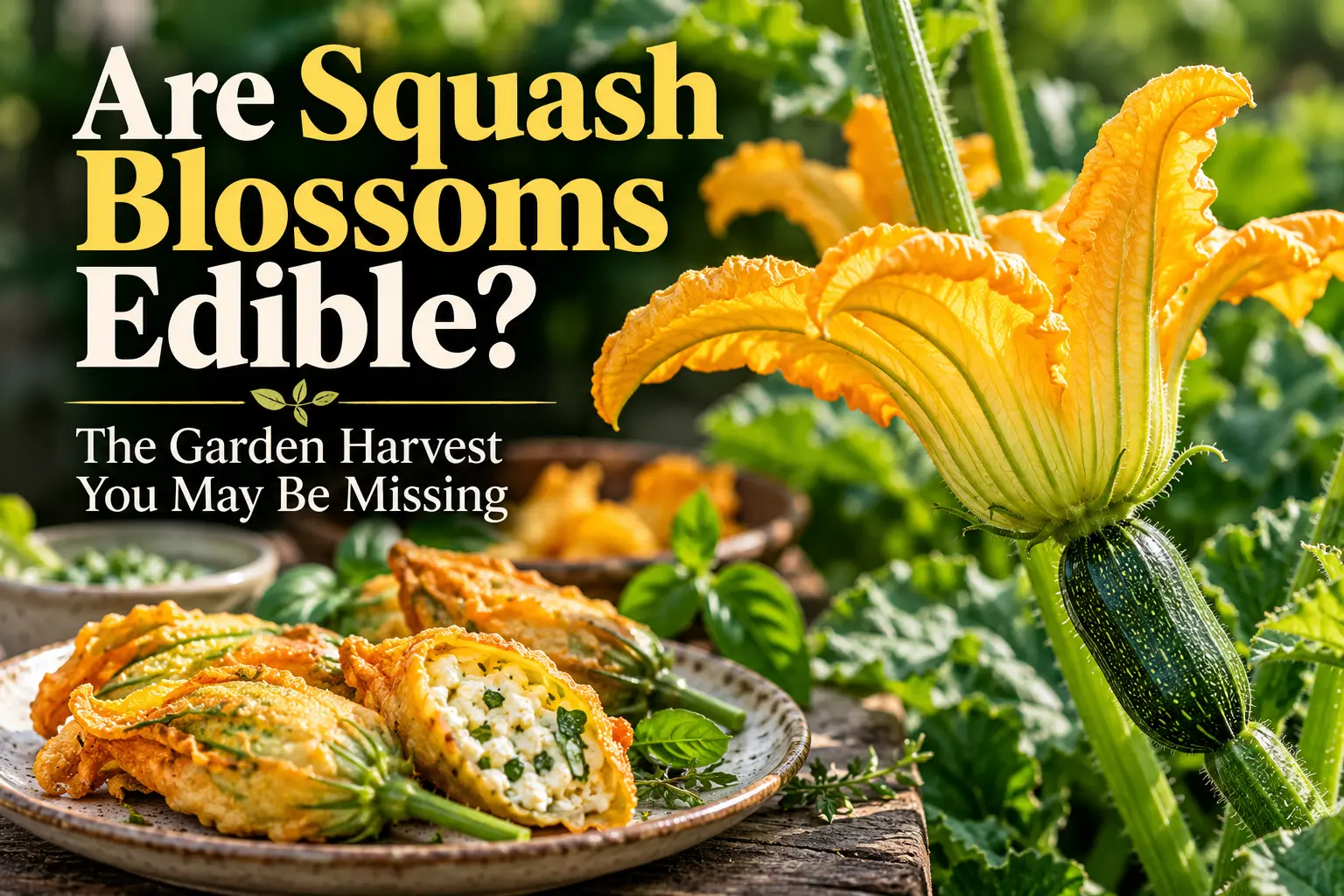
Are squash blossoms edible? Yes, and finding that out changed the way I looked at a plant I had always grown for the squash itself.
Most of us plant squash for the obvious reason: the squash.
We watch the vines spread, wait for those bright yellow flowers to appear, look for the tiny fruit forming behind them, and eventually start thinking about zucchini, pumpkins, butternut squash, or whatever variety we planted.
But I had overlooked something growing in plain sight:
The flowers are food too.
The yellow flowers produced by zucchini, pumpkins, summer squash, and winter squash can all be eaten. You may also see them called squash flowers, zucchini flowers, or zucchini blossoms, especially once you start looking at recipes.
They are delicate, mild, and slightly sweet, and they can be stuffed, fried, folded into eggs, tucked into quesadillas, added to pasta, floated into soups, or scattered across pizza. Illinois Extension even describes squash blossoms as a harvest you can enjoy before the squash itself is ready.
That made me look at the plant a little differently.
Male vs. Female Squash Flowers: Which One Should You Pick?
Before harvesting a squash blossom, there is one useful distinction to learn. Squash plants produce both male and female flowers.
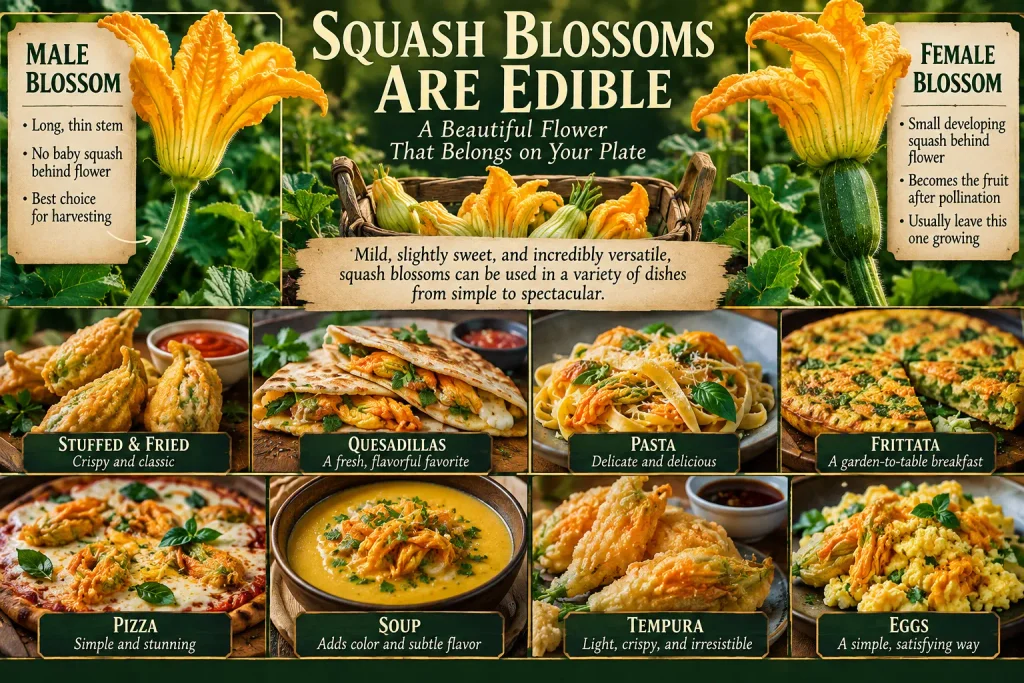
A male blossom grows from a relatively long, slender stem. A female blossom looks different at the base because a tiny developing squash sits directly behind the flower. If pollination succeeds, that little swelling is what becomes the squash.
Both flowers are edible. But if your goal is to keep producing fruit, male blossoms are usually the better ones to harvest. Illinois Extension recommends leaving some male flowers behind for pollination, while University of Minnesota notes that male flowers can be harvested without reducing fruit yield.
Gardening Chef Tip: Before cutting a flower, look behind it. No baby squash and a thin stem? Male. Tiny squash directly behind the blossom? Female.
That small bit of identification turns harvesting from guesswork into a choice.
“Okay, I picked one. What can I actually do with it?”
When Should You Pick Squash Blossoms?
Squash blossoms don’t wait around very long.
University of Minnesota recommends harvesting them on the day they open. Illinois Extension notes that picking them while the flowers are open makes them easier to handle, especially if you plan to stuff them, and that freshly picked blossoms should be used quickly.
Before bringing one into the kitchen, check the flower carefully for bees or other insects. Wash it gently just before using it because the petals are far more delicate than the squash that eventually follows them.
And then the garden becomes the kitchen.
How Do People Cook Squash Blossoms?
At first my question was simple: are squash blossoms edible? Once the answer was yes, the rabbit hole moved quickly from the garden to the kitchen.
Stuffing a squash blossom with cheese and frying it may be the preparation many of us encounter first, but the flower has a much larger culinary life.
In Italy, zucchini flowers are known as fiori di zucca and are famously fried, sometimes after being filled with cheese, anchovies, or other ingredients.
In Mexico, flor de calabaza appears in traditional preparations including quesadillas, tacos, soups, and stuffed or fried dishes. Mexico’s Secretariat of Agriculture specifically highlights tacos, soup, and quesadillas as ways the blossoms are eaten.
Then there are the wonderfully approachable possibilities shown in our graphic: pasta, eggs, frittatas, pizza, soup, tempura-style preparations, and more.
You don’t have to cook all eight.
The interesting discovery is that the flower you may have walked past all summer is already a recognized ingredient in kitchens around the world.
And now I have another question for the Kitchen Table:
Which preparation actually makes the blossom worth harvesting?
That is one I want to test rather than simply read about.
Want the Kitchen Table verdict?
I want to test which squash blossom preparation is actually worth harvesting for. Join The Gardening Chef Weekly, and I’ll share what I learn, along with the next garden discovery, kitchen test, or preservation idea.
Free to join. Leave anytime.
From Edible Squash Blossoms to a Bigger Harvest
This is the part that sent me farther down the rabbit hole.
I used to think of a squash plant in a fairly simple sequence:
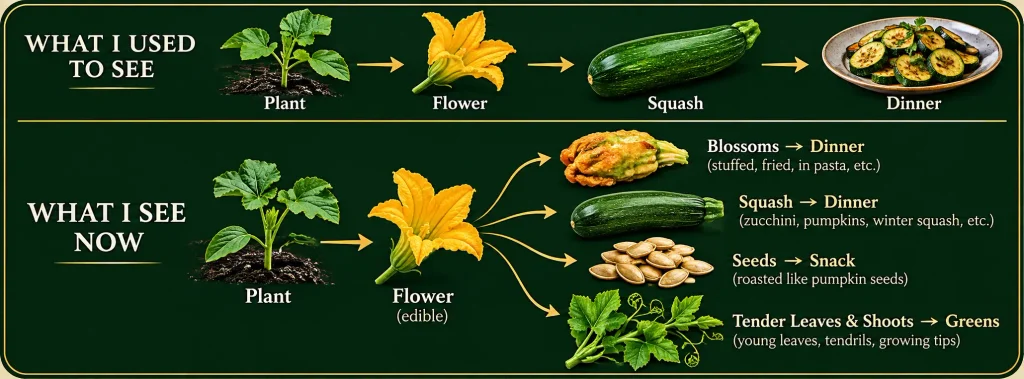
Once I started with the question “Are squash blossoms edible?” the rest of the plant suddenly became worth a closer look.
The blossom can become one harvest while other flowers continue doing their job and producing squash. Then I discovered that the story doesn’t necessarily stop with the blossom and fruit either.
In parts of the Pacific, young pumpkin leaves and tender tips are eaten as greens. Mature seeds can become another harvest too. A University of Hawaiʻi food-composition publication includes pumpkin flowers, fruit, and tender leafy tips as edible foods, while Illinois Extension notes that winter-squash seeds can be roasted just like pumpkin seeds.
Now that is a rabbit hole.
And I don’t think we need to chase all of it today.
For this Field Note, the squash blossom is enough to leave me looking at the plant differently:
Sometimes the garden is producing food before we realize there is something to harvest.
The next time you walk past a flowering zucchini, pumpkin, or squash plant, stop for a moment. Find a male flower. Find a female. Notice the little squash behind one and the long stem beneath the other.
And if you have enough blossoms to spare, maybe don’t walk past the male flower quite so quickly.
Your garden may already be offering you another ingredient.
Keep exploring the squash family
Want to understand what your squash plant can become from garden to kitchen? Explore our [Squash & Cucumber Field Guide] for growing, harvesting, preserving, and using the crop.
And if you’re wondering what else the September garden may still be offering, continue with 5 Best Vegetables to Harvest in September: Hidden Value.
Keep growing with me
If discoveries like this make you look at your garden a little differently, join me for The Gardening Chef Weekly.
Each week I share something I’m growing, cooking, preserving, learning, or seeing differently in the garden, plus the next Field Note, Kitchen Table test, or seasonal idea worth exploring.
Free to join. Leave anytime.